 Semiahmoo Siding
 Blaine's Exterior: Living Where the Strait Meets the Weather
Blaine sits at the northwest corner of Washington, wedged between Semiahmoo Bay, Drayton Harbor, and the Canadian border, with the Strait of Georgia funneling weather straight at the shoreline. Homes here don't get the luxury of a mild, protected microclimate. They get salt-laden air off the water, wind-driven rain that comes in sideways more often than straight down, and a wet season that stretches long enough for moss and algae to get comfortable on anything that stays damp. If you own a home in Blaine, your siding is doing more work than siding in a drier, inland part of Whatcom County, and it shows on the exterior a lot sooner if the wrong material or the wrong install went up.
We work on homes throughout the Semiahmoo and Blaine area regularly, and the pattern is consistent: houses closer to the water and homes with west- or southwest-facing walls take the brunt of it. Paint fails early. Trim rots at the joints. Panel seams that weren't detailed correctly let water track behind the cladding, and by the time anyone notices, there's damage in the wall assembly that costs a lot more to fix than the siding itself would have.
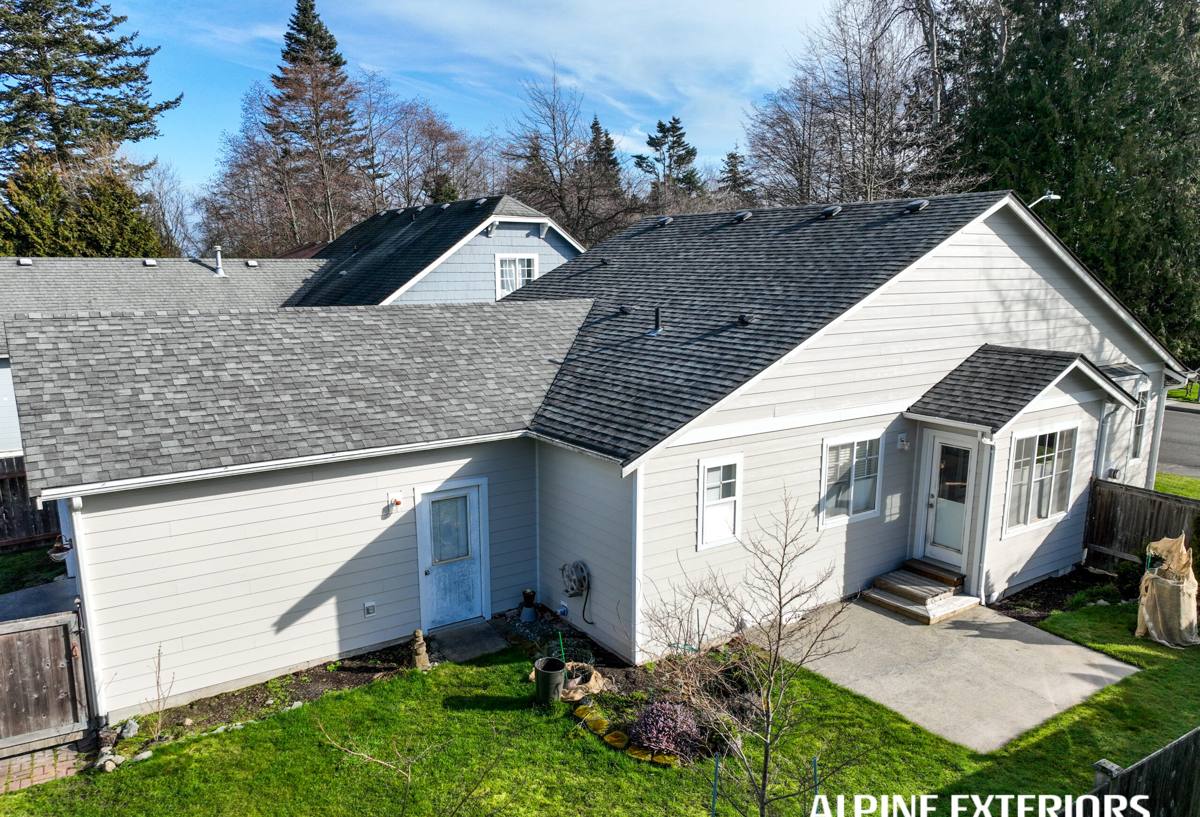
What Blaine's Climate Actually Does to a House
Salt Air and Coastal Exposure
Proximity to Semiahmoo Bay and the Strait means airborne salt is a real factor, not a theoretical one. Salt accelerates corrosion on exposed metal fasteners and flashing, and it can degrade certain coatings and finishes faster than they'd wear inland. Materials that rely on a thin factory coating or a field-applied paint job tend to chalk, fade, or lose adhesion sooner in a salt-air environment. This isn't unique to Blaine — it's true of any Pacific Northwest waterfront community — but it's a real design consideration here, not an afterthought.
Driving, Wind-Driven Rain
Whatcom County gets a lot of rain overall, but what matters more for siding performance is direction and force. Wind off the water pushes rain horizontally into wall surfaces, seams, and penetrations (windows, doors, hose bibs, light fixtures) with far more force than a straight vertical rain would. That means water intrusion at Blaine homes usually isn't a flat-surface failure — it's a joint, seam, or flashing failure. The siding material matters, but the installation detailing around every penetration matters just as much, if not more.
A Long Moss and Algae Season
Cool temperatures, shade from mature trees, and consistent moisture give moss, algae, and mildew a long growing window on the north and shaded sides of a house. Porous or textured surfaces hold onto moisture and organic growth longer than smooth, dense surfaces. Once moss establishes on a wall, it holds water against the substrate, which accelerates whatever deterioration is already happening underneath.
Temperature Swings and Wood Movement
Blaine doesn't see extreme heat, but it does see enough seasonal and day-to-night swing, combined with high humidity, to keep wood-based products expanding and contracting. Over years, that cycle works at paint adhesion, joints, and fastener holes.
Why We Standardized on James Hardie Fiber Cement
We install James Hardie fiber cement siding exclusively. We don't offer vinyl, LP SmartSide, Cemplank, Allura, primed spruce, or cedar as alternatives, and that's a deliberate call based on what actually holds up in this specific climate, not a sales preference.
- Non-combustible core. Fiber cement doesn't feed a fire the way wood-based or vinyl products can, which matters for insurance conversations and long-term risk regardless of region.
- Engineered for moisture, not just coated against it. Hardie's fiber cement formulation resists moisture-driven swelling, rot, and delamination in a way that wood-based composite panels can't fully match — there's no organic wood fiber at the core to feed decay.
- ColorPlus factory finish. A baked-on, factory-controlled finish holds color and resists fading, chalking, and peeling far longer than field-applied paint, which matters directly in a salt-air, high-UV-then-heavy-rain cycle like Blaine's.
- HZ5 and climate-matched product lines. Hardie engineers specific formulations for different climate zones. The versions we install are matched to Pacific Northwest moisture exposure, not a generic national spec.
- A strong, transferable warranty backed by a manufacturer with decades of fiber cement manufacturing behind it, which carries weight if you sell the home down the line.
We're not going to tell you other products are junk — vinyl and LP SmartSide both have real markets and real uses, and cedar has genuine aesthetic appeal. But we've made a professional judgment that in a coastal Whatcom County climate, the maintenance burden, moisture sensitivity, and finish longevity of those alternatives don't hold up as well as fiber cement does, and we'd rather install one product exceptionally well than juggle several we're less confident in over the long run.
How This Plays Out on a Blaine Home
Siding
Full siding replacement is the most common request we get from waterfront and near-waterfront properties where the existing cladding — often older cedar, an aging vinyl system, or a composite product that's reached the end of its service life — is showing rot, fading, or moisture damage at seams and corners. We also handle repair and partial replacement where damage is localized, though on older homes it's common to find that once you open up one problem area, there's related moisture damage nearby that needs to be addressed at the same time.
Roofing
Roofing and siding failures are often connected. A roof that's shedding water improperly at the eaves or a compromised gutter system will overload the siding and trim right below it, which is a common cause of premature siding failure on Blaine homes we've evaluated. We look at the roof-to-wall interface as part of any siding assessment, not as a separate problem.
Windows
Window flashing and integration with the siding plane is one of the most common sources of hidden water intrusion in wind-driven rain environments. When we replace siding around existing windows, we pay close attention to flashing and sealant details at those penetrations — that's frequently where a home's real vulnerability lives, even if the siding itself looks fine.
Decks
Decks in Blaine face the same moisture and moss exposure as siding, plus direct foot traffic and standing water risk. We build and repair decks with drainage and material choices suited to the same wet, coastal conditions we design siding installations around.
Comparing Common Siding Options for a Coastal Whatcom County Home
| Factor | James Hardie Fiber Cement | Vinyl | Wood/Composite (cedar, primed spruce, LP-style) |
|---|---|---|---|
| Moisture resistance | Engineered core resists swelling and rot | Won't rot, but can warp/buckle; seams are moisture entry points | Vulnerable to rot and swelling if moisture reaches the substrate |
| Finish durability in salt air | Factory ColorPlus finish, long fade resistance | Color molded through material, but can chalk/fade with UV over time | Field-applied paint/coating needs recoating on a regular cycle |
| Fire resistance | Non-combustible | Combustible (petroleum-based) | Combustible |
| Maintenance burden | Periodic washing; no repainting needed for the finish life | Low, but cracking/fading over decades | Regular repainting/resealing, moss and mildew treatment |
| Typical service life | Multi-decade with proper install | Multi-decade, but seams/fasteners degrade | Shorter without diligent maintenance |
Why a Local Crew Matters for Blaine Specifically
Siding performance in a place like Blaine comes down to installation detail as much as material choice. Flashing sequencing at windows and doors, fastener placement and spacing, panel gapping for expansion, and how the bottom edge of the siding is terminated above grade or a deck ledger are all details that either work with wind-driven rain or fail against it. A crew that installs fiber cement across a range of climates without adjusting for coastal exposure can put up a technically "correct" installation that still underperforms here.
We're on Whatcom County homes regularly, which means we see how installations from a few years back are actually holding up in this specific environment — where moss establishes first, which corners take water, which flashing details work over a full wet season and which don't. That local pattern recognition shapes how we detail every new installation, not just the ones on the waterfront.
What to Expect From a Blaine Siding Project
- An on-site evaluation of your current siding, trim, and any visible moisture or moss issues
- A check of roof-to-wall transitions, gutters, and window/door flashing where they interact with the siding plane
- A written scope specifying Hardie product line, profile, and color — no ambiguity about what's going on the house
- Attention to house wrap and drainage plane continuity before any panel goes up
- Correct fastener type and placement for coastal exposure
- Proper flashing and sealant detailing at every penetration, not just the visible seams
- A final walkthrough covering care and cleaning expectations for a coastal environment
Maintaining Fiber Cement Siding in a Coastal Climate
James Hardie siding is low-maintenance, not no-maintenance. In a Blaine-area setting, that mostly means periodic rinsing to keep salt residue and organic growth from building up, especially on shaded north-facing walls where moss is most persistent. Keeping gutters clear and functioning, trimming back vegetation that holds moisture against the wall, and having caulking and sealant joints checked every few years will get the most out of the installation. None of that is unusual maintenance — it's the same basic care any exterior in this climate needs, just without the repainting cycle that wood-based products require.
Get a Straightforward Look at Your Home
If you're noticing fading, moss buildup, soft spots, or water staining on your Blaine home's exterior, it's worth having someone look at it before a small issue becomes a wall-assembly problem. We offer free, no-pressure estimates for siding, roofing, window, and deck work — come find out what your home actually needs and what it would take to get it done right with James Hardie fiber cement. Use the form below to get started.