 Semiahmoo Siding
 We get asked about vinyl siding almost every week, usually by a homeowner who's done some price shopping and wants to know why our estimate doesn't include it. It's a fair question, and it deserves a straight answer instead of a sales pitch. Vinyl isn't a bad product in the abstract — it's inexpensive, it's everywhere, and for a lot of climates it does an adequate job for a while. We simply don't think it's the right long-term choice for homes sitting this close to Semiahmoo Bay and Drayton Harbor, and we'd rather explain why than quietly install something we don't believe in.
What Vinyl Siding Actually Gets Right
Before we get into the trade-offs, credit where it's due. Vinyl is light, it's fast to install, and it's genuinely one of the more affordable siding materials on the market. It never needs painting, it resists rot in the way that bare wood doesn't, and for a starter home or a rental property where the goal is minimum upfront cost, it's a reasonable option. If a contractor tells you vinyl is a scam, they're overstating it. It's a budget product that does a budget job — the issue is what happens when that budget product meets this particular stretch of coastline.
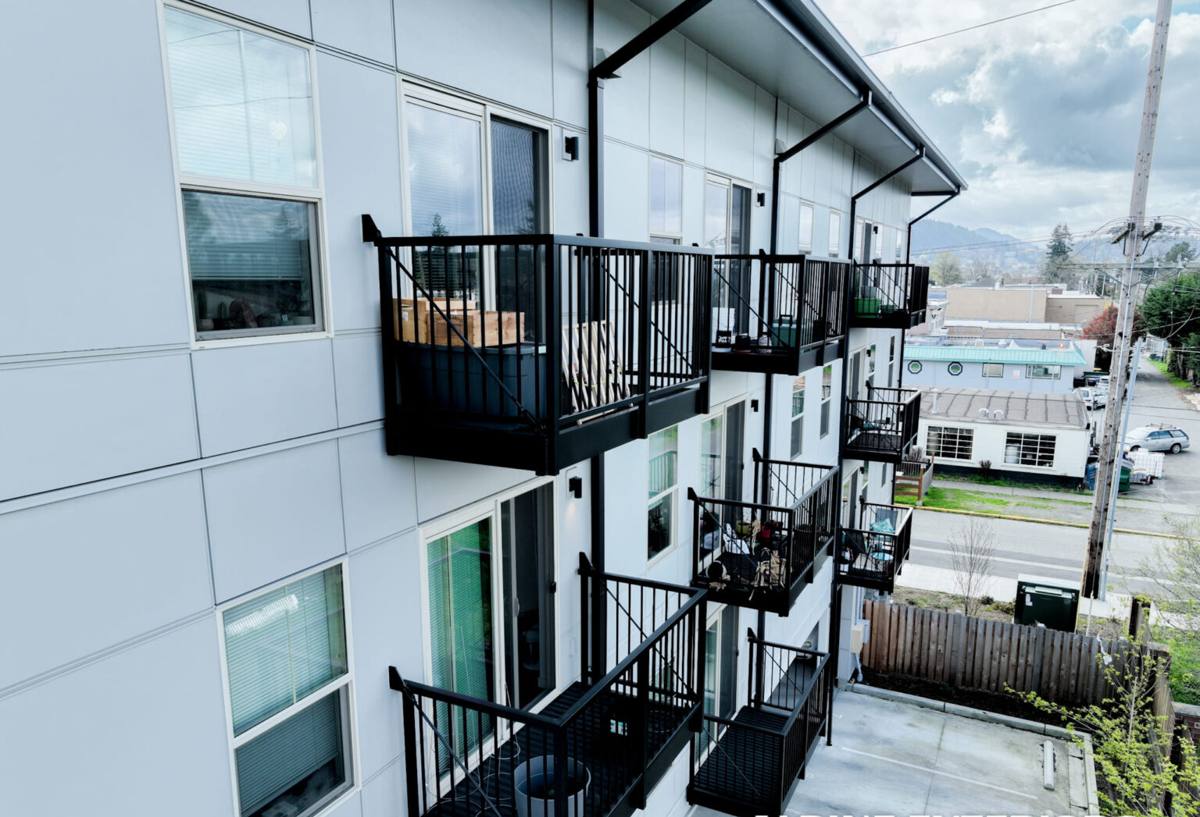
Salt Air and Semiahmoo's Marine Exposure
Semiahmoo sits on a spit surrounded by saltwater, with Drayton Harbor on one side and Semiahmoo Bay and the Strait of Georgia on the other. Homes here take on airborne salt spray almost constantly, especially on west- and north-facing walls that catch wind straight off the water. Salt residue accelerates the breakdown of the plasticizers that keep vinyl flexible. Over years, panels that started out pliable become stiffer and more brittle, and the surface finish dulls faster than it would twenty or thirty miles inland. It's not a dramatic failure — it's a slow fade in performance that most homeowners don't notice until they're comparing their siding to a neighbor's newer install.
Wind-Driven Rain and Panel Movement
Vinyl siding is engineered to expand and contract with temperature, which is why it's installed with a hanging, overlapping design rather than being fastened tight to the wall. That works fine in a stable climate. In Whatcom County, where cool marine mornings can give way to warm afternoons and back again within a single day, panels are constantly moving. Combined with the driving, wind-pushed rain that comes off the Strait during fall and winter storms, that movement creates small gaps where wind-blown moisture can work its way behind the panel. Vinyl itself doesn't absorb water, but the wall assembly behind it can, and once moisture gets behind cladding in a damp climate like ours, it doesn't dry out quickly.
The Long Moss Season
Anyone who's owned a home in this part of the county knows the moss and algae season runs long — often eight months or more of shaded, damp conditions that never fully bake dry. Vinyl's smooth, non-porous surface doesn't feed organic growth directly, but its horizontal laps and butt joints are exactly the kind of ledges where spores, dust, and moisture collect. On north-facing walls and anywhere shaded by mature trees, we routinely see vinyl siding develop persistent green-black staining within a handful of years. It can be pressure washed, but pressure washing vinyl also drives water up under the panels if it's not done carefully, which trades one problem for another.
Installation Sensitivity Most Homeowners Never See
Vinyl has a reputation as an easy, forgiving material to install, and mechanically it is — but it's unforgiving of shortcuts in ways that don't show up until years later.
Nailing and Expansion Gaps
Every panel needs to be nailed loosely enough to allow for expansion, with the correct gap left at the ends. Crews under pressure to move fast tend to nail too tight, which locks the panel in place. When it then tries to expand on a warm day, it has nowhere to go and buckles or waves. That's a workmanship issue more than a material issue, but it's common enough that it's a real risk with any lower-cost install.
Cold-Weather Brittleness
Vinyl becomes noticeably more brittle in cold temperatures. Whatcom County doesn't get brutally cold most winters, but we do get cold snaps, and impacts from a dropped ladder, a stray baseball, or wind-thrown debris during a winter storm are far more likely to crack a panel in January than in July. Cracked panels are a straightforward repair on paper, but matching the color of a ten-year-old panel that's spent a decade fading in the sun is close to impossible.
Warranty Structure: The Fine Print Matters
Most vinyl warranties look great on the label — lifetime, transferable, the works. The detail that matters is that they're typically prorated, meaning the manufacturer's payout shrinks every year you own the home. A "lifetime" warranty at year fifteen might cover a fraction of the replacement cost, and it almost never covers labor past the first few years. Color fade clauses are also written narrowly, often requiring a specific, hard-to-prove threshold of fade before a claim is even considered. We don't think that's dishonest on the manufacturers' part — it's just standard practice for a lower-cost material — but we don't want to be the ones explaining that fine print to a homeowner after the fact.
How Vinyl Compares to What We Install
| Factor | Vinyl Siding | James Hardie Fiber Cement |
|---|---|---|
| Fire behavior | Combustible plastic, can soften/melt near heat sources | Non-combustible core material |
| Salt air / marine exposure | Plasticizers degrade over time, finish dulls | Cement-based composition, factory finish engineered for weathering |
| Moisture behavior | Panel itself is inert, but gaps can let water behind cladding | Engineered for moisture management; HZ5 line rated for our climate zone |
| Impact resistance | Brittle in cold, cracks under impact | Dense, resists denting and cracking |
| Moss / algae staining | Collects at laps and joints in shaded, damp areas | ColorPlus finish resists organic staining better over time |
| Warranty structure | Typically prorated after initial years | Long-term, non-prorated coverage on ColorPlus finish and substrate |
| Upfront cost | Lowest of common siding materials | Mid-to-upper range, reflects material and labor |
Why We Standardized on James Hardie
We made a decision as a company to only install James Hardie fiber cement, and it wasn't about upselling — it was about not wanting to stand behind a product we didn't trust to perform for the twenty-plus years homeowners expect out of new siding in this climate. Hardie's fiber cement is non-combustible, holds up to the salt-laden wind coming off the water, and its ColorPlus factory finish is baked on rather than sprayed, which matters when you're dealing with a moss season that runs most of the year and UV exposure the rest of it. Hardie also builds specific product lines engineered for different climate zones, and the HZ5 formulation is suited to the wetter, cooler Pacific Northwest conditions we deal with here in Whatcom County. When something goes wrong with a Hardie installation, it's almost always an installation issue, not a material one — and installation is the part we control.
Questions Worth Asking Any Siding Contractor
- Ask what specific product line and climate rating they're proposing, not just the brand name
- Ask whether the warranty is prorated and what it actually covers after year five and year ten
- Ask how the material performs specifically in salt air and marine exposure, not general climate
- Ask what happens to color and finish over time, and whether the finish is factory-applied or field-painted
- Ask how they handle moisture management and flashing details behind the cladding
- Ask for the manufacturer's own installation instructions and whether the crew follows them to the letter
What This Means for Your Project
If cost is the deciding factor and vinyl is genuinely the only option that fits the budget, we'll say so honestly rather than pretend otherwise — but we won't be the ones installing it, because we'd rather refer that work out than put our name on a material we don't stand behind for this stretch of coastline. For homeowners in Semiahmoo and across Whatcom County who are planning to stay in their home for the long haul, or who are re-siding once and want it to be the last time, fiber cement is the material we can install with a clear conscience and a warranty we're comfortable explaining line by line.
If you're weighing siding options for a home here on the water or anywhere in Whatcom County, we're happy to walk your property, talk through what we're seeing on the exterior, and put together a free, no-pressure estimate for a James Hardie installation — no obligation either way.