 Semiahmoo Siding
 Siding Failure Is Almost Never About the Surface
When a homeowner in Semiahmoo calls us about siding trouble, the complaint is usually something visible: a soft spot near a window, paint that won't hold, a musty smell in a closet on an exterior wall. But the surface problem is rarely the actual problem. Siding is a water-management system first and a cosmetic layer second. When it fails, it's almost always because water found a way behind the cladding and had nowhere to go. What you see on the outside is the last symptom to show up, not the first.
Understanding this changes how you should think about repairs. Painting over a stain, caulking a crack, or replacing a single damaged board can hide a problem for a season or two without touching the moisture path that caused it. If the path isn't fixed, the rot keeps working underneath, and it usually costs more to fix later than it would have cost to address correctly the first time.
Why Whatcom County Homes Take a Harder Hit
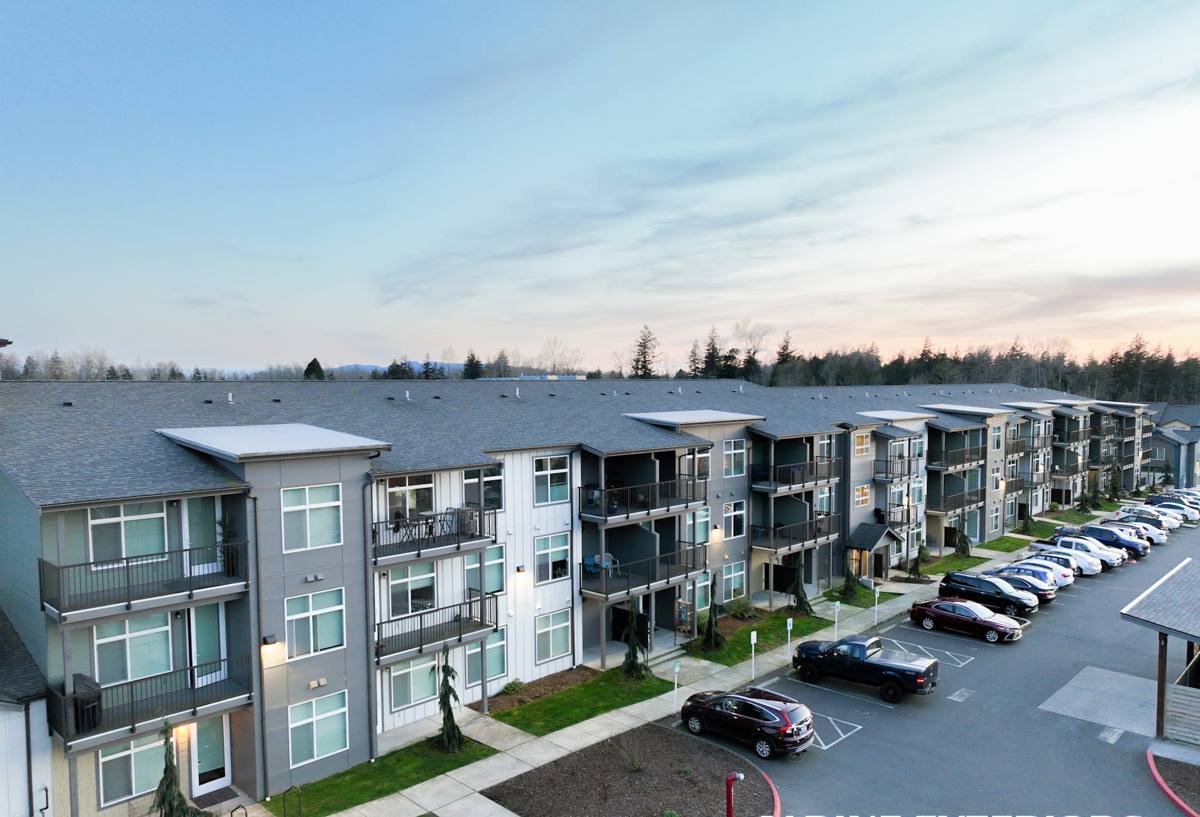
Semiahmoo sits right on the water, which means the siding on local homes deals with a combination most inland Washington towns don't see. Salt-laden air corrodes fasteners and finishes faster than dry inland air does. Driving rain off Semiahmoo Bay and Drayton Harbor pushes water sideways into joints and laps that were only ever designed to shed water falling straight down. And the long, damp moss season here means north-facing walls and shaded siding stay wet for weeks at a stretch instead of drying out between storms.
None of that is unusual for this part of Whatcom County — it's just the climate. But it means siding choices and installation details that might get away with sloppiness in a drier climate don't get away with it here. A wall assembly that can't dry out reliably between rain events is on a countdown, and in this area that countdown runs faster than most homeowners expect.
The Four Ways Water Gets In
1. Failed or Missing Flashing
Flashing is the metal or membrane detail that directs water away from windows, doors, and any place two building materials meet. It's invisible once the siding goes on, which is exactly why it's the most common point of failure — nobody sees it was done wrong until water starts showing up inside the wall.
2. Caulk as a Primary Defense
Caulk is meant to be a secondary seal, not the only thing standing between your framing and the weather. Caulk shrinks, cracks, and lets go over time, especially with the freeze-thaw and UV cycling siding sees on the coast. If caulk is the only thing keeping water out of a joint, that joint will eventually leak.
3. Poor Ground Clearance and Grade Contact
Siding installed too close to grade, buried in mulch, or in contact with concrete wicks moisture continuously from the ground up. This is one of the most common issues we find on older homes in low-lying areas near the water, where landscaping has crept up over the years and nobody thought to check clearance.
4. No Rainscreen or Drainage Path
Modern wall assemblies rely on a small air gap behind the siding — a rainscreen — that lets any water that does get past the cladding drain and dry out instead of sitting against the sheathing. Older installations and budget re-sides often skip this, which means the wall has no way to recover from even minor water intrusion.
What's Actually Happening Behind the Wall
Once water gets past the cladding and has no path to drain or dry, a predictable sequence starts. It usually takes longer than people expect to show up on the surface, which is part of what makes it dangerous.
| Stage | What's Happening | What You Might Notice |
|---|---|---|
| Early | Moisture is trapped against sheathing or framing | Usually nothing visible yet |
| Weeks to months | Wood framing and sheathing begin absorbing moisture | Musty smell, slightly soft siding when pressed |
| Months to a couple years | Fungal decay (rot) begins breaking down wood fiber | Visible staining, paint failure, soft or spongy boards |
| Ongoing, unaddressed | Structural wood loses integrity; mold can develop indoors | Sagging siding, interior stains, allergy or odor complaints |
The reason this matters: by the time a homeowner sees a stain or feels a soft spot, the damage has usually been building for a while. Catching it early — before it reaches the framing stage — is the difference between a targeted repair and a full section replacement.
Warning Signs Worth Walking Your House For
- Soft or spongy siding when you press on it, especially near the bottom edge or below windows
- Paint or finish that keeps failing in the same spot no matter how often it's repainted
- Dark streaking, staining, or persistent moss growth concentrated on one wall or corner
- A musty or damp smell in rooms along an exterior wall, particularly closets and corners
- Visible gaps, cracked caulk, or separated joints around windows, doors, or trim
- Siding boards that have visibly cupped, bowed, or pulled away from the wall
- Interior drywall or trim near exterior walls that feels soft or shows discoloration
If you notice more than one of these, especially on a wall that faces the water or stays shaded most of the day, it's worth having someone look at it before it gets worse — not after the next wet season.
Why Some Products Handle This Better Than Others
Not all siding materials respond to sustained moisture the same way, and this is a big part of why we made the product decisions we did. Wood-based products — including primed spruce, cedar, and engineered wood siding — are organic material at their core. Even with good coatings and careful installation, if water gets behind them and stays there, the material itself is food for rot and fungal growth. Vinyl doesn't rot, but it isn't rigid, so it can't always maintain a tight seal at seams and can allow water to track behind it, and it's more exposed to wind-driven rain issues than people assume in a location like this.
Fiber cement is a mineral-based product — cement, sand, and cellulose fiber, cured under pressure. It doesn't feed rot the way wood does, and it holds its shape and dimensional stability far better than vinyl in temperature swings and driving rain. That doesn't mean fiber cement is immune to bad installation — no siding is — but it gives you a much wider margin for error and a much slower failure curve if something does go wrong behind it. It's the core reason we standardized on James Hardie fiber cement products rather than offering a mix of materials: the installation practices we use only make sense paired with a material that can tolerate the coastal moisture load here.
What Correct Installation Actually Requires
Good siding material installed badly will still fail. The installation details matter as much as the product choice, and in a climate like ours, they matter more.
- Weather-resistive barrier installed and lapped correctly behind the siding, not just stapled up loosely
- Flashing at every window, door, and horizontal trim transition, integrated with the barrier — not caulk standing in for flashing
- Rainscreen gap to let incidental moisture drain and the wall assembly dry between storms
- Proper clearance from grade, roofing, decks, and patios — typically several inches minimum
- Correct fastening — right fastener type, spacing, and depth so panels aren't over- or under-driven
- Factory-finished siding where possible, since factory-applied finishes hold up more consistently than field-applied paint over time
Any one of these done wrong can undermine an otherwise good material. This is why we treat installation sequencing as seriously as the siding itself, and why a cheap re-side quote is worth questioning if it skips steps like rainscreen or proper flashing to save time.
What This Means for Your Timeline
If your siding is showing early warning signs, waiting rarely saves money. The gap between "a repair" and "a replacement" is usually the amount of time water has had to sit against wood framing. A wall inspected and corrected at the first sign of a soft spot might need a section of sheathing and siding replaced. The same wall ignored for two more wet seasons might need framing repair, insulation replacement, and a much larger section of the exterior opened up.
If you're not sure whether what you're seeing is cosmetic or structural, that's a reasonable thing to have someone look at before deciding whether it's a repair, a partial re-side, or something that can simply be monitored for another season.
Get an Honest Look at What's Going On
We offer free, no-pressure estimates for homeowners in Semiahmoo and the surrounding Whatcom County area who want a straight answer about what's happening with their siding — whether that means a small repair, a partial section replacement, or nothing urgent at all. Fill out the form below and we'll take a look.