 Semiahmoo Siding
 Building Exteriors for One of the Toughest Micro-Climates in Whatcom County
Point Roberts sits in a strange geographic spot — a small peninsula hanging off the bottom of Boundary Bay, surrounded on three sides by water and cut off from the rest of Washington by the Canadian border. That geography is part of what makes it a beautiful place to own a home, and it's also exactly why exteriors out there take more abuse than homes just a few miles inland in Semiahmoo or Blaine. Constant exposure to marine air, wind-driven rain coming off the Strait, and a long damp season that keeps north-facing walls and rooflines shaded and wet for months at a time all add up. We work on homes throughout this part of Whatcom County, and Point Roberts is one of the areas where we see the clearest evidence of what salt air and sustained moisture do to siding, trim, roofing, and decking over time.
This page is about what that climate actually does to a house, and how we approach siding, roofing, window, and deck work differently for a property that's essentially surrounded by the Salish Sea.
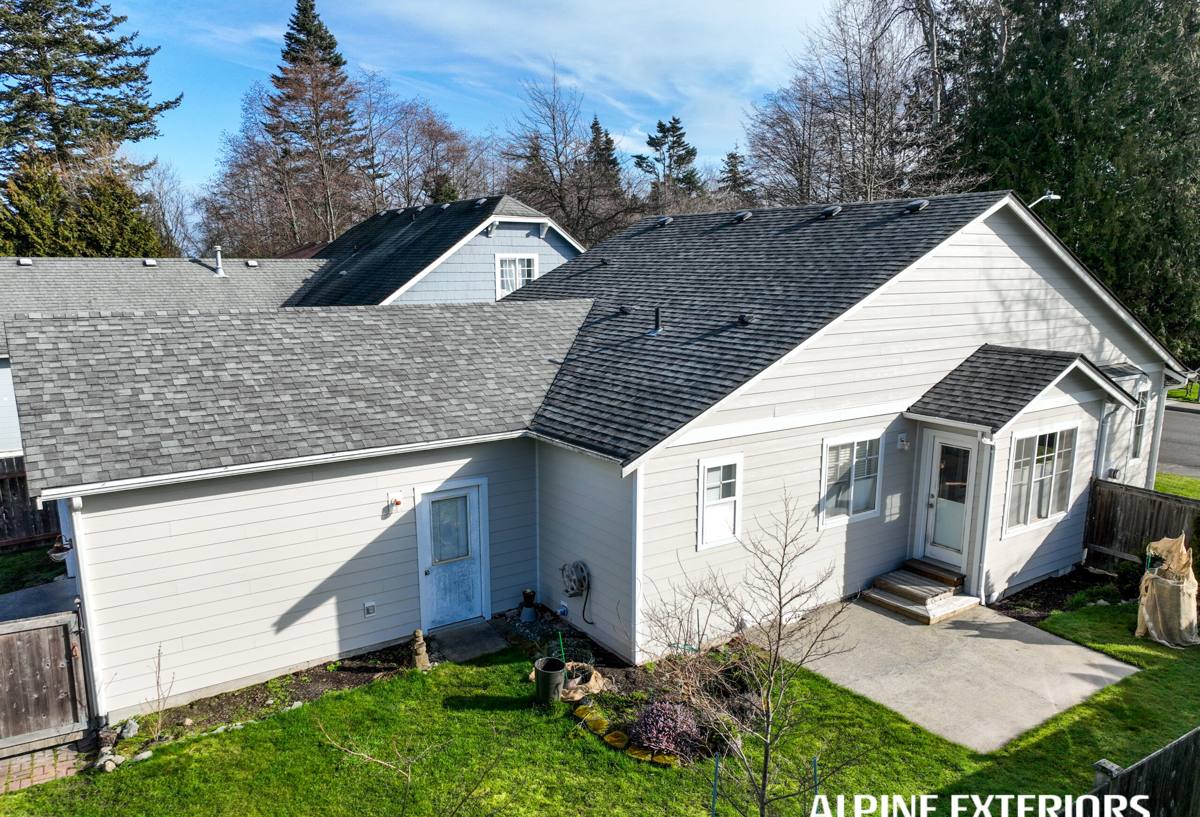
What Salt Air and Driving Rain Actually Do to a House
Salt Air and Metal
Homes close to the water deal with airborne salt that settles on every exterior surface — not just the parts facing the water. Over years, that salt accelerates corrosion on anything metal: nails, fasteners, flashing, hose bibs, light fixtures, and railings. Cheaper or improperly coated fasteners can start showing rust streaks down the face of siding well before the siding itself has any real problem. It's one of the most common cosmetic complaints we hear about on waterfront and near-waterfront homes, and it's almost always a fastener or flashing issue, not a siding failure.
Wind-Driven Rain
Point Roberts gets rain that doesn't just fall — it gets pushed sideways by wind coming off open water. That matters because wind-driven rain finds every gap, seam, and undersized overhang and pushes water into places vertical rain never would. Homes with minimal roof overhangs, older window flashing details, or gaps around trim are the ones that end up with hidden moisture intrusion long before anything looks wrong on the surface.
Moss, Algae, and the Long Damp Season
Shaded, north-facing walls and roof slopes in this part of Washington can stay damp for much of the fall, winter, and spring. That extended dampness is exactly what moss and algae need to get established on roofing and siding surfaces. Beyond looking bad, moss holds moisture against the surface it's growing on, which is a slow but real problem for wood-based products and for roofing material lifespan.
Why We Only Install James Hardie Fiber Cement Siding
We don't install vinyl, LP SmartSide, primed wood, cedar, or other fiber cement brands like Cemplank or Allura. That's a deliberate standard, not a sales pitch, and in a climate like Point Roberts' it matters more than almost anywhere else we work.
- Vinyl can warp and become brittle with UV and temperature swings, and its seams and J-channels give wind-driven rain more opportunities to get behind the cladding.
- Wood and primed spruce siding is organic material in a climate that stays damp for months — it's the product most vulnerable to the moss, algae, and rot pressure this area creates.
- LP SmartSide is an engineered wood product, and like any wood-based siding, cut edges and fastener penetrations need diligent field-sealing to keep moisture out over the long run. In a marine climate, that maintenance margin for error is thinner.
- Other fiber cement brands (Cemplank, Allura) are legitimate cement-based products, but we've standardized on one manufacturer so our crews install to one spec, one warranty structure, and one finish system — consistency we can stand behind.
James Hardie fiber cement is non-combustible, dimensionally stable, and doesn't feed moss or rot the way organic materials can. Hardie's ColorPlus factory-applied finish is baked on under controlled conditions rather than field-painted, which matters in an area where a lot of a home's exterior life is spent damp — a factory finish handles that far better than a coat of paint applied on site and re-coated every several years.
HZ5 and Climate-Engineered Product Lines
James Hardie engineers its HZ product lines for different climate zones across the country. For a coastal Pacific Northwest location like Point Roberts, that means a formulation built around sustained moisture exposure rather than a generic one-size-fits-all product. It's a meaningful difference from siding designed primarily around a different region's freeze-thaw or heat profile.
Siding: What Changes for a Point Roberts Install
The siding material matters, but so does the install. In this climate we pay particular attention to a few details that are easy to shortcut and expensive to fix later:
- Correct fastener type and spacing — stainless or coated fasteners rated for coastal exposure, not standard interior-grade hardware
- Proper flashing at every window, door, and horizontal trim transition, lapped to shed wind-driven rain rather than just vertical rain
- A drainage plane and rainscreen approach behind the siding so any incidental moisture has somewhere to go instead of sitting against the wall assembly
- Caulking and sealant choices rated for UV and salt exposure, not general-purpose products that break down faster near water
None of this shows up in a photo of a finished house. It's the difference between siding that looks good for two years and siding that performs for decades.
Roofing in a Moss-Prone, Wind-Exposed Area
Roofing takes a similar beating. Homes with north-facing slopes or heavy tree cover nearby tend to develop moss first, and once moss gets a foothold it holds moisture against shingles and accelerates granule loss. We look at ventilation, valley and edge flashing, and overhang length as part of any roofing conversation — not just the shingle product itself — because those details determine how well a roof sheds wind-driven rain and how much shade-driven moss pressure it's actually under.
Windows and the Weak Points They Create
Every window opening is a break in the siding's drainage plane, which makes window flashing one of the highest-risk details on any home in this climate. Older window installs — especially ones done before rainscreen and modern flashing tape practices were standard — are a common source of hidden moisture intrusion around window and door openings. When we replace siding on a home with older windows, we treat the flashing integration at those openings as critical work, not an afterthought.
Decks: Built for Wet, Not Just for Sun
Decks in Point Roberts deal with the same sustained dampness as the rest of the house, plus direct weather exposure with no siding or roof overhang protecting them. Ledger board flashing where the deck meets the house, proper spacing between deck boards for drainage and airflow, and hardware rated for coastal exposure all matter more here than in a drier inland climate. A deck built without those details in mind will show rot and hardware corrosion well ahead of schedule.
Cost Factors for Exterior Work in a Coastal Climate
| Factor | Why It Affects Cost Here |
|---|---|
| Fastener and flashing grade | Coastal-rated stainless or coated hardware costs more than standard-grade material but avoids early corrosion streaking |
| Rainscreen / drainage plane | Adds labor and material versus a direct-to-sheathing install, but manages wind-driven rain intrusion |
| Roof overhang or trim modifications | Extending minimal overhangs to better shed wind-driven rain adds scope beyond a straight re-side |
| Window flashing integration | Older openings often need more flashing work than a newer, already well-flashed window |
| Access and site logistics | Point Roberts' location affects scheduling and material delivery lead times compared to more central Whatcom County sites |
Why a Local Crew Matters Here
A crew that mostly works drier, more sheltered inland jobs can miss the details that matter on a place like Point Roberts. We work throughout this part of Whatcom County and treat coastal-exposure details — fastener grade, flashing sequencing, rainscreen assemblies, moss-resistant material choices — as standard practice, not upgrades. That's the difference between an exterior that's still doing its job in twenty years and one that needs premature repair because it was built to a generic spec instead of the one this location actually demands.
What a Point Roberts Homeowner Should Ask Before Hiring
- Do you use fasteners and flashing rated for coastal/marine exposure, or standard-grade hardware?
- What's your approach to wind-driven rain at windows, doors, and trim transitions?
- Do you install a rainscreen or drainage plane behind siding, and why or why not?
- What warranty do you offer on materials and on your labor separately?
- Can you walk me through how you'd handle moss-prone areas of my roof or siding specifically?
If you own a home in Point Roberts and want a straight answer on what your siding, roofing, windows, or deck actually need in this climate, we're happy to take a look and give you a free, no-pressure estimate. There's a request form below whenever you're ready.