 Semiahmoo Siding
 Siding in Lynden: A Different Kind of Wet Climate
Lynden sits inland from the coast, in the farm country of the Nooksack River lowlands, but that doesn't mean the exterior of a home here has it easy. Whatcom County as a whole deals with long, wet winters, driving rain that comes in sideways off the Pacific weather systems, and a moss and mildew season that can stretch from October well into spring. Homes closer to the water in places like Semiahmoo and Blaine catch salt air directly off Drayton Harbor and the Strait of Georgia. Lynden is far enough inland that salt exposure isn't the primary concern, but the same regional weather pattern that carries that salt air also brings the driving rain and prolonged damp that define siding wear across this whole corner of the state.
What Lynden homes deal with instead is a combination of river-bottom humidity, heavy tree cover on many older lots, and long stretches of shade that keep siding damp longer after a storm than it would stay in a more open, sunnier location. Add in agricultural dust and the freeze-thaw swings that hit the valley in winter, and you've got a climate that's genuinely hard on the wrong exterior materials, even if it doesn't look as dramatic as a coastal storm.
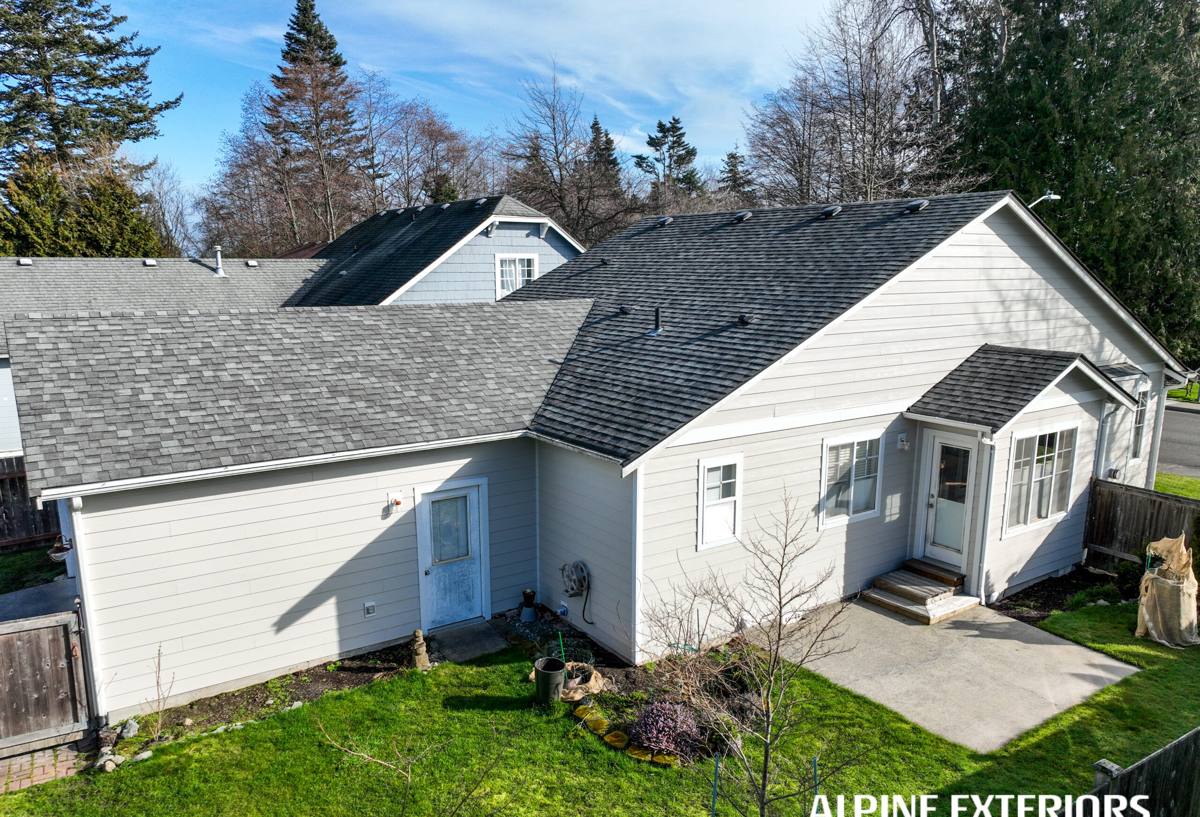
What This Climate Does to Siding Over Time
Moisture is the common thread behind almost every siding failure we see in this region, no matter the specific mechanism. A few of the patterns that show up again and again on Whatcom County homes:
- Moss and algae growth on north-facing walls and anywhere shaded by trees or overhangs, especially where siding stays damp for days after rain
- Swelling and delamination in wood-based or engineered wood siding where water gets behind the surface coating or into cut edges
- Paint and caulk failure from repeated wet-dry cycling, which opens gaps for water to work its way in
- Rot at the bottom courses near grade, splash zones, and anywhere gutters or downspouts aren't managing water properly
- Freeze-thaw stress on materials that absorb moisture, since trapped water expands when temperatures drop
None of this is unique to Lynden, but it's persistent here in a way that punishes materials with any real vulnerability to moisture. That's the lens we use when we talk to homeowners about what to put on a house in this part of Whatcom County.
Full Exterior Services for Lynden Homes
We're a full exterior contractor, not a siding-only outfit, which matters because the systems on a house work together. Water that gets past bad flashing at a roof edge shows up as a stain on siding two stories down. A window installed without proper sealing becomes the weak point that undermines a brand-new siding job around it. Our work in and around Lynden covers:
Siding
James Hardie fiber cement siding, installed to manufacturer spec, including trim, soffit, and fascia work to match.
Roofing
Roof replacement and repair, with attention to the flashing and ventilation details that keep water out of the wall assembly below.
Windows
Replacement windows installed with proper flashing and sealing, since a window is only as good as the water management around it.
Decks
Deck building and replacement for homes where outdoor living space has to hold up to the same wet-season stress as the siding.
Why We Install Only James Hardie Fiber Cement
We made a decision as a company to install one siding product: James Hardie fiber cement. We don't install vinyl, LP SmartSide, Cemplank, Allura, or bare cedar and primed spruce siding, and we think homeowners deserve an honest explanation of why, not just a sales pitch for what we do sell.
Vinyl
Vinyl is inexpensive and low-maintenance in the sense that it doesn't need painting, but it's a thin plastic product that can crack in cold snaps, warp under direct sun exposure, and fade over time in a way that can't be touched up. It also relies heavily on a tight, well-executed installation to keep water from getting behind it, since vinyl itself isn't a weather barrier so much as a rain screen over the house wrap.
LP SmartSide, Cemplank, and Allura
LP SmartSide is an engineered wood product, and like all wood-based siding, it depends on its factory coating and careful field sealing of every cut edge to keep moisture out. Once water gets into an engineered wood panel, especially at a poorly sealed cut or joint, swelling and softening can follow. Cemplank and Allura are fiber cement competitors to Hardie and are reasonable products in general terms, but we've standardized on Hardie's specific formulation, engineering, and factory finish system rather than splitting our crews' expertise across multiple fiber cement brands.
Cedar and Primed Spruce
Real wood siding can look great and plenty of homeowners love the look, but it's also the highest-maintenance option on this list. It needs regular refinishing, is the most vulnerable to rot and insect damage, and in a climate with this much sustained moisture, upkeep isn't optional if you want the siding to last.
What Hardie Gets Right for This Climate
James Hardie fiber cement is made from cement, sand, and cellulose fibers, which makes it dimensionally stable and resistant to moisture absorption in a way wood and wood-composite products aren't. It doesn't rot, it's non-combustible, and it holds paint and factory finish far longer than wood because the substrate itself isn't swelling and shrinking with every wet-dry cycle. Hardie also makes climate-engineered HZ product lines built for specific regional conditions, and factory-applies its ColorPlus finish under controlled conditions rather than relying on field-applied paint to do all the work. The warranty is transferable to a new owner if the home sells, which matters for resale in a market where buyers are asking more questions about exterior condition than they used to.
What Correct Installation Actually Involves
Fiber cement siding is only as good as the installation behind it. Hardie publishes detailed installation requirements, and skipping them is how a good product ends up with a bad reputation. The details that matter most on a Whatcom County home:
- Proper clearance between siding and grade, decks, and roof lines to prevent wicking moisture
- Correct fastening pattern and fastener type for the specific Hardie product being installed
- A functioning drainage plane and weather-resistive barrier behind the siding, not just the siding itself
- Factory-cut edges used wherever possible, with any field cuts sealed per Hardie's specifications
- Proper flashing at windows, doors, and any wall penetrations before siding goes on
- Correct joint and seam treatment so water sheds outward instead of collecting behind panels
This is where a crew's specific experience with Hardie product actually shows. Installation mistakes are the leading cause of premature siding failure on materials that, done correctly, are supposed to last for decades.
Cost Factors to Understand
Every siding project is different, and we don't quote pricing without seeing the house, but these are the main factors that drive cost up or down on a typical Lynden project:
| Factor | How It Affects Cost |
|---|---|
| Home size and wall complexity | More square footage and more corners, gables, and dormers mean more labor and material |
| Tear-off vs. install over existing | Removing old siding down to the sheathing adds labor but lets us check for hidden rot or moisture damage first |
| Trim, soffit, and fascia scope | Matching trim work adds cost but keeps the whole exterior system consistent |
| Siding profile and color selection | Certain Hardie profiles and factory finish colors carry different material pricing |
| Access and site conditions | Tree cover, tight lot lines, and multi-story walls affect scaffolding and staging needs |
| Underlying repairs | Rotten sheathing or water damage found during tear-off needs to be fixed before new siding goes on |
We walk through these line by line during an estimate so there aren't surprises once work starts.
Why a Local Crew Matters
A crew that works this specific region regularly knows what to look for on a Whatcom County house before the first panel comes off: where moss tends to build up, which wall orientations stay damp longest, how the local freeze-thaw pattern behaves, and what kind of water damage typically hides behind old siding on homes of a certain age. That local knowledge shapes how we sequence a tear-off, where we pay extra attention during inspection, and how we talk to homeowners about realistic timelines around the wetter months of the year. It's the difference between a crew that's installed siding here for years and one that's simply passing through the area on a job.
Signs It Might Be Time to Replace Your Siding
Not every siding problem means a full replacement, but these are worth a professional look:
- Visible warping, buckling, or gaps between siding panels
- Persistent moss or algae that keeps coming back after cleaning
- Soft or spongy spots, especially near the bottom of walls or around windows
- Peeling or bubbling paint that keeps recurring in the same spots
- Rising energy bills that suggest air and moisture are getting through the wall assembly
If you're seeing one or more of these on a Lynden home, it's worth having someone take a closer look before a small problem becomes a bigger repair.
If you're weighing a siding, roofing, window, or deck project for a home in Lynden, we're happy to take a look and walk you through what we're seeing and what it would take to fix it right. There's no pressure and no cost to get an estimate — just a straight answer about what your home actually needs.