 Semiahmoo Siding
 Why Decks Wear Out Faster in Lynden
Lynden sits inland from Semiahmoo Bay, but it's still squarely inside Whatcom County's marine-influenced weather pattern. That means long stretches of steady, driving rain from fall through spring, short cold snaps that freeze and thaw the ground more than once a season, and enough shade and moisture on the north and east sides of most homes to keep moss and algae growing on horizontal surfaces for months at a time. A deck is one of the few structures on a property that takes that weather head-on, flat side up, day after day.
Old wood decks in this area rarely fail all at once. They fail in one spot first — usually where a ledger board meets the house, where a post base sits in standing water, or where boards are tight enough together that they never fully dry out. By the time that failure is visible, the framing underneath has often been wet and drying in cycles for years. Understanding that pattern is the whole reason deck replacement, done correctly, is a different job than deck repair.
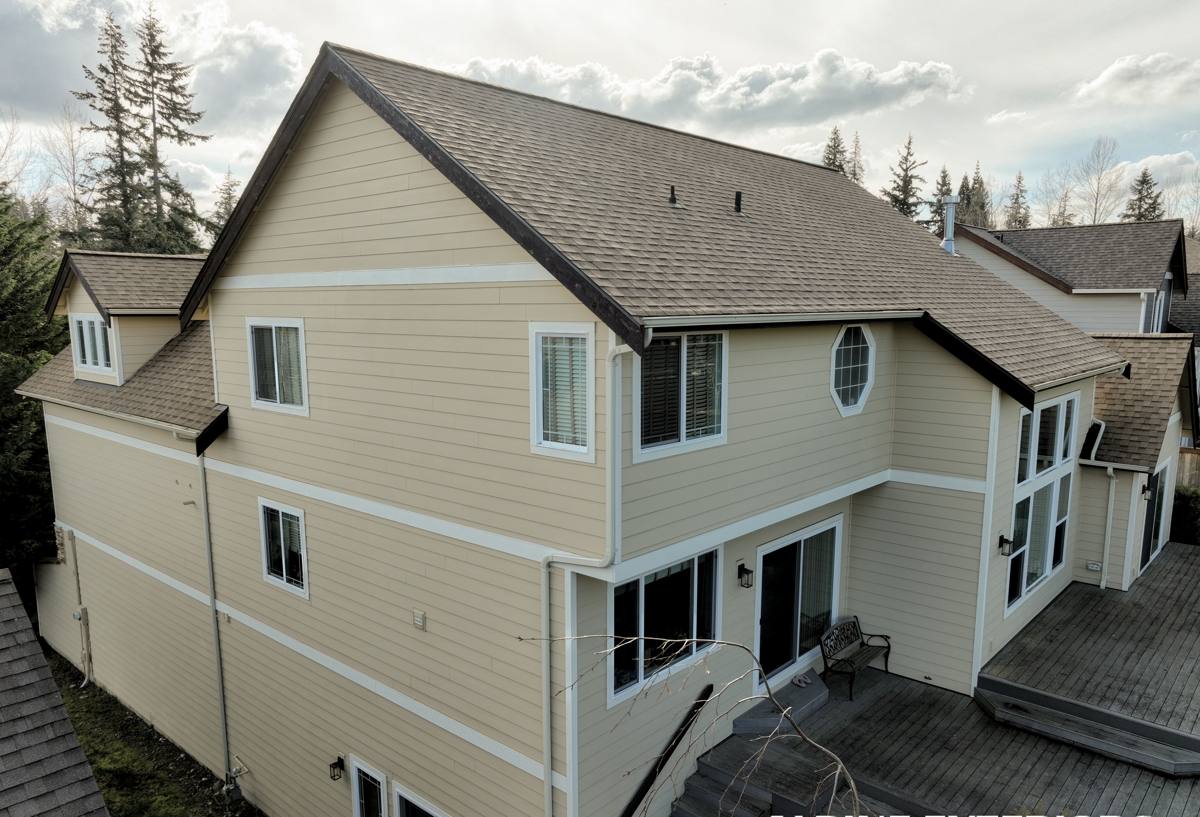
Repair or Replace? Reading the Signs
Not every tired-looking deck needs to come out. But in a climate that never fully dries a structure out for long, certain signs mean the framing itself is compromised, not just the surface.
- Soft or spongy spots when you walk the boards, especially near the house or stair landing
- A screwdriver or awl sinks easily into joists, the ledger board, or post bases
- Visible gaps, rust streaks, or daylight where the ledger meets the house siding or rim joist
- Deck posts that wobble, or footings that look like they're heaving or settling unevenly
- Moss or dark staining that keeps coming back within weeks of cleaning
- Railings that flex noticeably when leaned on
- The deck was built without visible flashing at the ledger, or the flashing has failed
If it's mostly surface graying or a few loose boards, refinishing or a partial board swap can be the honest answer. If the framing, posts, or ledger connection are involved, patching it is a short-term fix on a long-term moisture problem — and in this climate, that problem comes back.
What a Correct Deck Replacement Actually Involves
A deck replacement is a chance to fix everything the original build got wrong, not just install new boards over the same structure. In a high-rainfall region, a few details matter more here than they would in a drier climate.
Ledger Board and Flashing
The connection between the deck and the house is the single most common failure point we see. It has to include proper flashing that sheds water away from the house framing, not just caulk or a construction adhesive standing in for it. This detail alone determines whether water gets behind your siding and into the rim joist over the next decade.
Footings and Posts
Footings need to sit below frost depth and bear on solid, undisturbed soil — not just a form poured into loose fill. Post bases should hold the post above the deck surface and off standing water, with a positive connection that resists uplift, not just gravity.
Joists and Framing Hardware
Joist hangers, screws, and structural fasteners need to be rated for exterior and, where applicable, treated-lumber contact — mismatched hardware corrodes quietly and is one of the more common causes of hidden structural failure.
Drainage and Airflow
Board spacing, ground clearance, and grading under the deck all affect how fast the structure dries out between rain events. A deck that never gets airflow underneath stays damp longer and grows moss and mildew faster, regardless of what the decking surface is made of.
Decking Material Options for This Climate
There's no single "best" decking material — there's a best fit for your budget, your maintenance appetite, and how much sun or shade the deck actually gets. Here's how the common options compare for a wet, moss-prone climate like ours.
| Material | Upfront Cost | Maintenance | Moisture & Moss Behavior | Typical Lifespan |
|---|---|---|---|---|
| Pressure-treated wood | Lowest | Annual cleaning, periodic sealing/staining | Absorbs moisture; needs airflow and upkeep to resist rot and moss | 10–15 years |
| Cedar | Moderate | Regular sealing to hold color and resist decay | Naturally decay-resistant but still needs drying time and care in shade | 15–20 years |
| Capped composite | Higher | Occasional washing; no staining or sealing | Sheds water well; some early composite products without a full cap can hold moisture at cut edges | 25–30 years |
| PVC decking | Highest | Occasional washing | Doesn't absorb moisture, so it resists rot and moss growth the best of the group | 25–30+ years |
We don't push one material on every homeowner. A well-built wood deck that gets sun and regular care can serve a family for well over a decade. Where we steer people away from certain older-style composite boards is simple: if the product doesn't fully wrap the core, cut ends and screw holes become moisture entry points, and in a climate that stays wet as long as ours does, that shortens the useful life of the deck. That's a maintenance and moisture-behavior tradeoff, not a knock on any manufacturer.
Permits, Setbacks, and Code Requirements
Most deck replacements in Whatcom County require a building permit, particularly when framing, footings, or attachment to the house is being redone rather than just the surface boards. Guardrail height, baluster spacing, and stair rise-and-run all have to meet current code, even if the deck being replaced was built under older rules. Skipping the permit might save time up front, but it can create real problems at resale or insurance time, and it removes the inspection step that catches framing mistakes before they're covered up. We pull the required permits and build to current code as part of the job, not as an add-on.
Our Deck Replacement Process
- On-site assessment — we check the framing, ledger connection, footings, and posts, not just the visible decking, to determine what's actually driving the deck's condition.
- Honest scope and estimate — you get a clear picture of what needs full replacement versus what can be reused, and what that means for cost.
- Permit and material selection — we handle permitting and walk you through decking material tradeoffs based on your budget and how much sun or shade the space gets.
- Tear-out and structural rebuild — old decking, framing, and any compromised posts or footings come out; ledger flashing, joists, and hardware go in correctly the first time.
- Decking, railing, and stairs installed — to code, with attention to board spacing and drainage so the finished deck actually dries between storms.
- Final walkthrough — we go over care and maintenance specific to the material you chose so you know what upkeep, if any, is ahead of you.
Keeping a New Deck Ahead of the Moss
Even the best-built deck benefits from a little seasonal attention in this climate. A few habits go a long way toward protecting the investment:
- Sweep leaves and debris off the deck regularly in fall, especially between boards where moisture collects
- Rinse or lightly scrub shaded, north-facing areas where moss tends to establish first
- Keep gutters and downspouts clear so runoff isn't dumping directly onto or under the deck
- Check that vegetation isn't crowding the deck edge and blocking airflow underneath
- For wood decks, plan on resealing or staining on the manufacturer's recommended cycle, not just when it looks faded
Why Hiring a Crew That Already Works in Lynden Matters
A deck built for coastal California or the dry side of the state isn't built for what Lynden's winters actually do to a structure. Contractors who work this area regularly already know which ledger details fail first in our rain, which footing depths hold up through our freeze-thaw cycles, and which decking products handle long shaded, damp stretches without turning green by the second summer. That local pattern recognition is the difference between a deck that needs attention again in five years and one that's still solid in twenty. We also know the permitting expectations for Whatcom County jobs, which keeps the project moving instead of stalling on paperwork.
Get a Straight Answer About Your Deck
If your deck is showing soft spots, persistent moss, or a ledger connection you're not sure about, it's worth a second look before another wet season goes by. We offer free, no-pressure estimates for deck replacement in Lynden and the surrounding area — fill out the form below and we'll take a straightforward look at what your deck actually needs.