 Semiahmoo Siding
 Bellingham and Semiahmoo Sit in a Tough Climate for Exterior Materials
Homes around Bellingham and Semiahmoo face a combination of weather stresses that most siding products were never designed to handle well over the long haul. This stretch of Whatcom County sits close enough to Semiahmoo Bay, Drayton Harbor, and the Strait of Georgia that salt-laden air is a routine part of the environment, not an occasional event. Add in the driving, wind-pushed rain that rolls off the water during fall and winter storms, and a wet season that stretches for months on end, and you have conditions that will find every weak point in an exterior over time.
We've worked on homes throughout this area long enough to see the pattern repeat: siding that looked fine going into its first few winters starts showing swelling, staining, or soft spots by year six or seven if it wasn't matched to this climate. That's not bad luck — it's physics. Material choice and installation quality matter more here than in drier parts of the state, and it's the reason we've narrowed our siding offering to one product system rather than selling whatever's cheapest to install.
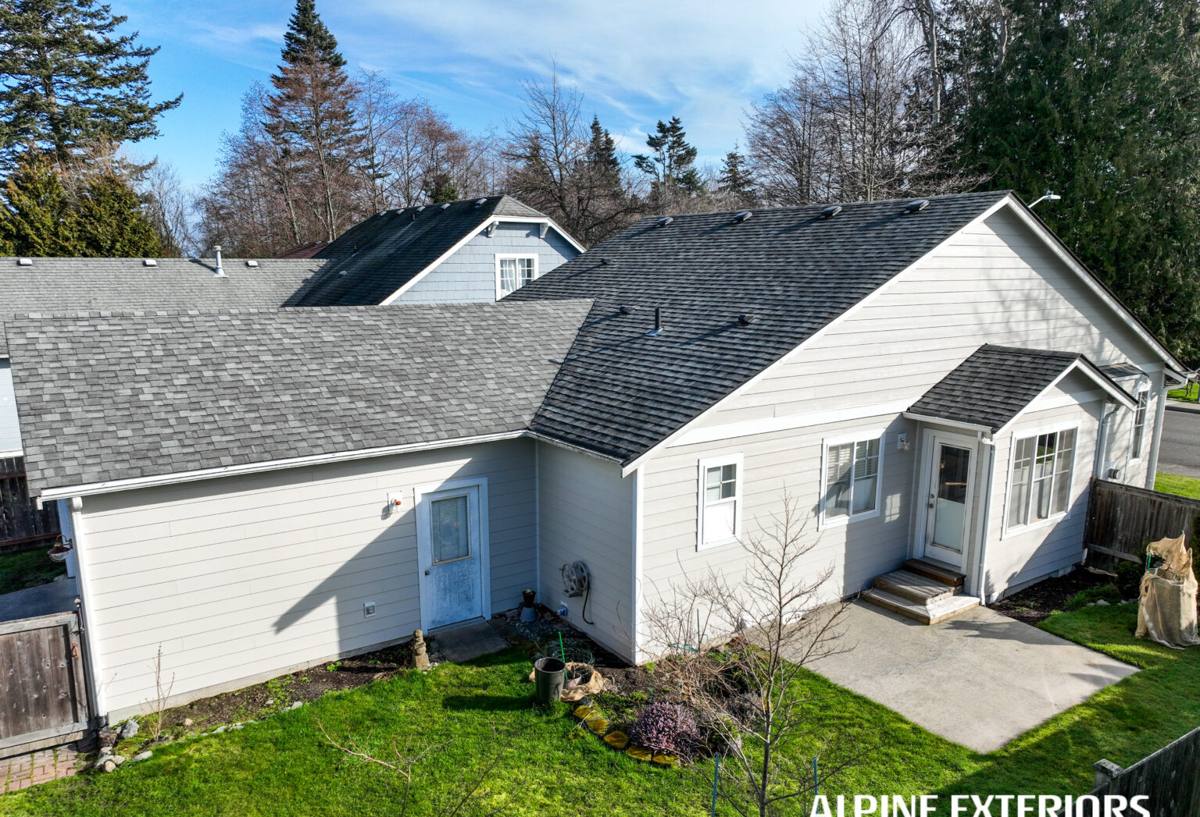
What Salt Air, Rain, and Moss Actually Do to a House
Salt Air and Corrosion
Proximity to saltwater means airborne salt settles on exterior surfaces and fasteners. Over years, this accelerates corrosion on unprotected metal trim, fasteners, and flashing, and it can degrade certain paint and coating systems faster than manufacturers' standard warranties assume. Materials and hardware need to be chosen with this in mind, not treated as an afterthought.
Driving, Wind-Driven Rain
Bellingham doesn't just get a lot of rain — a good share of it arrives sideways during winter windstorms. Wind-driven rain pushes water into laps, seams, and butt joints that would stay dry in a calmer climate. Any siding product that relies on paint film alone to keep water out, rather than a material that tolerates moisture without breaking down, is working against the odds here.
The Long Moss and Algae Season
Whatcom County's combination of moisture, mild temperatures, and tree cover means moss, algae, and mildew have a long growing season on north-facing and shaded walls. Porous or wood-based siding gives these organisms something to root into. Left unaddressed, sustained moisture and organic growth soften wood fiber and open the door to rot underneath.
Why We Standardized on James Hardie Fiber Cement
After years of exterior work in this climate, we made a deliberate decision: we install James Hardie fiber cement siding exclusively. We don't offer vinyl, LP SmartSide, Cemplank, Allura, primed spruce, or cedar as options, even though all of them have a place in the broader market. Here's the honest reasoning behind that call.
Fiber Cement Doesn't Feed Rot
James Hardie siding is made from cement, sand, and cellulose fibers — there's no wood substrate for moisture to soak into and no organic material for fungus to break down. In a climate where wood-based siding products are fighting moisture intrusion from day one, that's a fundamental advantage, not a marketing point.
Non-Combustible
Fiber cement is non-combustible, which matters increasingly to insurers and to homeowners thinking about wildfire exposure across the broader Pacific Northwest, even in a coastal county like Whatcom.
ColorPlus Factory Finish
Hardie's ColorPlus finish is baked on at the factory under controlled conditions, rather than field-painted on site. That finish is engineered to resist fading and hold up against UV and moisture cycling, and it comes with its own finish warranty separate from the substrate warranty. Field-applied paint on any siding material is only as good as the weather conditions and prep work on the day it's applied — factory finishing removes that variable.
HZ5 Climate-Engineered Formulation
James Hardie makes region-specific product formulations, and the HZ5 line is engineered for climates with prolonged moisture exposure and freeze-thaw cycling — a good match for what Whatcom County winters actually deliver. That's a meaningfully different approach than a single generic siding product marketed the same way in Arizona and Washington.
Warranty Backing
James Hardie backs its siding with a long, transferable limited warranty, which matters both for your own peace of mind and for resale value if you sell the home down the line.
What We Don't Install, and the Trade-Offs Involved
We don't think less of homeowners who've chosen these products elsewhere — they're legitimate materials with real advantages. But given what this specific climate does to a house, here's how we weigh them against fiber cement.
| Material | What It Gets Right | Why We Don't Install It Here |
|---|---|---|
| Vinyl Siding | Low upfront cost, no painting required | Can warp or crack in temperature swings and impacts; seams and laps are more exposed to wind-driven rain intrusion; not repairable in sections the way fiber cement is |
| LP SmartSide | Engineered wood, lighter and easier to install than fiber cement | Still wood-based — more vulnerable to prolonged moisture and edge swelling than cement-based siding in a wet marine climate |
| Cemplank / Allura | Also fiber cement, generally lower cost than Hardie | We standardized on one manufacturer's engineering, finish system, and warranty structure to keep quality consistent and installation crews deeply practiced on a single product |
| Primed Spruce / Cedar | Natural material, classic look, renewable | Requires ongoing repainting and sealing to keep water out; highest long-term maintenance burden in a climate with this much sustained moisture and moss pressure |
Beyond Siding: Roofing, Windows, and Decks in This Climate
Siding doesn't work in isolation — it's one part of a building envelope that has to shed water and resist moss and rot together. We also handle roofing, windows, and decks, and we think about all four the same way:
- Roofing: Proper flashing details and moss-resistant roofing choices matter as much here as material selection, given the shaded, damp conditions many Bellingham lots sit in.
- Windows: Correct flashing and sealing at window openings is one of the most common failure points for water intrusion behind siding — it has to be done right whether we're re-siding around existing windows or replacing them.
- Decks: Outdoor structures take the same salt air and driving rain exposure as siding, and ledger board and fastener corrosion resistance are worth getting right the first time.
Handling all four trades under one roof means fewer handoff gaps between contractors and a crew that's thinking about the whole envelope, not just one component.
Why a Local Crew Matters Here
Installation quality determines how well any siding system performs, and that's especially true for fiber cement, which has specific requirements around fastening, flashing, and joint treatment. A crew that works this region regularly understands the wind and rain exposure specific to Semiahmoo Bay-adjacent properties, knows how shaded, moss-prone walls need to be detailed differently than open, sun-exposed ones, and isn't guessing at how the local climate behaves. That local knowledge shows up in the details — how laps are flapped, how caulking is used, how flashing integrates with trim — details that separate an installation that lasts twenty-plus years from one that starts failing in five.
What to Expect From Our Process
- Free on-site assessment of your current siding, trim, and any moisture or moss issues
- Honest evaluation of whether repair, partial replacement, or full re-siding makes sense
- Written estimate detailing product line, color, and scope — no vague allowances
- Proper prep work: removal of failing material, inspection and repair of sheathing and weather barrier underneath
- Installation to James Hardie's specifications for fastening, clearances, and flashing
- Final walkthrough before we consider the job finished
What Drives the Cost of a Siding Project Here
| Factor | Why It Matters |
|---|---|
| Home size and wall complexity | More corners, dormers, and trim details mean more labor and material cuts |
| Condition of existing sheathing | Hidden rot or moisture damage found during tear-off adds repair scope |
| Siding profile and color | Lap width, shingle-style panels, and ColorPlus color selection affect material cost |
| Access and site conditions | Steep lots, limited access, or mature landscaping can affect labor time |
| Scope beyond siding | Bundling window, trim, or deck work into the same project can improve overall efficiency |
We won't quote a number without seeing the house — anyone who does is guessing. What we can tell you honestly is that fiber cement typically costs more upfront than vinyl and often more than engineered wood, and that the trade-off is a longer service life and lower long-term maintenance in a climate that is genuinely hard on exteriors.
A Straightforward Recommendation
If you own a home in Bellingham or Semiahmoo and you're weighing siding, roofing, window, or deck work, our honest advice is to prioritize materials and installation practices built for sustained moisture, salt exposure, and moss pressure — because that's what this climate delivers every year, not just in an unusually wet one. That's the whole reason we put James Hardie fiber cement on homes instead of the alternatives.
If you'd like a second opinion on your current exterior or you're ready to plan a project, we're happy to take a look and walk you through what we see — no pressure, no obligation. Use the form below to request a free estimate.