 Semiahmoo Siding
 Sumas Homes Face a Specific Kind of Weather
Sumas sits at the edge of Whatcom County, in the low-lying floor of the Nooksack Valley near the Canadian border. It's a different exposure than the coastal towns to the west, but the exterior of a house in Sumas takes a beating in its own way. The valley collects moisture. Storms roll in off the Pacific, dump their rain on the way over the Cascades' foothills, and the flat terrain around Sumas doesn't drain the way a hillside would. Add in the salt-laden air that pushes inland from the Strait of Georgia on windy days, and you've got a combination that's rough on almost every exterior building material homeowners consider.
Then there's moss season, which in this part of Washington isn't really a season at all — it's most of the year. Cool temperatures, shade from mature trees, and near-constant dampness give moss, algae, and mildew everything they need to take hold on siding, trim, and roofing. Homes that don't get regular attention can go from clean to visibly green in a surprisingly short time.
We work throughout Whatcom County, and Sumas is part of our regular service area. We know what this climate does to a house over ten, twenty, thirty years, and we build our recommendations around that reality rather than around whatever's cheapest at the yard.
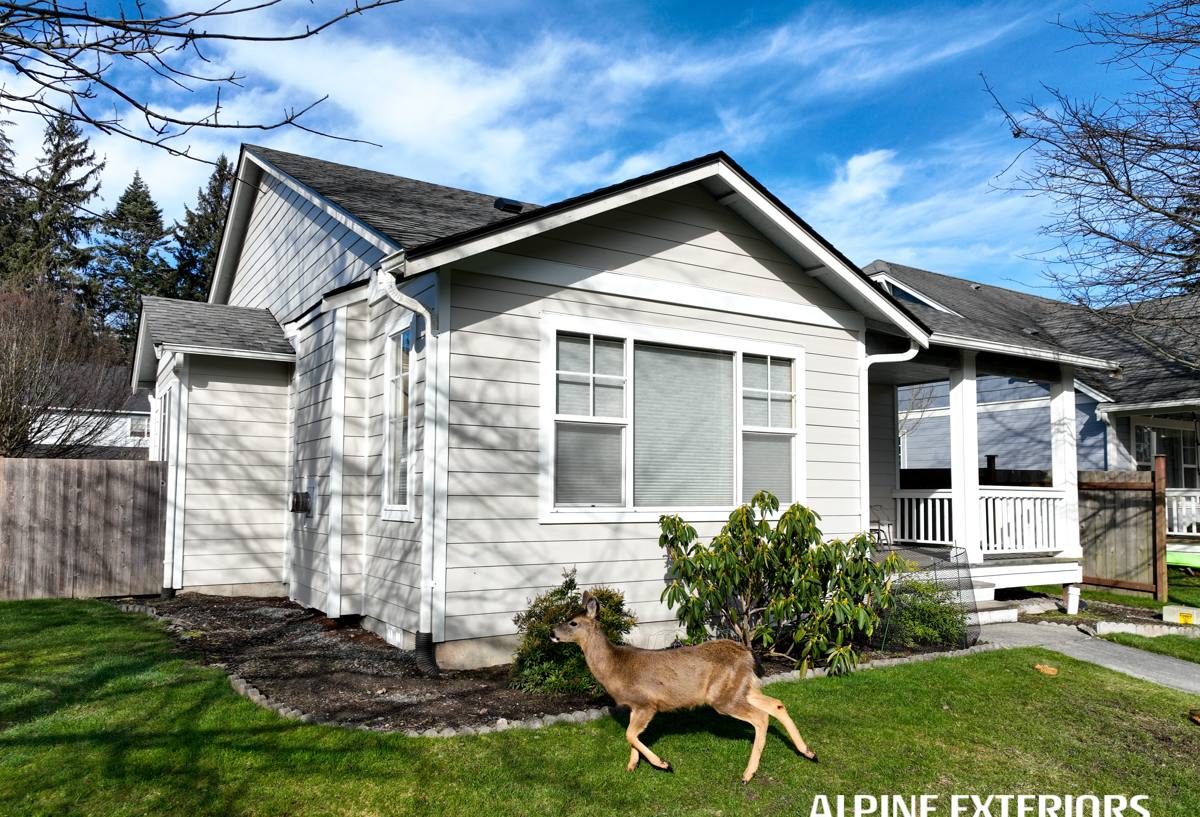
What Driving Rain and Moss Actually Do to a House
Driving rain isn't just rain that falls straight down — wind pushes it sideways into seams, laps, and fastener points that were never designed to handle water hitting them at an angle. Over time, that's how water finds its way behind siding, around window trim, and into the wall assembly itself. Once moisture gets behind the exterior cladding, it doesn't matter how good the material looks from the street. Rot, mold, and structural decay start where nobody's looking.
Moss and algae add a second layer of damage on top of that. They hold moisture against the surface of siding and roofing longer than it would otherwise sit there, which accelerates whatever breakdown is already happening. On wood-based products, that means faster rot. On some fiber cement competitors and engineered wood products, it means surface degradation, edge swelling, or finish failure. On a roof, moss works its way under shingles and lifts them, creating new paths for water to get in.
Why This Matters More in Sumas Than in Drier Climates
In a dry climate, a marginal installation or a lower-grade material can go decades without showing its weaknesses. Here, the weather finds every shortcut. A poorly flashed window, a siding product that wasn't rated for constant moisture exposure, a roof installed without proper ventilation — all of it shows up faster in Whatcom County than it would somewhere with a drier annual pattern. That's the honest reason material choice and installation quality matter more here than in a lot of the country.
Why We Install Only James Hardie Fiber Cement Siding
We get asked why we don't offer vinyl, LP SmartSide, or other engineered wood siding products, and it's a fair question — those products have a place in the market and plenty of contractors install them well. Our answer is specific to what we see in this climate, not a knock on any manufacturer.
Vinyl siding is affordable and low-maintenance in a general sense, but it's a thin plastic product that can warp, crack in cold snaps, and fade under UV exposure. It also relies heavily on a tight, well-executed installation to keep wind-driven rain from getting behind it — and once water is behind vinyl, there's often no good way to know until damage shows up. Engineered wood products like LP SmartSide use wood strand technology with a resin binder, which performs well when maintained but is still a wood-based product at its core — meaning it's more vulnerable to sustained moisture exposure than fiber cement if caulking, paint, or flashing details lapse over the years.
James Hardie fiber cement is a cement-based composite, not wood and not plastic. It doesn't rot, it's not attractive to pests, and it's non-combustible — a real consideration for wildfire-adjacent regions of Washington. Hardie's ColorPlus factory-applied finish is baked on under controlled conditions, which gives it more consistent, longer-lasting color than field-applied paint. And Hardie engineers specific product lines (their HZ5 designation, for example) for exactly the kind of wet, temperate climate Whatcom County sits in.
None of that means Hardie is maintenance-free or bulletproof — it still needs to be installed correctly, caulked properly, and painted or refinished eventually if you choose a non-ColorPlus option. But it gives us a product we're comfortable standing behind for the specific conditions Sumas homes deal with, backed by a strong transferable warranty. That's why, several years ago, we standardized on it and stopped installing the alternatives.
Beyond Siding: Roofing, Windows, and Decks
Siding doesn't work in isolation — it's one piece of a home's exterior envelope, and the same driving rain and moss pressure that affects siding affects the roof, windows, and any exterior decking.
Roofing
A roof in this climate needs proper underlayment, ventilation, and flashing details at every penetration — chimneys, vents, valleys — because that's where the majority of leaks start. Moss control matters here too; a roof that's allowed to stay mossy for years will show premature wear at the shingle edges and around fasteners.
Windows
Window failures in wet climates are almost always installation failures, not product failures. Flashing that directs water away from the rough opening, proper sealant at the right joints, and correct integration with the siding plane are what keep water out over the long run. We coordinate window replacement with siding work specifically so those transitions get done right the first time.
Decks
Exterior decks take direct exposure to rain, standing moisture, and moss growth on horizontal surfaces where water doesn't run off as quickly as it does on a wall. Material choice, proper spacing for drainage, and ledger flashing where the deck meets the house are the details that determine whether a deck lasts or starts failing within a few years.
What to Expect From a Local Crew
Hiring locally isn't just a feel-good preference — it has practical effects on the quality of the work.
| Factor | Local Whatcom County Crew | Out-of-Area Contractor |
|---|---|---|
| Familiarity with regional moisture patterns | Built into daily practice | Often generic, one-size-fits-all approach |
| Response time for warranty or punch-list items | Same region, quick turnaround | May require travel, longer delays |
| Knowledge of local permitting | Established relationships | Learning curve on each new jurisdiction |
| Accountability over time | Reputation is local and ongoing | May not be reachable years later |
A crew that works this region every week knows which details matter most — how tight to keep siding laps, where extra flashing pays off, which north-facing walls need extra moss-resistant detailing. That knowledge doesn't come from a manual; it comes from seeing what fails and what holds up, year after year, in this specific weather.
Cost Factors for a Siding Project in Sumas
Every home is different, but the major cost drivers on a siding project are fairly consistent. We always provide a written, itemized estimate before any work starts — no surprise charges added mid-project.
| Cost Factor | What Drives It Up or Down |
|---|---|
| Home size and wall complexity | More corners, gables, and dormers mean more cutting and detail work |
| Existing siding removal | Tear-off adds labor; some jobs allow install over existing sheathing after inspection |
| Moisture or rot repair | Hidden water damage found during tear-off requires sheathing or framing repair |
| Product line and finish | ColorPlus factory finish vs. field-painted options affects material cost |
| Trim and accessory work | Window trim, fascia, and corner detailing add to scope |
| Access and site conditions | Steep grades, tight lot lines, or limited equipment access affect labor time |
Maintenance That Actually Protects Your Investment
Even the best siding product benefits from basic upkeep, especially in a climate this wet. A short list of habits goes a long way:
- Rinse siding annually to remove moss, algae, and pollen buildup before it takes hold
- Trim back trees and shrubs so siding gets airflow and sunlight, which discourages moss growth
- Check and refresh caulking around windows, doors, and trim every few years
- Keep gutters clear so overflow doesn't run directly down exterior walls
- Walk the exterior once a year and look for cracked caulk, loose trim, or discoloration
- Address small issues — a gap, a loose board, a soft spot — before the next rainy season, not after
Signs It Might Be Time to Replace Your Siding
Homeowners often wait too long because siding damage isn't always obvious from the street. A few signs worth paying attention to:
- Soft or spongy spots when you press on the siding near the base of walls
- Persistent moss or algae staining that comes back within weeks of cleaning
- Visible warping, cracking, or separation at seams and corners
- Peeling or bubbling paint that keeps recurring in the same spots
- Rising energy bills that suggest the wall assembly isn't sealing the way it used to
Any one of these can be minor on its own, but together they usually point to moisture getting past the surface. Catching it early keeps a siding issue from becoming a framing issue.
Let's Take a Look at Your Home
If you're in Sumas or anywhere else in Whatcom County and you're weighing your options for siding, roofing, windows, or a deck, we're happy to come take a look and walk you through what we see — no pressure, no obligation. Use the form below to request a free estimate, and we'll give you a straight, honest read on where your home stands.