 Semiahmoo Siding
 Roof Replacement Built for Sumas Conditions
Sumas homeowners deal with a specific combination of weather that most national roofing companies never have to think twice about: long stretches of driving rain, a moss season that can run eight months out of the year, and marine air moving in off the Salish Sea that keeps everything just a little damp, a little longer, than most of the country ever experiences. A roof that's engineered for a dry climate — or even installed correctly but without local know-how — tends to show its age here faster than the manufacturer's brochure suggests. Roof replacement in this part of Whatcom County isn't just about swapping old shingles for new ones. It's about building a roof system that can shed water fast, resist moss colonization, and hold up to the kind of sustained moisture exposure that's just part of living here.
This page covers what a correct roof replacement looks like specifically for homes in and around Sumas — not a generic overview, but the details that actually matter when your roof has to survive a Pacific Northwest winter and everything after it.
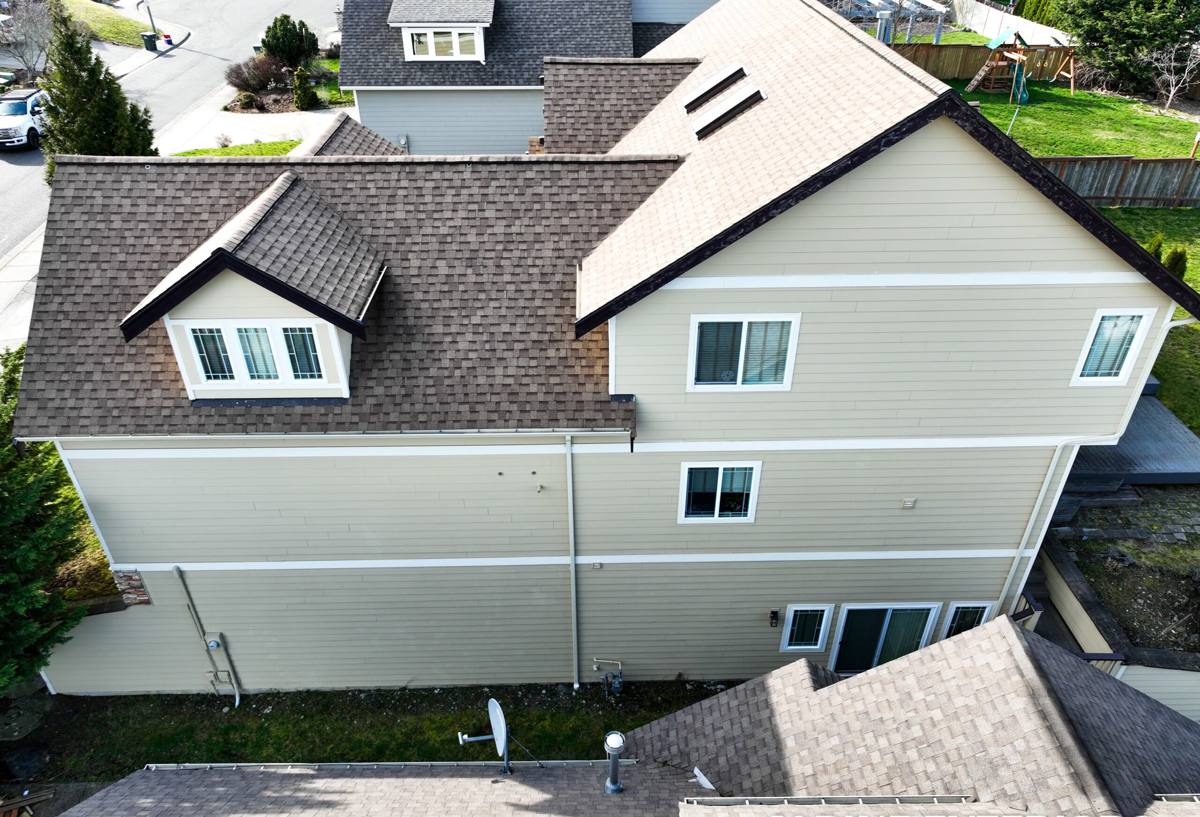
Why Sumas Roofs Wear Differently
Three climate factors do most of the damage to roofs in this area, and they compound each other:
Driving Rain and Wind-Driven Moisture
Rain in this region rarely falls straight down. Wind pushes it sideways and up under laps, flashing, and ridge caps that would stay dry in a calmer climate. A roof replacement here has to account for wind-driven rain at every transition point — valleys, chimney flashing, wall-to-roof intersections — not just the open field of the roof plane.
The Long Moss Season
Shade, moisture, and moderate temperatures are exactly what moss needs to establish itself, and Whatcom County offers all three for most of the year. Moss holds water against the roofing material, works its way under shingle tabs, and lifts granules and fasteners over time. Once moss gets a foothold, it accelerates every other form of wear happening underneath it.
Salt-Influenced Marine Air
Proximity to Puget Sound and the Salish Sea means metal components — flashing, fasteners, vents, gutters — are exposed to airborne salt that speeds up corrosion compared to inland climates. Fastener quality and metal selection matter more here than in drier, saltier-free parts of the state.
| Climate Factor | What It Does to a Roof | What a Correct Install Does About It |
|---|---|---|
| Driving rain | Forces water under laps and flashing | Proper underlayment overlap, sealed flashing details, correct pitch transitions |
| Moss growth | Traps moisture, lifts shingles, clogs valleys | Zinc or copper strips, ventilation design, material selection resistant to organic growth |
| Salt air | Corrodes fasteners and metal flashing | Corrosion-resistant fastener and flashing specification |
| Temperature swings | Expansion and contraction stress on seams | Proper fastening pattern, quality underlayment, correct nail placement |
What a Correct Roof Replacement Actually Involves
A roof replacement is more than tear-off and re-cover. Done right, it's a full system replacement, and every layer matters as much as the visible shingle or panel on top.
Tear-Off and Deck Inspection
Old roofing comes off down to the deck so the sheathing underneath can actually be inspected — not guessed at. Moisture-related rot, soft spots, and delaminated plywood or OSB get identified and replaced before anything new goes down. Skipping this step and roofing over a compromised deck is one of the most common shortcuts in the trade, and it's the one that causes the most expensive problems years later.
Underlayment Selection
In a climate with this much sustained rain, underlayment isn't a formality — it's the roof's actual water barrier if anything gets past the surface material. Synthetic underlayments generally outperform old-style felt in wet climates because they resist tearing and hold up better to moisture exposure during the install window itself, which matters when you're working around Whatcom County weather.
Ice and Water Barrier at Vulnerable Points
Valleys, eaves, and areas around chimneys and skylights get additional self-adhering membrane protection. These are the spots where water concentrates and where a standard underlayment alone isn't enough insurance against driving rain and ice buildup during cold snaps.
Flashing Detail Work
Flashing is where most roof leaks actually originate — not out in the open field of the roof. Step flashing at wall intersections, counter-flashing at chimneys, and properly lapped valley flashing all have to be done in the correct sequence with the underlayment and roofing material, not caulked together as an afterthought.
Ventilation
Proper intake and exhaust ventilation keeps the attic space at a temperature and humidity level that discourages condensation and helps the roof deck dry out between rain events. Poor ventilation traps moisture against the underside of the deck, which shortens the life of everything above it regardless of how good the shingles are.
Fastening and Material Installation
Correct nail placement, count, and pattern — following the manufacturer's specification exactly — is what keeps a roof attached in wind and prevents premature granule loss and shingle lifting. This is a step that's easy to rush and hard to inspect after the fact, which is exactly why it matters who's doing the work.
Material Considerations for This Area
There's no single "best" roofing material for every home — it depends on the roof's pitch, the home's structure, budget, and how much maintenance the homeowner wants to take on. That said, a few things matter more here than they would in a drier climate:
- Algae-resistant shingle products reduce (though don't eliminate) moss and algae staining over time
- Metal flashing components should be corrosion-resistant given the marine air influence
- Steeper roof pitches shed water and moss debris faster than low-slope sections, which affects maintenance frequency
- Darker roofing materials can mask algae staining longer, which is a cosmetic factor some homeowners weigh
- Ventilation upgrades are often worth bundling into a replacement rather than treated as a separate project later
Our Process for a Sumas Roof Replacement
We approach every roof replacement in this area the same structured way, because skipping steps is where problems start.
1. On-Site Assessment
We walk the roof, check the attic where accessible, and look at ventilation, flashing condition, and any visible signs of moisture intrusion or moss buildup before we recommend anything.
2. Honest Scope and Written Estimate
You get a clear, written scope of work and cost estimate before anything is scheduled — no verbal promises, no vague allowances. If deck repair turns out to be needed once tear-off starts, we tell you before proceeding, not after the invoice arrives.
3. Tear-Off and Deck Repair
Old material comes off, the deck gets inspected, and any needed repairs happen before new underlayment goes down.
4. Underlayment, Flashing, and Ventilation Install
These layers go in following manufacturer specifications and proper sequencing at every transition and penetration point.
5. Roofing Material Installation
Final material goes down with correct fastening patterns and attention to the details — valleys, ridges, and edges — that determine how the roof performs over the next 20-plus years.
6. Final Walkthrough
We walk the finished roof with you, confirm the site is cleaned up, and go over any maintenance recommendations specific to your home and its exposure.
Signs a Sumas Home Needs a Roof Replacement Soon
- Granules collecting in gutters or at downspout outlets
- Moss visibly established on multiple slopes, not just shaded edges
- Shingles that are curling, cupping, or losing their tab edges
- Daylight visible through the roof deck from inside the attic
- Soft or spongy spots when walking the roof
- Interior ceiling stains that reappear after heavy rain
- A roof approaching or past its material's expected service life
Why a Local Crew Matters for This Job
A roof replacement is a large, mostly one-time investment, and the difference between a correct install and a rushed one usually doesn't show up until years later — often after the workmanship warranty period on a job done by someone who isn't local anymore. A crew that actually works in Whatcom County day to day has already seen how moss re-establishes itself on different pitches, which flashing details fail first under sustained wind-driven rain, and which corners get cut by installers who don't have to answer for their work in this specific climate. That local track record is worth more than a slightly lower bid from a crew that's just passing through.
Working locally also means we're accountable after the job is done. If a question comes up during the next wet season, we're not a phone number in another state — we're down the road.
Get a Straight Answer About Your Roof
If your roof is showing wear, dealing with persistent moss, or simply getting close to the end of its expected life, it's worth getting an honest, no-pressure assessment before problems get more expensive. Fill out the form below and we'll take a look and give you a clear picture of where things stand and what your options are.