 Semiahmoo Siding
 Exterior Work Built for Semiahmoo's Waterfront Exposure
Semiahmoo Resort sits on a narrow spit reaching out into Semiahmoo Bay, with Drayton Harbor on one side and open water on the other — about as exposed a piece of real estate as you'll find in Whatcom County. Homes here don't face the same weather as a house ten miles inland in Blaine or Ferndale. They face wind coming straight off the water, salt-laden air that settles on every exterior surface, and a marine layer that keeps things damp for a good chunk of the year. Add in the long stretch of grey, wet months typical of northwest Washington, and you've got an exterior that's under constant, low-grade attack from moisture and salt even when nothing dramatic is happening weather-wise.
We work throughout Whatcom County, and Semiahmoo is one of the areas where we're most careful about material choice and installation detail — because the margin for error is smaller here. A siding or roofing job that would hold up fine in a more sheltered location can fail early on a spit exposed to wind-driven rain and salt spray. That's the lens we bring to every estimate in this area.
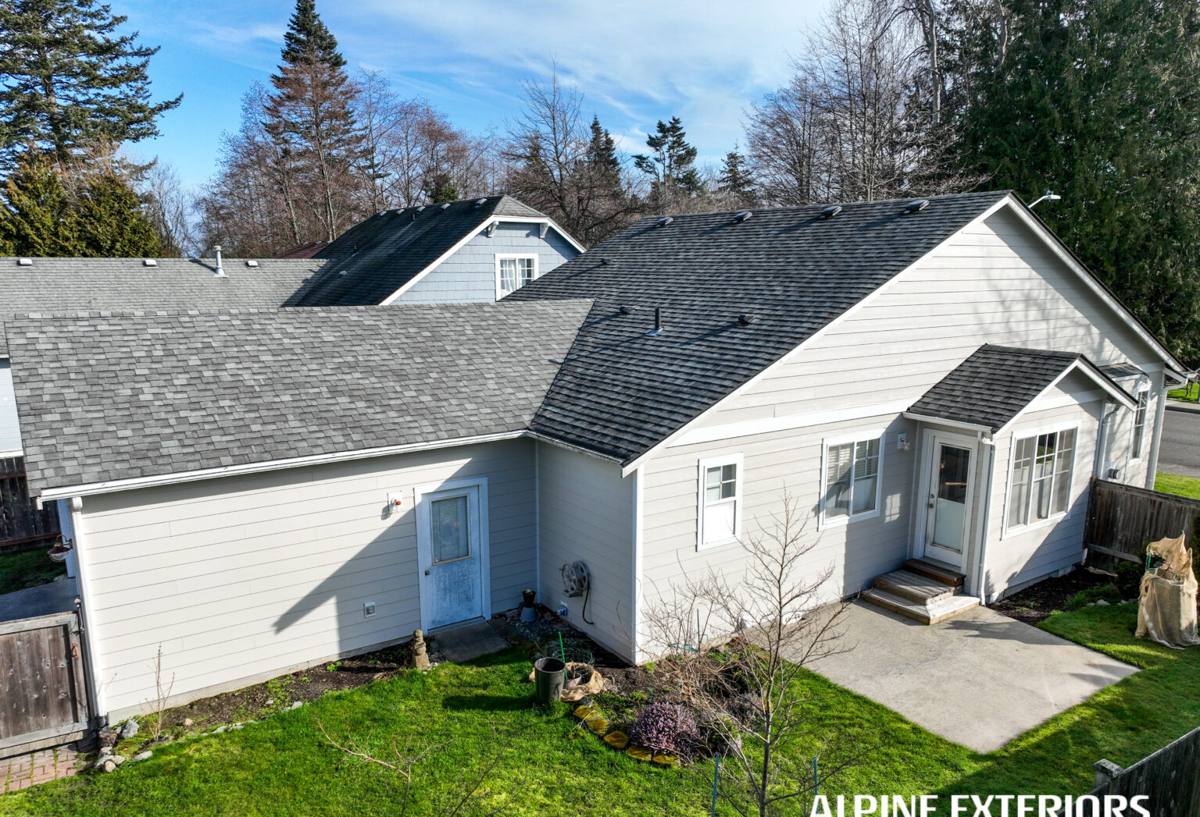
What the Semiahmoo Climate Actually Does to a House
Salt Air and Metal Fatigue
Salt in the air isn't just a coastal cliché — it's a chemical reality that accelerates corrosion on fasteners, flashing, gutters, and any exposed metal trim. Over years, this shows up as rust streaking, pitted hardware, and premature failure of components that would otherwise last decades. It also interacts with certain siding materials in ways that shorten their working life, particularly anything with exposed wood grain or a finish that isn't fully sealed against moisture intrusion.
Driving Rain and Wind-Driven Moisture
Rain in an exposed waterfront location rarely falls straight down. Wind pushes it sideways, into joints, laps, and seams that a more sheltered home would rarely test. This is where installation quality matters as much as the product itself — proper flashing, correct lap direction, and sealed penetrations are the difference between a wall system that sheds water and one that slowly lets it in behind the siding.
Moss, Algae, and the Long Wet Season
Whatcom County's wet season runs long, and a shaded, north-facing wall near the water can stay damp for weeks at a stretch. That's ideal growing conditions for moss and algae, which hold moisture against the surface and, on porous or untreated materials, can contribute to premature wear. Roofs are especially vulnerable, but siding, deck boards, and trim all show the same pattern if they're not built and finished to resist it.
Why We Install Only James Hardie Fiber Cement Siding
We made a deliberate decision to install James Hardie fiber cement exclusively, and it's not a marketing position — it's a response to what we've seen happen to other materials in exactly this kind of marine environment. We don't install vinyl, LP SmartSide, Cemplank, Allura, primed spruce, or cedar, and we think homeowners deserve an honest explanation of why, especially in a place as exposed as Semiahmoo.
Vinyl
Vinyl is affordable and low-maintenance in mild conditions, but it's a thin plastic product that can warp, crack, or become brittle under repeated wind loading and temperature swings — both things a waterfront property deals with more than most. Salt exposure doesn't help its long-term appearance either.
Wood-Based and Engineered Wood Siding (LP SmartSide, primed spruce, cedar)
Wood and engineered wood products can look great and perform well when maintained diligently, but they depend on an intact factory or field-applied coating to keep moisture out. In a location with near-constant humidity and salt air, any gap in that coating — a scratch, a poorly sealed cut edge, a fastener that backed out — becomes an entry point for moisture, and from there, rot and swelling follow. Cedar in particular needs regular refinishing to hold up here, which is a real ongoing cost homeowners should factor in.
Other Fiber Cement Brands (Cemplank, Allura)
These are legitimate fiber cement products and share Hardie's basic non-combustible, moisture-resistant chemistry. Our decision to standardize on Hardie comes down to their engineered HZ product lines (built for specific climate zones), the factory-applied ColorPlus finish, and the depth of their installation and warranty documentation — consistency we can stand behind on every job rather than mixing standards across brands.
Why Hardie Fits This Location
James Hardie fiber cement is non-combustible, dimensionally stable, and doesn't feed the moss and algae growth that plagues organic materials in shaded, damp conditions. The ColorPlus factory finish is baked on and warrantied against fading and peeling, which matters a lot when a home is taking direct salt spray and UV off open water. And Hardie's HZ5 product line is specifically engineered for cold, wet climates — a good match for a spit that gets the worst of what Whatcom County weather can offer.
| Material | Salt Air Resistance | Moisture Behavior | Maintenance in This Climate |
|---|---|---|---|
| James Hardie Fiber Cement | Strong — non-combustible, factory-sealed | Dimensionally stable, doesn't rot | Occasional wash; no refinishing |
| Vinyl | Fair — can chalk, fade, become brittle | Can warp under wind/heat cycling | Low, but limited repair options |
| Cedar / Primed Wood | Poor without diligent upkeep | Rot risk if coating fails | Regular refinishing required |
| Other Fiber Cement | Good — similar base chemistry | Stable | Low, brand-dependent warranty depth |
Roofing, Windows, and Decks in a Marine Environment
Roofing
A roof near open water takes wind uplift, driving rain, and salt exposure all at once. We pay close attention to underlayment quality, flashing at every penetration and valley, and fastener corrosion resistance — the small details that determine whether a roof holds up through Whatcom County's storm season or starts leaking at the first hard blow off the bay.
Windows
Window failures in this kind of location are almost always about the seal, not the glass. Flashing integration with the siding system, proper sill pan drainage, and corrosion-resistant hardware all matter more here than in a sheltered inland home. When we replace siding, we make sure window flashing is corrected as part of the job, not left to whatever was there before.
Decks
Decks near the water face the same moisture and salt exposure as siding, plus foot traffic and UV. Fastener choice, board spacing for drainage, and ledger flashing where the deck meets the house are the details that separate a deck that lasts from one that starts showing rot or rust within a few seasons.
What a Siding Project Looks Like Here
- On-site assessment of current siding, trim, flashing, and any moisture damage already present
- Check of window and door flashing integration, since siding replacement is the best window to correct these
- Material selection from Hardie's plank, shingle, or panel lines, with color chosen from the ColorPlus palette
- Removal of old siding and inspection of the sheathing underneath for hidden moisture damage
- Installation of house wrap or weather-resistive barrier appropriate for a marine exposure
- Hardie installation following manufacturer fastening and clearance specs, with attention to lap direction against prevailing wind
- Final flashing, caulking, and trim detail work at all penetrations
What to Check Before Hiring Anyone for Exterior Work Here
- Do they carry current Washington state contractor licensing and liability insurance?
- Can they explain their flashing and moisture-barrier approach specifically for a waterfront or marine-exposed home?
- Do they install to the manufacturer's documented fastening and clearance specs, not just "how it's always been done"?
- Will the siding warranty transfer if the home sells?
- Do they have local experience with homes actually exposed to salt air and driving rain, not just general regional work?
- Are they willing to walk you through why they recommend one material over another, rather than just quoting a price?
Cost Factors for Semiahmoo Projects
Every home and project is different, but a few factors consistently move the price on exterior work in this area: the extent of any hidden moisture damage found once old siding or roofing comes off, the complexity of the home's trim and window detailing, access difficulty on a spit lot, and the scope of flashing correction needed. We give straightforward, itemized estimates so you can see exactly what's driving the number rather than a single lump figure.
A Local Crew That Understands This Exposure
Working this stretch of Whatcom County means understanding that "coastal" isn't a general description here — it's a specific, demanding condition. A crew that mostly works inland can miss the details that matter on a property facing open water: the flashing laps, the fastener grade, the finish that has to survive salt spray year after year. We bring that understanding to every Semiahmoo estimate, along with straight answers about what a given material or approach will and won't hold up to.
If you're planning siding, roofing, window, or deck work on a Semiahmoo Resort property, we're happy to walk the exterior with you and give you a clear, no-pressure estimate — just fill out the form below to get started.