 Semiahmoo Siding
 Blaine Harbor Sits Right Where Wind, Salt, and Rain Meet a House
Blaine Harbor and the surrounding Semiahmoo shoreline get a version of Pacific Northwest weather that's a notch harder on a home's exterior than what you'd find a few miles inland. The harbor and Semiahmoo Bay put homes closer to open water, which means more salt-laden air moving across siding, trim, and roofing on a regular basis. Add the wind that comes with being near the water, the driving rain that Whatcom County sees for a good chunk of the year, and the shade and dampness that let moss get a foothold and stay, and you've got three climate stresses working on a house at the same time instead of just one.
None of this means a home near the harbor is doomed to constant repairs. It means the exterior materials and the installation details matter more here than they would in a drier, more sheltered part of the state. That's the lens we bring to every siding, roofing, window, and deck job we do for Blaine Harbor homeowners.
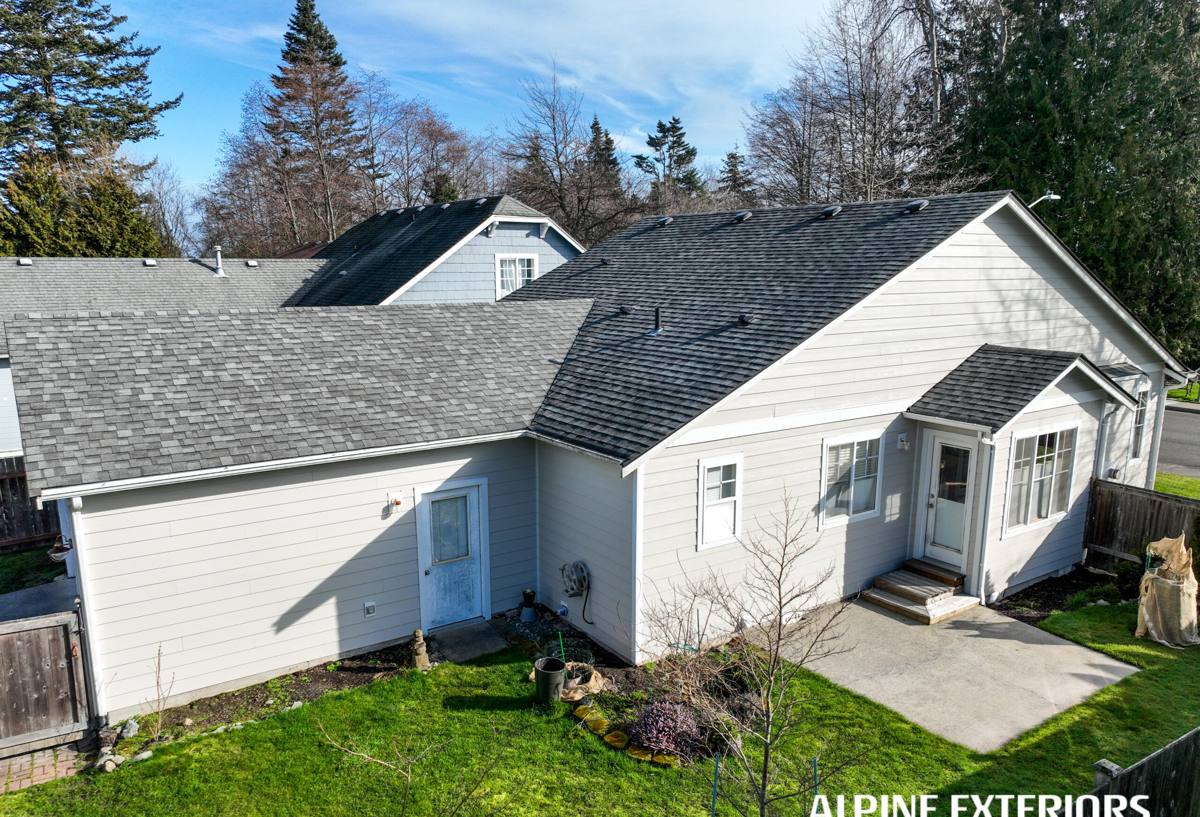
Why Salt Air Is Harder on Siding Than People Expect
Salt air doesn't have to come from waves crashing on your foundation to matter. Airborne salt travels on wind and settles as a fine residue on any exposed surface, including siding, fasteners, and trim. Over time that residue can accelerate corrosion of metal fasteners and flashing, and it can also just sit on a painted or coated surface and slowly break down the finish faster than it would break down inland.
What This Means for Material Choice
Materials that rely on a surface paint film for protection are the ones that show salt exposure fastest, because the paint film is exactly what's taking the hit. Once that film starts to chalk, fade, or crack, moisture and salt both get a more direct path to whatever's underneath. This is one of the biggest reasons we steer homeowners toward factory-applied finishes rather than field-applied paint for anything going on a home this close to the water.
What This Means for Fasteners and Metal Details
It's not just the siding panel itself. Nails, screws, flashing, and any exposed metal trim need to be rated for coastal exposure, or they'll corrode well before the siding around them shows its age. A lot of exterior failures near the water start at a corroded fastener or a piece of undersized flashing, not at the siding material.
Driving Rain and Wind-Driven Moisture
Whatcom County gets plenty of rain, but the harbor adds wind to that equation, and wind-driven rain behaves differently than rain falling straight down. It gets pushed sideways and upward into laps, seams, butt joints, and anywhere a wall penetration hasn't been flashed correctly. A siding system can look fine from the street and still be letting moisture behind the cladding if the water-resistive barrier, flashing, and caulking details weren't done right at installation.
Why the Wall Assembly Matters as Much as the Siding
Siding is the visible layer, but it's really the last piece of a wall assembly that includes a weather-resistive barrier, properly lapped and taped seams, correctly flashed windows and doors, and a drainage plane that lets any moisture that does get past the siding find its way back out instead of sitting against the sheathing. In a driving-rain climate like this one, cutting corners on those hidden layers is exactly what turns into rot and mold problems years down the road, well after the crew that did the shortcut is gone.
The Long Moss Season and What It Means for Maintenance
Shaded north- and east-facing walls, roof valleys, and anywhere air doesn't circulate well stay damp for extended stretches in this region, and that dampness is what moss and algae need to establish. Once moss gets going on a roof or on siding, it holds moisture against the surface even longer, which compounds the problem. On roofing, moss can lift shingles and shorten their life. On siding, algae and moss growth is mostly cosmetic, but it's also a signal that a surface is staying wet longer than it should, which is worth paying attention to.
Material and Design Choices That Help
Some of this comes down to landscaping and roof design, which isn't something a siding crew controls. But cladding choice matters too. Materials that absorb and hold moisture give algae and moss more to work with than materials that shed water and dry out quickly. Factory-applied, baked-on finishes also resist the kind of surface breakdown that gives spores something to grip.
Why We Only Install James Hardie Fiber Cement
We install James Hardie fiber cement siding exclusively. We don't install vinyl, LP SmartSide, Cemplank, Allura, primed spruce, or cedar, and that's a deliberate call, not a lack of options. Each of those alternatives has real strengths, but each also has a trade-off that becomes more of a liability in a coastal, high-moisture, high-wind climate like Blaine Harbor's, whether that's a wood-based product's sensitivity to sustained moisture, vinyl's tendency to warp or fade under UV and heat cycling, or a finish that depends on field-applied paint holding up against salt air for the life of the siding.
Non-Combustible Fiber Cement
James Hardie siding is fiber cement, not wood or wood fiber, which means it doesn't feed a fire the way wood-based siding can and doesn't require the same ongoing maintenance to keep it structurally sound against sustained moisture exposure.
ColorPlus Factory Finish
Most James Hardie siding we install uses the ColorPlus finish system, which is baked on at the factory in a controlled environment rather than brushed or sprayed on-site. That finish is engineered to resist fading and chipping better than field-applied paint, which matters directly here, since a field-applied finish is exactly what salt air and UV exposure wear down fastest.
Climate-Engineered HZ Product Lines
James Hardie makes region-specific formulations, and the HZ5 line is engineered for the kind of wet, freeze-thaw-capable climate the Pacific Northwest coast sees. It's built to hold up to moisture cycling better than a generic, one-size-fits-all fiber cement product.
A Warranty Backed by the Manufacturer
James Hardie's transferable warranty coverage is a meaningful part of why we standardized on it. It gives homeowners real recourse tied to the manufacturer, not just to whichever installer happened to do the job, and it transfers if the home sells, which matters to buyers evaluating an older home's exterior condition.
What a Siding Job Looks Like for a Blaine Harbor Home
Every home is different, but the process we follow is consistent, and it's built around the coastal conditions this neighborhood deals with.
Assessment First
We start by looking at the existing siding, the wall assembly underneath where it's exposed, window and door flashing, and any areas showing moss, staining, or soft spots. This tells us whether we're dealing with a straightforward re-side or whether there's sheathing or framing damage that needs to be addressed before new siding goes on.
Tear-Off and Substrate Check
Once old siding comes off, we can actually see the sheathing and framing condition, which is often the real story behind a home's exterior performance. Any rot or compromised sheathing gets repaired before anything new goes back up. Covering over a hidden problem just locks it in for the next owner to find.
Weather-Resistive Barrier and Flashing
This is the step that matters most in a driving-rain, high-wind climate. A properly lapped weather-resistive barrier, correctly integrated window and door flashing, and attention to every penetration through the wall are what actually keep water out, more than the siding material itself. We treat this as the part of the job that determines whether the siding performs for decades or causes problems in five years.
Installation to Manufacturer Spec
James Hardie siding has specific fastening, clearance, and caulking requirements, and following them is what the manufacturer's warranty depends on. That includes proper nail spacing and penetration, correct clearance from grade, decks, and roof lines, and using compatible trim and caulking products. Installed off-spec, even a good product won't perform the way it's designed to.
Final Detailing
Trim, caulking, and touch-up work at seams and cut edges finish the job. In a salt-air environment, we pay particular attention to any fasteners or metal flashing left exposed, making sure they're rated for coastal use.
Beyond Siding: Roofing, Windows, and Decks in the Same Climate
Siding doesn't work in isolation, and a lot of what stresses siding near the harbor stresses the rest of a home's exterior the same way.
Roofing
Moss and algae growth is often worse on roofs than on walls, since roofs stay wet longer and see more shade in valleys and under trees. Roofing near the harbor needs attention to ventilation and moisture shedding as much as to the shingle or material itself.
Windows
Window flashing integration is one of the most common failure points in coastal, wind-driven-rain climates. When we replace windows, we treat the flashing and integration with the surrounding siding as seriously as the window unit itself, since a poorly flashed window can undermine an otherwise well-installed siding job.
Decks
Decks near the water take a similar beating from salt air and moisture, particularly at ledger connections, fasteners, and any wood-to-wood contact points that hold water. Material choice and proper fastener selection matter here too.
What Drives the Cost of a Siding Project Here
Every home is priced individually, but these are the factors that tend to move the number most for Blaine Harbor homes specifically.
| Factor | Why It Matters Near the Harbor |
|---|---|
| Existing sheathing condition | Coastal moisture exposure raises the odds of rot found during tear-off, which affects scope |
| Wall complexity and trim detail | More corners, gables, and trim mean more flashing and cutting work |
| Fastener and flashing spec | Coastal-rated hardware costs more than standard hardware but resists salt corrosion |
| Home height and access | Multi-story or steep-lot homes near the water often need more scaffolding or staging |
| Siding profile and finish selection | Lap width, panel vs. plank, and color selection affect material cost |
Signs Your Exterior May Need Attention
A few things worth watching for on a Blaine Harbor home, whether your siding is old or relatively new:
- Persistent moss or algae growth on shaded or north-facing walls that keeps coming back after cleaning
- Peeling, chalking, or fading paint on siding, especially on the sides of the house that face the water or prevailing wind
- Soft or spongy spots when you press on siding near the bottom of walls or around window and door trim
- Rust streaking below fasteners or metal trim
- Gaps opening up at caulked seams, corners, or where trim meets siding
- Warping, cupping, or visible panel movement, particularly after a stretch of wind and rain
Any one of these on its own isn't necessarily an emergency, but a combination of them, or any sign of soft sheathing, is worth having looked at before it turns into a bigger repair.
Why a Local Crew Matters for Blaine Harbor Homes
A crew that works this stretch of Whatcom County regularly knows which walls take the worst of the wind and salt, which lots hold moisture longest, and what a wall assembly needs to hold up here versus somewhere more sheltered inland. That local knowledge shows up in small decisions during a job, like where to add extra flashing attention or which fastener spec to insist on, that a crew unfamiliar with coastal exposure might not think twice about.
If you're weighing a siding, roofing, window, or deck project for a home in Blaine Harbor or elsewhere around Semiahmoo, we're happy to take a look and talk through what your home actually needs. Reach out for a free, no-pressure estimate using the form below.