 Semiahmoo Siding
 Building Exteriors for a Peninsula Climate
Homes near the Peace Arch border area, tucked against Semiahmoo Bay and Drayton Harbor in Whatcom County, sit in one of the more demanding exterior environments in Washington. It's not dramatic weather in the sense of hurricanes or hail — it's persistent, low-grade exposure that never really lets up. Salt-laden air off the water, wind-driven rain that comes in sideways more often than straight down, and long stretches of gray, damp months that never quite dry out. Individually, none of these are extreme. Together, year after year, they're exactly the conditions that separate exterior materials and installation methods that hold up from the ones that don't.
This page is about what that means for siding specifically, and how our approach — along with the roofing, windows, and decks that make up the rest of a home's exterior envelope — is built around that reality rather than around a generic weather assumption that doesn't apply here.
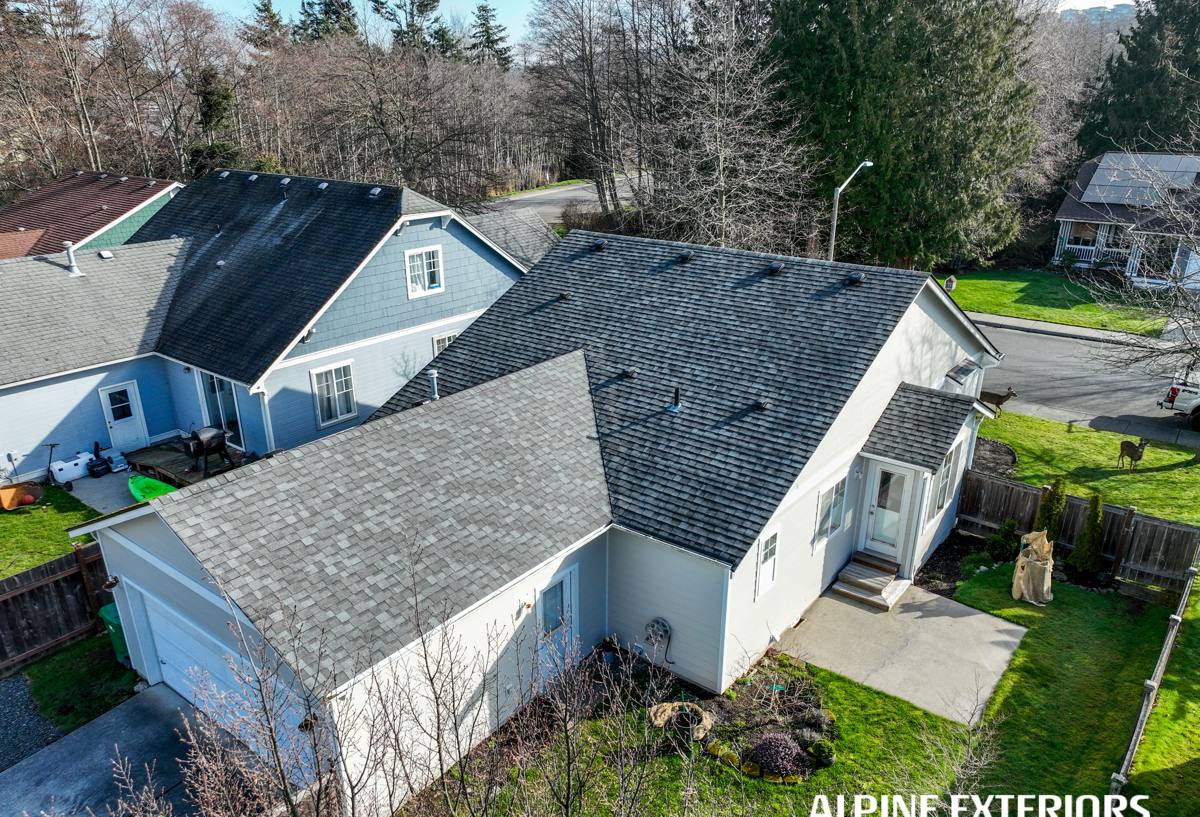
What Salt Air Actually Does Over Time
Corrosion You Can't See From the Curb
Proximity to saltwater doesn't just mean humidity — it means airborne salt particles settle on every exterior surface, including siding, fasteners, and flashing. Over years, that accelerates corrosion in metal components: nail heads, trim flashing, hose bibs, and any exposed hardware. Siding materials that rely on paper-faced or wood-based construction are more vulnerable here because trapped moisture combined with salt residue speeds up softening and rot at seams and cut edges.
Why Finish Quality Matters More Near the Water
Paint and coatings take more abuse in a marine-influenced climate. UV exposure off open water, plus the drying and re-wetting cycle from salt spray, causes field-applied paint to chalk, fade, and peel faster than it would inland. That's a big part of why factory-applied finishes designed for moisture resistance hold their color and adhesion longer than a coat of paint applied on-site after installation.
Driving Rain and the Whatcom County Moisture Load
Whatcom County gets a lot of its precipitation as steady, wind-pushed rain rather than brief downpours. On a home near the water, wind direction changes often enough that all four sides of a house — not just the weather-facing wall — take on wind-driven moisture at some point during the wet season. That has real implications for how siding is detailed:
- Butt joints and corner trim need consistent, correct caulking and flashing — not just on the windward side
- Window and door flashing has to shed water outward at every point, since wind can push rain upward and sideways under poorly lapped material
- House wrap and drainage planes matter as much as the siding itself, since siding is the first line of defense, not the only one
- Ground clearance and kickout flashing at roof-to-wall intersections prevent water from wicking into the bottom courses
Siding that absorbs and holds moisture, even briefly, is at a disadvantage in this pattern. Materials and details that shed water quickly and dry out between events perform noticeably better over a 20- or 30-year span.
Moss Season Isn't a Roof Problem Alone
Whatcom County's long, mild, wet stretch from fall through spring is ideal moss-growing weather, and homeowners here already know it shows up on roofs, decks, and north-facing walls that stay shaded and damp. What's less obvious is what moss and algae growth does to siding over time: it holds moisture against the surface longer, can stain lighter-colored finishes, and on materials that aren't dimensionally stable, contributes to slow degradation at the surface. Siding on the shaded, tree-lined lots common in this area needs a finish that resists staining and a substrate that doesn't degrade just because it stays damp longer between dry spells.
Why We Install Only James Hardie Fiber Cement
We made a deliberate decision to install James Hardie fiber cement siding exclusively — not vinyl, not engineered wood products like LP SmartSide, not other fiber cement brands. That's not a marketing position, it's a practical one shaped by exactly the conditions described above:
- Non-combustible core — fiber cement doesn't rely on wood fiber that can absorb moisture and soften over time
- Factory-applied ColorPlus finish — baked-on color and coating designed to resist fading and chalking, which matters more here than in a drier inland climate
- HZ5 product engineering — Hardie's HZ5 line is formulated for regions with damp, moderate climates and freeze-thaw cycling, which better matches Pacific Northwest coastal conditions than a one-size-fits-all product
- Long, transferable warranty backing — a warranty structure we can stand behind when we tell a homeowner what to expect over 20-plus years
We're upfront that other products have real advantages in certain situations — lower upfront material cost being the main one. But for a peninsula climate with salt air, driving rain, and a long moss season, we've found the trade-offs of cheaper substrates (moisture sensitivity, shorter finish life, more frequent field maintenance) aren't worth it for homeowners who want to install siding once and not revisit it for decades.
The Full Exterior Picture: Roofing, Windows, and Decks
Roofing
Siding and roofing work together as a system. Poor roof flashing at wall intersections is one of the most common sources of moisture getting behind siding, regardless of how good the siding itself is. When we're on a home for siding work, we look at roof-to-wall transitions, gutter function, and moss buildup on roof surfaces as part of the same conversation.
Windows
Window flashing integration is one of the highest-risk details on any home in this climate. A window that isn't properly flashed into the surrounding siding and house wrap gives wind-driven rain a direct path into the wall assembly. When we replace siding around existing windows, or install new windows alongside a siding project, we treat that integration as critical, not incidental.
Decks
Decks in this area face similar exposure — driving rain, moss on shaded boards, and salt air affecting fasteners and hardware. Deck ledger flashing where it meets the house is handled with the same care as any other wall penetration, since it's a common point for water intrusion if it's not done right.
What a Correct Installation Looks Like Here
| Detail | Why It Matters in This Climate |
|---|---|
| Proper starter strip and gapping | Allows drainage and expansion without trapping moisture at the base |
| Correct fastener type and placement | Reduces corrosion risk from salt air and prevents panel movement over time |
| Flashing at every penetration and joint | Manages wind-driven rain hitting the wall from multiple directions |
| House wrap and rain screen where appropriate | Gives the wall assembly a drainage plane behind the siding itself |
| Factory-cut edges sealed per manufacturer spec | Protects cut fiber cement edges from moisture absorption |
Fiber cement is a forgiving material in terms of longevity, but only when it's installed to the manufacturer's specification. Gaps, fastener choice, and flashing sequence are where most siding problems actually originate — not from the product itself failing on its own.
Cost Factors Homeowners Should Understand
| Factor | How It Affects Your Project |
|---|---|
| Home size and number of stories | More surface area and access complexity increase labor time |
| Existing siding removal and wall condition | Rot or moisture damage found underneath adds repair scope |
| Trim and detail complexity | Corners, dormers, and window trim take more time than flat wall runs |
| Color and plank profile selection | Some ColorPlus finishes and profiles carry different material costs |
| Site access | Waterfront and sloped lots common in this area can affect staging and scaffolding needs |
We don't quote broad, generic price ranges on this page because every home's condition and scope is different — that's exactly what a walkthrough and estimate are for.
Maintenance Reality for This Area
Even with a low-maintenance material like fiber cement, homes in a marine, moss-prone climate benefit from a basic seasonal routine:
- Rinse siding periodically to remove salt residue and organic buildup, especially on shaded or north-facing walls
- Keep gutters clear so overflow doesn't run down and saturate siding at roof-to-wall transitions
- Trim back vegetation and tree cover that keeps siding damp and shaded longer than necessary
- Have caulking at trim joints and penetrations inspected every few years, since sealants age faster under constant moisture cycling
- Address any moss or algae staining early rather than letting it sit against the finish long-term
Why a Local Crew Matters Here
A crew that mostly works inland doesn't necessarily think about salt air corrosion on fasteners, or how a west-facing wall on a Semiahmoo-area lot takes wind-driven rain differently than a sheltered inland home. Installation details that are optional in a drier, calmer climate aren't optional here — flashing sequence, fastener selection, and drainage planning all need to account for what this specific stretch of Whatcom County coastline actually does to a house over time. That's the perspective we bring to every project in the Peace Arch and Semiahmoo area, not as an afterthought but as the baseline standard.
If you're weighing a siding project, or want a second opinion on roofing, windows, or a deck that's showing its age, we're glad to walk your property and give you a straightforward, no-pressure estimate — just fill out the form below.