 Semiahmoo Siding
 California Creek: A Beautiful Place to Live, A Hard Place on Exterior Materials
California Creek sits close enough to Semiahmoo Bay and the Strait of Georgia that the same air carrying that clean, salty smell off the water is also the air working against every exterior surface on your home. Add in Whatcom County's long, wet winters and the shaded, damp pockets that collect along the creek corridor and tree lines, and you've got a climate that is genuinely tougher on siding, trim, and roofing than most of the country ever deals with. Homeowners who've lived out here a while already know this. New homeowners, or anyone who bought a home with builder-grade siding, usually find out the hard way.
We're a Semiahmoo-based crew that works this stretch of Whatcom County regularly, which means we're not guessing at what California Creek homes need — we're looking at the same moss lines, the same rot patterns at the bottom courses of siding, and the same corroded fasteners on almost every job.
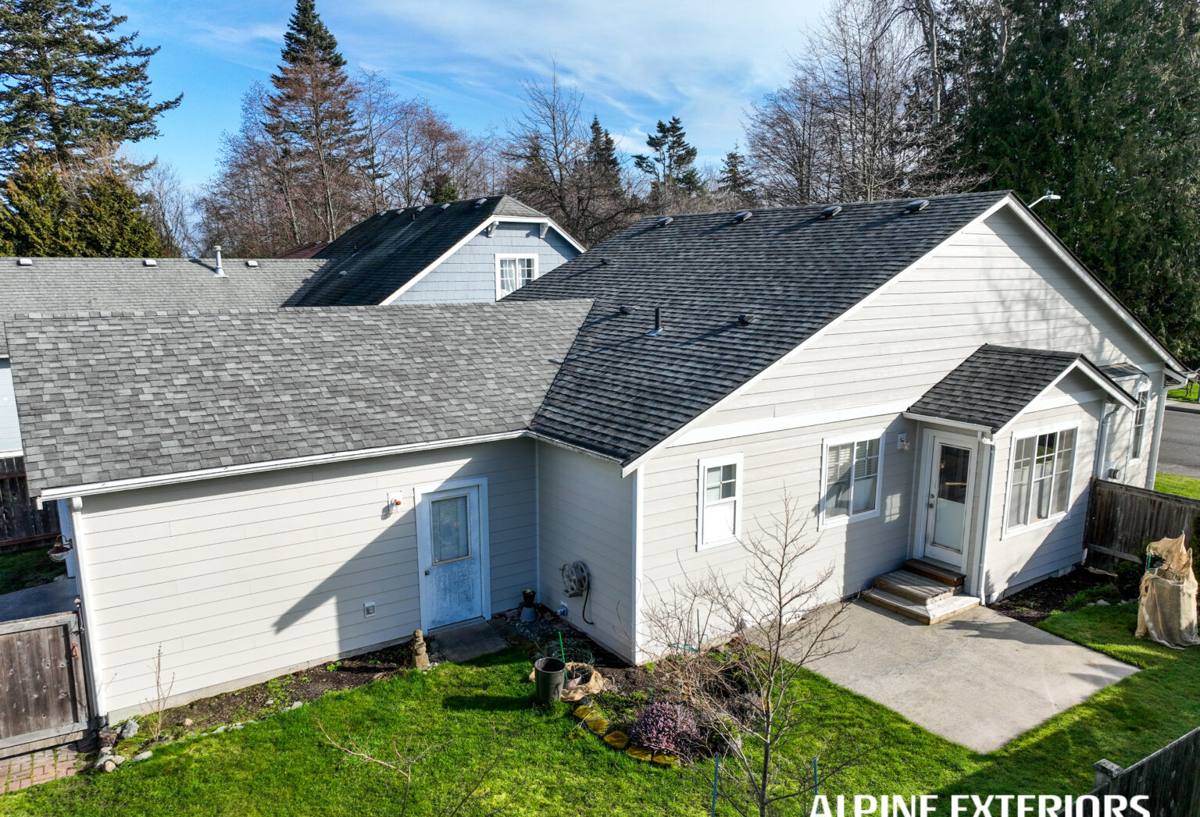
What Salt Air, Driving Rain, and Moss Season Actually Do
Salt Air
Proximity to Semiahmoo Bay means airborne salt is a real factor here, even a few miles inland. Salt is corrosive to fasteners, metal flashing, and cheaper trim products, and it accelerates the breakdown of paint films that weren't designed to handle it. Over years, this shows up as rust streaking, chalky or peeling paint, and soft spots where moisture has been getting behind the material.
Driving Rain
This part of Whatcom County doesn't just get rain — it gets wind-driven rain that hits siding at an angle instead of falling straight down. That matters because it pushes water into seams, laps, and butt joints that were designed for vertical rainfall, not horizontal pressure. Any weak point in the water management behind your siding — a gap in the house wrap, a poorly flashed window, a caulked joint instead of a properly lapped one — becomes an entry point.
Moss Season
Shaded, damp exteriors along tree-lined properties near the creek stay wet longer after every storm, and that extended dampness is exactly what moss, algae, and mildew need to take hold. On porous or absorbent siding materials, that surface growth isn't just cosmetic — it holds moisture against the material for extended periods, which shortens the life of paint, primer, and in some cases the substrate underneath.
None of this means California Creek is a bad place to own a home. It means the exterior materials and installation details matter more here than they would in a drier, calmer climate.
Why We Only Install James Hardie Fiber Cement
We get asked fairly often why we don't offer vinyl, LP SmartSide, or a raw wood product like primed spruce or cedar. It's a fair question, and the honest answer is that we made a standard for our company based on what holds up in this specific climate, not what's cheapest to install or easiest to sell.
The trade-offs we weighed
- Vinyl is affordable and low-maintenance in mild climates, but it can warp or become brittle over time, and its seams and J-channels are more vulnerable to wind-driven rain intrusion than a properly lapped fiber cement installation.
- LP SmartSide is an engineered wood product with real strengths, but wood-based siding is more sensitive to sustained moisture exposure — exactly the condition our moss season creates — and it depends heavily on maintaining an intact factory or field-applied finish.
- Primed spruce and cedar are traditional and attractive, but they require the most ongoing maintenance of any option — repainting, caulking, and moisture monitoring — to hold up against salt air and driving rain over the long term.
James Hardie fiber cement is cement, sand, and cellulose fiber — it's non-combustible, it doesn't absorb moisture the way wood-based products do, and it resists the kind of moss and mildew staining that shows up fast on porous surfaces in shaded, damp yards. Hardie's ColorPlus factory finish is baked on under controlled conditions, which gives it better fade and moisture resistance than most field-applied paint jobs, and it comes backed by a strong transferable warranty when installed to spec. We install it because it's the product we're comfortable standing behind on homes in this exact climate.
Roofing, Windows, and Decks Face the Same Conditions
Siding doesn't work in isolation — the whole building envelope has to manage the same salt air, rain, and moss exposure.
Roofing
Roof coverings, flashing, and ventilation all have to shed wind-driven rain and resist the moss growth that thrives on shaded, north-facing slopes near the creek. Poor attic ventilation combined with heavy moss buildup is a common contributor to premature roof wear out here.
Windows
Window flashing and sealant integration matter as much as the window unit itself. A quality window installed with poor flashing details will leak in driving rain regardless of the window's rating — this is one of the most common repair calls we get in coastal Whatcom County neighborhoods.
Decks
Decking, ledger boards, and fasteners take a direct hit from both moisture and salt exposure. Ledger board rot where a deck meets the house is one of the more serious — and more preventable — problems we find during exterior inspections.
Because we handle all four trades, we look at your home as one connected system rather than a siding job that ignores what's happening at the roofline or around the windows.
Why a Local Crew Matters Here
California Creek isn't a dense subdivision with cookie-cutter homes — it's a mix of lot sizes, tree cover, and exposure levels, and two homes a quarter mile apart can face very different conditions depending on how close they sit to the water and how much shade they get. A crew that works this area regularly recognizes those differences on sight: which side of a house takes the worst of the wind-driven rain, where moss is going to build up fastest, and where salt exposure is going to be the biggest long-term factor.
A local crew is also easier to hold accountable. We're not driving in from out of the area for one job and disappearing — we're based in Semiahmoo, we work this part of Whatcom County consistently, and our workmanship warranty means something because we're still here to honor it.
What to Expect From an Estimate and Installation
- An on-site walkthrough of your home's current siding, trim, and any visible moisture or moss issues.
- An honest assessment of what's driving. wear on your home specifically — sun exposure, shade, proximity to water, drainage around the foundation.
- A written estimate for James Hardie fiber cement siding, including the HZ product line suited to our climate zone, with clear scope and pricing — no pressure to decide on the spot.
- If you're bundling roofing, window, or deck work, we'll walk through how those trades interact with the siding installation and timeline.
Cost Factors to Understand Before You Budget
| Factor | Why It Affects Price |
|---|---|
| Existing siding removal | Tear-off of old wood, vinyl, or damaged material adds labor and disposal cost |
| Moisture or rot repair | Any sheathing or framing damage found underneath must be repaired before new siding goes on |
| Home size and complexity | Multiple stories, dormers, and trim detail increase labor time |
| Siding profile and color | Lap width, shingle-style panels, and ColorPlus finish options vary in material cost |
| Trim and accessory work | Fascia, soffits, and corner trim are often replaced alongside siding for a consistent, weather-tight result |
Simple Maintenance That Extends Any Exterior's Life
- Rinse moss and algae growth off siding and trim gently each spring before it spreads.
- Keep gutters clear so overflow doesn't run down and saturate siding at the roofline.
- Trim back tree branches and shrubs that keep siding shaded and damp longer than necessary.
- Inspect caulking around windows, doors, and trim joints annually and have gaps resealed promptly.
- Walk the exterior after major windstorms to check for loose trim, damaged flashing, or shifted panels.
Let's Take a Look at Your Home
If you're in California Creek and dealing with moss buildup, soft or rotting trim, or siding that's simply worn out from years of salt air and driving rain, we're happy to come take a look. The estimate is free, there's no pressure to commit to anything, and you'll get a straight answer about what your home actually needs — whether that's a full siding replacement or a smaller repair.