 Semiahmoo Siding
 Primed wood siding — usually finger-jointed spruce or pine boards, primed at the factory and painted after installation — shows up often in remodel bids because it's familiar, it's cheap per board foot, and it looks good the day it goes up. We get asked about it regularly by homeowners in Semiahmoo and around Whatcom County who are comparing quotes. We don't install it, and we think homeowners deserve the real reasons why, not just a sales pitch for what we do install instead.
What Primed Wood Siding Actually Is
Primed spruce or pine siding is solid wood or finger-jointed wood (short pieces glued end-to-end) milled into lap boards, then coated with a factory primer before it ships. It arrives ready for a contractor to install and a painter to finish with topcoat. It's been a staple product in the Pacific Northwest for decades because the wood is regionally available, easy to cut and nail, and gives a traditional lap-siding look that a lot of homeowners want on a Craftsman or farmhouse-style home.
The primer is a manufacturing convenience, not a moisture barrier. It seals the surface enough to protect the wood during shipping and storage, but it is not a substitute for a properly maintained paint film once the siding is on the wall.
Why It's Still Sold
Primed wood has real upsides: it's inexpensive, it's easy for crews to work with, it can be special-milled for custom profiles or historic-match trim, and it holds paint well when everything is done right. For a covered porch soffit or trim detail out of the weather, it can be a reasonable choice. The trouble starts when it's used as the primary field siding on a house exposed to the weather Semiahmoo actually gets.
The Climate Problem: Salt Air, Driving Rain, Moss Season
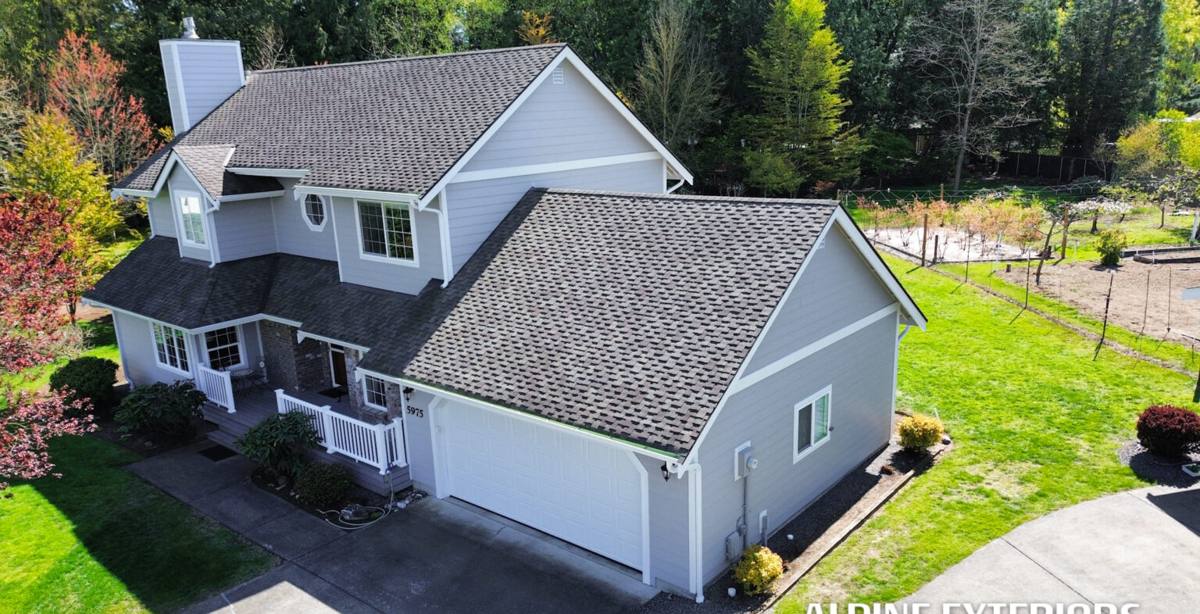
Semiahmoo sits right on the water, and that changes the math on wood siding. Salt-laden air accelerates the breakdown of paint films faster than it does inland, so a coating schedule that might hold up in, say, Sumas or Everson doesn't hold up the same way a quarter mile from Semiahmoo Bay. Add in Whatcom County's driving winter rain — often blown sideways by wind off the water — and you get repeated wetting of the same wall assemblies for months at a stretch.
Then there's moss. Whatcom County's long, cool, wet season is close to ideal moss and algae growth conditions, and that growth doesn't stay on the roof. It creeps onto north-facing and shaded wall sections, holding moisture against the siding surface long after a storm has passed. Wood siding under sustained moss cover stays damp far longer than siding in full sun and open air, and damp wood is exactly the condition that leads to the failures below.
What Sustained Moisture Does to Wood Siding
- Paint film breakdown accelerates, especially on south and west exposures that see the most UV, and on north exposures that stay shaded and damp longer
- End grain and butt joints wick moisture fastest, since they're the least protected part of any board
- Finger-joints can telegraph through paint over time as the glue lines react differently to moisture than solid wood
- Swelling and shrinking cycles from wet-dry seasons can loosen fasteners and open hairline gaps at laps and joints
- Once moisture gets behind the paint film, rot can start before it's visible from the outside
The Maintenance Burden Is the Real Cost
Primed wood siding isn't a "install it and forget it" product — it's a product that requires an ongoing paint maintenance program to perform. Manufacturers and painting contractors generally recommend repainting on a cycle measured in a handful of years, shorter in harsh coastal exposure than in a protected inland lot. Skipping or stretching that cycle is the single biggest reason wood siding fails early.
That's a real, recurring cost that doesn't show up on the original siding bid. We think it's fair for a homeowner to weigh that against the lower upfront material price before deciding.
| Factor | Primed Wood Siding | James Hardie Fiber Cement |
|---|---|---|
| Upfront material cost | Lower | Moderate to higher |
| Repaint cycle in coastal WA exposure | Every several years, often shorter near salt water | ColorPlus factory finish holds color far longer; unfinished lines still need standard repaint |
| Moisture/rot risk if paint fails | High — wood rots when wet paint film fails | Very low — fiber cement doesn't rot |
| Combustibility | Combustible | Non-combustible core material |
| Moss/algae surface damage | Growth holds moisture against wood | Growth can be cleaned off without exposing wood underneath |
| Typical warranty structure | Varies by mill; often limited | Long transferable manufacturer warranty on the product |
Installation Sensitivity
Primed wood siding is also less forgiving of small installation mistakes than a lot of homeowners realize. Every cut end needs to be field-primed or sealed before it goes up, because factory primer only covers the original mill surface. Skip that step at a single cut and you've created a moisture entry point that can sit hidden behind trim for years. Flashing details, caulking at joints, and proper clearance off the ground or off a deck surface all matter more with a material that rots than with one that doesn't.
We're not saying it can't be installed correctly — it can. We're saying the margin for error is thin, and in a climate that delivers this much sustained moisture, thin margins catch up with a house eventually.
Common Failure Points We See on Older Wood Siding
- Butt joints where two boards meet without proper back-priming or sealant
- Bottom courses near grade or near decks that stay damp longer than the rest of the wall
- North-facing walls with persistent shade and moss buildup
- Areas around windows and trim where caulking has cracked or pulled away
- Nail heads that have rusted and telegraphed through older paint layers
Why We Standardized on James Hardie Instead
After years of siding work in this exact climate, we made the call to install James Hardie fiber cement exclusively. It's not that wood siding is a bad product in the abstract — it's that we didn't want to keep selling homeowners a material that needs a maintenance schedule to survive our specific weather, when a non-combustible alternative exists that doesn't have that dependency.
Hardie's fiber cement doesn't rot, because it isn't wood. It's engineered for climate zones — Hardie's HZ product lines are formulated for regions like ours, accounting for moisture exposure. The ColorPlus factory finish is baked on and warrantied against fading and peeling, which removes the repaint-cycle math from the equation for the life of that finish. And because the material is non-combustible, it adds a layer of fire resistance that wood siding simply cannot offer, which matters more every year as wildfire smoke and dry-season risk creep further into Western Washington's summers.
None of that makes Hardie maintenance-free forever — caulking joints, keeping gutters functional, and normal exterior upkeep still apply to any siding material. But it removes the single biggest point of failure we see on wood siding in this exposure: a paint film that has to be perfect and has to be renewed on schedule, indefinitely, or the substrate underneath starts to fail.
What This Means If You're Comparing Bids
If a bid comes in with primed wood siding and it's noticeably cheaper than a fiber cement bid, that's not necessarily a red flag on the contractor — it may just reflect the real material cost difference. What we'd encourage any homeowner to do is ask the contractor directly what repaint cycle they recommend for a home that close to Semiahmoo Bay, and factor that ongoing cost into the comparison, not just the installed price.
- Ask what climate zone the product was engineered for, if any
- Ask what the manufacturer warranty actually covers — material only, or labor too
- Ask how the contractor treats cut ends and butt joints during installation
- Ask what a realistic long-term maintenance schedule looks like, in writing
- Ask whether the product is combustible and how that fits your insurance and wildfire-risk considerations
Our Bottom Line
Primed wood siding can look great and can perform reasonably well in the right setting with disciplined maintenance. In Semiahmoo's combination of salt air, driving rain, and a moss season that runs long, we've simply seen too many homes where the paint maintenance didn't keep pace with the climate, and the wood underneath paid the price. That's why we install James Hardie fiber cement on every siding project we take on — it's the product we're confident will still be doing its job on this coastline in twenty years with normal upkeep, not a rescue repaint.
If you're weighing wood siding against fiber cement for a home in Whatcom County, we're happy to walk through both honestly. Reach out for a free, no-pressure estimate and we'll give you a straight answer on what your specific house and exposure actually need.