 Semiahmoo Siding
 Exterior Work Built for Laurel's Climate
Laurel sits inland from the Salish Sea in Whatcom County, close enough to the water to catch salt-laden air on windy days and far enough from the coast to also get the damp, still, shaded conditions that come with a wooded, semi-rural setting. That combination is tougher on a home's exterior than either factor alone. Homes here deal with driving rain off the water, long stretches of overcast humidity, and a moss and algae season that can run most of the year on north-facing walls and anything shaded by fir or cedar trees. We've worked on homes throughout this part of Whatcom County long enough to know that "good enough" siding, roofing, and trim don't hold up under all three at once.
Semiahmoo Siding Company handles siding, roofing, windows, and decks. We treat these as one connected system rather than four separate jobs, because on a Pacific Northwest home they behave like one. Water that gets past a roof edge, a window flashing detail, or a deck ledger board doesn't stay contained — it finds siding, sheathing, and framing. When we look at a Laurel home, we're looking at how all four systems work together to keep water out and moving away from the structure.
What Whatcom County Weather Does to a House Over Time
Moisture Is the Constant Threat
Whatcom County doesn't get extreme weather very often, but it gets wet weather constantly. Fall through spring is a long run of rain, fog, and condensation, and even summer mornings can bring heavy dew. Materials that are marginally moisture-resistant get tested every single week of the year here, not just during a storm event. Over a decade or two, that constant low-grade moisture exposure is what separates exterior products that hold up from ones that don't.
Salt Air and Wind-Driven Rain
Proximity to Semiahmoo Bay and the broader Salish Sea means airborne salt is a real factor on fasteners, flashing, and any exposed metal. Wind off the water also drives rain sideways into wall assemblies, which puts extra stress on siding laps, window and door flashing, and any horizontal trim detail that wasn't built to shed water aggressively.
Moss, Algae, and Shade
Laurel's tree cover is part of what makes it a nice place to live, but shaded, slow-drying wall sections are where moss and algae take hold first. Left unaddressed, organic growth holds moisture against the surface underneath it, which accelerates rot in wood-based products and paint failure on painted surfaces.
Siding: Why We Install Only James Hardie
We get asked regularly why we don't offer vinyl, LP SmartSide, primed spruce, cedar, or other fiber cement brands like Cemplank or Allura. It's a fair question, and the honest answer is that we made a standardization decision based on what holds up in this specific climate over decades, not just what looks good on installation day.
Vinyl
Vinyl is inexpensive and low-maintenance in the sense that it doesn't need painting, but it's a thin plastic product that expands and contracts significantly with temperature swings, can crack in cold snaps, and fades over time in UV exposure. It also isn't rigid, so it telegraphs waviness in the wall behind it rather than hiding minor imperfections. For a region with our humidity swings and long sun exposure in summer, we don't think it's the best long-term investment for most homeowners.
Engineered Wood (LP SmartSide) and Solid Wood (Cedar, Primed Spruce)
Engineered wood and solid wood products are genuinely attractive and perform reasonably well when installation is flawless and maintenance is kept up every single year. The problem is the margin for error. Any wood-based siding depends on an intact factory or field-applied coating to keep moisture out of the wood fibers underneath. A missed caulk joint, a scratch during installation, or a few years of deferred maintenance is enough to let moisture in — and once wood-based siding starts absorbing water, swelling and rot follow. In a climate as consistently wet as Whatcom County's, we've seen that margin for error get exploited too often.
Other Fiber Cement Brands
Cemplank and Allura are fiber cement products, and fiber cement as a category is the right general approach for our climate — it's non-combustible, dimensionally stable, and doesn't rot the way wood-based products can. Where we draw the line is with James Hardie specifically, because of the depth of their climate-engineered product lines, the consistency and durability of their ColorPlus factory finish, and the strength of their transferable warranty. Standardizing on one manufacturer also means our crews install one system, day in and day out, which keeps installation quality consistent.
What James Hardie Gets Right
- Fiber cement composition that doesn't rot, swell, or attract wood-boring insects
- Non-combustible material, which matters for fire-conscious homeowners in wooded settings
- HZ5 and HZ10 product engineering built around specific climate exposure zones
- ColorPlus factory-applied finish, which is more consistent and more durable than field-applied paint
- A strong transferable warranty backed by a large, established manufacturer
Correct installation matters as much as the product itself. That means proper clearances above grade and roof lines, correctly lapped and caulked joints, and fastening patterns that match manufacturer specifications. We install to those specs on every job, because a great product installed poorly will still fail early.
Roofing: The First Line of Defense
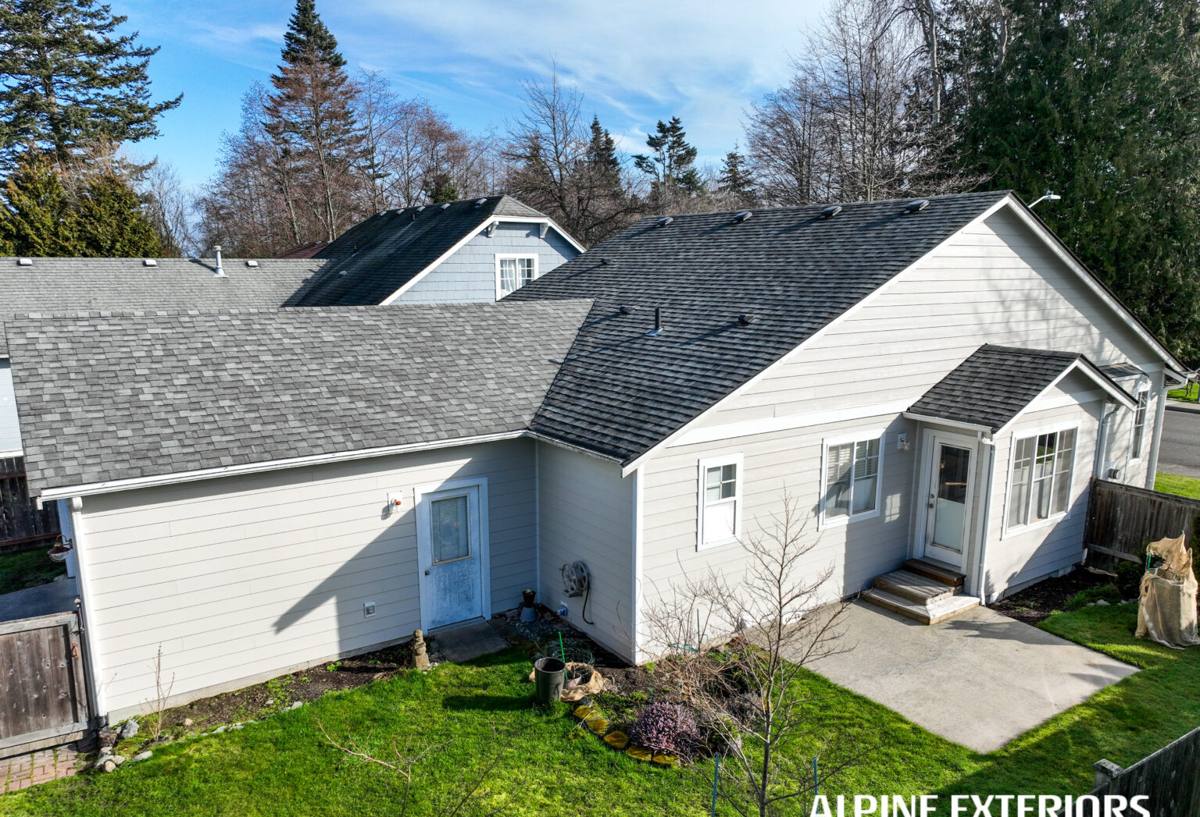
A roof's job in Laurel isn't just to keep rain out during a storm — it's to shed a near-constant trickle of moisture for most of the year without letting any of it back up under shingles or flashing. We pay close attention to valley flashing, chimney and vent penetrations, and edge details, since those are the spots where slow leaks tend to start. A roof that's shedding water properly also protects the siding below it; a roof edge that's failing will stain and eventually damage the wall section underneath.
Windows: Where Leaks Actually Start
More water intrusion problems trace back to window flashing than to the siding field itself. A window opening cut into a wall creates a seam, and that seam has to be flashed correctly — with the right layering and lapping so that any water that gets behind the siding is directed back out, not into the wall cavity. When we install or replace windows, we treat the flashing detail as the most important part of the job, not an afterthought behind the trim.
Decks: Built to Handle Standing Water and Shade
Decks in shaded, wooded lots like much of Laurel deal with slower drying times and more moss and algae buildup than decks in full sun. Ledger board attachment — where the deck meets the house — is a common point of hidden rot if it wasn't flashed correctly when built. We check that detail closely on any deck project, along with proper spacing between boards for drainage and airflow underneath.
Cost Factors Homeowners Should Understand
Every home and project is different, but the factors below are the ones that most often move a project's scope and price.
| Factor | Why It Matters |
|---|---|
| Extent of hidden moisture damage | Sheathing or framing repairs found once old siding comes off can add scope |
| Home size and wall complexity | More corners, dormers, and trim details mean more labor and material |
| Existing material being removed | Full tear-off vs. install over existing conditions changes labor time |
| Product line and color selection | ColorPlus finishes and certain HZ lines are priced differently than base products |
| Access and site conditions | Steep lots, tree cover, or tight access affect equipment and staging |
Why a Local Crew Matters
Contractors based outside Whatcom County sometimes apply generic installation specs that don't account for how much wetter and shadier a lot in Laurel can be compared to a drier inland job. A crew that works this area regularly knows which wall orientations need extra attention to moss and algae resistance, which sites need more aggressive water management at grade, and how salt air near the bay affects fastener and flashing choices over time. That local knowledge shows up in the details that aren't visible on installation day but matter ten and twenty years later.
What to Expect From Us
- An on-site inspection that looks at siding, roofing, windows, and deck areas together, not in isolation
- A written scope that identifies any hidden moisture or rot issues found before work begins
- James Hardie fiber cement siding installed to manufacturer specifications, with no shortcuts on flashing or fastening
- Clear communication about product options, HZ line selection, and ColorPlus color choices
- A crew that shows up, does the work correctly the first time, and cleans up the site
If you're in Laurel and dealing with aging siding, a roof that's due for attention, drafty windows, or a deck that's seen better days, we'd be glad to take a look. Reach out for a free, no-pressure estimate using the form below.