 Semiahmoo Siding
 Storm Damage Roof Repair in Lynden: Weather That Doesn't Let a Roof Coast
Lynden sits inland from Semiahmoo Bay, but it's still inside the same marine-driven weather system that moves through this whole stretch of Whatcom County. When a storm comes through, it doesn't stay near the water — wind funnels inland, rain turns sideways, and the same salt-tinged air that sits over the coast gets carried further in than most homeowners expect on a calm day. Add in Whatcom County's long moss season, which keeps roof surfaces damp and softened for months at a time, and a single storm can turn a roof that looked fine a week earlier into one with real, active problems.
Storm damage roof repair is one of the more time-sensitive calls we get. A roof that's taken wind or debris damage isn't just cosmetically hurt — it's often compromised in a way that lets the next rain in, and the next storm after that makes it worse. We work roofs across the wider Semiahmoo and Whatcom County area, and for Lynden specifically that means understanding both the storm patterns that move through this part of the county and the toll that moss and sustained moisture have already taken on a roof before a storm ever hits it.
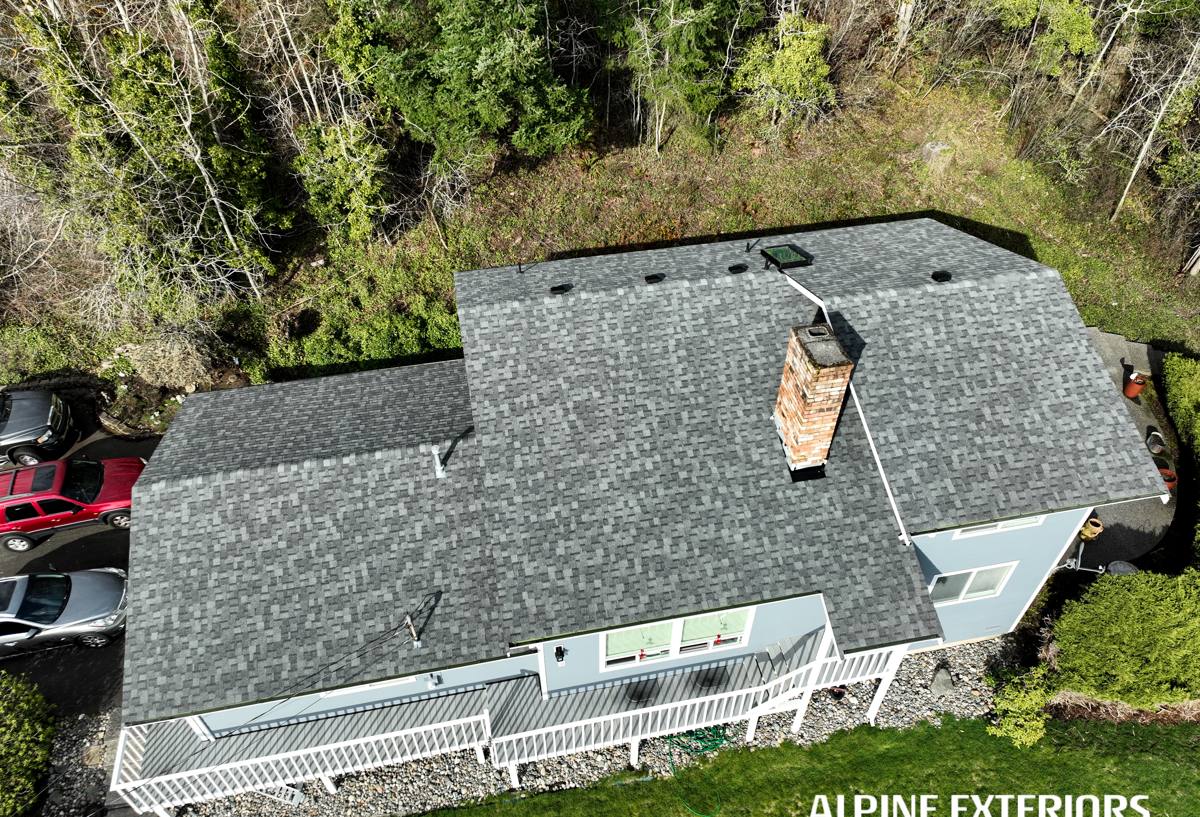
What a Storm Actually Does to a Lynden Roof
Wind-Driven Rain and Shingle Uplift
Rain that falls straight down is manageable for almost any roof in decent condition. Rain that's being pushed sideways by wind is a different problem — it gets forced under shingle tabs, into valleys, and around flashing edges that were never designed to handle water moving in that direction. A roof with aging sealant strips or a few shingles that were already loosened by moss can lose its grip fast once a real windstorm hits.
Debris Impact
Branches, cones, and general wind-blown debris are the most common physical damage we see after a storm here. It doesn't take a large limb to crack a shingle, dent a vent cap, or knock flashing out of position — and small impact damage is often invisible from the ground, which is exactly why a post-storm roof shouldn't be judged by a quick look out a window.
Moss-Softened Roofing Meets a Sudden Load
A roof that's been holding moisture under moss for months isn't starting from a healthy baseline when a storm arrives. Shingles that are already lifted or granule-worn from long-term dampness give a storm's wind and water an easier place to get underneath. This is part of why storm damage in this climate tends to concentrate on the same shaded, moss-prone roof sections year after year rather than spreading evenly across the whole roof.
Salt-Tinged Air During Coastal Storms
Storms that sweep in off the Strait and the Sound carry salt-laden air further inland than a normal calm day does. Lynden doesn't take the direct exposure that a waterfront property near Semiahmoo does, but repeated storm events still add up on exposed metal — flashing, fasteners, and vent components corrode faster when they've been hit by that salt air repeatedly over the years, even at a distance from the water.
Signs Your Roof Took Storm Damage
Some storm damage is obvious. A lot of it isn't, and the damage that goes unnoticed is usually what turns into an interior leak weeks later. After any significant wind or rain event, it's worth checking for:
- Shingles that are cracked, curled, creased, or missing entirely
- Granules collecting in gutters or at the base of downspouts in unusually large amounts
- Flashing around chimneys, vents, or roof valleys that looks bent, lifted, or separated
- Dented or cracked vent caps and pipe boots
- New water staining on interior ceilings or around exterior wall lines
- Debris, branches, or visible punctures on the roof surface
- Gutters pulled loose from the fascia or sagging under debris weight
Any one of these is worth a call. Roof damage after a storm rarely improves by waiting, and in this climate the next rain is usually not far off.
What a Correct Storm Damage Repair Involves
Assessment Before Any Work Starts
We look at the whole roof, not just the spot that prompted the call. Storm damage often shows up in more than one place, and a repair that only addresses the visible problem while missing a second weak spot just means a second call after the next storm. Where accessible, we also check the attic side for water intrusion that hasn't reached a ceiling yet.
Temporary Protection When It's Needed
If a roof has an active opening — missing shingles, a torn section, exposed decking — and a full repair can't happen the same day, we'll get it protected first. Stopping active water intrusion matters more in the short term than finishing cosmetic work, especially heading into another wet stretch.
The Actual Repair
A proper storm repair means matching materials as closely as reasonably possible, reinstalling flashing correctly rather than just resealing over a gap, and replacing damaged underlayment rather than shingling over it. Caulk and sealant have a place in roofing, but they're not a substitute for correctly lapped flashing or a properly fastened shingle course.
Documentation Along the Way
We photograph damage before and after repair work. If you're filing an insurance claim, that documentation is often more useful to your claim than anything we could say in a phone call, and it gives you a record even if you're not filing right away.
Insurance Claims: What We Can Help With
We're a roofing contractor, not an insurance company, and we're upfront about that distinction. We can give you an honest, detailed inspection with photos, a written estimate, and a clear explanation of what's storm-related damage versus what's pre-existing wear — insurers generally want to see that distinction too. What we can't do is guarantee a claim will be approved or tell you what your adjuster will decide. If you're filing a claim, contact your insurer promptly after a storm, and be cautious of anyone who shows up unsolicited after a storm pushing a fast contract signature before an adjuster has even seen the roof.
Repair or Full Replacement? How We Help You Decide
Not every storm-damaged roof needs to be replaced, and we don't default to recommending one. The right call depends on a handful of factors we walk through together:
| Factor | Leans Toward Repair | Leans Toward Replacement |
|---|---|---|
| Roof age | Well within its rated lifespan | Already near or past expected service life |
| Extent of damage | Localized to one section or slope | Spread across multiple slopes or the whole roof |
| Roof deck condition | Solid, dry decking under the damage | Soft spots or moisture staining in the deck |
| Repair history | First or second repair on this roof | Roof has had several prior patch repairs already |
| Moss/moisture condition | Minimal moss, roof otherwise in good shape | Long-term moss damage compounding the storm damage |
A roof with one damaged slope and a sound deck underneath is usually a straightforward repair. A roof that's older, already moss-damaged, and now hit by a storm on top of that is often more honestly addressed with replacement rather than another patch that won't hold through the next wet season.
Our Process for Storm Calls in Lynden
- You call or send photos of visible damage, and we get a sense of urgency — active leak versus damage that can wait a day or two for a full inspection.
- We inspect the full roof, not just the reported problem area, and check the attic side where accessible.
- If there's an active opening, we handle temporary protection before anything else.
- We give you a written estimate and a plain explanation of what happened and why, including photos you can keep for your own records or an insurance claim.
- We complete the repair with matched materials and correct flashing and underlayment work, then follow up to confirm it held through the next round of weather.
Why a Crew Already Working This Area Matters
Storm damage calls move faster when the contractor already knows the area. We've seen how wind moves through this part of Whatcom County, which roof orientations tend to take the worst of a given storm, and how moss-related weakness compounds storm damage on roofs that haven't had recent maintenance. That familiarity means less time spent explaining local conditions and more time spent actually assessing your roof — and it means a working relationship you can call on again, rather than a one-time visit from whoever happened to answer the phone that week.
Beyond the Roof: Checking the Rest of the Exterior
A storm strong enough to damage a roof is usually stressing the rest of the building envelope too. We also handle siding, windows, and decks, so when we're on-site for a roof call, we'll take a quick look at obvious wind or water damage to siding, trim, and gutters as well. If something else needs attention, you'll hear about it plainly — we're not going to manufacture extra work, but we're also not going to ignore a problem we can see while we're already there.
If your Lynden home took storm damage — or you just want a roof checked after a rough stretch of weather — we're glad to come take an honest look. Reach out using the form below for a free, no-pressure estimate.