 Semiahmoo Siding
 Siding Installation in Lynden: What This Climate Demands
Lynden sits inland from the water, out in Whatcom County's farm country, but it shares the same weather system that soaks Semiahmoo and the rest of the county for much of the year. Our crew is based near Semiahmoo and works throughout Whatcom County, and Lynden is one of the communities we're out in regularly for siding installation. The climate here asks something specific of an exterior wall system, and that's the part of the job that separates a siding installation that lasts decades from one that starts failing within a few wet seasons.
Driving Rain, Humidity, and a Long Moss Season
Whatcom County's marine-influenced climate reaches well past the shoreline, and Lynden gets its own steady dose of driving rain, sustained humidity, and a moss and mildew season that runs most of the year on shaded or north-facing walls. That combination is hard on any siding material that absorbs moisture or holds it against the wall assembly. It's also hard on caulk, trim, and lower-grade paint finishes, which tend to break down faster here than they would in a drier, more sheltered climate.
Open Fields Mean More Direct Wind Exposure
Lynden's agricultural surroundings mean a lot of homes sit on more open lots than you'd find in a denser, tree-sheltered neighborhood. Less windbreak means wind-driven rain can hit a wall assembly with more force and from more angles than a sheltered lot would see, pushing water into joints, laps, and flashing details that a calmer site would never test. Installation quality matters more, not less, on an open lot like that.
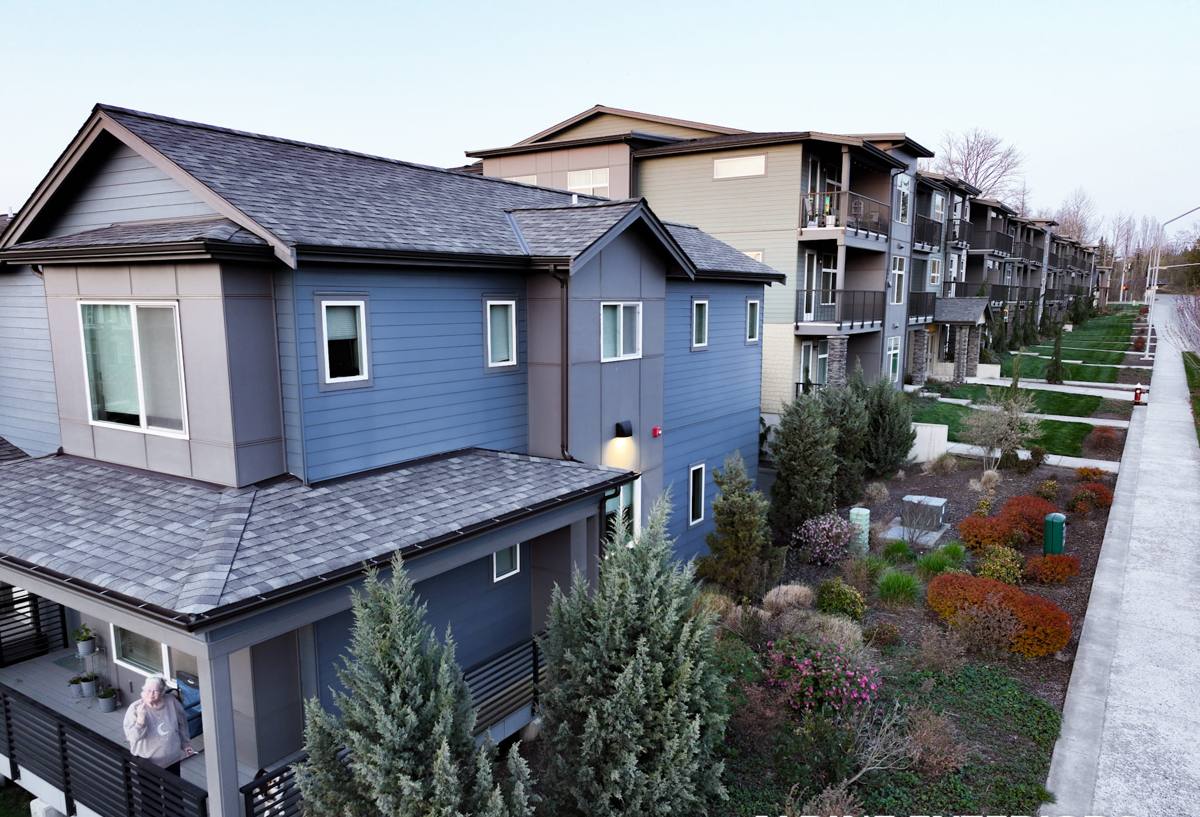
What a Correct Siding Installation Actually Involves
Siding installation is often talked about like it's just fastening panels to a wall, but the panels are the last and least important part of the system. Most of the long-term performance of a siding job comes from the layers and details underneath the visible surface -- the parts a homeowner never sees again once the job is finished.
Water-Resistive Barrier and Flashing Details
Every wall needs a continuous water-resistive barrier behind the siding, lapped correctly from bottom to top so any water that gets past the siding drains back out instead of pooling behind it. Flashing at windows, doors, and every horizontal trim transition has to integrate with that barrier in the right sequence. Installed out of order, flashing can direct water into the wall instead of away from it. This is the step that determines whether a house stays dry through Lynden's wet season or develops hidden rot behind siding that still looks fine from the driveway.
Fastening, Clearance, and Joint Treatment
Fiber cement siding has to be fastened with the correct nail or screw type, spaced to the manufacturer's pattern, and held to the right clearance from grade, roof lines, and decks so water doesn't wick up into the bottom edge of the material. Butt joints need to be factory-mitered where possible, or properly treated and caulked where they aren't, since an open or poorly sealed joint is one of the most common places moisture gets into an otherwise sound wall.
Why We Install Only James Hardie Fiber Cement in Lynden
We install one siding system: James Hardie fiber cement. We don't offer LP SmartSide, vinyl siding, Cemplank, Allura, primed spruce, or cedar, and that's a deliberate professional standard rather than a limited product list.
What We Won't Install, and Why
Each of the products we don't install has a legitimate place in the market, and plenty of homes elsewhere carry them without issue. But engineered wood products like LP SmartSide are wood-based at the core, which makes cut edges and joints moisture-sensitive in a climate that stays wet as long as this one does. Vinyl can distort with heat, and its seams and fastener points are long-term exposure points. Cedar and primed spruce absorb and release moisture readily and need consistent refinishing to hold up, which is a real ongoing cost most homeowners underestimate when they price the material up front. We'd rather stand behind one system fully than offer a cheaper option that quietly shifts maintenance risk onto the homeowner down the road.
HZ5 and a Warranty Built for This Climate
James Hardie makes climate-specific formulations, and the HZ5 line is engineered for regions with heavy moisture exposure and freeze-thaw cycling -- a good match for Whatcom County generally, Lynden included. It's dimensionally stable, so it doesn't swell, cup, or warp the way moisture-sensitive materials can after repeated wetting. It also comes with a factory-applied ColorPlus finish, baked on under controlled conditions rather than brushed on in the field, which holds color and resists chalking far longer than site-applied paint. Hardie backs the product with a substantial, transferable warranty, but that warranty depends on installation following their published spec -- another reason installation quality matters as much as the material itself.
Maintaining James Hardie Siding in Lynden's Climate
Correctly installed fiber cement is low-maintenance compared to most alternatives, but "low-maintenance" isn't "no-maintenance" in a climate like this one.
Moss and Mildew Care
Shaded and north-facing walls should get a periodic soft wash to keep moss and mildew from building up and holding moisture against the surface long-term. This is a lighter job than roof moss removal, but it matters most on the sides of the house that don't get much direct sun during Lynden's long wet stretch.
Caulk and Trim Inspection
Caulk at joints, trim, and penetrations is the part of the system most likely to need attention over time, even with a durable siding material behind it. A yearly walk-around to check for cracked or missing caulk, especially around windows and doors, catches small gaps before they turn into a path for water behind the wall.
Signs a Lynden Home Needs New or Repaired Siding
Some of these signs are easy to spot from the ground; others take a closer look, especially on walls that don't get much direct sun.
- Soft or spongy spots when you press on the siding, especially near the bottom edge or below window sills
- Persistent moss or dark staining on shaded or north-facing walls that comes back shortly after cleaning
- Visible cracking, buckling, or warping in panels or lap joints
- Paint that's peeling, bubbling, or chalking well ahead of when it should
- Gaps opening up at trim, corners, or butt joints where caulk has failed
- Interior signs like staining or soft drywall near exterior walls, which often means moisture has already gotten behind the siding
Cost Factors for Siding Installation in Lynden
There's no single number that applies to every home, since the details below can shift a project meaningfully in either direction. An accurate figure comes from an on-site look at the house, not a phone estimate, but here's what actually drives the cost on a typical siding installation.
| Factor | Why It Matters | Typical Cost Impact |
|---|---|---|
| Total wall square footage | More surface area means more material and labor | Scales roughly with size |
| Full tear-off vs. new construction | Removing and disposing of existing siding adds labor before installation even starts | Moderate to significant |
| Hidden rot or moisture damage found underneath | Damaged sheathing or framing has to be repaired before new siding goes on | Can be significant; not knowable until tear-off |
| Trim complexity and architectural detail | More corners, window returns, and custom trim mean more cutting and fitting time | Moderate |
| Number of stories and access difficulty | Taller walls and tight lot access require more scaffolding and staging time | Moderate |
How Our Process Works
We start with an on-site walk of the existing siding, looking specifically for how the current system has held up against moisture over time, not just how it looks from the street. That includes checking soft spots, flashing condition, and any areas where water has clearly found a way in. From there we put together a clear written scope covering tear-off, any sheathing or framing repair, water-resistive barrier and flashing details, and the Hardie product line and color we're installing, along with a realistic timeline.
Once work begins, flashing sequencing, correct fastening, and proper clearance from grade aren't treated as optional upgrades -- they're the baseline on every job, in Lynden or anywhere else we work in the county. We walk the finished job with the homeowner before we consider it done.
Why a Crew That Already Works Lynden Makes a Difference
A crew that regularly works Lynden and the surrounding parts of Whatcom County already has a feel for how this climate behaves on open, less-sheltered lots -- how far wind-driven rain travels past a wall without a windbreak, how long moss takes hold on a shaded elevation, and where extra flashing detail earns its keep over the life of the siding. That familiarity shows up in the small decisions on a job site, and those small decisions are usually what separates a siding installation that holds up for decades from one that needs attention again in a few years.
- Ask what siding material they install and whether they'll put a written warranty behind it
- Confirm current Washington contractor licensing and active liability insurance
- Ask how they detail flashing and water-resistive barrier work at windows, doors, and trim
- Ask whether they've worked other homes in Lynden or nearby, and what they typically find during tear-off in this area
- Get a clear, written scope of work before signing anything
If you're weighing your options for siding on a Lynden home, we're glad to walk the exterior with you and give you an honest read on what it actually needs. Reach out below for a free, no-pressure estimate.