 Semiahmoo Siding
 Bellingham Homes Face a Specific Kind of Weather Punishment
Bellingham sits where the Salish Sea meets the Cascade foothills, and that combination creates one of the more demanding siding environments in Washington. Homes here don't just deal with rain — they deal with salt-laden air off Bellingham Bay, wind-driven storms that push moisture sideways instead of straight down, and long stretches of shade and dampness that keep exterior surfaces wet for days at a time. Siding that works fine in a drier inland climate can fail here in a fraction of the time if it wasn't chosen and installed with this specific exposure in mind.
This page focuses on one job, done right, in one place: installing siding on a Bellingham home. Not a general overview of siding materials, not a sales pitch — a straight explanation of what this climate demands, what correct installation actually involves, and why we've standardized on one product system instead of offering a menu of options.
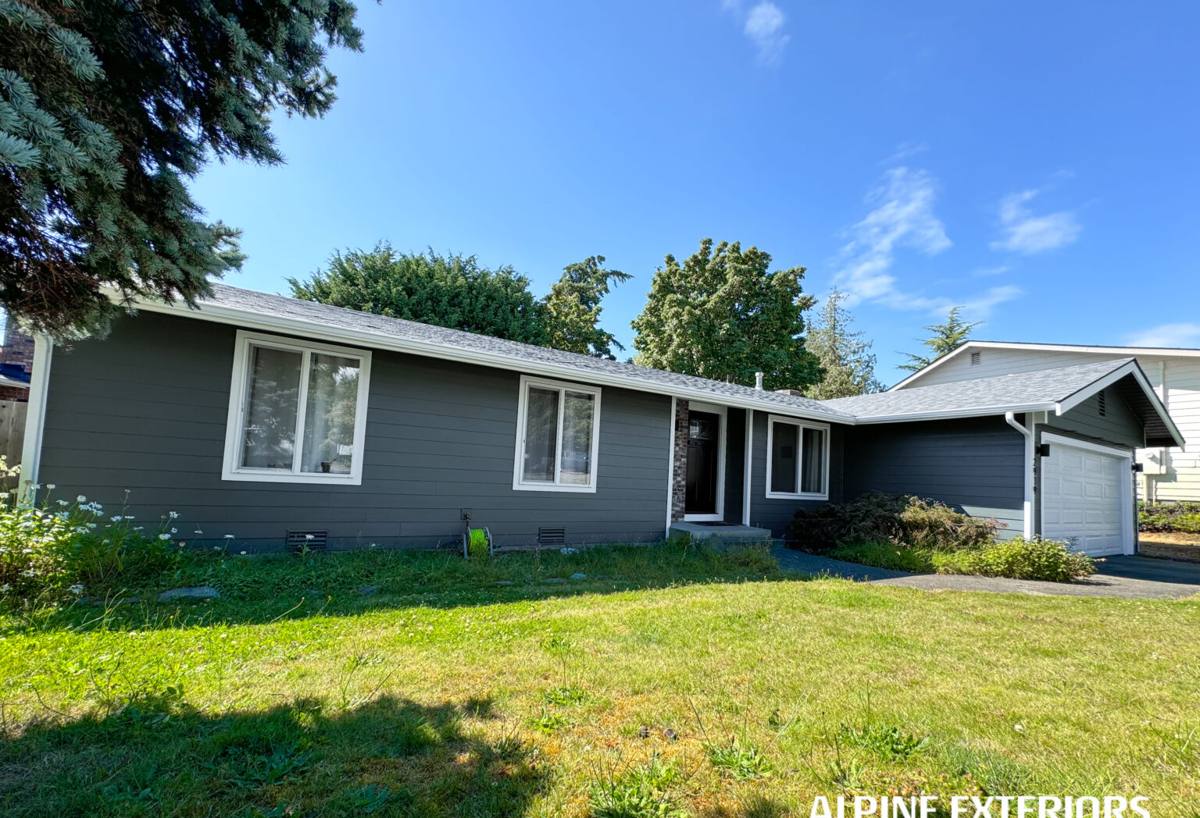
What Whatcom County Climate Does to Siding Over Time
Salt Air and Corrosion
Proximity to saltwater doesn't just affect boats and metal railings. Airborne salt accelerates the breakdown of fasteners, corner flashing, and lower-grade trim, and it speeds up fading and chalking on paint films that aren't formulated to resist it. Over years, a home closer to the water will show wear on its siding and trim well before an identical home fifteen miles inland.
Driving Rain and Wind-Driven Moisture
Whatcom County storms frequently come with real wind behind them, which means rain doesn't just run down a wall — it gets pushed into laps, seams, and butt joints. Siding systems that rely heavily on caulk to stay sealed are fighting a losing battle here, because wind-driven rain finds every gap that opens up as caulk ages and shrinks. The installation details around window and door openings, corners, and horizontal joints matter more here than in calmer climates.
A Long, Real Moss Season
Shade, moisture, and mild temperatures are perfect conditions for moss and algae growth — not just on roofs, but on the north and west-facing walls of a house that stay damp longest. Siding that can't shed water quickly or that traps moisture behind it becomes a growing surface. That's a cosmetic issue at first, but sustained moss and mildew growth against a wall keeps the substrate wet longer, which is where the real damage starts.
What a Correct Siding Installation Actually Involves
A good-looking siding job and a correctly installed one are not always the same thing. The parts that determine how a Bellingham home performs over the next twenty or thirty years are mostly hidden once the job is done.
Weather-Resistive Barrier and Drainage Plane
Every installation starts with a continuous, properly lapped weather-resistive barrier underneath the siding. In a climate this wet, we treat a drainage gap behind the siding as standard practice, not an upgrade — it lets any moisture that does get past the cladding drain and dry out instead of sitting against the wall sheathing.
Flashing Comes First
Window and door flashing, kick-out flashing where a roofline meets a wall, and head flashing above trim are what actually stop water intrusion — siding is the visible layer, but flashing is the layer doing the real work. Skipping or shortcutting flashing details is the single most common cause of hidden rot we see in older installations around the county.
Fastening and Fit
Fiber cement siding has specific fastening requirements — nail placement, spacing, and depth all affect how the panel performs during our wet-dry cycles and temperature swings. Panels fastened too tightly or with the wrong nail pattern can crack or work loose over time, which opens the door to exactly the kind of water intrusion this climate is looking for.
Caulk as a Backup, Not a Primary Seal
We detail joints, corners, and trim so that caulk is a secondary line of defense rather than the only thing standing between a seam and the weather. Given how much wind-driven rain this area sees, any installation that depends on perfect, permanent caulk lines is an installation that will eventually leak.
Why We Install Only James Hardie Fiber Cement
We made a deliberate decision to install one siding system rather than offer vinyl, LP SmartSide, primed spruce, cedar, or other fiber cement brands. Here's the honest reasoning, not a sales script.
- Non-combustible material — fiber cement doesn't contribute fuel to a fire the way wood-based and some engineered wood products can.
- Climate-engineered product lines — Hardie's HZ5 product line is engineered for the wetter, more temperate regions like ours, addressing moisture and freeze-thaw behavior specific to the Pacific Northwest.
- Factory-applied ColorPlus finish — baked-on in a controlled environment rather than field-applied, which matters in a climate where paint failure from moisture and UV is a real long-term risk.
- Dimensional stability — fiber cement doesn't swell, warp, or rot the way wood-based sidings can when they stay damp for extended periods, which is a real consideration during our moss season.
- A strong transferable warranty — backed by decades of real-world performance data, not a new-to-market product.
We're not going to tell you vinyl or LP SmartSide are junk — both have legitimate uses and plenty of homes wearing them without major issues. But for the specific combination of salt exposure, wind-driven rain, and sustained dampness that Bellingham homes deal with, we decided years ago that fiber cement done right was the standard we wanted to put our name behind, and James Hardie is the manufacturer whose engineering and finish system best match this climate.
How the Materials Actually Compare for This Climate
| Factor | James Hardie Fiber Cement | Vinyl | LP SmartSide / Wood-Based | Cedar |
|---|---|---|---|---|
| Moisture behavior | Dimensionally stable, engineered for wet climates | Doesn't absorb water but can warp/buckle with heat and poor installation | Wood-based core is more vulnerable to prolonged moisture | Absorbs moisture; requires diligent maintenance to prevent rot |
| Salt air / coastal exposure | Strong resistance with factory finish | Can chalk and fade faster near saltwater | Coatings and edges more exposed to salt-driven wear | Weathers quickly without frequent refinishing |
| Fire resistance | Non-combustible | Combustible, can melt/deform in heat | Combustible | Combustible |
| Moss/algae resistance on shaded walls | Sheds water well with proper drainage detailing | Sheds water but seams can trap moisture | More susceptible if coating is compromised | Prone to moss and mildew without regular treatment |
| Finish longevity | Factory-baked ColorPlus finish, long fade resistance | Color molded through material, can fade and chalk | Field or factory-applied coating, variable durability | Requires repeated staining/sealing |
Our Installation Process on Bellingham Homes
- On-site assessment — we look at exposure direction, shade patterns, existing moisture damage, and how the current siding and trim have held up.
- Tear-off and sheathing inspection — we don't install over hidden problems; any rot or compromised sheathing gets addressed before new siding goes on.
- Weather-resistive barrier and drainage gap installation — the layer that does the real long-term work.
- Flashing at every penetration and transition — windows, doors, roof-to-wall intersections, and trim.
- Hardie panel, plank, or shingle installation — fastened to manufacturer spec for our climate zone.
- Trim, caulking, and touch-up — caulk as backup, not primary defense.
- Final walkthrough — so you understand what was done and why, before we consider the job finished.
Signs Your Current Siding Is Already Behind
- Persistent moss or dark streaking on north- or west-facing walls that returns quickly after cleaning
- Soft spots, bubbling, or visible warping, especially near ground level or under windows
- Paint that's chalking, peeling, or fading noticeably faster on the side of the house facing the water
- Cracked or separated caulk joints at corners and trim that keep reopening after being resealed
- Visible gaps or buckling at seams after a windy storm
- Rising energy bills that may point to moisture-compromised insulation behind the siding
Cost Factors Homeowners Should Understand
| Factor | Why It Affects Cost |
|---|---|
| Tear-off vs. install over existing siding | Tear-off adds labor but allows sheathing inspection and repair, which matters after years of PNW moisture exposure |
| Home size and story height | More square footage and multi-story walls increase labor, staging, and material needs |
| Trim and architectural detail | Homes with more corners, gables, and window/door openings require more flashing and cut work |
| Existing moisture damage | Rot repair to sheathing or framing, if found, is addressed before new siding goes on |
| Product line and profile choice | Panel, lap, or shingle profiles and ColorPlus color selection affect material cost |
We provide a firm, itemized quote after an in-person assessment — not a rough number based on square footage alone, since the details above genuinely change the scope of the work.
Why Hiring a Crew That Already Works Bellingham Matters
Siding installation isn't a one-size-fits-all trade. A crew that regularly works Whatcom County homes already understands how to detail flashing for wind-driven rain, where moss tends to build up fastest on local lot orientations, and how salt exposure changes near the water versus further inland. That local pattern recognition shows up in the small decisions made on-site — where to add extra flashing, which walls need more attention to drainage, how tight to run fastener spacing given our humidity swings. It's the difference between a crew following a generic install manual and one that's seen how that manual plays out against this specific climate, year after year.
Maintenance Once Your New Siding Is Installed
- Rinse shaded, moss-prone walls annually, especially before the wet season sets in
- Inspect caulk lines at trim and corners each year and touch up before gaps widen
- Trim back vegetation and tree cover that keeps walls shaded and damp longer than necessary
- Check flashing at roof-to-wall intersections after major windstorms
- Address any paint chalking or fading early rather than waiting for it to spread
If you're weighing a siding replacement or new installation for a home in Bellingham, we're happy to walk the property with you, point out what your specific exposure requires, and provide a free, no-pressure estimate using the form below.