 Semiahmoo Siding
 Building a Deck That Actually Holds Up in Bellingham
A deck in Bellingham does a different job than a deck almost anywhere else in the country. It isn't just outdoor living space — it's a structure that has to survive months of standing moisture, salt-laden air rolling in off the water, and a moss season that can start creeping across a shaded deck surface before the summer is even over. A deck built to a generic national spec will show its age here faster than homeowners expect: soft spots at the ledger, corroding fasteners, slick green film on the walking surface, and railings that loosen year over year. Building it right the first time, for this specific climate, is what separates a deck that lasts fifteen-plus years from one that needs major repair by year five.
This page covers what a correctly built custom deck looks like for a Bellingham property, how we build and finish decks to hold up against Whatcom County's weather, and what our process looks like from first call to final walkthrough.
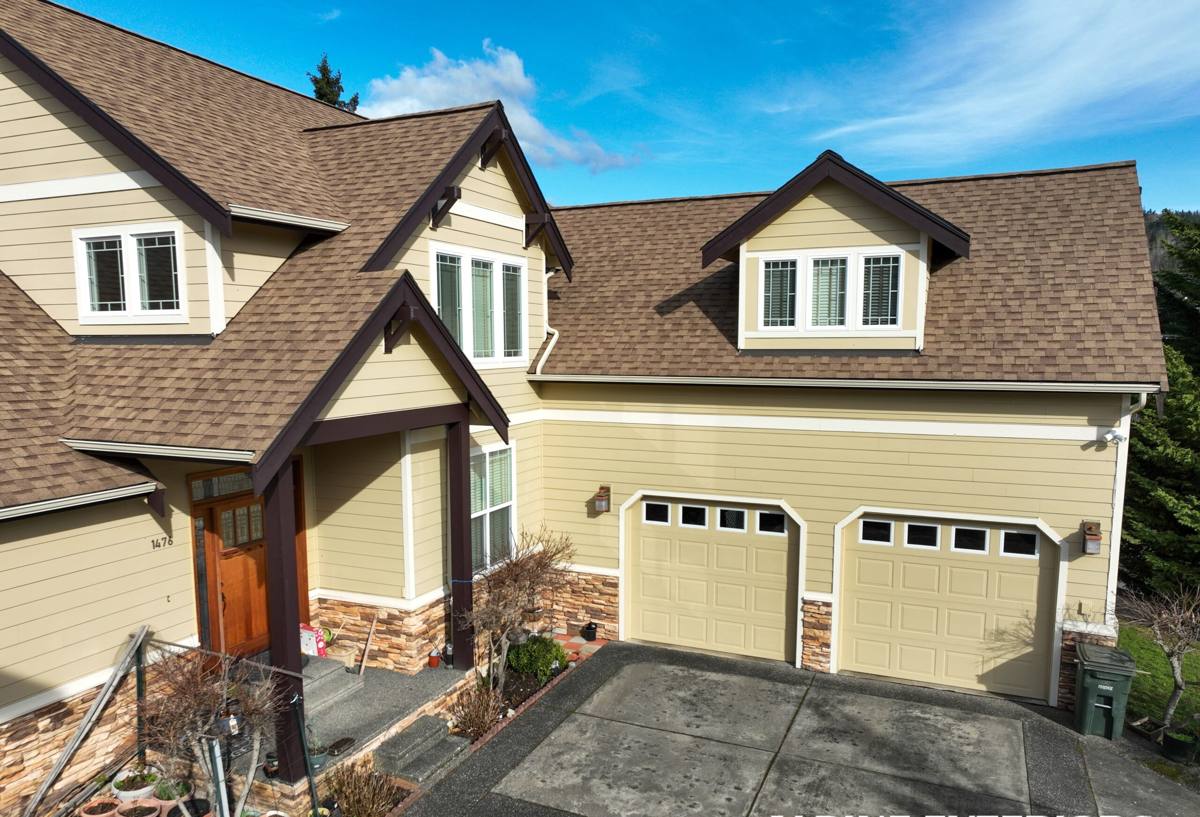
What Salt Air, Rain, and Moss Actually Do to a Deck
It helps to understand the specific mechanisms at work, because they drive nearly every material and construction decision we make.
Salt Air and Metal Fatigue
Homes closer to Semiahmoo Bay and the broader Salish Sea shoreline deal with airborne salt that settles on exposed metal. Ordinary electro-galvanized screws, joist hangers, and bolts can start showing surface corrosion within a couple of seasons in a salt-exposed setting. Once a fastener starts to corrode, it loses holding strength long before it looks obviously bad — which is why the hardware spec matters as much as the lumber spec.
Rain, Standing Water, and Rot
Bellingham gets a long stretch of the year with frequent, sustained rain rather than short heavy downpours. That means wood surfaces, ledger connections, and framing joints stay damp for extended periods rather than getting a quick soak and a fast dry-out. Any spot where water can pool — a poorly sloped board, a ledger without proper flashing, end grain left exposed — becomes a rot starting point over a few wet seasons.
Moss, Algae, and Slip Risk
Shaded decks, north-facing decks, and decks under tree cover in this region grow moss and algae far more readily than most homeowners coming from drier climates expect. Beyond the cosmetic issue, moss on a walking surface holds moisture against the board and gets slick and genuinely dangerous underfoot, especially on stairs. Deck design — spacing, surface texture, drainage, and sun exposure — has a real effect on how bad this gets and how often it needs attention.
Choosing the Right Decking Material for This Climate
There's no single "best" decking material — there's a best material for a given budget, look, and maintenance appetite, once you account for local conditions. Here's how the common options actually perform in a wet, salt-influenced climate like ours.
| Material | Upfront Cost | Moisture & Salt Behavior | Maintenance | Realistic Lifespan Here |
|---|---|---|---|---|
| Pressure-treated lumber | Lowest | Prone to cupping, splitting, and moss growth if not sealed and maintained | Annual cleaning; re-sealing every 1-2 years | 10-15 years with upkeep |
| Cedar | Mid | Naturally rot-resistant, but surface grays and needs sealing to stay tight against rain | Sealing/staining every 1-2 years; periodic cleaning | 15-20 years with upkeep |
| Composite decking | Higher | Doesn't rot or splinter; some early-generation boards were prone to surface mold in shaded, damp spots | Periodic washing to clear moss/algae film; no sealing | 25+ years |
| PVC/capped polymer decking | Highest | Fully moisture-sealed board; best resistance to moss staining and moisture intrusion | Occasional washing | 25-30+ years |
Composite and capped polymer boards have become the more common choice for shaded or heavily rain-exposed decks in Whatcom County simply because they take the moisture-and-moss cycle out of the maintenance equation. That said, real wood is still the right call for homeowners who want a specific traditional look and are willing to stay on top of sealing — and we're glad to build either one correctly.
What a Correctly Built Deck Involves Here
Ledger Attachment and Flashing
The ledger board — where the deck attaches to the house — is the single most common failure point on decks we're called to repair. It needs proper through-bolting (not just lag screws driven into siding), a code-compliant flashing detail that sheds water away from the house band board, and a gap or flashing membrane that keeps water from wicking behind the siding. Skipping or shortcutting this detail is invisible on day one and a structural problem by year three or four.
Fastener and Hardware Selection
Given the salt air common along this stretch of Washington's coast, we spec stainless steel or heavy hot-dip galvanized fasteners and structural hardware rather than standard coated screws, particularly on decks with any water exposure or proximity to the shoreline. It costs more up front and is one of the cheapest insurance policies against early corrosion-driven failure.
Drainage and Slope
Every deck surface should have a slight slope away from the house — typically a small fraction of an inch per foot — so water sheds instead of pooling. Board spacing and under-deck drainage (on covered or multi-level decks) also matter for keeping framing dry and reducing the standing moisture that feeds moss growth.
Railings, Stairs, and Code
Guard height, baluster spacing, stair rise/run consistency, and graspable handrail requirements are all governed by Washington building code, and inspectors here check them. Beyond passing inspection, correct stair geometry and secure railings matter for basic safety on a surface that's wet more often than not.
Our Deck-Building Process
- Site visit and design. We look at sun exposure, drainage, existing structure, and how the space will actually be used, then talk through material options honestly — including trade-offs, not just upsells.
- Permitting and engineering. Most new decks and significant rebuilds in Whatcom County jurisdictions require a permit. We handle the permit process and make sure footings, ledger attachment, and framing meet current code.
- Framing. Correct footing depth, joist spacing rated for the intended board and load, proper ledger flashing, and corrosion-resistant hardware throughout.
- Decking, railings, and finish work. Board installation with attention to spacing and drainage, railing installation to code, and any finish or sealing appropriate to the material chosen.
- Final walkthrough. We go over the finished deck together, cover basic care for the specific material installed, and make sure everything meets the plan we agreed on.
Maintenance for a Bellingham Moss Season
Even a well-built deck needs some seasonal attention in this climate. A simple, realistic maintenance rhythm goes a long way:
- Sweep debris and standing leaf litter off the deck regularly, especially in fall — trapped organic matter is what feeds moss and holds moisture against boards.
- Wash the surface once or twice a year with a deck-safe cleaner to break up early moss and algae film before it gets established, particularly on shaded or north-facing sections.
- Avoid pressure-washing wood decking on high settings — it can strip fibers and open the surface to faster water absorption.
- For wood decks, inspect the sealant/stain film each spring; if water stops beading on the surface, it's time to reseal.
- Check railings, stair connections, and any visible hardware annually for corrosion or loosening, especially on decks closer to the water.
- Keep gutters and downspouts near the deck clear so roof runoff isn't dumping extra water onto or under the deck structure.
Common Problems We See on Older or DIY-Built Decks Locally
A lot of our deck work in the Bellingham area is rebuilding or repairing decks that were built without this climate in mind. The patterns repeat: ledger boards attached with lag screws and no flashing, standard coated deck screws that are visibly rusting within a few years, boards laid flat with no drainage slope so water sits and grows moss almost immediately, and railings that have loosened because the posts weren't bolted through to solid framing. None of these are dramatic mistakes — they're the kind of shortcuts that look fine at handoff and only show up as problems once the deck has been through a few full Whatcom County winters.
Why Hiring a Crew That Already Works Bellingham Matters
Deck-building knowledge that works in a dry climate doesn't transfer cleanly here. A crew that builds decks year-round in Bellingham already knows which fastener grade holds up near the water, how much slope actually sheds water under sustained rain rather than just heavy short storms, and which decking products handle a shaded, moss-prone yard without turning into a maintenance headache. That local pattern-recognition — plus familiarity with the permitting requirements in Whatcom County jurisdictions — is the difference between a deck that's designed for a brochure and one that's designed for the actual weather it's going to sit in.
We also stand behind the work with straight answers about trade-offs rather than steering every homeowner toward the most expensive option. Some homeowners want low upfront cost and are fine with a wood deck maintenance routine; others want to install it once and mostly forget about it. Both are reasonable choices as long as the framing, fasteners, and drainage underneath are done correctly.
Get a Free Estimate for Your Bellingham Deck Project
If you're planning a new deck, replacing an aging one, or dealing with rot, moss, or loose railings on your current deck, we're glad to take a look and give you an honest assessment — no pressure, no obligation. Use the form below to request a free estimate and we'll walk through your options together.