 Semiahmoo Siding
 Siding Repair in Lynden, From a Crew That Already Works Whatcom County
Lynden sits inland from the water, but it's not sheltered from the weather patterns that drive most siding failures across Whatcom County. We're based out on the Semiahmoo waterfront near Blaine, and the drive inland to Lynden's farmland and residential streets is one we make regularly — this isn't a one-time trip to bid a job and move on. Siding repair is a different discipline than new installation. It starts with figuring out what's actually wrong, how far it's progressed, and whether a targeted fix will hold or whether it's covering up a bigger problem. Get that diagnosis wrong and a repair either wastes money on cosmetic patching or leaves real water damage in place to keep spreading behind the wall.
This page covers what typically damages siding on Lynden homes, how we tell a cosmetic issue from a structural one, what a correct repair actually involves, and why we do all of our repair and installation work in James Hardie fiber cement rather than servicing every siding brand on the market.
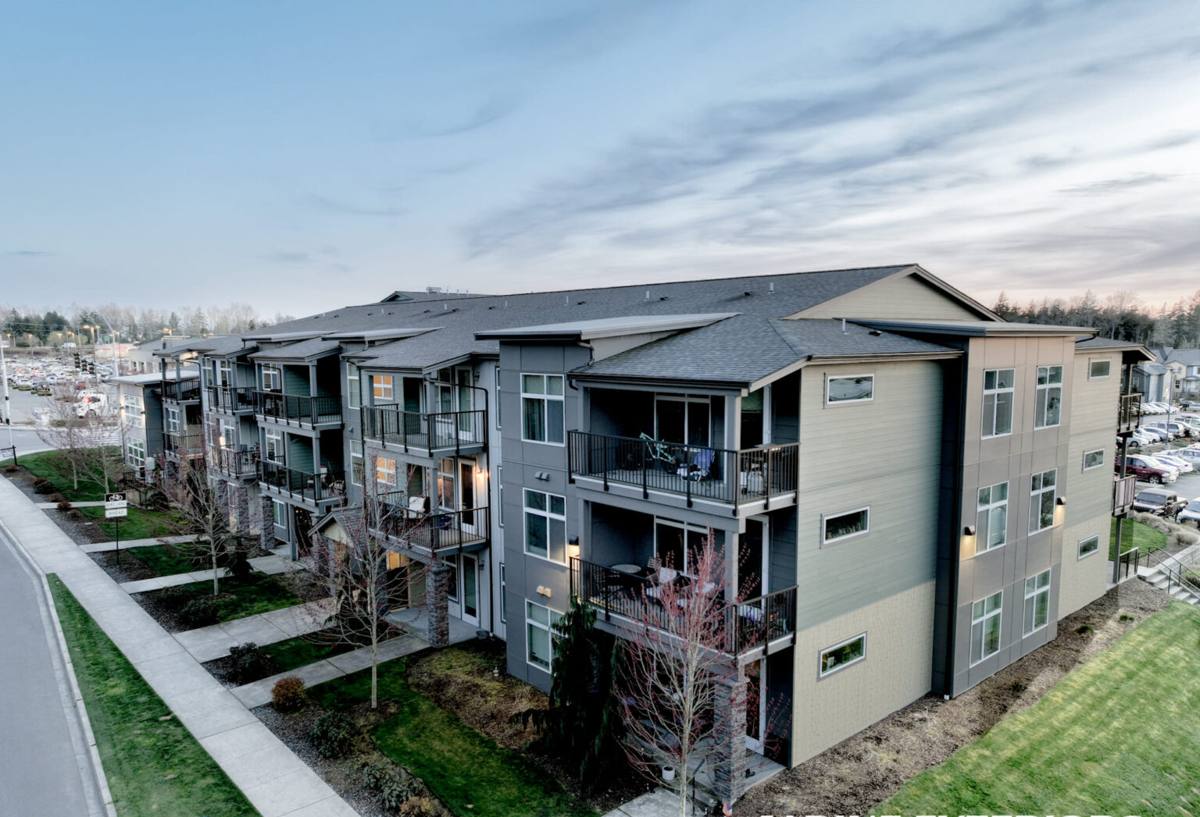
What Actually Damages Siding on a Lynden Home
Salt Air, Even This Far Inland
Lynden isn't on the water the way our home base near Semiahmoo is, but marine air moves across this whole part of Whatcom County, and it doesn't stop at the coastline. Over years, that salt-laden air accelerates corrosion in fasteners, flashing, and lower-grade trim hardware. It's slower and less obvious than what we see on waterfront properties, but it's a real factor in why fastener heads rust, trim hardware fails early, and paint on non-factory-finished siding breaks down faster than homeowners expect.
Wind-Driven Rain
Rain in this region rarely falls straight down through the fall and winter storm season. Wind pushes it sideways into wall assemblies, lap joints, and the transitions where trim meets siding or roof meets wall. That sideways load is what actually causes most of the water intrusion we find behind Lynden siding — not a failure of the material itself, but a gap, a poorly sealed joint, or a flashing detail that wasn't built to handle rain coming in at an angle instead of straight down.
A Long Moss and Mildew Season
Mild temperatures and near-constant moisture add up to a moss and mildew season that can run close to year-round on shaded, north-facing walls. Lynden's mix of open farmland and tree-sheltered residential lots means this varies a lot from house to house — a wall facing open field dries out fast, while one backed up against a tree line often stays damp for weeks at a stretch. Any siding that's even slightly porous, or that holds moisture against the substrate instead of shedding it, becomes a growth surface over time, and that growth traps even more moisture against the wall behind it.
Cosmetic Wear vs. Structural Damage
Not every issue on aging siding calls for the same response, and telling the two apart correctly is the actual job of a repair estimate — not just naming what's visible on the surface.
| Symptom | Usually Cosmetic | Often Structural |
|---|---|---|
| Faded or chalky paint on the surface | Yes — normal weathering and UV exposure | Only if paired with soft or swollen boards underneath |
| Moss or algae staining that returns after cleaning | Yes, if the substrate is still firm | Can indicate trapped moisture if it keeps recurring quickly |
| Soft or spongy panel, especially low on the wall | No | Yes — rot or sustained moisture intrusion |
| Cracked or buckled panel after a windstorm | Sometimes, if isolated and dry underneath | Often — check the sheathing behind it before patching |
| Rust streaking below fasteners or trim | Cosmetic if isolated | Can point to failing fastener hardware underneath |
| Gap or separation at a seam or corner trim | No | Yes — an active entry point for wind-driven rain |
Cosmetic wear affects appearance and can usually be scheduled as routine maintenance. Structural issues mean water or rot has already reached the sheathing or framing behind the siding, and those shouldn't sit on a maintenance list for next season — the damage tends to get worse, and more expensive, every wet month it's left alone.
How We Diagnose Siding Before Recommending a Repair
A repair estimate that's actually useful comes from a real inspection, not a guess based on what's visible from the driveway. On a Lynden home, that typically includes:
- Checking for soft spots by hand around window and door trim, low on the wall, and at any panel seam — not just a visual pass
- Looking at how each wall's exposure — open field versus tree-shaded — has affected moss growth and moisture retention differently across the house
- Inspecting flashing at windows, doors, and roof-to-wall transitions, since these are the most common points where wind-driven rain actually gets behind the siding
- Checking fastener condition for early rust or pull-through, particularly on older or non-factory-finished siding
- Probing suspect areas to confirm whether damage is limited to the surface material or has reached the sheathing underneath
- Noting whether damage is isolated to one or two walls or spread across the house, since that changes the repair scope significantly
We walk through what we actually find — what needs attention now, what can be monitored, and what's purely cosmetic — before recommending a scope of work.
Repair vs. Replace: How That Decision Gets Made
Homeowners often assume any siding problem means a full re-side, or the opposite — that a repair will always be the cheaper, equally good answer. Neither assumption holds up consistently. What actually drives the decision:
- Extent of sheathing damage. Localized rot behind a section of siding is usually repairable. Widespread moisture damage across multiple walls often isn't worth chasing panel by panel.
- Age and material of the existing siding. Older wood-based or non-factory-finished siding nearing the end of its practical life may only have a repair cycle or two left before replacement becomes the more sensible path.
- Whether the damage is a symptom of a bigger issue. Siding damage that traces back to a failing roof-to-wall detail or a leaking window will keep recurring until that root cause is fixed, regardless of how many times the siding itself gets patched.
- How much of the house is affected. Damage isolated to one or two walls is a strong repair candidate. Damage spread broadly across the exterior often means the underlying moisture problem is systemic, not local.
We'll give a straight answer on which category a given home falls into, including when replacement is genuinely the better value, instead of defaulting to whichever job is bigger.
What a Correct Siding Repair Involves
Matching Panel Profile and Finish
Repairing James Hardie siding means matching the existing panel profile, exposure, and, where possible, color. Because ColorPlus finishes are baked on at the factory and color offerings shift over time, matching an older installation exactly isn't always possible — we'll tell you upfront if that's the case rather than after the work is done, so there are no surprises on a visible wall.
Addressing the Cause, Not Just the Panel
A rotted section of sheathing or a swollen panel is a symptom. A failed flashing detail, a gap at a trim joint, or years of trapped moisture behind non-breathing siding is usually the cause. A repair that swaps the damaged panel without correcting what let water in behind it tends to fail again in the same spot, often faster the second time because the underlying path for water was never closed off.
Flashing and Water Barrier Detail
Since most of what we find behind failed siding traces back to water getting in rather than the material itself breaking down, we pay close attention to house wrap, flashing, and sealant detail at every repair point — not just the panel being replaced. This is the step that's easiest to rush and hardest to inspect once new siding is up, so we treat it as standard practice, not an add-on.
Installed to Manufacturer Spec
James Hardie's warranty coverage depends on installation following their published specifications, and that standard applies to repair work the same as new installation — correct fastener type and spacing, proper clearances, and correctly sealed joints. We hold repairs to that spec as the baseline.
Why We Only Repair and Install James Hardie Fiber Cement
We used to work with a broader range of siding products. We narrowed that down to one system after seeing, repeatedly on repair calls across Whatcom County, what actually holds up in this climate versus what looks fine on a spec sheet and starts failing a few wet seasons in.
- Non-combustible core: Fiber cement doesn't feed a fire the way wood-based siding products can, which matters for both safety and insurance underwriting.
- Factory-applied ColorPlus finish: Baked on under controlled conditions rather than brushed on in the field, it holds color and adhesion far longer under sustained moisture and UV exposure than site-applied paint.
- Climate-engineered HZ product lines: Hardie's HZ5 formulation is built for regions with significant moisture exposure and freeze-thaw cycling, which describes Lynden and the rest of Whatcom County well.
- Dimensional stability: Fiber cement doesn't swell, cup, or warp the way engineered wood siding can after repeated wetting cycles over a long wet season.
- A strong transferable warranty: Backed by one of the more substantial warranty structures in the industry, provided installation and repair follow Hardie's published specs.
We don't install or repair LP SmartSide, vinyl siding, Cemplank, Allura, primed spruce, or cedar. Each has a place in the market, and plenty of homeowners are satisfied with them. Our call is a professional one: we'd rather bring deep, specific expertise to one system we fully stand behind than spread our crew thin across several products with uneven results. On a repair call, that focus means we know exactly what a correctly repaired Hardie wall should look like when we're done — not just what covers the damage for now.
What Affects Siding Repair Cost on a Lynden Property
Every estimate is specific to the house, but a few factors consistently move the number: how much of the exterior is affected versus isolated to one or two walls, whether the sheathing underneath needs repair once damaged siding comes off, how much trim and detail work surrounds the repair area, and whether an exact color and profile match is available for the existing siding. We walk through those factors specifically during the estimate rather than handing over a flat number with no explanation behind it.
Signs a Lynden Home's Siding Needs a Repair Call
- Moss or dark staining that returns quickly after cleaning, especially on shaded or north-facing walls
- Soft or spongy siding, particularly low on the wall or around window and door trim
- Cracked, buckled, or missing panels after a windstorm
- Visible gaps or separation at seams, corners, or trim joints
- Rust staining running down from fasteners or trim hardware
- Musty odors or staining on interior walls that back up to exterior siding
- Peeling paint or visible warping on older wood-based or engineered wood siding
None of these automatically mean a full re-side is necessary, but each is worth a professional look before another wet season adds to the damage rather than after.
Why a Semiahmoo-Based Crew That Already Works Lynden Matters
Our home base is out on the Semiahmoo waterfront, but Lynden is a community we work in regularly, not a place we're learning on your project. That repeated exposure across different parts of Whatcom County — from open-water salt exposure on the spit to the farmland-and-treeline mix around Lynden — shapes real decisions on a repair call: which wall orientations on a given property stay damp longest, where a flashing detail is worth extra attention, and whether a panel that looks fine from ten feet away is hiding something underneath. It also means that if a repair needs a warranty follow-up or a question comes up years later, it's a call to a crew still working this county, not one that's moved on.
If your Lynden home has siding that needs a second look — a soft spot, storm damage, recurring moss, or just a general assessment of where things stand — we're glad to come take a look and give you a straightforward, no-pressure estimate. Reach out using the form below to get started.