 Semiahmoo Siding
 Window Installation in Lynden: Built for This Climate, Not Just Any Climate
Lynden sits inland from the water, but the weather here doesn't care about that distinction. The same marine-driven system that pushes moisture off the Salish Sea keeps Whatcom County wet, gray, and humid for a good chunk of the year. Add driving rain that comes in sideways during winter storms, a moss season that seems to start earlier every fall, and the kind of temperature swings that make wood and vinyl expand and contract, and you've got a climate that is genuinely hard on windows. A window installed correctly in Arizona can fail in five years here if it's installed the way an out-of-town crew installs it. That's the whole reason this page exists — window installation in Lynden is its own trade problem, not a smaller version of a general window job.
This page covers what local homes actually need from a window installation, what a correct job looks like from the inside out, how we approach the work, and why hiring a crew that already installs windows in this specific area matters more than it sounds like it should.
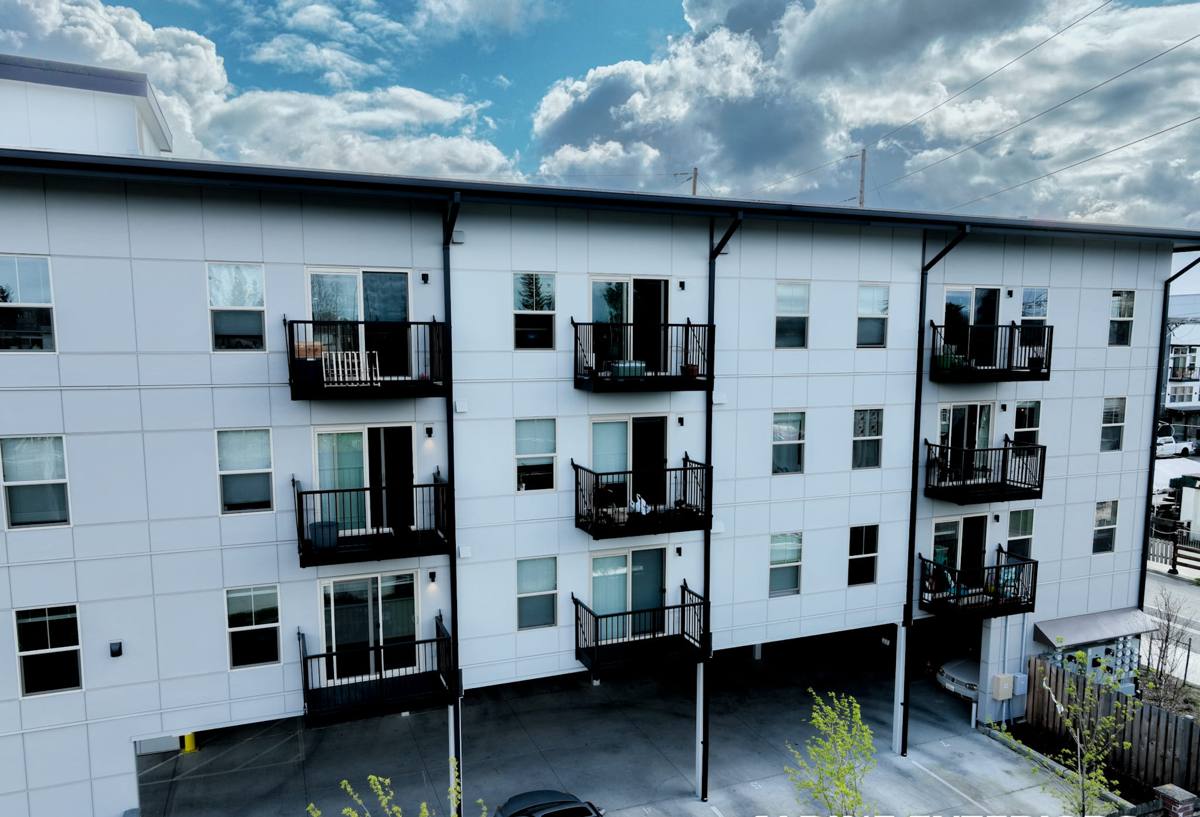
What Whatcom County Weather Actually Does to Windows
Most window failures we see in this area aren't glass failures — they're installation and moisture-management failures. Understanding what's working against a window here helps explain why the install matters as much as the product.
Driving Rain and Wind-Driven Moisture
Wind-driven rain doesn't just fall on a window — it gets forced sideways and upward under sills and around trim, especially during the fall and winter storm pattern this region gets. If the flashing and sealant details around a window aren't done in the right order, water finds its way behind the frame instead of running off it. That's a slow leak that can go unnoticed inside a wall cavity for years.
Sustained Humidity and Moss
Long stretches of damp, low-sun weather are exactly what moss, algae, and mildew need to take hold on siding, trim, and window sills. Beyond the cosmetic issue, sustained moisture sitting against wood trim or an aging sill accelerates rot. Windows with poor drainage paths or caulked-shut weep systems are the ones we see with soft trim and stained interior sills first.
Salt-Influenced Air and Coastal Exposure
Whatcom County's proximity to the Salish Sea means salt-laden air is part of the regional exposure profile, particularly on exterior metal components — hinges, cranks, screen frames, and lower-grade cladding on vinyl or aluminum windows. It's a slower factor than the rain, but over a couple of decades it shows up as corrosion and stiff, sticking hardware on windows that weren't spec'd for it.
What a Correct Window Installation Actually Involves
A window installation isn't just "remove old window, set new window, caulk the edges." Done correctly, it's a sequence, and skipping or reordering steps is where most long-term problems start.
- Opening inspection first. Before anything gets ordered or set, we check the rough opening for rot, soft framing, or existing water damage — this is often where the real story of a leaky window is written.
- Sill pan flashing. A sloped, sealed sill pan under the window gives any water that does get past the frame somewhere to go — out, not into the wall.
- Proper flashing sequence (shingle-style). Flashing tape and building paper have to be layered so water always sheds downward and outward, never trapped behind a layer above it.
- Correct fastening and shimming. A window that's out of square or not shimmed evenly will bind, won't seal against its own weatherstripping, and stresses the frame over time.
- Low-expansion foam or backer rod, not just caulk. Gaps around the frame need to be insulated and air-sealed properly, not just filled with expanding foam that can bow the frame if overused.
- Exterior trim and sealant as the last line, not the only line. Caulk is a finish detail here — if it's doing all the water-management work, the install underneath it wasn't done right.
Choosing a Window Material for This Climate
There's no single "best" window material — there's a best fit for how much moisture exposure a wall faces, the home's age, and the budget. Here's how the common options actually perform in a wet, moss-prone climate like this one.
| Material | Moisture Behavior | Maintenance | Typical Lifespan Here |
|---|---|---|---|
| Vinyl | Won't rot; can warp if lower-grade product sees prolonged direct sun/heat cycling | Low — occasional cleaning of tracks and weep holes | 20–30 years with quality install |
| Fiberglass | Very stable in wet/dry cycling; minimal expansion and contraction | Low | 30+ years |
| Wood (clad exterior) | Excellent insulator, but exposed or poorly sealed wood is vulnerable to the region's sustained damp | Higher — exterior cladding and interior wood need periodic inspection | Varies widely with maintenance |
| Aluminum | Prone to condensation and, over decades, corrosion in salt-influenced air | Moderate | Shorter than the above unless thermally broken |
For most Lynden homes, we steer people toward vinyl or fiberglass for straightforward, budget-conscious replacements, and clad-wood where the homeowner wants a specific interior wood look and is willing to keep up with it. We don't push any one brand — the honest answer is that the installation quality determines performance more than the material label on the window.
Our Window Installation Process
- On-site assessment. We look at existing windows, framing condition, and any visible water staining or trim damage before quoting anything.
- Accurate measurement and ordering. Windows are measured to the actual opening, not a catalog size — this matters for older Lynden homes that weren't always built to modern standard dimensions.
- Removal and opening prep. Old windows come out carefully so we can inspect and, if needed, repair the framing before a new window ever goes in.
- Flashing and sill pan installation. This is the step that determines whether the window stays dry for the next 20 years — we don't skip it or shortcut it.
- Setting, leveling, and shimming. The window is set plumb, level, and square, then fastened per manufacturer spec so the warranty stays valid.
- Insulation, air sealing, and exterior trim. Gaps get properly insulated, and exterior trim is finished to shed water, not just look finished.
- Final walkthrough. We check operation, locks, and seals with the homeowner before calling the job done.
Signs Your Current Windows Are Past Their Job
Not every drafty window needs full replacement, but these are the signs worth a professional look, especially given how this climate accelerates window problems:
- Fogging or condensation between panes (failed seal on a double- or triple-pane unit)
- Soft, discolored, or moss-covered wood trim around the frame
- Visible daylight or a noticeable draft along the frame edges
- Windows that are hard to open, close, or lock — often a sign of a warped or settling frame
- Interior sill staining or peeling paint, which usually points to water getting behind the frame
- Noticeably higher heating bills in a home whose windows haven't been touched in 20+ years
What Affects the Cost of a Window Installation
We won't quote a number without seeing the job, but these are the factors that actually move the price up or down, so you can budget realistically before we ever get on-site.
| Factor | Why It Matters |
|---|---|
| Number and size of windows | Straightforward volume driver, but larger units also need more careful flashing and support |
| Framing condition | Rot or water damage found once old windows are removed adds repair time before the new unit can go in |
| Material choice | Vinyl is typically the most budget-friendly; fiberglass and clad-wood cost more up front but can cost less over the window's life |
| New construction vs. retrofit/replacement | Retrofit into an existing opening is usually faster and less invasive than a full frame-out replacement |
| Access and site conditions | Second-story windows, tight landscaping, or limited driveway access can add labor time |
Why It Matters That We Already Work in Lynden
A crew that installs windows regularly in this part of Whatcom County has already seen how local homes were built, what the common framing quirks are on houses from different eras, and how this specific weather pattern behaves against a house through a full year — not just a dry-season install that looks fine until the first real winter storm. That familiarity shows up in small decisions: how much slope to build into a sill pan for this rainfall pattern, which trim details actually shed the kind of driving rain this area gets, and which materials are worth the extra cost given how long moss season really runs here. It's the difference between a window that's installed and a window that's installed for this place.
If your windows are drafty, fogged, hard to operate, or just old enough that you're wondering, we're glad to take a look and give you a straight answer — no pressure, no upsell. Reach out for a free estimate using the form below.