 Semiahmoo Siding
 Building Decks That Hold Up in Birch Bay's Marine Climate
A deck in Birch Bay does a different job than a deck fifty miles inland. It sits close to Semiahmoo Bay, catches salt-laden wind off the water, and spends a good chunk of the year under low clouds and steady drizzle. Add in a moss season that can stretch from fall through spring, and you have an environment that's genuinely harder on outdoor wood and hardware than most of Washington. A deck built without that in mind will look fine for a year or two and then start showing problems: soft boards, rust bleed at the fasteners, algae film that turns steps slick, and railings that loosen because the posts were never properly flashed.
We build decks for Birch Bay the way the location actually requires — not with a generic build that happens to also work here, but with material choices, framing details, and drainage planning aimed specifically at salt exposure, driving rain, and prolonged damp shade. That's the difference between a deck that needs real work again in five years and one that's still solid in twenty.
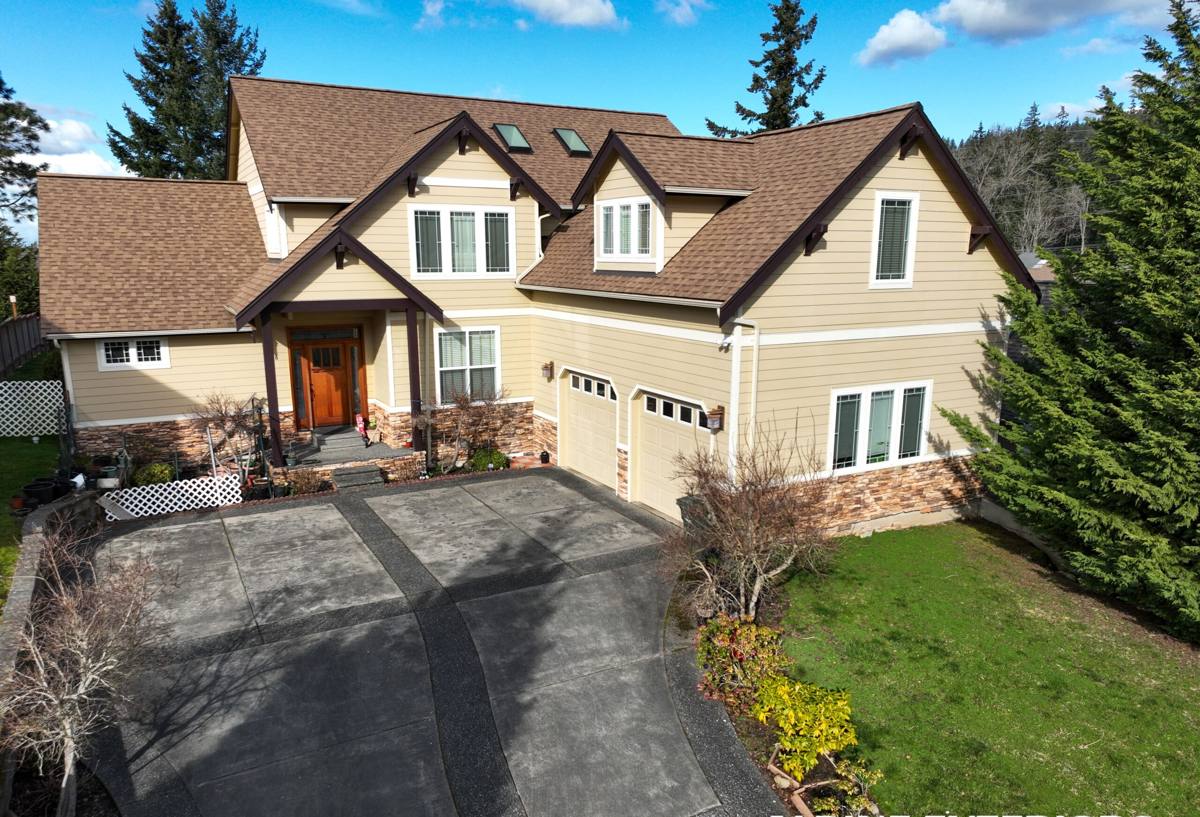
What Makes Birch Bay Different From an Inland Deck Job
Three things drive most of our decisions on a Birch Bay deck, and they all trace back to the same cause: this is a coastal, marine-influenced site in Whatcom County.
Salt Air
Airborne salt accelerates corrosion on anything ferrous. Standard fasteners, cheap joist hangers, and unprotected steel brackets will rust well before the wood around them fails. Once a fastener starts rusting, it weakens, stains the surrounding wood, and can eventually let a connection work loose.
Driving Rain
Wind off the water doesn't just bring rain straight down — it pushes it sideways, under railings, behind ledger boards, and into any gap that isn't properly flashed or sealed. Water that gets trapped instead of shedding is the single biggest cause of hidden rot in coastal decks.
Moss Season
Shade, moisture, and mild temperatures are exactly what moss and algae need. On a deck, that growth isn't just cosmetic — it holds moisture against the wood surface and makes stairs and low-traffic areas dangerously slick, especially on smooth-faced boards.
Choosing the Right Decking Material for Salt Air and Moss
There's no single "best" decking material for every Birch Bay home — it depends on your budget, how much upkeep you want to do, and how the deck is used. Here's how the common options actually perform in this climate.
| Material | How It Handles Salt Air & Rain | Moss / Algae Behavior | Upkeep |
|---|---|---|---|
| Pressure-treated wood | Good if fasteners and hardware are corrosion-resistant; wood itself resists rot well when sealed | Needs regular cleaning; textured grain holds moisture | Annual cleaning, re-sealing every 2-3 years |
| Cedar | Naturally rot- and insect-resistant, but softer and more prone to weathering in driving rain | Similar to pressure-treated; benefits from periodic cleaning | Regular sealing/staining to maintain appearance |
| Composite decking | Excellent — doesn't absorb water or rot, unaffected by salt | Can still grow surface algae in shaded, damp spots; textured caps reduce slip but need occasional washing | Low — periodic washing, no sealing or staining |
| PVC decking | Excellent — fully moisture-resistant | Same as composite; smooth surfaces can be slicker when wet | Low — washing only |
For most Birch Bay homeowners who want to spend less time maintaining the deck and more time using it, we lean toward composite or PVC decking with a slip-resistant surface texture. For homeowners who prefer the look and feel of real wood and are willing to keep up with sealing, we build with cedar or properly rated pressure-treated lumber — but we're upfront that it's a higher-maintenance choice in this climate, not a lower-quality one.
Framing and Footings: Where Most Deck Failures Start
The decking surface gets all the attention, but the framing underneath is what determines whether a deck lasts. In a wet, salt-exposed environment like Birch Bay, we pay particular attention to a few things that are easy to skip and expensive to fix later:
- Footings sized and set below frost depth, with proper drainage so standing water doesn't sit against concrete or posts
- Ledger board flashing that actually sheds water away from the house rim joist, not just a bead of caulk
- Joist tape or comparable protection on top of every joist to keep standing water off end grain
- Corrosion-resistant, coastal-rated hardware on every hanger, bolt, and screw — not just at visible connections
- Airflow underneath the deck so framing can dry out between rain events instead of staying damp for weeks
None of this is visible once the deck is finished, which is exactly why it matters. A deck that looks identical from the surface can have a completely different lifespan depending on what's underneath.
Railings, Fasteners, and Hardware Built for Coastal Exposure
Railings take more abuse than people expect — they're handled constantly, exposed on all sides, and often the first thing to show rust or wobble on a coastal deck. We use fasteners and structural hardware rated for corrosive, coastal environments rather than standard interior-grade hardware, because the price difference is small and the failure difference is not. Post bases get flashed and set to avoid standing water at the base of the post, which is the spot we see rot start most often on older decks in this area.
For the railing infill itself — wood balusters, metal, or cable — we walk through the tradeoffs with you honestly. Metal and cable systems hold up well to salt air when properly finished, but require corrosion-resistant components throughout, not just at the visible parts.
Our Deck Building Process From Estimate to Final Walkthrough
We keep the process straightforward and communicate at each stage so there are no surprises.
- On-site assessment: We look at your home's exposure, existing grade and drainage, and how you plan to use the deck before recommending materials.
- Design and material selection: We walk through decking, railing, and hardware options with real cost and maintenance tradeoffs, not just a sales pitch for the most expensive option.
- Permitting: We handle the permit process with Whatcom County where required, including footing and structural details.
- Framing and footings: Built to the drainage, flashing, and hardware standards described above.
- Decking, railing, and finish work: Installed to manufacturer spec so warranties stay intact.
- Final walkthrough: We go over the finished deck with you, including what maintenance it needs and when.
Maintenance: What Birch Bay Decks Need Year-Round
Even a well-built deck needs some seasonal attention in this climate — the goal is to keep water and organic growth from ever getting a foothold.
Spring and Fall
Clear leaves and debris from between boards and off ledger flashing where water can pool. This is also the best time to check for early moss growth before it spreads.
Moss Season
A periodic wash — plain water and a stiff brush, or a deck-safe cleaner for wood — keeps algae and moss from building up on the surface and in shaded corners. Letting it accumulate makes steps and low spots slippery and holds moisture against the boards.
Wood Decks Specifically
Plan on resealing or restaining every two to three years, sooner in areas that get direct salt spray or constant shade.
Hardware Check
Once a year, look over railing connections and any visible fasteners for early rust or looseness. Catching it early is a five-minute fix; ignoring it becomes a repair job.
Cost Factors for a Birch Bay Deck Project
Deck pricing varies a lot based on size, material, and site conditions, so we don't quote broad numbers without seeing the job. What we can tell you is what actually moves the price:
| Factor | Why It Affects Cost |
|---|---|
| Decking material | Composite and PVC cost more upfront than wood but less over the deck's lifetime in maintenance |
| Height off grade | Elevated decks need more substantial framing, railings, and often stairs |
| Site access and grading | Difficult access or uneven grade adds labor and sometimes additional footing work |
| Hardware grade | Coastal-rated fasteners and connectors cost more than standard hardware but are not optional here |
| Railing style | Wood, metal, and cable systems vary significantly in material and labor cost |
| Permitting and structural requirements | Footing depth, ledger attachment, and inspections are set by Whatcom County code |
We give you a firm, itemized estimate before any work starts, so you know exactly what you're paying for and why.
Why Hire a Crew That Already Works Birch Bay
A lot of deck problems we get called to fix weren't caused by bad workmanship in general — they were caused by a build that would have been fine somewhere drier, applied to a site that gets driving rain off the bay and months of damp shade. Knowing the difference between "code minimum" and "right for this location" only comes from building here repeatedly: seeing which fastener grades actually hold up, which decking surfaces stay safe underfoot through moss season, and where water actually wants to go on a coastal lot.
We're a Semiahmoo-based siding and exterior contractor working throughout Whatcom County, and deck building is part of how we think about a home's exterior as a whole system — decking connects directly to siding, flashing, and drainage decisions that affect the rest of the house. That's the perspective we bring to every deck we build here.
If you're planning a new deck or replacing one that's showing its age, we're happy to take a look and give you a straightforward, no-pressure estimate. Use the form below to get started.