 Semiahmoo Siding
 Siding Replacement Built for Lynden's Weather, Not Just Its Look
Lynden sits inland from the coast, in the farmland and river-valley country of Whatcom County, but that distance doesn't spare it from the weather that defines this part of Washington. Marine moisture off the Pacific still moves through the Nooksack valley, low clouds and fog settle over open fields, and on stormy days wind can carry a trace of salt air well past the shoreline. Add driving rain that comes in sideways during fall and winter storms, and a moss season that can stretch from October into May, and you have a climate that is genuinely hard on exterior siding — regardless of how good it looked the day it was installed.
A siding replacement in Lynden isn't just a cosmetic upgrade. Done right, it's a rebuild of the water management system protecting the structure underneath: the sheathing, the framing, the insulation, and everything inside the walls. This page walks through what that weather actually does to siding over time, what a correct replacement job looks like, and why the products and crew you choose matter more here than in a drier climate.
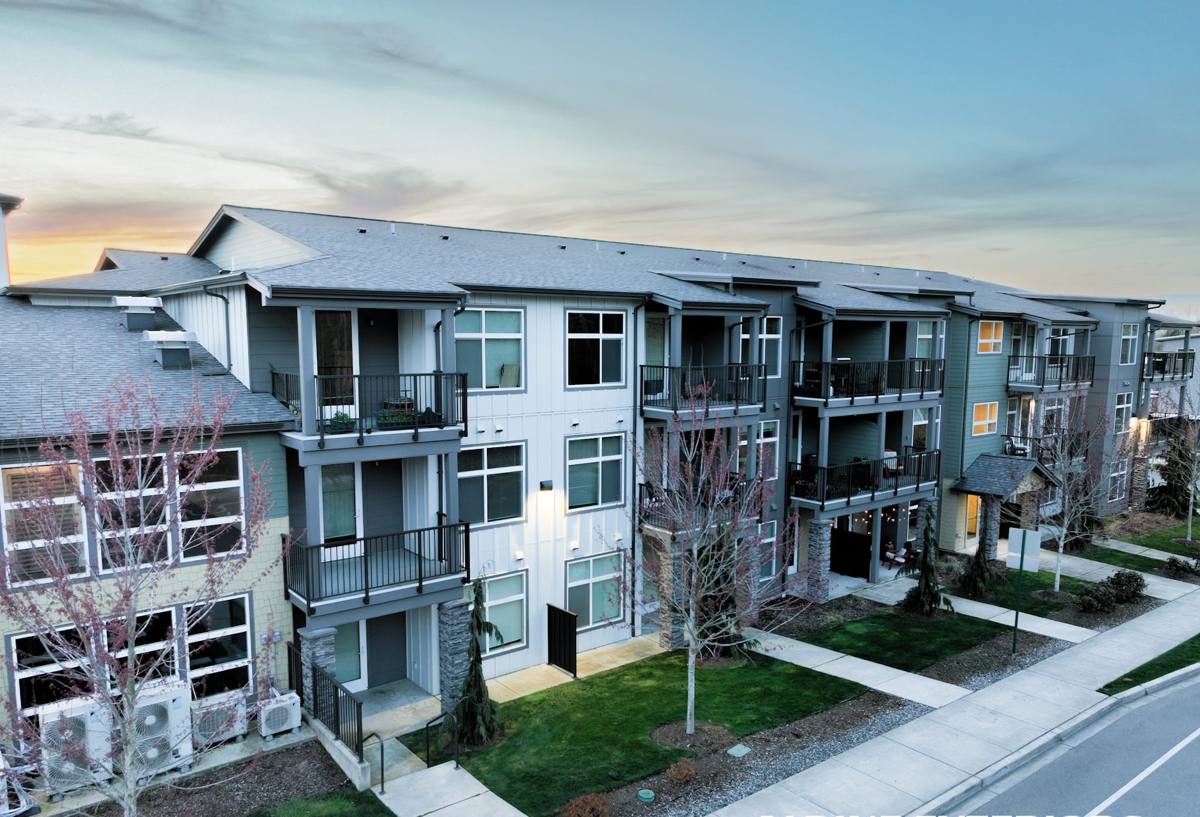
What Driving Rain and Moss Season Do to Siding Over Time
Wind-driven moisture finds every gap
Rain that falls straight down mostly runs off. Rain that's pushed sideways by wind gets forced up under laps, into seams, and behind trim — which is exactly what happens during Whatcom County's fall and winter storm systems. Over years, siding with weak seams, poor flashing, or a failing caulk joint lets small amounts of water in repeatedly. It doesn't take a flood to cause rot; it takes the same quarter-inch of water finding the same gap, storm after storm, for a decade.
Moss and algae thrive on shaded, damp surfaces
Lynden's tree cover, fence lines, and north-facing walls stay damp for long stretches in the cooler months. That's ideal growing conditions for moss and algae, which hold moisture against the siding surface far longer than open air would. On wood-based products, that sustained dampness accelerates rot. On any siding, it stains the finish and, if left to build up, can work its way into seams and fastener holes.
Temperature swings stress the material itself
Even in a mild climate, siding expands and contracts with daily and seasonal temperature changes. Materials that don't handle that movement well — through swelling, warping, or cracking — open new paths for water intrusion that didn't exist when the siding was new.
Signs a Lynden Home Needs Siding Replacement, Not Just Repair
Some damage can be patched. Other damage means the underlying material or installation has failed and repair is just delaying the inevitable. Signs worth taking seriously include:
- Soft or spongy spots when you press on the siding, especially near the bottom courses or around windows
- Visible warping, buckling, or bulging panels
- Persistent moss or algae growth that returns within a season of cleaning
- Paint that's peeling, bubbling, or chalking heavily rather than just fading
- Cracked or missing caulk at seams, corners, and trim joints
- Rising energy bills with no other explanation, which can point to moisture-saturated insulation
- Visible rot at bottom edges, corners, or anywhere siding meets the ground or a roofline
- Interior signs like musty odors, peeling wallpaper, or discoloration on walls that back up to exterior siding
If you're seeing two or more of these at once, it's usually a sign the water-resistive barrier behind the siding has been compromised, not just the visible surface.
What a Correct Siding Replacement Actually Involves
Full tear-off and inspection, not a cover-over
Installing new siding directly over old siding hides problems instead of fixing them. A correct job removes the old siding down to the sheathing, so the crew can actually see and address any rot, mold, or damaged framing before it gets sealed behind a new wall.
A properly detailed water-resistive barrier
This is the layer that does the real work of keeping a home dry — the siding is the first line of defense, but the barrier and flashing behind it are what actually stop water that gets past the surface. Given how much wind-driven rain this region sees, correct lapping, taping, and flashing at every window, door, and penetration matters as much as the siding brand on the outside.
Installation to the manufacturer's actual specification
Every siding product has an install manual covering fastener spacing, clearances above grade and roofing, gaps at butt joints, and caulking requirements. Skipping these details is the single most common reason siding fails early — and it's invisible from the street until problems show up years later.
Why We Install Only James Hardie Fiber Cement
We don't install vinyl, LP SmartSide, primed wood, cedar, or other fiber cement brands. That's a deliberate standard, not a sales pitch — it comes down to what holds up, and what we're willing to warranty, in this specific climate.
A material engineered for wet, humid climates
James Hardie's siding is fiber cement — non-combustible, and manufactured in product lines engineered for specific climate zones. The HZ5 line is built for regions like the Pacific Northwest that see sustained moisture and freeze-thaw cycles, rather than a one-size-fits-all product. Fiber cement doesn't swell, rot, or feed the kind of moss growth that thrives on wood-based siding, which matters directly for a place with Lynden's long damp season.
A factory finish that doesn't rely on field paint
Hardie's ColorPlus Technology is a baked-on factory finish, not job-site paint. It resists fading, chipping, and cracking better than field-applied paint, which is the finish that usually fails first on wood and some fiber cement competitors. That finish is backed by a real manufacturer warranty, and the product itself carries a long transferable warranty against manufacturing defects — something worth having when the whole point of the job is a siding system that outlasts the next decade of storms.
How Common Siding Materials Compare
| Material | Moisture Behavior | Moss/Algae Resistance | Finish Durability |
|---|---|---|---|
| James Hardie fiber cement | Does not absorb, swell, or rot | High — non-organic surface | Factory ColorPlus finish, long warranty |
| Vinyl | Sheds water but seams and edges can trap it | Moderate — can hold surface grime | Color molded through material, can fade and become brittle over time |
| Cedar / primed wood | Absorbs moisture, prone to swelling and rot | Low — organic material feeds growth | Relies on field paint or stain, needs regular recoating |
| LP SmartSide (engineered wood) | Treated to resist moisture but still wood-based | Moderate — better than untreated wood | Field or factory finish, sensitive to installation and edge sealing |
Our Process, Start to Finish
- On-site walkthrough of your home's current siding, trim, and any visible problem areas
- Honest assessment of whether repair, partial replacement, or full replacement is the right call
- A written estimate covering materials, tear-off, and any additional repair work uncovered along the way
- Full removal of old siding and inspection of sheathing and framing before anything new goes up
- Repair of any rot or damage found, and correct installation of the water-resistive barrier and flashing
- Installation of James Hardie siding and trim to manufacturer specification
- Final walkthrough with you before we consider the job done
What Affects the Cost of a Siding Replacement
| Factor | Why It Matters |
|---|---|
| Home size and number of stories | More surface area and access requirements (scaffolding, lifts) add labor time |
| Condition of the sheathing underneath | Rot or water damage found during tear-off has to be repaired before new siding goes on |
| Trim and detail work | Corners, window and door surrounds, and fascia detail take more time than flat wall runs |
| Siding profile and accessories | Lap width, shingle-style panels, and trim style all affect material and labor cost |
| Access and site conditions | Tight lot lines, landscaping, or fencing can slow removal and staging |
We won't quote a job without seeing the home in person — anyone who does is guessing, and guesses turn into change orders later.
Why It Matters to Hire a Crew That Already Works in Lynden
Siding installation isn't just about the product — it's about how that product is detailed against the specific weather it has to handle. A crew that regularly works Whatcom County's homes has already seen how wind-driven rain, moss, and humidity behave against different wall orientations, roof lines, and landscaping. That experience shows up in the details: where extra flashing gets added, how butt joints are sealed, and which corners of a house need the most attention.
It also matters for accountability. A local crew is easy to reach if a question comes up five years down the road, and stands behind its own work in the same community it lives and works in — not a name that shows up for one season and moves on.
If your Lynden home's siding is showing its age, we're happy to take a look and give you a straight answer about what it needs. Reach out for a free, no-pressure estimate — there's a form below to get started.