 Semiahmoo Siding
 Windows Built for Life Near Drayton Harbor
Marietta sits close to the water, tucked along the Drayton Harbor and Semiahmoo Bay shoreline in Whatcom County, and that location shapes everything about how windows perform here. Homes just a few blocks from the water take on a different kind of weathering than homes further inland. Salt-laden air corrodes hardware and fasteners faster. Driving rain off the water finds every weak seam. And the long, wet moss season coats north-facing trim and sills with organic growth that holds moisture against the frame year-round. A window that's rated fine for a dry climate can still fail early here if it isn't installed with these conditions specifically in mind.
This page covers window installation as a standalone service for Marietta homes — what the job actually involves, what tends to go wrong when it's rushed, and how we approach it as a crew that already works this stretch of Whatcom County.
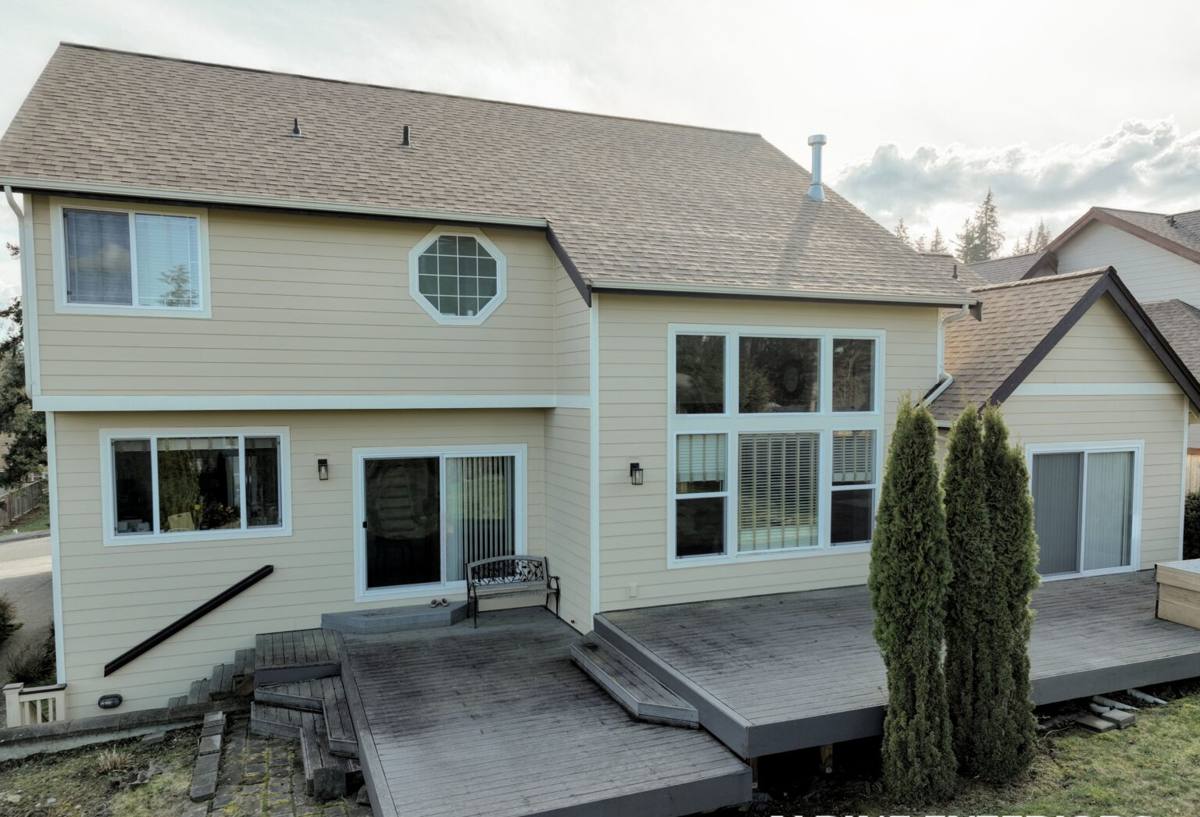
What This Climate Actually Does to a Window Opening
Before talking about the install itself, it helps to understand what we're installing against.
- Salt air corrosion: Metal fasteners, hinges, and cranks near the water corrode faster than the same hardware inland. Cheap or mismatched fasteners are often the first thing to fail.
- Wind-driven rain: Storms off the Strait of Georgia and Semiahmoo Bay don't just fall straight down — they push rain sideways into siding and window openings. A flashing detail that would hold up in a calm rain event can leak under wind pressure.
- Moss and organic growth: Shaded, north- and west-facing walls stay damp longer through fall and winter. Moss and algae hold moisture against wood trim and can work into hairline gaps around a poorly sealed frame.
- Condensation swings: Cool, humid air combined with temperature swings between day and night can drive interior condensation on older or poorly insulated windows, which over time damages sills and interior trim.
None of this means Marietta homes need exotic materials — it means the installation details that are optional in a mild, dry climate are not optional here.
What a Correct Window Installation Actually Involves
Window installation is often thought of as swapping one window for another, but the window itself is only part of the job. The install determines whether that window actually keeps water out for the next 20-plus years.
The details that matter most
- Opening inspection: Checking the rough opening for rot, soft framing, or prior water damage before anything new goes in. Installing a new window over a compromised opening just hides the problem.
- Flashing sequence: Sill pan flashing, side flashing, and head flashing installed in the correct shingle-style order so water is always directed outward and down, never trapped behind the window.
- Weather barrier integration: Tying the window flashing into the home's existing house wrap or weather-resistive barrier correctly, so the window becomes part of a continuous drainage plane rather than a separate patch.
- Shimming and squaring: Windows that aren't shimmed level and square bind, leak air, and wear out their hardware and weatherstripping early.
- Insulation and air sealing: Low-expansion foam or backer rod and sealant around the perimeter, without overfilling in a way that bows the frame.
- Interior and exterior sealant: The correct sealant type for the substrate, applied in a bead that sheds water rather than trapping it.
Skipping or rushing any one of these steps is usually invisible on install day and becomes a leak, a rot problem, or a fogged-up unit two to five years later — often outside the window manufacturer's own warranty coverage, since most product warranties exclude installation defects.
Full-Frame Replacement vs. Insert Replacement
One of the first decisions on any window job is whether to do a full-frame replacement (removing the old window down to the rough opening) or an insert/pocket replacement (installing a new window inside the existing frame). Both are legitimate approaches — the right one depends on the condition of the existing frame and what the homeowner is trying to accomplish.
| Factor | Insert (Pocket) Replacement | Full-Frame Replacement |
|---|---|---|
| Existing frame condition | Only appropriate if the frame is dry and structurally sound | Required if there's rot, soft wood, or prior water damage |
| Access to flashing | Limited — relies on the existing flashing still being sound | Full access to re-flash the opening correctly |
| Best fit for Marietta homes | Newer homes with intact, well-sealed openings | Older homes, waterfront-exposed walls, or any opening with a history of leaks |
| Glass area | Slightly reduced (new frame nests inside old) | Full original opening size preserved |
| Typical labor time | Faster, less disruption to interior/exterior finishes | Longer, more finish work involved |
Because of the moisture exposure common in this area, we lean toward recommending full-frame replacement on any opening that shows signs of past water intrusion, even if that adds time to the job. An insert replacement over a compromised frame just re-covers the same problem.
Choosing Window Materials for a Marine Climate
Material choice matters more here than in a dry inland climate, mainly because of how each material handles moisture and hardware corrosion over time.
| Material | How it holds up near the water | Maintenance |
|---|---|---|
| Vinyl | Doesn't corrode or rot; performs well in salt air; the most common choice for this area | Low — occasional cleaning, no painting |
| Fiberglass | Very stable, resists warping and expansion/contraction better than vinyl in temperature swings | Low, higher upfront cost |
| Wood-clad | Attractive interior wood look, but the exterior cladding and any exposed wood joints need to be well-sealed and inspected regularly in a wet climate | Moderate to high |
| Bare aluminum | Conducts cold and can condense heavily; not something we recommend installing in this climate | Low, but poor thermal performance |
We install quality vinyl and fiberglass windows as our standard recommendation for Marietta homes because they hold up to salt air and repeated wet-dry cycles with the least long-term maintenance. If a homeowner wants a wood-clad look, we'll install it, but we're upfront that it comes with more upkeep on this stretch of coastline than it would 50 miles inland — that's a maintenance trade-off, not a defect in the product.
How Window Installation Ties Into Your Siding
As a siding company, we look at window installation as part of the whole exterior envelope, not an isolated job. The window opening is one of the most common places for a home's weather barrier to fail, because it's where the flat plane of the siding meets a hole in the wall. If the flashing at the window doesn't integrate cleanly with the siding and house wrap above and below it, water finds that seam eventually — regardless of how good the window itself is.
This matters in Marietta specifically because many homes here take direct wind-driven rain off the water on at least one exposure. When we install windows on a home where we're also doing siding work, we can verify the whole drainage plane at once. When it's a window-only job on existing siding, we still make sure the flashing ties in correctly with what's already there rather than just caulking over the gap and calling it done.
Signs Your Marietta Home's Windows Need Attention
- Visible gaps, soft spots, or discoloration in the trim or sill around the window
- Fogging or moisture between the panes of a double- or triple-pane unit (a failed seal)
- Drafts you can feel near the frame even when the window is fully closed
- Difficulty opening, closing, or locking — often a sign the frame has shifted or swelled
- Visible corrosion on hinges, cranks, or exterior hardware
- Moss or dark staining building up on the sill or trim that keeps coming back after cleaning
- Noticeably higher heating bills in winter compared to similar-sized rooms in the house
Any one of these on its own isn't necessarily an emergency, but a few of them together — especially on a wall that faces the water or prevailing weather — usually means it's worth having someone look at the opening, not just the glass.
Our Process, Start to Finish
- Free on-site estimate: We look at the actual openings, note the exposure and condition of each one, and talk through insert vs. full-frame based on what we find.
- Straightforward quote: Written pricing by window, with the reasoning behind any full-frame recommendation explained plainly — no pressure to upsell every opening in the house.
- Scheduling around weather: Given how much rain this area gets, we plan install days to minimize how long any opening sits without a weather-tight seal.
- Removal and opening inspection: Old window comes out, and we check the framing before installing anything new.
- Flashing, install, and seal: Correct flashing sequence, shimming, insulation, and sealant — the steps that determine whether the job lasts.
- Final walkthrough: We check operation, look at the interior and exterior finish work, and answer any questions before we consider the job done.
Permits, Codes, and Local Requirements
Window replacement in Whatcom County can require a permit depending on the scope of work — particularly for full-frame replacements, egress window changes in bedrooms, or any structural modification to the opening. Washington's state energy code also sets minimum performance requirements (U-factor and, in some cases, solar heat gain coefficient) for replacement windows. We handle the permit question as part of the estimate so there are no surprises, and we make sure whatever we install meets current code rather than just matching what was there before.
Why a Local Crew Matters for This Job
Window installation is one of those jobs where a crew's familiarity with an area actually shows up in the quality of the work. A crew that regularly works Marietta and the surrounding Semiahmoo waterfront has seen how homes here age — which walls take the worst weather, where moss builds up fastest, what flashing details tend to fail on older construction near the harbor. That's not something you get from a general contractor who does one window job in the area and moves on. It means fewer surprises during the estimate, and a flashing and sealing approach that's already tuned to this specific coastline rather than a generic installation checklist.
If you're weighing whether your Marietta home's windows need attention, or you already know you want them replaced, we're happy to come take a look. The estimate is free, there's no pressure, and we'll give you an honest read on whether you need a full-frame replacement, an insert replacement, or just better sealing around what's already there.