 Semiahmoo Siding
 Why Roofs Near Semiahmoo Wear Out Faster Than Homeowners Expect
Blaine sits right where Whatcom County meets Semiahmoo Bay and the Strait of Georgia, and that location is hard on a roof. Salt-laden air moves off the water and settles on every exposed surface, which accelerates corrosion on fasteners, flashing, and any metal component that isn't rated for a marine environment. Add in driving rain that comes sideways during winter storms, and you have wind-driven water testing every seam, valley, and penetration a roof has.
Then there's moss. Shaded roof sections, north-facing slopes, and areas under tree cover stay damp for most of the year in this part of Washington, and moss doesn't just sit on top of shingles looking bad — it lifts edges, holds moisture against the roofing material, and works its way into gaps over time. A roof that would last two or three decades in a drier, sunnier climate often shows real wear here well before that, especially if it wasn't installed with this coastline in mind.
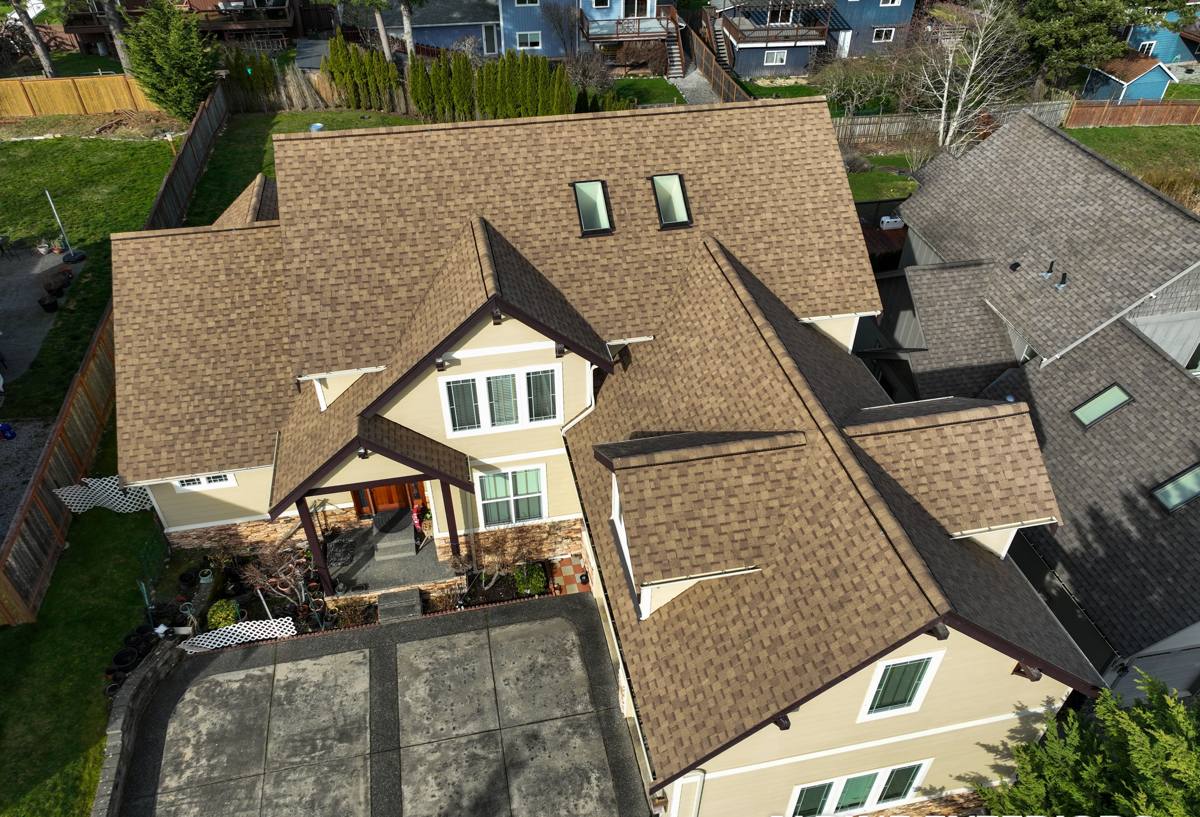
Signs a Blaine Roof Needs Full Replacement, Not Another Repair
Not every roof problem calls for a full tear-off. Isolated flashing leaks, a handful of cracked shingles, or a clogged valley can often be repaired. But repair only makes sense when the roofing material and deck underneath are still sound. Once a roof is failing broadly — granule loss across large areas, soft spots in the decking, or repeated leaks in different locations — patching becomes a cycle of spending money without solving the underlying problem.
- Shingles that are cupping, curling, or missing granules over more than a small section of the roof
- Daylight visible through the roof deck from inside the attic
- Soft, spongy, or discolored decking when walked or pressed on
- Moss coverage thick enough that it's lifting shingle edges rather than just staining the surface
- Flashing that's rusted, pulling away, or was never properly integrated at valleys and penetrations
- A roof at or past its material's expected service life, especially if it's the original roof on an older home
- Interior water stains that reappear after a repair, suggesting the leak path is bigger than one spot
If a roof is showing two or more of these, a replacement estimate is usually worth getting even if the immediate problem seems small — it tells you whether you're looking at a repair bill or a bigger decision.
What a Correct Roof Replacement Involves Here
Tear-Off and Deck Inspection
A proper replacement starts with removing the existing roofing down to the deck, not layering new material over old. That's the only way to see what's actually underneath — soft plywood, rot around penetrations, or old damage that's been hidden for years. Any compromised decking gets replaced before anything new goes down, because new shingles or panels installed over a weak deck will fail early no matter how good the material is.
Underlayment and Water Barrier Details
Given how much rain this area sees, the underlayment layer matters as much as the visible roofing material. Self-adhered ice-and-water membrane belongs at eaves, valleys, and around every penetration — the places wind-driven rain is most likely to force its way under the surface layer. Synthetic underlayment across the rest of the deck adds a second line of defense if wind ever lifts a shingle edge.
Flashing at Valleys, Chimneys, and Penetrations
Flashing is where most roof leaks actually start, not in the field of the roof itself. In a salt-air environment, we pay close attention to flashing material — coatings and metals that won't corrode prematurely — and to how it's integrated with the underlayment, not just caulked on top of it. Caulk is a backup, not a waterproofing strategy.
Ventilation That Keeps Moisture Moving
A roof system needs airflow to stay dry from the inside out. Balanced intake and exhaust ventilation prevents moisture from condensing in the attic, which matters in a climate where the air itself carries a lot of humidity for much of the year. Poor ventilation shortens the life of a new roof regardless of how well the outside was installed.
Choosing Materials That Hold Up to Salt Air and Moss
There's no single "best" roofing material for every home — it depends on budget, roof pitch, and how much maintenance you want to take on. Here's how the common options compare for a coastal Whatcom County property.
| Material | Moss & Moisture Resistance | Salt Air Durability | Maintenance |
|---|---|---|---|
| Asphalt composition shingle (standard) | Moderate — benefits from algae-resistant granules | Good with corrosion-resistant flashing and fasteners | Periodic moss treatment and gutter clearing |
| Asphalt composition shingle (algae-resistant) | Better — copper-infused granules slow moss and algae growth | Good with proper flashing | Lower than standard shingle, still needs gutter care |
| Standing seam metal | Very good — smooth surface sheds moisture and resists moss buildup | Excellent when specified with marine-grade coatings and fasteners | Low; occasional inspection of seams and fasteners |
| Cedar shake | Poor without diligent upkeep — retains moisture, prone to moss and rot | Requires regular treatment near salt air | High; not something we recommend without a firm maintenance commitment |
We'll walk through these trade-offs honestly during an estimate. Cedar can look great, but its moisture retention and maintenance demands are a genuinely hard sell in a climate this damp — that's a practical, not aesthetic, judgment. Metal costs more upfront but asks the least of you over time. A quality algae-resistant asphalt shingle is where most Blaine homeowners land, balancing upfront cost against long-term performance.
Cost Factors for a Blaine Roof Replacement
We don't publish flat prices because roof cost depends on specifics that vary house to house, but the main drivers are consistent: roof size and pitch, how many layers need to be torn off, the amount of decking repair required, the material chosen, and the complexity of valleys, dormers, and penetrations. A simple, low-pitch roof in good condition costs meaningfully less than a steep, cut-up roof with hidden deck damage. We give a firm number after a physical inspection, not a phone estimate, because guessing on any of those factors from a photo does homeowners a disservice.
How We Handle a Roof Replacement, Start to Finish
Estimate and Roof Assessment
We walk the roof in person, check the attic for ventilation and moisture signs, and look at flashing, valleys, and any problem areas you've already noticed. You get a written scope and price before any work is scheduled — no pressure to decide on the spot.
Scheduling Around This Coastline's Weather
Roofing is weather-dependent work, and a property near the Strait sees rain patterns that don't always match the forecast for inland Whatcom County. We build in realistic scheduling and don't start a tear-off without a dry window long enough to get the deck covered and dried in before conditions turn.
Tear-Off, Installation, and Daily Cleanup
Old material comes off, the deck gets inspected and repaired as needed, underlayment and flashing go in with the details described above, and the new roofing goes on. We clear debris and nails from the property daily rather than leaving a job site in disarray overnight, especially with kids or pets around.
Final Walkthrough and Documentation
Once the job's done, we walk it with you, point out what was replaced and why, and leave you with documentation of the materials and warranty coverage. If something doesn't look right to you, that's the time to flag it, not months later.
Why a Crew That Already Works Blaine Matters
Roofing crews that work this specific coastline learn things you don't get from a general roofing background. We know which fastener and flashing specs actually hold up against salt air instead of corroding within a few years. We know how aggressive the moss season is here and design ventilation and material choices around that reality instead of a one-size-fits-all approach. We're familiar with Whatcom County permitting requirements, so that part of the process doesn't stall your project. And because we're local, warranty follow-up or a question six months after the job isn't a phone call to a call center — it's a crew that's still working in your area and can come look.
Keeping a New Roof Performing After Installation
A correctly installed roof still benefits from basic upkeep, especially here. A little attention goes a long way toward getting the full service life out of the investment.
- Clear gutters and downspouts at least twice a year so water isn't backing up under the roof edge
- Have moss growth treated before it thickens rather than after it's already lifting shingles
- Trim back overhanging branches to reduce shade and debris buildup on north-facing slopes
- Check attic ventilation isn't blocked by insulation or storage after any attic work
- Schedule a visual roof check after major windstorms, since that's when flashing and shingle damage most often starts
If you're weighing a repair against a full replacement, or just want an honest read on where your roof actually stands, we're glad to come take a look. The estimate is free, there's no pressure attached to it, and you'll get a straight answer either way — use the form below to get started.