 Semiahmoo Siding
 Why Window Replacement in Sumas Is a Different Job Than It Looks
Windows in this part of Whatcom County don't fail the way they might in a drier climate. The damage is usually hidden until it isn't — a soft spot in the sill, a fogged pane that used to be clear, hardware that won't turn smoothly anymore. Between salt-laden air, long stretches of driving rain, and a moss season that seems to start earlier every year, window assemblies here are under near-constant moisture pressure. A window that's a few degrees off level, or flashed incorrectly at install, won't show a problem on day one. It'll show it two or three winters later, after water has had time to find every gap.
That's the real case for window replacement done right the first time in Sumas: it's cheaper and less disruptive than fixing water damage after the fact. This page covers what local homes actually need from a window replacement, what a correct installation involves, and why hiring a crew with real experience in this specific climate matters more than it does in most parts of the country.
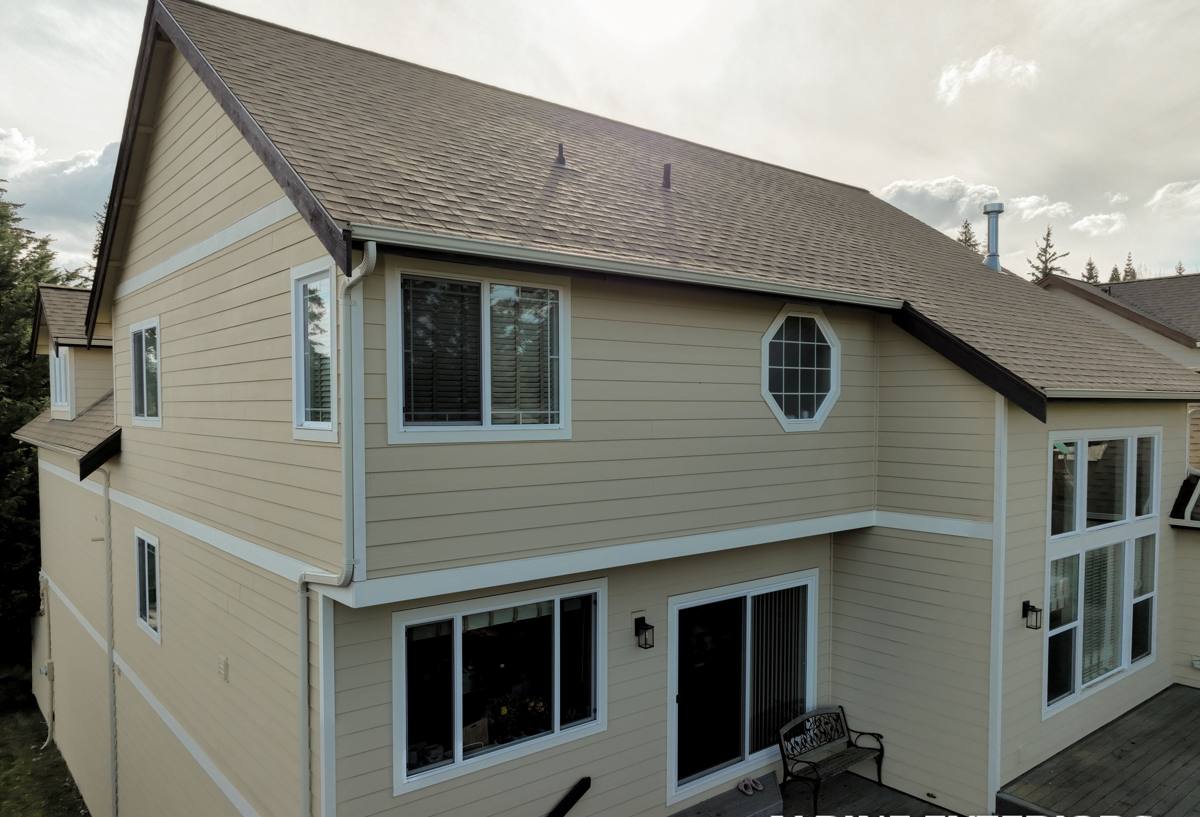
What the Local Climate Does to Windows Over Time
Salt Air and Hardware Corrosion
Coastal and near-coastal air in this region carries salt that settles on and around window components — hinges, locks, cranks, and especially the fasteners holding trim and flashing in place. Lower-grade hardware and uncoated fasteners corrode faster than most homeowners expect, and once a lock mechanism seizes or a hinge pin rusts, the window's seal is compromised even if the glass itself is fine.
Driving Rain and Water Intrusion
Rain here doesn't just fall — wind pushes it sideways and up under trim, sills, and poorly lapped flashing. A window that's watertight in a light, straight-down rain can still leak in a driving rain if the flashing sequence, weep holes, or sill pan weren't done correctly. This is the single most common cause of hidden rot we find behind older window installations.
Moss, Mildew, and a Long Wet Season
Extended humidity and shade around window openings gives moss, algae, and mildew a long season to establish themselves — on sills, in corners, and in any wood trim that stays damp longer than it should. Beyond being unsightly, sustained moisture at these points slowly breaks down caulking, primer, and unprotected wood, which is exactly where a window assembly is most vulnerable.
Signs a Sumas Home's Windows Need Replacing
- Visible fog, haze, or moisture between panes of double- or triple-glazed glass — the seal has failed
- Soft, discolored, or spongy wood at the sill, jamb, or bottom corners
- Windows that are difficult to open, close, or lock, especially after damp weather
- Noticeable draft or cold spot near a closed window during winter storms
- Visible moss, black staining, or peeling paint concentrated around the window opening rather than the wall generally
- A rise in heating costs without a clear cause elsewhere in the home
- Condensation forming on interior glass or sills regularly, even with normal ventilation
What a Correct Window Replacement Actually Involves
Swapping an old window for a new one is only part of the job. The parts that determine whether a window lasts 20+ years in this climate or starts leaking in three happen at the opening itself, before the new window ever goes in.
Assessing the Opening
Every opening gets checked for rot, soft framing, and existing water damage before anything is installed. If there's damage behind the old window — which is common on older installs — it gets addressed first. Installing a new window over compromised framing just hides the problem for a while.
Flashing and Water Management
This is where most of the long-term performance difference lives. A correctly flashed window sheds water from the top down, in the right shingle-lap order, with a sill pan that directs any water that does get past the exterior back outside rather than into the wall. Given how much driving rain this area sees, we treat this step as non-negotiable, not optional.
Sealing and Insulating
The gap between the window frame and the rough opening gets properly insulated and air-sealed — not just caulked around the outside. Done wrong, this creates both a draft problem and a condensation point, which over time becomes a moisture problem.
Hardware and Fastener Selection
Given the salt air exposure common in this area, we use fasteners and hardware rated for corrosion resistance rather than standard-grade components that look fine on install day but start failing within a few years.
Choosing Materials That Hold Up Here
Not every window product performs the same way in a wet, salt-influenced climate. Material choice affects how much maintenance a homeowner will actually have to do, and how the window ages over the next one to two decades.
| Material | Moisture & Salt Air Performance | Maintenance | Best Fit For |
|---|---|---|---|
| Vinyl | Strong — won't rot or corrode, handles humidity well | Low — occasional cleaning | Most Sumas homes, budget-conscious replacements |
| Fiberglass | Excellent — very stable in temperature and moisture swings | Low | Homeowners wanting a longer-term, lower-maintenance upgrade |
| Aluminum | Weaker in salt air — prone to corrosion and higher heat loss unless thermally broken | Moderate to high | Specific architectural needs only; we discuss trade-offs honestly |
| Wood / Wood-Clad | Attractive but higher risk if seals or cladding are compromised by driving rain | High — regular inspection and upkeep required | Homeowners committed to ongoing maintenance for a specific look |
We're upfront about these trade-offs. Wood-clad windows can look great, but in a climate with this much sustained moisture, any gap in the cladding or finish becomes an entry point for rot faster than it would in a drier region — that's a maintenance reality, not a knock on the product. Vinyl and fiberglass simply ask less of the homeowner over time, which is why most of the replacements we do in this area use one of those two.
Glass and Energy Performance for This Climate
Beyond the frame material, the glass package matters for comfort and condensation control. Double-pane, low-E glass is the standard baseline for this region and handles most homes well. Triple-pane adds extra insulation and sound dampening, which some homeowners want on north- or west-facing exposures that take the brunt of winter storms, but it's a cost and weight trade-off worth discussing rather than assuming is automatically necessary. We'll walk through what actually makes sense for your specific exposure rather than defaulting to the most expensive option.
How We Approach a Window Replacement Project
- On-site assessment — we inspect each window opening, check for existing moisture or rot, and measure for accurate fit
- Material and product selection — we go over frame material, glass options, and hardware based on your home's exposure and budget
- Written estimate — a clear scope and price before any work begins, no surprise add-ons mid-project
- Removal and opening prep — old windows come out, framing is inspected and repaired if needed before the new unit goes in
- Installation — proper flashing sequence, sill pan, insulation, and air sealing, then the new window is set, leveled, and secured
- Final sealing and cleanup — exterior trim and caulking finished, site cleaned, and the work walked through with you
What Affects the Cost of Window Replacement
Every home and every opening is different, so we don't quote a flat per-window price without seeing the job. That said, homeowners in this area should expect these factors to move the price up or down:
| Factor | Why It Matters |
|---|---|
| Window size and configuration | Larger openings, bay windows, and custom shapes cost more than standard single or double units |
| Frame material | Vinyl is typically the most budget-friendly; fiberglass and wood-clad cost more upfront |
| Condition of the existing opening | Hidden rot or framing damage adds repair scope beyond a straight swap |
| Full-frame vs. insert replacement | Full-frame replacement (removing trim and flashing entirely) costs more but is often necessary when there's existing water damage |
| Number of windows | Doing multiple windows in one project typically lowers the per-window cost versus one-off replacements |
| Glass package | Upgrading to triple-pane or specialty coatings adds cost over standard double-pane low-E glass |
Why Local Installation Experience Matters in Sumas
A window that's correctly installed for a mild, dry climate isn't automatically correct for this one. Flashing details, sealant choice, and even the timing of an install can matter more here because of how much sustained moisture the assembly has to shed over a typical year. A crew that regularly works in Whatcom County has already seen how driving rain finds weak points in a flashing job, how moss and mildew take hold around window trim, and how salt air shortens the life of the wrong hardware — and builds around those realities instead of learning them on your home.
There's also a practical scheduling advantage to working with a crew familiar with this area's weather patterns: knowing when a multi-day window replacement can be sequenced to avoid leaving an opening exposed during a heavy rain stretch is part of doing the job responsibly, not an afterthought.
Maintaining New Windows in a Wet Climate
- Rinse sills and tracks periodically to clear salt residue and debris before it builds up
- Check exterior caulking annually, especially after winter storms, and re-seal any cracked sections promptly
- Keep gutters and downspouts clear so water isn't sheeting down over window openings
- Wipe away moss or algae growth on sills and trim before it spreads or holds moisture against the frame
- Operate locks and hardware periodically even on windows you don't open often, to keep mechanisms from seizing
- Watch for condensation between panes — it's the earliest sign of a failing seal, well before other symptoms show up
If your windows are showing any of the signs above, or you're simply planning ahead before the next wet season, we're happy to take a look and give you a straightforward, no-pressure estimate. Use the form below to get started.