 Semiahmoo Siding
 Roof Repair Built for a Peninsula That Takes Weather From Every Side
Point Roberts sits out on its own spit of land, wrapped by the Strait of Georgia on one side and Boundary Bay on the other, with very little else around to slow the wind before it reaches a rooftop. When a storm system moves through Whatcom County, Point Roberts roofs take it from more directions and with less shelter than most inland homes ever see. Add the salt-laden air coming off the water and a moss season that barely lets up in the Pacific Northwest's wet, mild climate, and you get roofs that are working harder, year-round, than the manufacturer's warranty paperwork usually accounts for.
Semiahmoo Siding Company repairs storm-damaged roofs on Point Roberts homes. We build every repair around what actually wears these roofs out in this specific spot — not a generic checklist written for a drier part of the state.
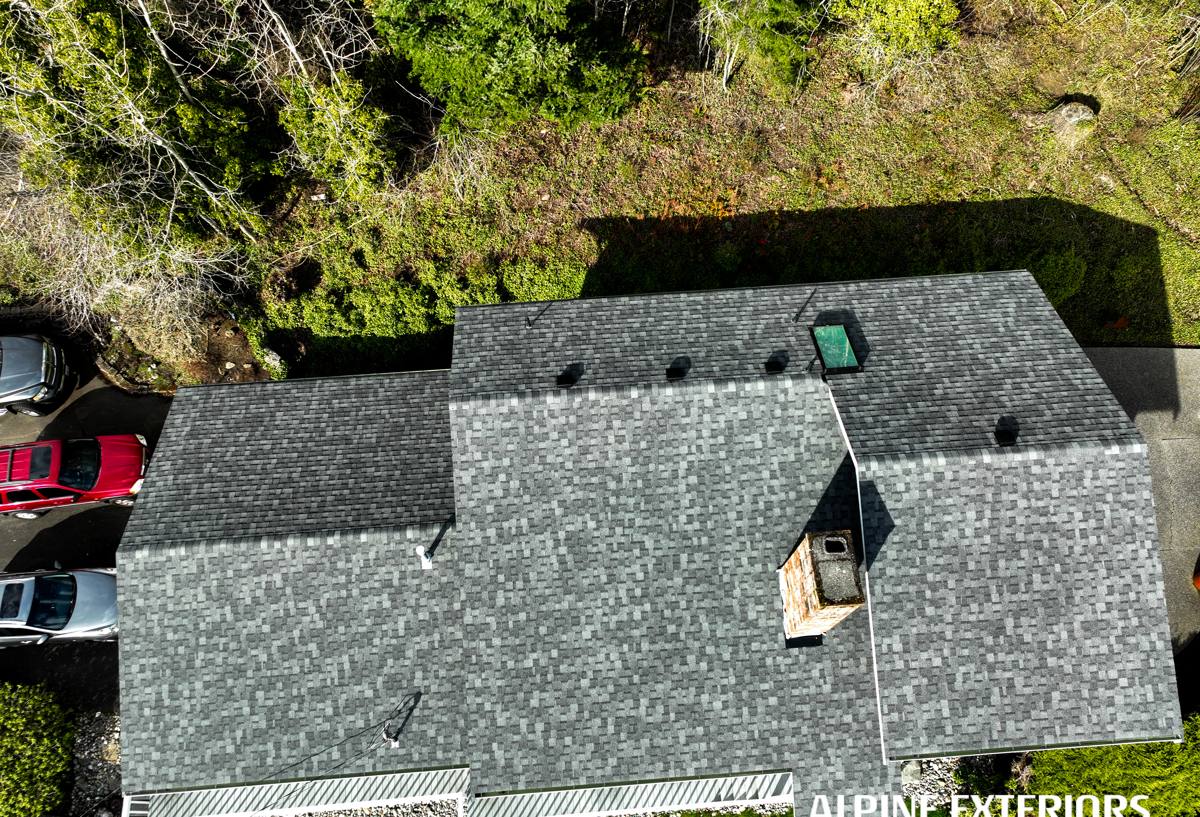
What Storms Actually Do to a Point Roberts Roof
Wind-Driven Rain and Salt Air
Straight-down rain is easy for any roof to shed. Wind-driven rain is not — it gets pushed sideways and upward, working its way under shingle tabs, around flashing edges, and into any seam that isn't fully sealed. On an exposed peninsula like Point Roberts, storms routinely push rain at angles that a roof on a sheltered inland lot rarely has to handle. Salt air compounds the problem: it accelerates corrosion on exposed fasteners, flashing, and metal roof edges, which means small leaks can start at points that looked fine the season before.
A Moss Season That Never Fully Ends
Whatcom County's damp, shaded, mild climate keeps roofs wet longer than almost anywhere else in the country, and Point Roberts' marine exposure adds even more ambient moisture to the mix. Moss and algae take hold wherever shade and moisture linger — north-facing slopes, valleys, and areas around chimneys and vents — and once established, moss holds water against the roofing material, works under shingle edges as it grows, and speeds up granule loss. A storm that knocks loose material off an already moss-compromised roof does more damage, faster, than the same storm would on a clean one.
Common Signs of Storm Damage We Find on Local Roofs
Not all storm damage announces itself with an obvious hole or a missing shingle in the yard. Some of the most costly damage is the kind homeowners don't notice until a leak shows up inside. Worth checking after any significant wind or rain event:
- Shingles that are lifted, curling, or missing — especially near ridges, edges, and valleys
- Granules collecting in gutters or at downspout outlets after a storm
- Flashing around chimneys, skylights, and vent pipes that looks bent, lifted, or separated
- Soft spots or slight sagging when walked or viewed from a ladder
- Water stains or discoloration on interior ceilings, especially near exterior walls
- Moss buildup that's thicker on one slope, which often points to a spot holding extra moisture
- Debris, branches, or gravel-like material accumulating in valleys
- Gutters pulling away from the fascia or overflowing during rain
Any one of these is worth a look. Several at once usually means the roof took a real hit and needs more than a cosmetic fix.
Why a Quick Patch Often Isn't the Right Fix
After a storm, it's tempting to have someone seal the visible spot and call it done. Sometimes that's genuinely enough. Often, on a Point Roberts roof, it isn't — because the visible damage is rarely the full extent of what wind-driven rain and trapped moisture have already gotten into.
| Approach | What It Actually Addresses | Where It Falls Short |
|---|---|---|
| Surface patch / sealant only | Stops water entry at the exact visible gap | Doesn't check decking underneath for moisture, doesn't address nearby fasteners or flashing already compromised by salt air |
| Shingle or section replacement | Replaces damaged material and matches the surrounding roof where possible | Still needs a decking inspection underneath to be a complete repair, not a cosmetic one |
| Full storm damage repair (our standard) | Damaged material removed, decking checked and dried or replaced as needed, flashing and fasteners inspected, new material tied properly into the existing roof | Takes more time and material than a patch — but it's the only approach that actually confirms the leak is stopped, not just hidden |
Cost for any of these depends heavily on roof pitch, access, how closely we can match existing material, and — most importantly — whether the decking underneath is dry or has already started to take on water. We always give homeowners the honest picture of what we find before we start, rather than pricing a patch and discovering the real problem halfway through.
What a Correct Storm Repair Involves
A repair that actually holds up on this peninsula has to do more than replace what blew off. We treat every storm repair as three parts, not one:
First, confirm the full extent of the damage — not just the spot that's leaking, but the fasteners, flashing, and underlayment around it, since salt air corrosion and wind stress tend to weaken a wider area than what failed first. Second, address the decking. If water has been getting in for any length of time, the plywood or sheathing underneath may be damp or starting to soften, and covering that over with new shingles without drying or replacing it just delays the next leak. Third, tie the repair into the surrounding roof correctly — proper shingle lap, sealed flashing, and fasteners set to hold in sustained coastal wind, not just enough to pass a quick visual check.
Skipping any one of these three steps is how a "repaired" roof ends up leaking again in the next storm.
Our Storm Damage Repair Process
- Inspection. We get on the roof (not just a ground-level look) to check the damaged area, the surrounding field, flashing, and vulnerable points like valleys and penetrations.
- Honest assessment. We tell you what's actually wrong — including if decking is wet or if the damage is more limited than it looked from the ground — before any work starts.
- Scope and plan. We outline what needs to be replaced, what can be repaired, and what material matches your existing roof as closely as possible.
- Repair. Damaged material comes off, decking is checked and addressed, new material and flashing go in, and everything is tied into the existing roof properly.
- Walkthrough. We show you what was done and what to watch for going forward, especially around moss and drainage.
Materials We Use — and Why We're Selective
Given how much salt air and moisture Point Roberts roofs deal with, we favor fasteners, flashing, and underlayment rated for coastal and marine exposure rather than standard-grade materials that are fine inland but corrode faster this close to open water. For shingle matching, we work to get as close a color and profile match as the existing roof and current product availability allow, though some variation is normal on an older roof — we'll always tell you upfront if an exact match isn't realistic rather than promise one we can't deliver. Where a roof has repeated moss trouble, we'll talk through drainage and airflow adjustments that reduce how much moisture the roof holds onto between storms, since that's often a bigger factor in long-term roof life than the shingle brand itself.
Why Hiring a Crew That Already Works Point Roberts Matters
Point Roberts is a U.S. exclave — by land, it's only reachable through Canada, via the border crossing at Tsawwassen. That's not a small detail for roofing work. A crew unfamiliar with the area has to plan around border crossing times for workers and material deliveries, customs handling for equipment and supplies, and the general logistics of scheduling a job on a peninsula that isn't a quick "swing by" the way a mainland Whatcom County address is. Contractors who don't already build that into their routine tend to under-bid the logistics, run late, or avoid taking storm calls out there altogether — which is exactly when homeowners need a fast response most.
We already work this route regularly, so scheduling a Point Roberts storm repair doesn't mean waiting behind a crew that's figuring out the crossing for the first time. It also means we've seen how roofs here actually age and fail over multiple storm seasons, not just how they're supposed to perform on paper.
Insurance Claims and Timing
Storm damage is often covered under homeowners insurance, but claims move faster and more smoothly with clear documentation of what happened and when. We can document the damage we find during inspection and provide the kind of detail adjusters typically ask for, though the claim itself is between you and your insurer. Timing matters too — a small leak left through one more moss-season rain event can turn into a decking replacement, so we'd rather get out to look at fresh storm damage quickly than have a homeowner wait and see.
If your roof took a hit in the last storm — or you're just seeing signs of moss and wear building up — we're happy to take a look and give you a straight answer about what it needs. Use the form below to request a free, no-pressure estimate.