 Semiahmoo Siding
 Cherry Point's Roofs Work Harder Than Most
Cherry Point sits along Whatcom County's Salish Sea shoreline, and that location shapes everything about how a roof ages here. Homes in this stretch of coastal Washington deal with a combination most inland roofs never see: near-constant marine humidity, salt-laden air moving off the water, long stretches of driving rain, and a moss season that can run eight months or more depending on the winter. None of that is dramatic on its own. What it does is wear a roof down steadily, year after year, in ways that are easy to miss until a leak shows up inside the house.
A roof built for a dry inland climate and a roof built for Cherry Point are not the same product, even if the shingle looks identical on the shelf. The difference is in the details underneath — the underlayment, the flashing, the ventilation, and the fasteners. When those details are done right, a Cherry Point roof can perform as well as anywhere else in Whatcom County. When they're skipped or rushed, problems show up early, usually right where the roof meets a wall, a chimney, or a vent.
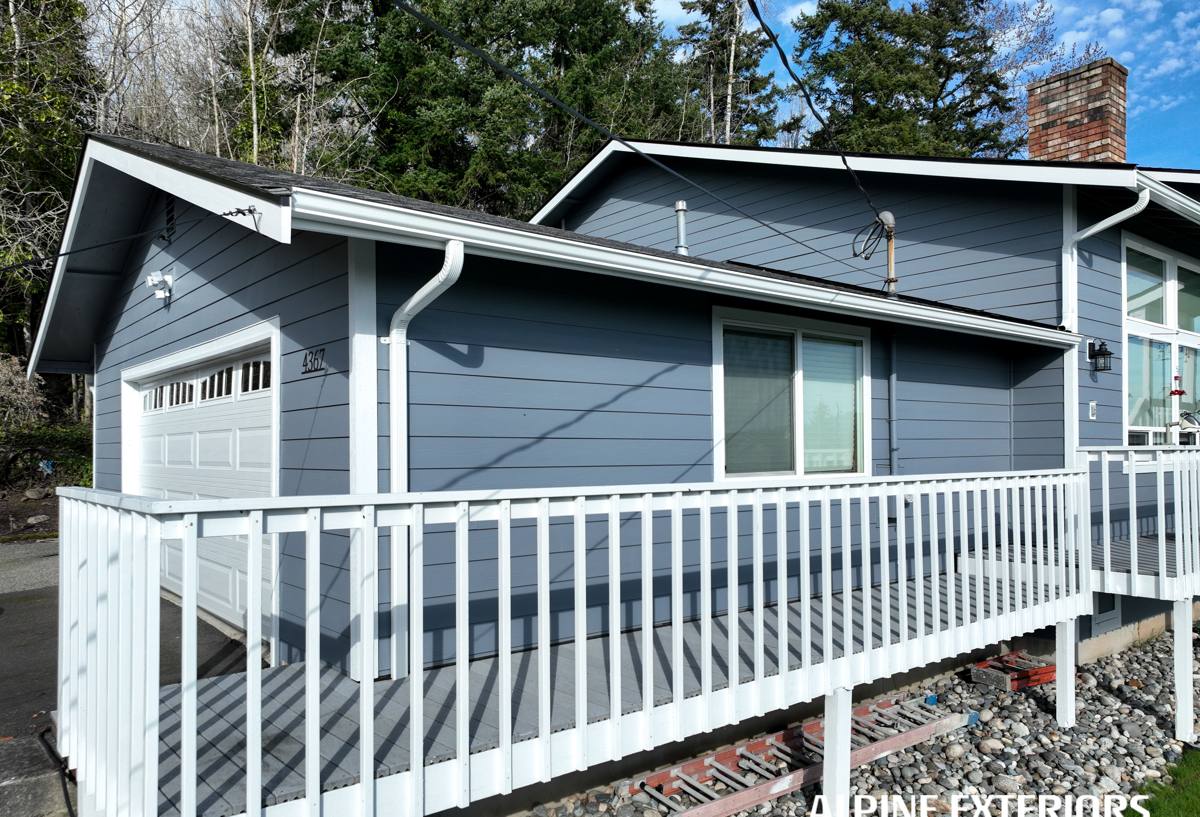
What Salt Air, Rain, and Moss Actually Do to a Roof
Salt Air
Airborne salt from the water accelerates corrosion on anything metal — nails, flashing, gutter fasteners, vent caps. Standard galvanized fasteners can start showing rust streaks years before they would inland. This is why fastener and flashing material matter more here than in a lot of the county; it's one of the first things we check on an aging Cherry Point roof.
Driving Rain
Wind-driven rain off the water doesn't just fall straight down — it pushes sideways, up under shingle tabs, and into any gap around flashing or roof penetrations. A roof that would shed water fine in a calm rain can still leak in a Cherry Point storm if the underlayment and flashing weren't installed with that wind direction in mind.
Moss and Sustained Moisture
Shade, moisture, and mild temperatures are exactly what moss needs, and this part of Whatcom County offers all three for most of the year. Moss holds water against the roof surface, works its way under shingle edges, and lifts granules and tabs as it grows. A roof that's never treated or cleaned can see moss establish itself within a couple of years, especially on north-facing slopes or areas shaded by trees.
Signs Your Cherry Point Roof Needs Replacement, Not Just Repair
Not every roof problem calls for a full replacement. But there's a point where patching individual leaks becomes more expensive over time than doing the job once, correctly. Here's what we look for during an inspection to make that call honestly:
- Granule loss heavy enough that you can see bare asphalt on multiple slopes, not just one worn patch
- Shingles that are cupping, curling, or cracking across large sections rather than isolated spots
- Moss or algae established broadly across the roof, not just on one shaded corner
- Soft spots or sagging in the roof deck when walked, which usually means water has reached the plywood
- Flashing around chimneys, skylights, or wall intersections that's rusted, lifted, or was never properly stepped
- Daylight visible through the roof deck from the attic, or water stains on multiple rafters
- A roof already past 20-25 years old (for asphalt) that's had repeated repair calls in recent years
If a roof shows two or three of these signs, repair is usually just delaying the inevitable and spending money that won't carry forward into a replacement. We'll tell you straight if that's the situation rather than stringing along another round of patch work.
Choosing Materials for a Marine Climate
There's no single "best" roofing material for every home — it depends on your budget, your roof's slope and exposure, and how long you want to go before thinking about it again. Here's how the common options actually perform in Cherry Point's conditions:
| Material | Coastal Performance | Typical Lifespan | Trade-offs |
|---|---|---|---|
| Architectural asphalt shingle | Good with proper underlayment and corrosion-resistant fasteners | 25-30 years | Most affordable; needs moss treatment/cleaning to hit full lifespan |
| Standing seam metal | Excellent when fasteners and flashing are marine-rated | 40-50+ years | Higher upfront cost; requires correct fastener spec to avoid galvanic corrosion |
| Synthetic/composite shingle | Very good; resists moisture absorption better than organic-mat asphalt | 30-40 years | Higher material cost than standard asphalt |
| Wood shake | Poor in sustained moisture; high moss and rot risk without diligent maintenance | Variable, often shortened here | We generally steer clients away from shake in this specific climate unless they're committed to aggressive upkeep |
We don't push one material on every homeowner. Instead we walk the roof, look at slope, shading, and sun exposure, and talk through what fits your house and your budget. If a product isn't a good match for a shaded, moss-prone slope, we'll say so before you spend money on it.
What a Correct Roof Replacement Actually Involves
A roof replacement is more than swapping old shingles for new ones. Done right, it's a full system, and skipping any layer undermines the rest. Here's what should happen on a proper tear-off and replacement:
Tear-Off and Deck Inspection
Old roofing comes off down to the deck so it can actually be inspected — not covered over. Soft, delaminated, or water-stained plywood gets identified and replaced before anything new goes down. Roofing over a compromised deck just hides a problem that will resurface as a sag or a leak.
Underlayment
In a climate with sustained wind-driven rain, underlayment is your backup line of defense, not an afterthought. We use synthetic or ice-and-water underlayment at eaves, valleys, and other vulnerable areas where wind-driven moisture is most likely to find a way in.
Flashing
Flashing around chimneys, skylights, sidewalls, and vent penetrations is where most roof leaks actually originate — not in the open field of shingles. Correctly stepped and counter-flashed details, with corrosion-resistant metal given the salt air here, are non-negotiable.
Ventilation
Balanced intake and exhaust ventilation keeps the attic space dry and temperature-stable, which matters for shingle lifespan and for preventing condensation that can feed moss and mildew from underneath. A roof can look great on the surface and still be shortening its own lifespan from poor attic airflow.
Fasteners
Given the corrosion risk from salt air, fastener choice isn't cosmetic — it affects how long flashing and shingles stay properly secured. We spec fasteners with that exposure in mind rather than defaulting to whatever's cheapest.
Our Roof Replacement Process
- On-site inspection and honest assessment — we walk the roof and attic, document what we find, and tell you whether repair or replacement actually makes sense.
- Written estimate — a clear scope of work and price, broken down so you know what you're paying for, with material options explained rather than assumed.
- Scheduling around weather — in a climate with as much rain as this one, timing tear-off correctly matters. We plan around forecasts to minimize the window your deck is exposed.
- Tear-off and deck repair — old material removed, deck inspected, any damaged sheathing replaced before moving forward.
- Underlayment, flashing, and ventilation installed — the parts that don't show but determine whether the roof actually holds up.
- New roofing installed to manufacturer specification — correct nailing pattern, exposure, and fastener count, not shortcuts that void warranty coverage.
- Cleanup and final walkthrough — site cleared, magnetic sweep for stray fasteners, and a walkthrough so you understand what was done and what to expect going forward.
Cost Factors for Cherry Point Roof Replacement
Every roof is priced individually, but the variables that move the number are consistent. Rather than quote a figure that won't match your actual roof, here's what drives cost up or down:
| Factor | Effect on Cost |
|---|---|
| Roof size and number of squares | Largest single driver of total cost |
| Roof pitch and accessibility | Steeper or harder-to-access roofs require more labor and safety setup |
| Number of layers to remove | Tear-off of multiple existing layers adds labor and disposal cost |
| Deck condition | Rotted or soft plywood sections add material and labor to replace |
| Material selected | Asphalt, synthetic, and metal carry different material costs per square |
| Number of penetrations and valleys | Chimneys, skylights, and complex valleys mean more flashing labor |
| Ventilation upgrades needed | Adding or correcting intake/exhaust vents adds modest cost but protects the investment |
We give you the real number for your roof after seeing it, not a guess over the phone. If there's a way to save money without cutting a corner that matters, we'll point it out.
Why a Crew That Works Cherry Point Regularly Matters
A roofing crew that mostly works drier inland areas of Whatcom County can still do competent work, but they may not default to marine-grade fastener specs, may not think through wind-driven rain paths the same way, and may not flag moss risk on a shaded north slope until it's already a problem. Working this specific coastline regularly means those decisions become standard practice, not an afterthought brought up mid-project.
It also means knowing what actually holds up here versus what looks fine for the first few years and then underperforms. That's not about any one product being bad — it's about matching the material and installation details to conditions that are genuinely more demanding than a typical inland roof faces.
Maintaining a New Roof in This Climate
A correctly installed roof still benefits from basic upkeep, especially given the moss pressure in this part of Whatcom County. A few habits go a long way:
- Keep gutters clear so water isn't backing up under the eaves during heavy rain
- Trim back overhanging branches to reduce shade and debris buildup on the roof surface
- Have moss growth addressed early, before it lifts shingles or works into seams
- Schedule a roof check after any major windstorm to catch lifted flashing or shingles early
- Have the roof inspected every few years even if nothing looks obviously wrong
None of this is expensive or time-consuming, but skipping it is how a well-installed roof ends up with an avoidable leak a decade in.
Get a Straight Answer About Your Roof
If your Cherry Point roof is showing wear, or you just want an honest read on how many years it has left, we're happy to take a look. The estimate is free, there's no pressure, and we'll tell you plainly whether you need a full replacement, a repair, or nothing at all right now. Fill out the form below to get started.