 Semiahmoo Siding
 Why Wiser Lake Homes Need Siding Built for This Climate
Wiser Lake sits in Whatcom County's marine climate belt, close enough to Semiahmoo Bay and the Strait of Georgia that salt-tinged air, wind-driven rain, and long stretches of overcast, damp weather are simply part of living here. Siding on a Wiser Lake home isn't just a cosmetic layer — it's the first line of defense against moisture that wants to get behind the wall, and against the slow, corrosive effect of salt air on anything not built to handle it. Products that perform fine in a dry inland climate often struggle here within a decade.
We install fiber cement siding on homes throughout this area because it holds up to exactly this combination of conditions: repeated wetting and drying, humidity that never really lets up, and green growth that thrives on north-facing walls and shaded siding runs. This page walks through what that actually means for a Wiser Lake home, what correct installation looks like, and how we approach every project in this specific area.
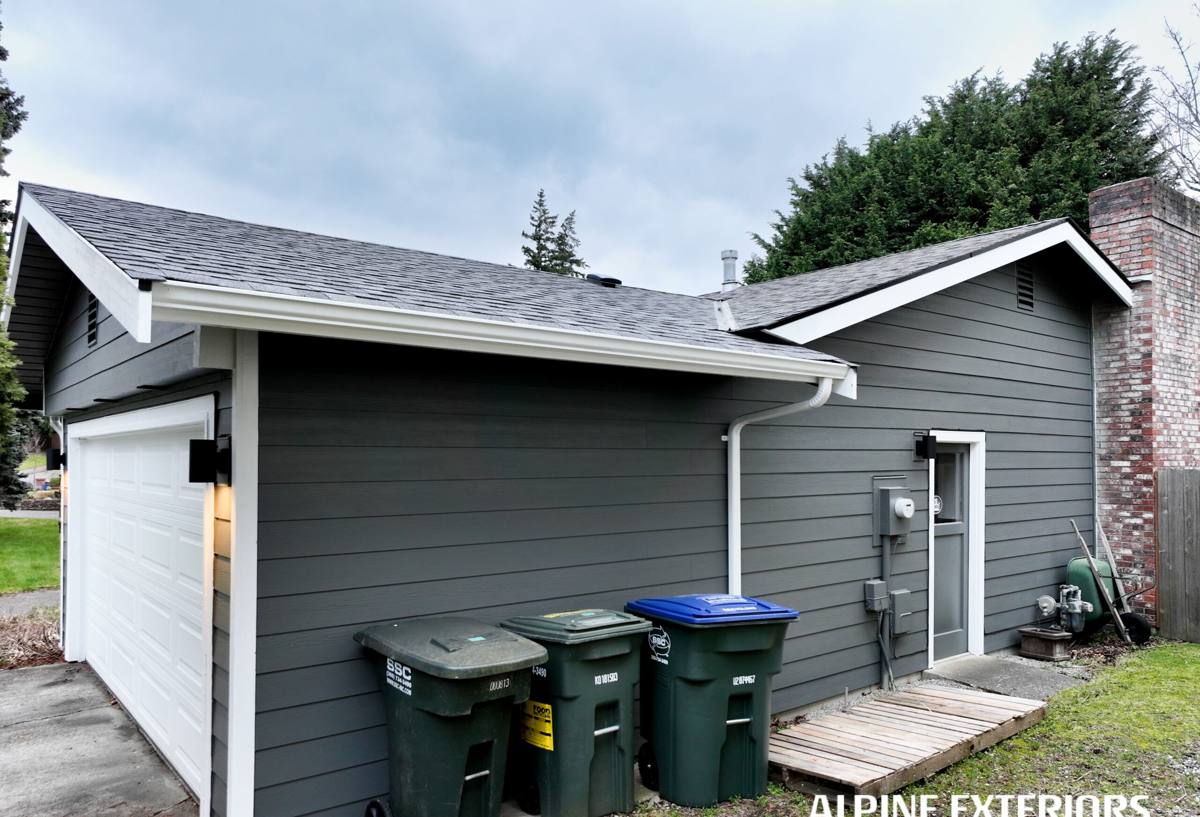
What Salt Air, Driving Rain, and Moss Actually Do to Siding
Salt Air and Corrosion
Airborne salt from Semiahmoo Bay and the wider Puget Sound region doesn't just affect homes directly on the water — it travels inland on wind and settles on exterior surfaces, fasteners, and trim across Whatcom County. Over years, salt exposure accelerates corrosion on unprotected metal fasteners and can degrade certain coatings and finishes faster than manufacturers' standard testing accounts for. Siding materials and hardware need to be chosen with that in mind, not just for how they look on install day.
Driving Rain and Wind-Driven Moisture
Whatcom County storms frequently bring rain sideways, not straight down. That matters more than most homeowners realize: wind-driven rain gets pushed up and under lap siding, into gaps around windows and trim, and behind panels that aren't properly flashed and lapped. A siding product that's only rated for "normal" rain exposure — and an installation that skips proper water-management detailing — is a slow-motion problem in this climate, even if it looks fine for the first few years.
The Long Moss Season
Between the rainfall totals and the extended cloud cover, Wiser Lake homes deal with a moss and algae season that runs far longer than it does in drier parts of the state. Shaded siding, north walls, and areas under overhangs stay damp for extended periods, which is exactly the environment moss, mildew, and algae need to take hold. Siding material that absorbs moisture readily gives that growth something to root into; material that doesn't gives it much less to work with.
Why We Only Install James Hardie Fiber Cement
We made a deliberate decision to install James Hardie fiber cement exclusively — not LP SmartSide, not vinyl, not lower-cost fiber cement alternatives like Cemplank or Allura. That's not a brand preference for its own sake; it's a standard we hold because of what we've seen hold up in this exact climate over time.
Fiber cement itself — cement, sand, and cellulose fiber pressed and cured — doesn't absorb moisture the way wood-based siding does, and it doesn't expand and contract with humidity the way vinyl does. It's also non-combustible, which matters increasingly to insurers and homeowners alike. Within fiber cement, James Hardie's ColorPlus factory-baked finish and climate-engineered HZ product lines are manufactured and warranted specifically for regional exposure conditions — including the wet, marine environment Wiser Lake sits in. We'd rather stand behind one product line we know inside and out than offer a menu of options with different long-term track records.
What a Correct Fiber Cement Installation Involves
Fiber cement siding performs the way it's supposed to only when the installation behind it is done correctly. This is where a lot of siding jobs — on any brand — go wrong, and it's where the difference between a rushed crew and an experienced one shows up years later, not on install day.
Moisture Barrier and Flashing First
Before a single piece of siding goes up, the wall needs a continuous weather-resistive barrier, correctly lapped and taped at every seam, with proper flashing at windows, doors, and any penetration through the wall. In a climate with wind-driven rain, this layer is doing as much work as the siding itself — if it's installed poorly, moisture that gets past the surface has nowhere to go but into the wall assembly.
Fastening and Clearances
James Hardie specifies fastener types, spacing, and penetration depth for a reason — get it wrong and you either compromise the siding's wind and impact resistance or create points where moisture can wick in. Proper clearance from grade, roof lines, decks, and horizontal surfaces is equally important; siding installed too close to the ground or to a roof deck stays damp longer and is far more likely to develop moss and staining.
Caulking, Gaps, and Panel Spacing
Hardie's installation specs call for specific gaps at butt joints and trim, sealed with the right sealant — not just caulked shut everywhere, which can trap moisture rather than let it drain. Getting this balance right is a detail that separates a correctly installed Hardie job from one that just looks similar from the curb.
Our Process for Wiser Lake Siding Projects
| Step | What Happens |
|---|---|
| Inspection and assessment | We walk the full exterior, check existing sheathing and framing condition, identify moisture damage or rot, and note problem areas like shaded walls, roof-line intersections, and low-clearance sections |
| Removal and prep | Old siding comes off, sheathing is repaired or replaced where needed, and a compliant weather-resistive barrier goes on with correctly lapped seams and flashing at every opening |
| Installation | James Hardie siding, trim, and accessories go up to manufacturer spec — correct fasteners, clearances, gaps, and sealant, with extra attention to wind-exposed and shaded elevations |
| Final walkthrough | We review the completed work with the homeowner, confirm details around windows, doors, and trim, and go over basic care so the siding performs the way it's designed to |
Working in this area regularly means we already know which elevations on a typical Wiser Lake property take the worst of the wind-driven rain, and which ones are most prone to moss buildup — that knowledge shapes where we spend extra time on flashing and detailing, not just where the spec sheet says the minimum requirement is.
Choosing the Right Hardie Product Line for This Climate
James Hardie makes several distinct product lines, and the right choice depends on the home's style, exposure, and what the homeowner wants to maintain long-term.
| Product | Best Fit | Climate Consideration |
|---|---|---|
| HardiePlank lap siding | Traditional and craftsman-style homes | Most common choice; performs well with proper lapping against wind-driven rain |
| HardiePanel vertical siding | Modern styles, accent walls, gable ends | Requires correct joint detailing to shed water on vertical runs |
| HardieShingle siding | Cottage and Craftsman accents | More surface texture can hold moisture longer in shaded areas — good detailing matters most here |
| HardieTrim boards | Window, door, and corner trim | Non-combustible and moisture-resistant compared to wood trim, which rots faster in this climate |
All of these are available with the factory-applied ColorPlus finish, which is baked on under controlled conditions rather than field-painted — a meaningful advantage in a climate where field-applied paint has fewer good drying days per year to cure properly.
Cost Factors for a Wiser Lake Fiber Cement Project
Every home is different, but the same handful of factors drive most of the cost variation we see on projects in this area:
| Factor | Why It Matters |
|---|---|
| Existing wall condition | Rot or water damage found during removal adds repair work before new siding can go on |
| Home size and wall complexity | More corners, dormers, and roof intersections mean more cutting, flashing, and labor time |
| Product line and profile | Lap width, panel style, and trim choices affect material cost and installation time |
| Accessibility | Steep grades, limited access, or multi-story walls affect staging and labor |
| Color and finish | Factory ColorPlus finishes and custom trim packages carry different price points than primed material |
We won't quote a number without seeing the home, but we're happy to walk through these factors during an estimate so there are no surprises once work begins.
Why Hiring a Crew That Already Works Wiser Lake Matters
Siding installation isn't just about following a manufacturer's manual — it's about applying that manual correctly to the specific conditions a home actually faces. A crew that regularly works in Wiser Lake and the surrounding Semiahmoo-area communities already knows which wall orientations take the worst of the driving rain, how much moss growth to expect on shaded elevations, and how salt-tinged air affects fastener and flashing choices over time. That local pattern recognition shows up in small decisions — an extra flashing detail here, a different fastener spec there — that a crew unfamiliar with the area might not think to make.
It also means familiarity with local permitting expectations and typical home construction in Whatcom County, which keeps projects moving without avoidable delays.
Maintenance Checklist for Long-Term Performance
Fiber cement siding is low-maintenance compared to wood or vinyl, but "low-maintenance" doesn't mean "no maintenance" — especially in a climate this wet. A short annual routine goes a long way:
- Rinse siding annually with a garden hose to clear salt residue, pollen, and general grime before it builds up
- Check shaded and north-facing walls for early moss or algae growth and address it before it spreads
- Inspect caulking around windows, doors, and trim joints yearly and re-seal if it's cracked or pulling away
- Keep gutters clear so overflow doesn't run down the siding face repeatedly
- Trim back vegetation and landscaping that keeps siding shaded and damp for extended periods
- Watch for any staining or discoloration near ground level, which can signal a clearance or drainage issue
None of this requires a professional visit in most years — it's the kind of routine upkeep that protects the investment and keeps small issues from becoming bigger ones.
If you're weighing a siding replacement for a Wiser Lake home, we're glad to take a look and talk through what your home actually needs. Reach out for a free, no-pressure estimate using the form below.