 Semiahmoo Siding
 Cherry Point Siding Takes a Different Kind of Beating
Homes along the Cherry Point shoreline near Semiahmoo deal with a combination of stresses that inland Whatcom County houses simply don't see as often. Marine air carries salt onto exterior walls year-round, wind-driven rain gets pushed sideways into laps and seams during winter storms, and the long, wet shoulder seasons keep north-facing and shaded walls damp enough to grow moss for months at a time. None of these forces are dramatic on their own, but stacked together over years, they find every weak point in a siding system — a hairline crack in caulk, a fastener that's starting to corrode, a panel edge that was never quite sealed right.
That's the context we bring to every repair call in this area. A siding repair here isn't just patching a hole — it's addressing whatever let the moisture or salt in, and doing it in a way that holds up to the next ten winters, not just the next inspection.
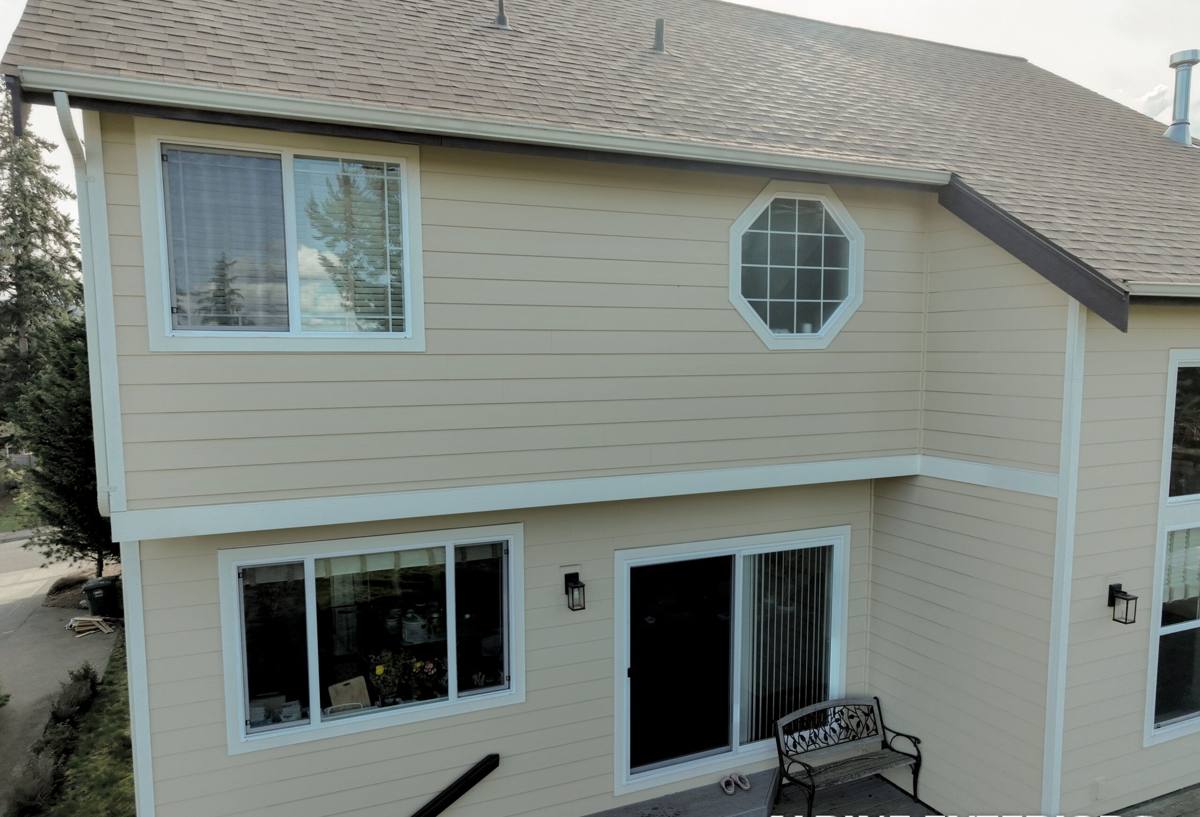
Signs Your Siding Needs Repair, Not Just a Cleaning
A lot of siding damage in this area starts subtle. Homeowners often assume dark streaking or a soft spot is cosmetic, wash it down, and move on — only to find the underlying problem has been quietly spreading. Watch for:
- Soft, spongy, or crumbling siding when you press on it, especially near the bottom of walls or below windows
- Persistent moss or dark green-black staining that returns within weeks of cleaning
- Visible gaps, cracking, or separation at seams, corners, and trim joints
- Bubbling, peeling, or chalky paint that won't hold a fresh coat
- Rust streaks below fasteners or corroded nail heads showing through the surface
- Warping or bowing panels, particularly on walls that face prevailing wind and rain
- Interior signs — a musty smell, damp drywall, or a stain on an inside wall that lines up with an exterior problem area
Any one of these is worth a look before it's ignored through another wet season. In this climate, small problems don't stay small for long.
Where Damage Tends to Concentrate
We see repeat patterns on Cherry Point-area homes: the base of walls where splashback and standing moisture collect, corners and butt joints where caulk fails first, areas around window and door trim where flashing was skipped or installed short, and shaded north or east elevations where moss gets a permanent foothold. Knowing where to look first saves time and keeps the assessment honest.
What a Correct Repair Actually Involves
A repair that's done right starts before any siding comes off. We look at the damage and ask a more important question first: why did this happen here? Patching over a symptom without answering that just buys a homeowner a few dry seasons before the same spot fails again.
Diagnosis Before Demolition
That means checking behind the siding at the damaged area — looking at the house wrap or building paper, the flashing details around openings, and how water was actually finding its way in. Was it a caulk joint that dried out and cracked? A missing kick-out flashing at a roofline? A panel installed too close to grade or a deck surface, wicking moisture up from below? The repair plan follows from that answer, not the other way around.
Matching Material and Method
Once we know the cause, the fix has to match the existing wall correctly — same reveal, same fastening pattern, and a color and texture match that doesn't leave an obvious patch. Flashing and water-resistive barrier details get corrected, not just re-covered, and every seam gets properly sealed and fastened so the repaired section performs as well as, or better than, it did the day it was installed.
Repair vs. Replacement: How We Make the Call
Not every damaged wall needs to come off. But not every damaged wall should be patched, either. The honest answer depends on a few factors we walk through with the homeowner before recommending anything.
| Factor | Favors Repair | Favors Replacement |
|---|---|---|
| Extent of damage | Isolated to one or two sections | Spread across multiple walls or elevations |
| Underlying material condition | Siding is sound elsewhere, still within its service life | Widespread delamination, rot, or brittleness |
| Cause of failure | A localized, fixable issue (one bad flashing detail, one cracked joint) | A systemic issue — original material or install method not suited to this exposure |
| Existing siding material | Durable, moisture-tolerant product still performing well | Material prone to repeat failure in salt-air, high-moisture exposure |
| Age of the siding | Well within expected lifespan | At or past the point where matching material is impractical or discontinued |
Where we're honest with homeowners: if the existing siding is a material that struggles in this environment to begin with — certain wood products, older engineered wood panels, or vinyl that's chalked and brittled from UV and salt exposure — a "repair" is often a short-term patch on a long-term problem. In those cases we'll say so plainly rather than charge for a fix that won't hold.
Why the Replacement Material Matters When Repair Isn't Enough
When damage is widespread enough that repair isn't the right call, what goes back up matters as much as the workmanship. This is the reason we install only James Hardie fiber cement siding on the homes we work on — it's a non-combustible material engineered for exactly the kind of moisture and marine exposure that Cherry Point sees, with a factory-applied ColorPlus finish that doesn't rely on field-applied paint holding up against salt air and UV. We don't install vinyl, LP SmartSide, Cemplank, Allura, or raw cedar or primed spruce siding, because we've seen how each of those products behaves over time in this exact climate, and we'd rather stand behind one system we trust completely than offer several we'd have reservations about.
For a section replacement or partial re-side, that also means matching into James Hardie's HZ product lines correctly — the right panel profile, the right ColorPlus color match, and installation details (gaps, fastening, flashing) that follow Hardie's own specifications so the warranty stays intact.
Our Repair Process
- On-site assessment — we inspect the visible damage, check behind it where accessible, and identify the actual cause, not just the symptom
- Honest recommendation — repair, partial replacement, or full re-side, explained in plain terms with the reasoning behind it
- Written estimate — scope, materials, and a realistic cost range before any work starts
- Correct removal — only the affected area is opened up, protecting sound siding around it
- Moisture barrier and flashing correction — the underlying cause gets fixed, not covered
- Match and install — replacement material fastened and sealed to spec, with attention to color and reveal match
- Final walk-through — we confirm the repair looks right and explain what to watch for going forward
Living With Salt Air and a Long Moss Season
Even a well-repaired wall needs a little seasonal attention in this climate. A few habits go a long way toward keeping Cherry Point homes ahead of the moisture and salt cycle:
- Rinse siding periodically, especially south and west walls closest to open water, to clear salt residue before it accumulates
- Keep gutters clear so overflow doesn't run down and pool at wall bases
- Trim back vegetation and branches that shade siding and keep it damp longer after rain
- Address moss at first sign rather than after it's established — it holds moisture against the surface
- Check caulk at trim joints and penetrations once a year; it's usually the first thing to fail
- Have any soft spots or persistent stains looked at promptly — in this climate, a small problem rarely stays small
Why a Local Crew Matters for This Kind of Work
Siding repair in a marine, moss-prone environment isn't identical to siding repair twenty miles inland. A crew that regularly works homes around Semiahmoo and the Cherry Point shoreline already knows which elevations take the worst weather, how fast moss re-establishes on shaded walls here, and what corroded fasteners and salt-stressed trim actually look like before they become bigger problems. That familiarity shows up in the diagnosis — catching the real cause instead of just patching the visible damage — and in a repair that's built to handle the specific conditions of this stretch of Whatcom County, not generic assumptions about siding wear.
If you're seeing soft spots, persistent staining, moss that won't stay gone, or gaps opening up in your siding, we're happy to take a look and give you a straight answer about what it needs. A free, no-pressure estimate is a good place to start — use the form below and we'll set up a time to come out.