 Semiahmoo Siding
 Cherry Point Is Hard on a House
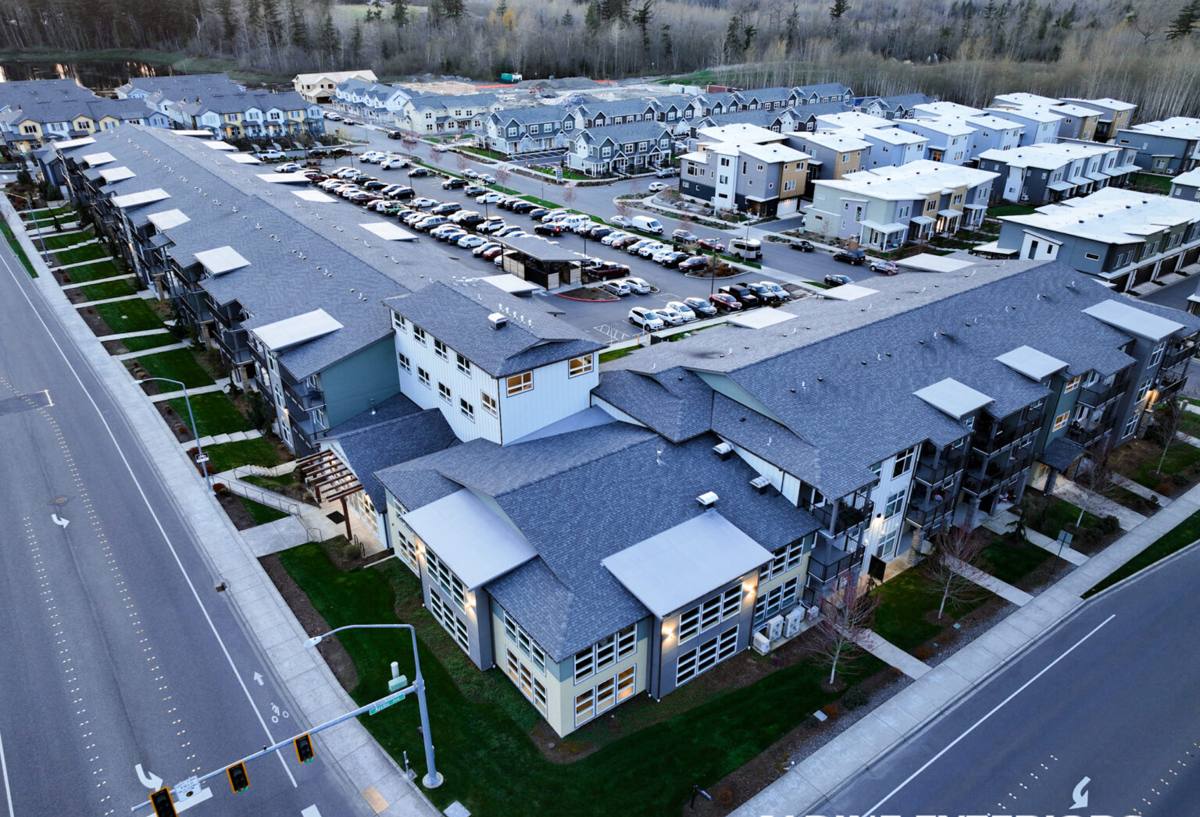
Cherry Point sits right on the water along the Whatcom County shoreline near Semiahmoo, and that location cuts both ways. It's part of what makes the area a good place to live, and it's exactly what wears out siding faster than it would ten or fifteen miles inland. Homes here take a steady diet of salt-laden air off the Salish Sea, wind-driven rain that hits walls sideways instead of falling straight down, and a shaded, damp shoulder season that can stretch on for months. Add in the tree cover that's common on lots near the water, and you've got a recipe for moss, algae, and moisture problems that a siding product picked for a drier climate simply isn't built to handle.
We're not describing a hypothetical. This is the normal weather pattern for any home sitting close to the water in this part of Whatcom County, and it's the reason we install one product on every job: James Hardie fiber cement siding. This page is specifically about what that looks like for Cherry Point homes — not a generic siding pitch, but the actual considerations that change when your house is this close to the shoreline.
What Salt Air, Driving Rain, and Moss Actually Do to Siding
Each of these three conditions attacks a house in a different way, and a correct siding job has to answer all three at once.
Salt Air
Airborne salt is corrosive to exposed metal fasteners, trim flashings, and hardware, and it accelerates the breakdown of paint films and cheaper composite materials over time. Products that rely on a surface-applied paint coat tend to chalk, fade, and lose adhesion faster in a salt-air environment than they would twenty miles inland.
Driving Rain
Wind off the water doesn't just drop rain on a roof — it pushes water sideways into wall assemblies, laps, and seams. Any siding system that depends on face-sealing (caulk and paint alone) to keep water out is going to fail eventually in this kind of exposure. The wall behind the siding needs a real drainage path, not just a good-looking surface.
Long Moss Season
Shaded, damp conditions for a good chunk of the year mean moss and algae have plenty of time to establish on any siding surface that stays wet, especially on north-facing walls and areas under tree cover. Moss holds moisture against the siding surface, which is bad for any material, and it's especially bad for anything with wood content that can absorb and swell.
Why Fiber Cement Is the Right Material for This Coastline
Fiber cement siding is made from cement, sand, and cellulose fiber, cured into a dense, stable board. It doesn't have the wood content that gives moss and rot something to feed on, it doesn't swell and shrink with moisture the way wood-based or wood-fiber products do, and it holds paint and factory finish far longer than vinyl or primed wood products in a salty, humid environment. That combination is exactly what a Cherry Point wall assembly needs: a material that stays dimensionally stable, resists moisture intrusion at the board level, and keeps its finish instead of chalking and fading within a few seasons.
We install James Hardie specifically, not fiber cement in general, because Hardie engineers its products by climate zone. For the Pacific Northwest, that means their HZ5 formulation, built to perform in wetter, more humid regions rather than a one-size-fits-all board. The factory-applied ColorPlus finish is baked on rather than field-painted, which matters a lot in an area where UV, salt, and moisture all work together to break down a paint job. A factory finish with a real product warranty behind it is a meaningfully different proposition than a coat of paint applied on-site in variable weather.
What a Correct Installation Actually Involves Here
The siding material only does its job if the installation underneath it is done correctly. This is where most siding failures near the water actually start — not with the board itself, but with shortcuts in the assembly behind it.
Drainage Gap Behind the Siding
In a driving-rain, high-moisture environment like Cherry Point, we install a rain screen gap — a drainage space between the water-resistive barrier and the back of the siding — so that any moisture that does get past the surface has somewhere to go and can dry out instead of sitting against the wall sheathing.
Flashing and Fastening
Every window, door, and penetration needs proper flashing that sheds water down and out, not just caulk covering a gap. Fasteners are set to Hardie's specified pattern and depth — over-driven or under-driven nails are one of the most common causes of premature siding failure, and it's a detail that's easy to rush and hard to spot once the job looks finished.
Caulking and Paint Lines
Caulk is a backup, not the primary water management strategy, but it still has to be done right — the correct joints sealed, the right product used, and no caulk where a gap needs to breathe. Cut edges of Hardie board get sealed and painted to match, which matters more in a wet climate where an unsealed cut edge is a direct path for moisture into the board.
Our Process for Cherry Point Jobs
- Site and wall assessment — we look at sun and shade exposure, tree cover, existing moisture or moss damage, and how the house is currently oriented to wind-driven rain before we scope the job.
- Tear-off and sheathing check — old siding comes off and we inspect the sheathing underneath for rot or water damage that needs to be addressed before anything new goes on. Covering up a wet wall with new siding just hides the problem.
- Weather barrier and drainage gap installation — the water-resistive barrier and rain screen furring go on correctly, with attention to flashing details around every opening.
- Hardie board installation — installed to manufacturer fastening and clearance specs, including the ground clearance and roofline clearances that matter for long-term moisture management.
- Finish detailing — cut-edge sealing, caulking, and trim work done to hold up to the salt air and rain this location gets.
- Walkthrough — we go over the finished job and what maintenance, if any, it'll need going forward.
Fiber Cement vs. Other Siding Materials in a Marine Climate
| Factor | James Hardie Fiber Cement | Vinyl | Wood-Based Composite (e.g. LP SmartSide) | Cedar |
|---|---|---|---|---|
| Moisture/rot resistance | Cement-based, no wood content to rot | Doesn't rot, but can trap moisture behind panels | Wood-fiber core, vulnerable if edges or seams aren't sealed correctly | Natural wood, requires ongoing sealing to resist rot |
| Salt air/UV finish durability | Factory-baked ColorPlus finish, engineered for fade resistance | Color molded through, but can chalk and become brittle over time | Field or factory paint, needs repainting on a maintenance cycle | Needs regular staining/sealing to hold up |
| Moss/algae resistance | Dense, non-porous surface, no organic food source | Surface can host algae in shaded, damp spots | Wood content is more susceptible in prolonged damp conditions | Wood content, most susceptible of the group |
| Wind-driven rain performance | Performs well when installed with proper drainage gap and flashing | Can be prone to water intrusion at laps in high-wind driven rain | Installation-sensitive; edge sealing is critical | Installation-sensitive; joints need careful detailing |
| Fire resistance | Non-combustible | Combustible | Combustible | Combustible |
| Typical warranty | Long-term, transferable manufacturer warranty | Varies by manufacturer, often prorated | Varies by manufacturer | No manufacturer warranty; performance depends on maintenance |
We only install the product in the left-hand column. We think it's the right call for this coastline, and we'd rather explain why plainly than push a product we don't stand behind.
Living With Moss and Salt Air: Realistic Maintenance
No siding material makes a Cherry Point home maintenance-free — the climate is what it is. But fiber cement meaningfully lowers the maintenance burden compared to wood-based options. In practice, that means an occasional gentle rinse to knock off surface grime and salt residue, keeping gutters clear so water isn't sheeting down the wall in the wrong places, and trimming back vegetation that's shading a wall and keeping it damp longer than it needs to be. Because the board itself isn't feeding moss the way a wood-fiber product can, what you're managing is surface buildup, not structural degradation of the siding.
Why a Crew That Already Works Cherry Point Matters
A siding crew that hasn't worked this stretch of coastline is going to make assumptions that don't hold up here — assumptions about how much drainage detailing a wall actually needs, how exposed a given elevation is to wind-driven rain, or how much shade and moisture a north wall under tree cover is really dealing with. We work this area regularly, so we're not guessing at how Cherry Point's microclimate behaves — we're building to what we've actually seen hold up and what we've seen fail. That local pattern recognition is worth more than it sounds like on paper; it's the difference between a job that looks right on installation day and one that's still performing correctly in ten years of salt air and rain.
What to Check Before You Hire Anyone for This Job
- Do they install a proper drainage gap behind the siding, or just face-seal with caulk?
- Are they James Hardie certified or experienced specifically with Hardie's fastening and clearance specs?
- Will they inspect and address existing sheathing damage before covering it with new siding?
- Do they seal cut edges of fiber cement board, not just leave them exposed or lightly caulked?
- Can they explain how their approach accounts for wind-driven rain and shaded, moss-prone walls specifically?
- Is the manufacturer warranty transferable, and do they stand behind their own labor separately?
Get a Straight Answer for Your Home
Every Cherry Point property is a little different depending on how exposed it is to wind, how much shade it gets, and what condition the existing wall assembly is in. If you'd like an honest look at what your siding needs and what a correct James Hardie installation would cost, we're happy to come take a look. The estimate is free, there's no pressure, and we'll tell you plainly what we see — whether that's a full re-side or just a few problem areas worth addressing now.