 Semiahmoo Siding
 California Creek's Climate Doesn't Go Easy on a Roof
Homes in the California Creek area sit close enough to Semiahmoo Bay and Drayton Harbor that salt-carrying air is part of the daily weather, not an occasional nuisance. Layer in Whatcom County's long, wet fall-through-spring stretch and the shade thrown by mature evergreens common along the creek corridor, and a roof up here is fighting three separate battles at once: corrosion, water intrusion, and moss. A roofing product or installation method that holds up fine twenty miles inland can fall short here, which is why we treat this area as its own case rather than a copy-paste job.
Salt Air and Corrosion
Airborne salt from the bay settles on every exposed surface, including roof fasteners, flashing edges, and cut panel ends. Over years, that salt film accelerates rust on anything not properly coated or sealed — especially at the small stuff homeowners rarely think about, like exposed screw heads or unfinished cut edges. It's rarely the field of the roof that fails first; it's the fasteners and trim.
Driving Rain and Wind Off the Water
Storms coming off the water push rain sideways, not just down. That wind-driven rain finds any lap, seam, or penetration that isn't detailed correctly and drives water uphill under panels where gravity alone would never take it. A metal roof that only accounts for straight-down rainfall is the wrong spec for a California Creek lot.
Shade, Moisture, and a Long Moss Season
Tree cover keeps north-facing and low-slope sections of a roof damp for days after a storm passes elsewhere. That extended damp window is exactly what moss and algae need to get established, and once moss holds moisture against a roof surface, it works against the metal and its coatings year-round, not just during the wettest months.
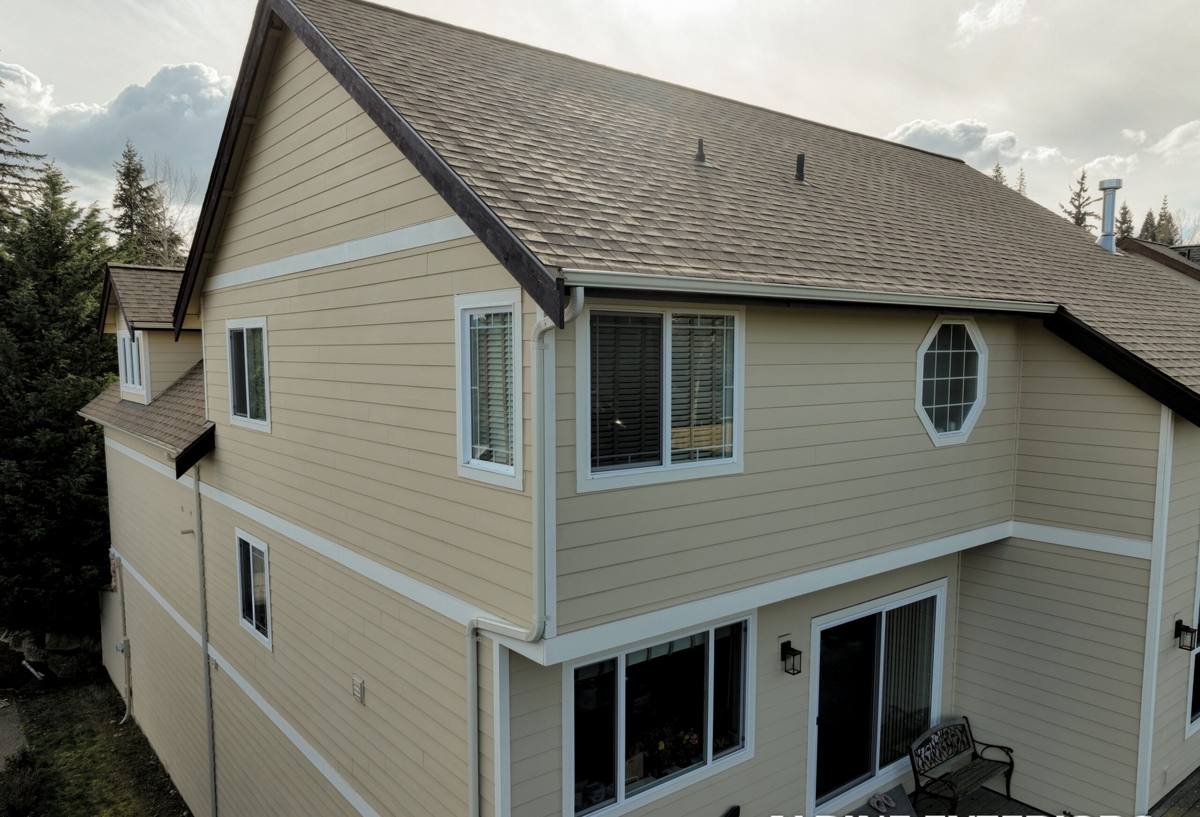
What a Metal Roof Here Actually Needs to Do
A correctly specified metal roof for this area isn't about picking the most expensive option — it's about matching the coating, fastening, and detailing to the actual exposure the roof will see. That means a finish system rated for coastal or marine conditions, fasteners that won't corrode faster than the panel around them, underlayment that protects the deck if wind-driven rain does get past the first line of defense, and ventilation that lets the attic and roof assembly dry out between storms instead of staying damp.
None of this is exotic. It's standard practice done consistently, on every roof, instead of skipped on the parts nobody sees from the ground.
Panel Types and Finishes We Install
We work with a handful of proven metal roofing systems and are upfront with California Creek homeowners about how each one behaves in salt air and heavy rain.
| Panel Type | Salt-Air Durability | Maintenance | Best Suited For |
|---|---|---|---|
| Standing seam (concealed fasteners) | Strong — fewer exposed penetration points for salt and moisture to attack | Low; occasional debris and moss check | Full roof replacements, waterfront or near-shore lots |
| Exposed-fastener ribbed/corrugated steel | Good with correct fastener spec, but exposed screws need periodic inspection | Moderate; fastener washers age and should be checked | Budget-conscious projects, outbuildings, simpler rooflines |
| Stone-coated steel (shingle or shake profile) | Good; coating adds a protective layer over the steel | Low to moderate; coating should stay intact at cuts and fastener points | Homeowners wanting a traditional look with metal's durability |
For most California Creek homes, especially anything within sight of the water, we lean toward standing seam. Concealed fasteners mean far fewer places for salt-laden moisture to find a way to bare metal over the roof's lifespan. That said, exposed-fastener panels done correctly — with the right fastener alloy and gasket washers — are a legitimate, cost-effective option for the right project. We'll walk you through the real trade-offs rather than push one system because it's what we happen to have on the truck.
What a Correct Installation Involves
Deck and Underlayment
Before any metal goes down, the deck gets inspected for soft spots and moisture damage — common on older roofs that have sat under wet tree canopy for years. A synthetic or self-adhered underlayment goes down as the roof's real waterproofing layer, since the metal panels themselves are the shedding layer, not the seal. Eaves, valleys, and any low-slope transitions get extra underlayment protection, since that's where wind-driven rain and standing water do the most damage over time.
Fastening and Flashing
Fasteners are matched to the panel metal to avoid galvanic corrosion — mixing incompatible metals is a slow, hidden way to void a roof's service life years before its finish actually fails. Flashing at chimneys, vents, skylights, and wall intersections is formed and layered so water is always directed out and down, never trapped or forced backward by wind.
Ventilation
A metal roof assembly needs to breathe. Balanced intake and exhaust ventilation keeps moisture from condensing under the panels, which matters more here than in drier parts of the state because the air itself carries more moisture for more of the year.
Put together, a properly installed metal roof for this area includes:
- Deck inspected and repaired before any new material goes down
- Synthetic or self-adhered underlayment across the full roof, doubled up at eaves and valleys
- Fasteners and washers matched to the panel metal to prevent galvanic corrosion
- Formed metal flashing at every penetration, wall intersection, and valley — not caulk used as a substitute for flashing
- Balanced attic or roof-assembly ventilation
- Panel and trim finishes rated for coastal or marine exposure
- Clean, sealed edge and rake details that don't leave cut metal exposed to weather
Moss and Algae: What Actually Slows Them Down
No roof in this part of Whatcom County is moss-proof, but a few things genuinely help. Zinc or copper strips installed near the ridge release trace metal ions that wash down the roof with rain and discourage moss growth over time. Keeping gutters, valleys, and any low-slope sections clear of needles and leaf litter removes the organic material and standing moisture moss needs to get a foothold in the first place. We also advise against pressure washing metal roofing — it can strip or damage factory finishes and force water up under laps and fasteners, causing exactly the intrusion problem you're trying to avoid. A gentle rinse and manual debris removal on a reasonable schedule does more good with none of the risk.
Our Process for California Creek Projects
We start with an on-site inspection of the existing roof, deck condition, ventilation, and how much tree cover and shade the specific lot deals with — that shade pattern affects moss risk and drying time more than most homeowners expect. From there we talk through panel and finish options with the real trade-offs, not a sales pitch toward whatever's most profitable for us.
Scheduling around here has to respect the weather rather than fight it — we avoid opening up a roof deck during an extended wet stretch, since a deck that gets soaked mid-project creates problems that follow the homeowner for years. Once conditions are right, we install with full flashing and ventilation detailing, clean up thoroughly, and walk the finished roof with you before calling the job done.
What Drives the Cost
Metal roofing costs vary more by project specifics than by brand name. The factors below matter more than any single price point we could quote without seeing your roof.
| Cost Factor | Why It Matters |
|---|---|
| Roof pitch and complexity | Steep pitches, multiple valleys, and dormers all add labor time and material cuts |
| Tear-off vs. install over existing roofing | Removing old roofing adds cost but lets us properly inspect and repair the deck underneath |
| Panel type and gauge | Standing seam and heavier-gauge steel cost more upfront than exposed-fastener panels |
| Number of penetrations and valleys | Every vent, skylight, and valley needs custom flashing, which adds labor |
| Site access and staging | Tree cover, steep lots, and limited driveway access near the creek can add setup time |
Rather than quote a number that means little without seeing the roof, we give honest ranges after a walk-through and break down exactly what's driving the price — no padded line items, no pressure to upgrade beyond what your home actually needs.
Why It Matters to Hire a Crew That Already Works California Creek
A roofing crew that already works this stretch of Whatcom County knows which slopes near the creek hold moss the longest, how exposed a given lot is to wind off the bay, and how tree cover on a shaded property changes drying time after a storm. That local pattern recognition shows up in small decisions — where to add extra underlayment, which fastener spec to insist on, how to schedule around the region's wet season — that a crew unfamiliar with this specific stretch of coastline might not think twice about. It's the difference between a roof that's technically installed to code and one that's actually built for where it sits.
If you're weighing a metal roof for a home near California Creek, we're happy to take a look and give you a straight, no-pressure estimate — just fill out the form below.