 Semiahmoo Siding
 The Climate Drayton Harbor Roofs Deal With
Homes around Drayton Harbor sit close to open water, and that changes how a roof ages compared to a house further inland in Whatcom County. Salt-laden air off the harbor, wind-driven rain that comes in sideways during winter storms, and a moss season that can run most of the year all put extra demand on roofing materials, fasteners, and flashing. A roof repair here needs to account for all three, not just patch the spot that's currently leaking.
Salt Air and Corrosion
Airborne salt settles on roofing surfaces and works into metal components — nail heads, flashing, gutter hardware, vent caps — faster than it would a few miles inland. Corrosion often starts small: a rusted nail head under a shingle tab, a pinhole in a flashing seam. Left alone, that small failure point becomes the entry for water. Roofs facing the water or sitting in an open, breezy spot near Drayton Harbor tend to show this wear first.
Wind-Driven Rain
Rain that falls straight down is manageable for almost any roof system. Rain that's being pushed sideways by wind coming off the water is a different problem — it can work its way up under shingle tabs, through poorly lapped flashing, and into valleys that weren't detailed with enough overlap. This is why so many "mystery leaks" near the harbor only show up during a specific storm direction, not every time it rains.
A Long Moss Season
Whatcom County's damp, mild climate keeps moss and algae growing on north-facing and shaded roof slopes for much of the year. Moss isn't just cosmetic. It holds moisture against the roofing material, lifts shingle edges as it grows, and channels water sideways instead of letting it run off — all of which shortens the life of an otherwise sound roof and creates the conditions for a leak to start.
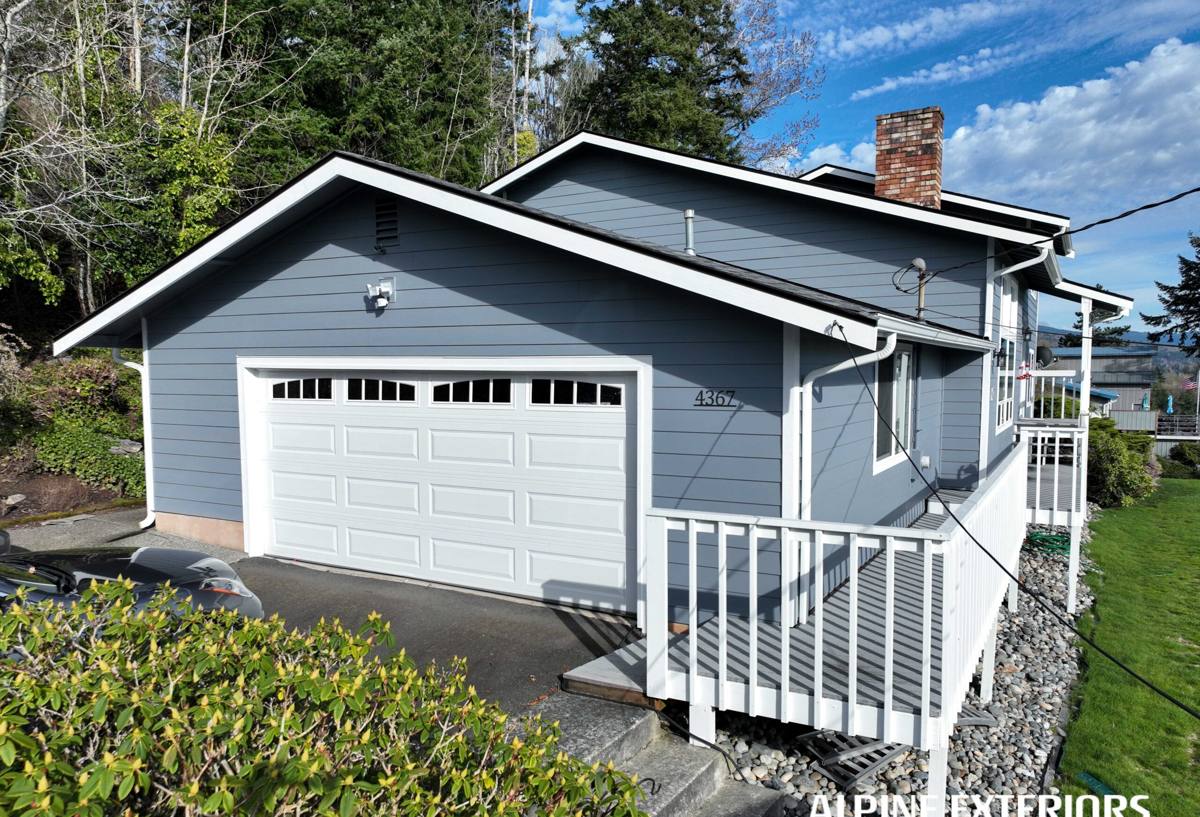
Common Roof Repair Issues We See in This Area
Not every roof problem near Drayton Harbor looks the same, but a handful of issues come up again and again on homes in this stretch of coastline:
- Corroded or lifted flashing around chimneys, skylights, and roof-to-wall transitions
- Moss-damaged shingles on shaded north- and east-facing slopes
- Wind-lifted or cracked shingle tabs from storm gusts off the water
- Clogged or corroded gutters causing water to back up under the roof edge
- Valley leaks where two roof planes meet and rain volume concentrates
- Nail pops and fastener corrosion working shingles loose over time
- Soft or stained roof decking discovered only after a slow leak has been running for a while
Most of these start small and stay hidden until they show up as a stain on a ceiling or ice-dam-style backup at the eaves. Catching them early is almost always cheaper than waiting.
What a Correct Roof Repair Actually Involves
Diagnosis Before Patching
A roof leak rarely shows up directly above where the water is actually entering — it travels along decking and framing before it drips somewhere visible. A proper repair starts with tracing the leak back to its real source, not just sealing the spot where the stain appears. That usually means getting on the roof, checking the attic or crawlspace if accessible, and looking at flashing, fasteners, and shingle condition in the surrounding area, not just the failure point.
Flashing and Transition Details
Most roof leaks near the water start at a transition — where a roof plane meets a chimney, wall, vent pipe, or skylight — not in the open field of shingles. A correct repair re-flashes or reseals these transitions properly, lapped and sealed in the right order, rather than relying on a bead of sealant to bridge a gap that should have been flashed. Sealant is a short-term fix on its own; it's a supplement to good flashing, not a substitute for it.
Matching Materials
Repairs should use materials compatible with what's already on the roof — matching shingle profile and, where possible, color, and using corrosion-resistant fasteners and flashing suited to a salt-air environment rather than standard interior-grade hardware. A repair that looks fine on day one but uses mismatched or under-spec materials tends to fail again within a season or two, right around the patch.
Roofing Materials and How They Hold Up Near the Harbor
The table below is a general guide, not a guarantee — actual performance depends on installation quality, roof slope, sun and shade exposure, and maintenance history.
| Material | Salt Air Exposure | Moss Resistance | Typical Repair Considerations |
|---|---|---|---|
| Asphalt composition shingle | Handles it reasonably well; fasteners are the weak point | Moderate — moss gains a foothold on shaded slopes over time | Widely available matching materials; straightforward tab and flashing repairs |
| Metal roofing (standing seam or panel) | Good with quality coatings; fastener and cut-edge corrosion is the main risk | Good — sheds moisture and moss struggles to establish | Repairs require matching profile and coating; seam and fastener work needs care |
| Cedar shake or shingle | Absorbs and releases moisture, which salt air and rain both slow down | Weak — natural wood is more moss- and moisture-prone in this climate | Requires more frequent maintenance; individual shake replacement is labor-intensive |
We'll walk you through what's actually on your roof and what a repair versus a longer-term upgrade looks like for that specific material — we're not going to talk you into tearing off a perfectly repairable roof.
Repair or Replace? Reading the Signs
Not every leak means a new roof, and not every old-looking roof needs to come off. A few honest signals help sort one from the other:
- Isolated leak at a single flashing point or valley, roof otherwise sound: usually a repair
- Widespread granule loss, curling, or brittle shingles across most slopes: replacement territory
- Soft or spongy decking found in more than one spot: often points toward a larger repair or partial re-roof
- Roof is under 15 years old with isolated storm or moss damage: typically a repair
- Multiple past patches in the same area that keep failing: a sign the underlying cause was never fixed, worth a full assessment
If we get up there and find the honest answer is "this needs more than a repair," we'll tell you that plainly, along with what a repair would and wouldn't buy you in the meantime.
Our Roof Repair Process
- Inspection. We get on the roof (weather permitting) and physically check the problem area and its surroundings, not just the spot you noticed.
- Diagnosis. We trace the actual entry point and explain what's causing it in plain terms — no jargon, no upsell pressure.
- Written estimate. You get a clear scope of work and price range before anything is touched.
- The repair. Flashing, decking, or shingle work is done to match your existing roof system and to hold up to salt air and driving rain, not just look patched.
- Cleanup and check. Job site is cleared of debris and nails, and we confirm the fix from both the roof and, where relevant, the interior.
Moss, Algae, and Ongoing Roof Care
Because moss is such a persistent issue this close to the water, a repair is often paired with a conversation about maintenance — not because we're trying to sell extra work, but because a roof that gets cleared of moss and debris on a reasonable schedule simply lasts longer and leaks less. Gutters that stay clear prevent water from backing up under the roof edge, which is one of the more common causes of edge and fascia rot we see on harbor-facing homes. If your roof has heavy moss buildup, we'll flag it honestly as part of the inspection rather than treat it as a separate problem from the leak you called about.
Why a Crew That Already Works Drayton Harbor Matters
A roof repair contractor who works this stretch of Whatcom County regularly already knows what salt exposure does to fasteners over a few winters, which flashing details tend to fail first in wind-driven rain off the water, and how aggressive moss growth gets on shaded slopes here compared to a drier inland town. That's not something you can fully substitute with a general roofing checklist — it comes from repeatedly seeing how roofs in this specific environment actually fail, and what holds up. It also means a faster, more accurate diagnosis, because we're not guessing at conditions we've never seen before.
If you've got a leak, a storm-damaged section, or a roof that's showing its age near Drayton Harbor, we're happy to take a look and give you a straight answer — free, no-pressure estimate, no obligation. Use the form below to get started.