 Semiahmoo Siding
 Siding Repair Built for a Peninsula Home
Point Roberts sits on its own peninsula at the southern tip of the Tsawwassen headland, surrounded by water on three sides and connected to the rest of Whatcom County only by a drive through Canada. That geography isn't just a curiosity — it's the reason siding on Point Roberts homes takes a different kind of beating than siding a few miles inland. Homes here face a near-constant marine environment: salt-laden air off Boundary Bay and the Strait of Georgia, wind-driven rain with nowhere to lose momentum before it hits an exterior wall, and enough shade and moisture in the wooded lots to keep moss and algae active most of the year.
Siding repair in this setting isn't a cosmetic job. Done right, it's a diagnosis of what's actually letting water and salt reach the wall assembly, followed by a fix that addresses the cause — not just the visible damage. This page walks through what Point Roberts homes typically need from a siding repair, what a correct repair looks like, and how our process works for jobs on the peninsula.
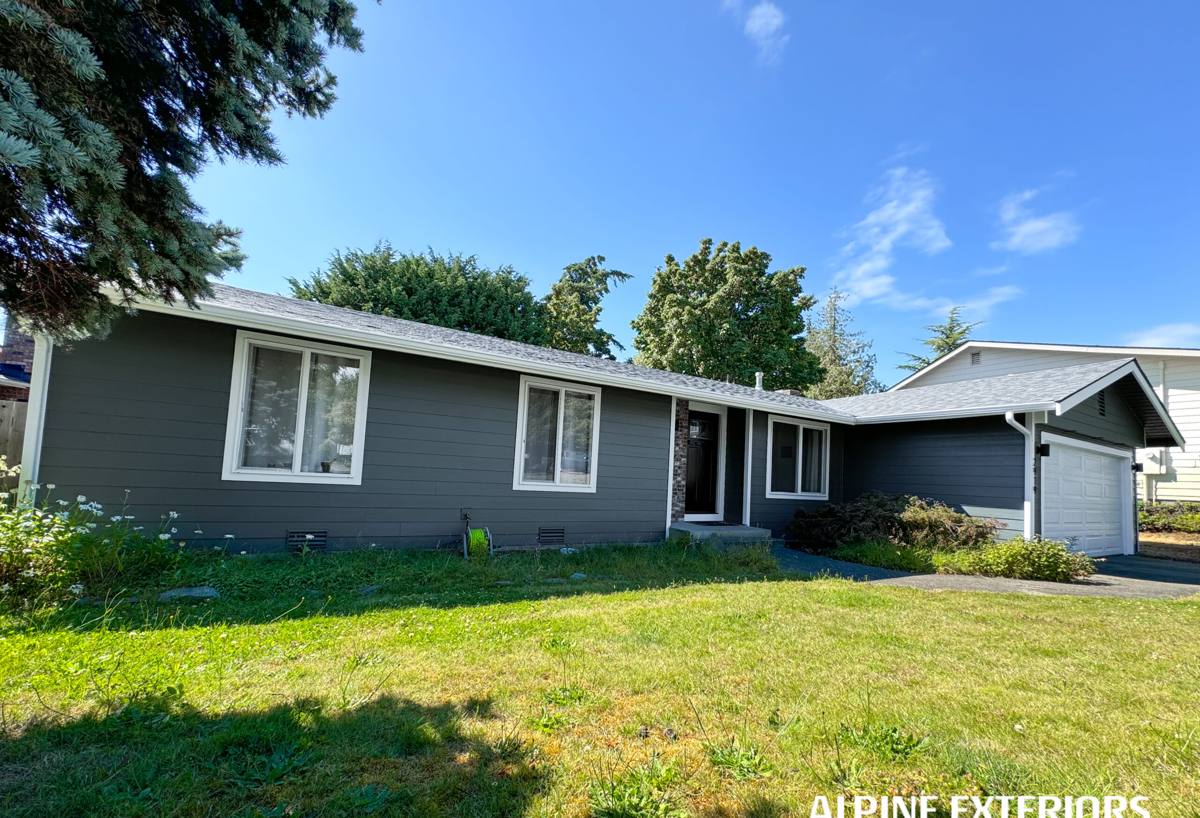
Why Siding Wears Differently Here
Salt Air and Corrosion
Airborne salt from the surrounding waters settles on exterior surfaces and fasteners year-round, not just during storms. Over time it accelerates corrosion in exposed nails, staples, and trim fasteners, and it can degrade paint and caulk faster than in a drier, inland location. Siding materials and finishes that aren't built to resist this kind of chemical exposure tend to show fading, chalking, and fastener failure earlier than their rated lifespan would suggest.
Driving Rain With No Buffer
Because the peninsula is exposed to open water, wind-driven rain hits west- and southwest-facing walls with more force and more volume than a typical Whatcom County lot tucked behind trees or hills. That matters for siding repair because most siding failures aren't really about the siding — they're about water finding a path behind it through a gap, a failed seam, or a piece of trim that's lost its seal. On an exposed peninsula, those small failure points get tested far more often.
A Long Moss Season
Between the marine moisture and the tree cover common on Point Roberts lots, conditions stay damp enough for moss and algae to take hold on north- and shade-facing siding for much of the year, not just the wet months. Moss holds moisture against the surface long after a rain event has passed, which is exactly the condition that lets rot start underneath siding that looks fine from a distance.
Signs a Point Roberts Home Needs Repair — Not Just a Repaint
A lot of homeowners reach for a pressure washer or a fresh coat of paint when the real issue is underneath the surface. Before doing either, it's worth checking for these signs:
- Soft or spongy spots when you press on siding, especially near the bottom edge or around windows and doors
- Visible gaps, cracks, or separation at seams, corners, and trim joints
- Persistent moss or dark staining that comes back within weeks of cleaning
- Peeling or bubbling paint on wood-based siding, which often signals moisture trapped behind it
- Warping, buckling, or boards that no longer sit flat against the wall
- Interior signs — musty smells, discolored drywall, or peeling interior paint on an exterior wall
- Fastener heads that are rusted, popped, or leaving streaks down the siding face
Any one of these can be an isolated issue. Several together, especially on the sides of the house that take the worst weather, usually mean water has been getting behind the siding for a while.
What a Correct Repair Actually Involves
Finding the Cause, Not Just the Symptom
The visible damage — a cracked board, a soft patch, a stain — is where water showed up, not necessarily where it got in. A proper repair starts by tracing the path: checking flashing above windows and doors, looking at how trim meets siding, and inspecting the house wrap or building paper behind the removed section. Replacing a damaged board without finding and fixing the entry point just buys time before the same spot fails again.
Matching Materials and Finish
Repairs should match the existing siding's profile, reveal, and finish as closely as possible. On fiber cement siding with a factory-applied finish, that means sourcing the correct product line and color rather than field-painting a patch that will weather differently than the surrounding material over the next few years.
Rebuilding the Water Management, Not Just the Surface
Any competent repair re-establishes proper flashing, correct overlaps, and a sealed house wrap behind the new material before the new siding goes back on. Skipping this step to save time is exactly how a repair turns into a repeat repair eighteen months later.
Repair or Replace? Weighing the Real Cost Factors
Not every damaged section needs a full re-side, but repair isn't always the cheaper long-term option either. These are the factors that actually drive that decision on a peninsula home:
| Factor | Favors Repair | Favors Full Replacement |
|---|---|---|
| Extent of damage | Isolated to one or two elevations or sections | Present on multiple sides, especially the weather-exposed faces |
| Underlying wall condition | House wrap and sheathing test dry and sound | Moisture has reached the sheathing or framing in more than one spot |
| Age of existing siding | Well within its expected service life | Nearing or past the end of its practical lifespan |
| Material match | Current product line and color are still available | Discontinued product, patch would visibly mismatch |
| Root cause | A localized flashing or seal failure | A systemic issue in how the original siding was detailed |
An honest assessment tells you which column your home falls into, rather than defaulting to whichever option is more profitable for the contractor doing the looking.
Why We Repair and Replace in James Hardie Fiber Cement
We install and repair with James Hardie fiber cement exclusively — we don't work in vinyl, LP SmartSide, cedar, or primed spruce. In a salt-air, high-rain environment like Point Roberts, that standard matters for repair work specifically. Fiber cement doesn't rot, and it isn't a food source for the moss and algae that thrive in this climate the way wood-based products can be. James Hardie's HZ5 product line is engineered for climates with sustained moisture exposure, and the factory-applied ColorPlus finish holds its color and resists the fading that comes from constant salt exposure far better than field-applied paint. When we repair a section of Hardie siding, we're extending a system that was built for this kind of exposure in the first place, backed by a transferable warranty — not patching a material that was already fighting the climate to begin with.
Our Process for Point Roberts Siding Repair Jobs
Getting crews and materials to Point Roberts takes more planning than a typical Whatcom County job, since the only land route runs through a Canadian border crossing. That affects how we schedule and stage a repair:
- An on-site assessment where we identify every affected area, not just the spot the homeowner called about, and check the house wrap and framing behind removed sections where damage is suspected
- A written scope that separates what needs repair now from what's worth monitoring, so you're not paying to replace sound material
- Material sourcing and cutting done ahead of the crossing, since fabricating on-site isn't practical for a peninsula job
- Scheduling that accounts for border wait times and weather windows, so the crew and materials arrive together and the repair gets done in one mobilization rather than several partial trips
- A final walkthrough that includes the repaired water management details, not just the visible siding
Why It Matters That We Already Work in Point Roberts
A siding repair on a peninsula home isn't the same job as a repair three miles inland, and a crew that hasn't worked this specific area before will learn that on your dime. Knowing which elevations on a Point Roberts home typically take the worst of the wind-driven rain, how aggressively moss returns on the shaded sides, and how to plan a crossing and mobilization so the job gets done in one trip instead of three all come from having done this work here before — not from a general siding background. That local experience shows up in fewer surprises, a tighter schedule, and a repair that's built to hold up against the exact conditions your home actually faces.
If you're seeing soft spots, recurring moss, or staining on your Point Roberts home, we're happy to take a look and give you a straightforward, no-pressure estimate on what it would take to fix it right. Use the form below to get started.