 Semiahmoo Siding
 Why Marietta Homes Put Extra Demands on Windows
Marietta sits close enough to Semiahmoo Bay that salt-laden air, wind-driven rain, and long stretches of gray, damp weather are just part of owning a home here. Whatcom County's marine climate doesn't hit windows with dramatic storms so much as it wears them down slowly — humid air working into seals, fine salt residue settling on frames and hardware, and moss finding a foothold anywhere moisture lingers. Windows that were fine when a house was built twenty or thirty years ago often aren't holding up their end of the bargain anymore, and the homeowner ends up paying for it every month in higher heating bills.
Energy-efficient windows done right aren't just about a lower utility bill, though that matters. In this climate they're also your first line of defense against moisture intrusion, which is the root cause of most of the rot, mold, and siding damage we see on service calls in this area. A window that's properly rated, properly installed, and properly sealed keeps water out and warm air in — and in a place like Marietta, both jobs matter equally.
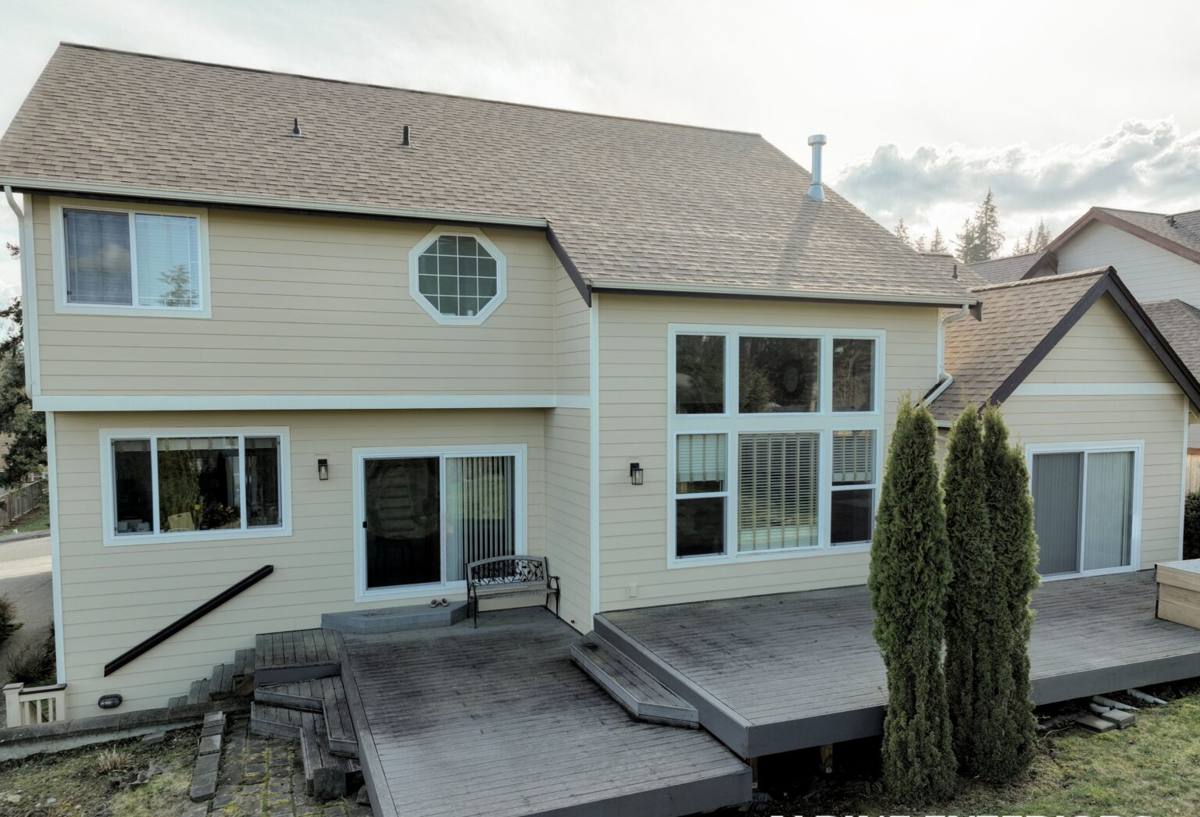
What "Energy-Efficient" Actually Means for This Climate
Energy-efficient windows get rated on a few numbers that actually matter more than marketing language on a brochure:
- U-factor — how well the window resists heat loss. Lower is better, and it's the number that most affects your winter heating bill.
- SHGC (Solar Heat Gain Coefficient) — how much solar heat passes through the glass. In our mostly overcast climate this matters less than it would in a sunnier region, but it still affects comfort on the clear days we do get.
- Air infiltration rating — how much air leaks around the sash when it's closed. This is the one that's most directly tied to drafts and to moisture finding its way in around a poorly sealed unit.
For homes exposed to salt air and driving rain, the glass package is only half the equation. Frame material, weatherstripping quality, and — most of all — how the window is flashed and sealed into the wall opening determine whether that efficiency rating actually holds up over time.
Frame Materials in a Coastal Climate
| Frame Type | How It Handles Salt Air & Moisture | Maintenance |
|---|---|---|
| Vinyl | Won't rust or rot; handles salt residue well with occasional rinsing | Low — periodic cleaning of tracks and weep holes |
| Fiberglass | Very stable dimensionally, resists moisture and corrosion, holds paint well if color changes are wanted later | Low |
| Aluminum | Durable but conducts heat and cold, and lower-grade finishes can pit or corrode faster near salt air | Moderate — finish and hardware need checking |
| Wood or wood-clad | Attractive but the most vulnerable to the moisture and moss exposure common in this area unless claddings and finishes are well maintained | Higher — regular inspection and finish upkeep |
We don't push one brand or material on every home. The right call depends on the home's exposure to wind and rain, the existing siding and trim, and what the homeowner wants to maintain long-term. What we won't do is install a frame material that we know will struggle against this specific coastline's conditions just because it's cheaper up front — we'd rather explain the trade-offs honestly and let the homeowner decide with full information.
Signs Your Current Windows Are Costing You Money
Most homeowners don't realize how much a tired window is costing them until it's pointed out. A few things worth checking around the house:
- Noticeable draft when standing near the window on a windy day
- Condensation building up between panes (a sign the seal has failed on a double-pane unit)
- Difficulty opening, closing, or locking — often a sign the frame has shifted or the hardware has corroded
- Visible daylight or gaps around the frame where it meets the siding or trim
- Soft or discolored wood trim around the window, which can mean water has already been getting in
- Moss or dark streaking on the sill or the siding just below the window
- Rooms near older windows that feel noticeably colder or draftier than the rest of the house
Any one of these is worth a look. Several together usually mean the windows have been quietly losing the battle against the weather for a while.
What a Correct Installation Actually Involves
A window is only as good as the opening it's installed into. This is the step that gets rushed by crews that don't know the area, and it's the step that matters most where wind-driven rain is a regular event.
Before the New Window Goes In
We check the existing rough opening for water damage, soft framing, or signs of past leaks before anything new goes in. Installing a high-efficiency window into a compromised opening just traps the problem behind new trim — it doesn't fix it.
Flashing and Moisture Management
Proper flashing — sill pan, side flashing, and head flashing integrated correctly with the house's weather-resistive barrier — is what actually keeps driving rain from working its way into the wall cavity over time. This is arguably more important to the long-term performance of the window than the glass package itself in a climate like this one.
Sealing and Insulation
Gaps around the frame get properly insulated (not just caulked and left) and the exterior gets sealed with materials rated for the movement and moisture exposure the assembly will see. Skipping this step is a common shortcut, and it's exactly the kind of thing that shows up as a draft or a leak two winters later.
Our Process
- On-site assessment — we look at existing windows, openings, siding condition, and sun/wind exposure specific to the home's position.
- Product recommendation — based on the home's exposure and the homeowner's priorities (efficiency, maintenance, appearance, budget), not a one-size-fits-all pitch.
- Written estimate — clear scope, materials, and timeline before any work starts.
- Removal and opening prep — old units removed carefully, opening checked and repaired as needed.
- Installation — proper flashing, insulation, and sealing as described above.
- Final check and cleanup — operation, seal, and finish work verified before we consider the job done.
Choosing Glass and Hardware for Salt Air and Moss Season
Glass Coatings
Low-E coatings help control heat transfer year-round, and in a climate with as many overcast, damp days as ours, the insulating value matters more day-to-day than solar control. We help homeowners pick a glass package suited to actual local weather rather than a generic national recommendation.
Hardware and Corrosion Resistance
Locks, hinges, and cranks near salt air benefit from corrosion-resistant finishes and hardware designed for coastal exposure. Cheaper hardware can start sticking or corroding within a few years in this environment, which turns into a service call that a slightly better hardware spec would have avoided.
Screens and Weep Holes
Weep holes (the small drainage openings at the base of a window frame) need to stay clear so water can drain out instead of pooling. In areas with heavy moss growth nearby, these are worth checking a couple of times a year — it's a five-minute task that prevents a much bigger problem.
Why a Crew That Already Works Marietta Matters
Every coastal neighborhood has its own combination of wind exposure, rain direction, and moisture patterns, and Marietta's position near Semiahmoo Bay is no exception. A crew that already works in this specific area knows which sides of a house typically take the worst of the driving rain, how moss tends to establish itself on north-facing and shaded surfaces, and what local building codes and permitting expect for window replacement in Whatcom County. That's knowledge that only comes from doing the work here repeatedly — not from a general product catalog.
It also means faster, more accurate estimates. We're not guessing at how this climate treats a given product over time; we're telling you what we've actually seen hold up on homes like yours in this exact area.
Maintaining Your Windows After Installation
Even the best window benefits from a little upkeep in this climate:
- Rinse salt residue off frames and glass periodically, especially on sides of the house facing open water or prevailing wind
- Keep weep holes clear of debris, moss, and dirt
- Check and lightly lubricate hardware (locks, cranks, hinges) once or twice a year
- Inspect exterior caulking and sealant lines annually and touch up before gaps widen
- Trim back vegetation or growth that keeps a window shaded and damp longer than the rest of the house
None of this takes long, and it goes a long way toward protecting the investment and keeping the efficiency numbers you paid for actually performing as expected.
Ready to Talk About Your Windows?
If you're noticing drafts, condensation, or moss and staining creeping in around your windows, it's worth having someone take an honest look before it becomes a bigger repair. We offer free, no-pressure estimates for Marietta homeowners — come take a look at what's actually going on with your windows and get straight answers about what it would take to fix it right.