 Semiahmoo Siding
 Building New in Point Roberts Means Building for the Water
Point Roberts sits on its own little peninsula, cut off from the rest of Whatcom County by the international border, and surrounded on three sides by the Strait of Georgia and Boundary Bay. That location is part of why people build here — but it also means new construction takes more punishment than a comparable lot ten miles inland. Salt-laden wind comes off the water year-round, driving rain hits siding and window walls at an angle instead of straight down, and the shoulder seasons stay damp long enough for moss and algae to get established on anything that doesn't drain and dry properly. If you're framing a new home or a major addition here, the window package is one of the places where cutting corners shows up fastest — usually as staining, seal failure, or soft trim within a few years, not decades.
New-construction windows are a different job than replacement windows. There's no existing frame to work around, no old flashing to patch into, and no finished interior wall to protect. That's an advantage — it means the window opening can be built and flashed correctly from the sheathing out, instead of compromising around what's already there. Done right, a new-construction window installation in a place like Point Roberts should outlast the first re-roof and re-side cycle without a callback.
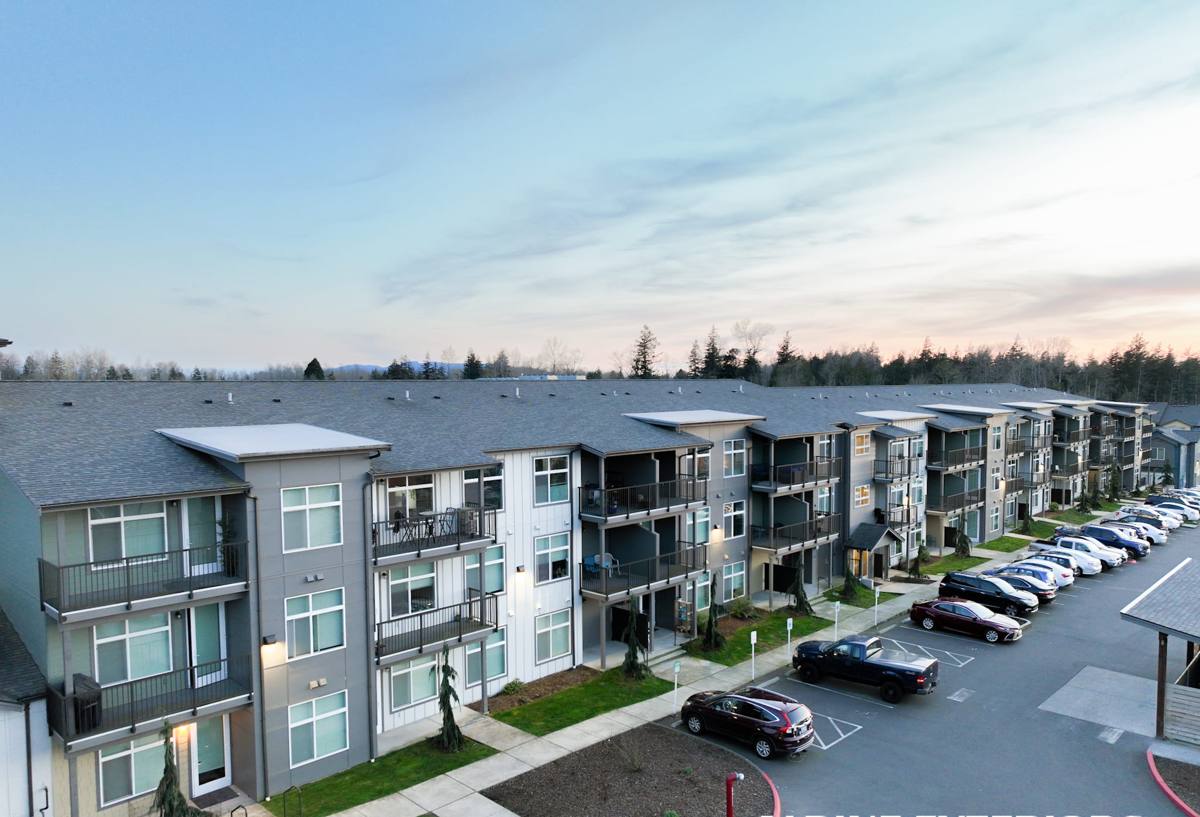
What Point Roberts' Climate Actually Does to a Window Opening
Salt Air and Metal Components
Salt spray corrodes unprotected fasteners, cheap cladding, and low-grade hardware faster than people expect, especially on the west- and south-facing walls that catch the prevailing weather off the water. This matters most in the details other crews skip: the grade of screws used to anchor the frame, whether flashing tape is rated for long-term UV and salt exposure, and whether the window's exterior cladding and hardware are actually suited to a marine-influenced environment rather than a standard suburban spec.
Driving Rain and Wind-Driven Water
Rain here rarely falls straight down. Wind off the water pushes it sideways into wall assemblies, which puts real pressure on the flashing details around every rough opening. A window that would perform fine in a sheltered inland yard can leak at Point Roberts if the sill pan, house wrap integration, and head flashing aren't sequenced correctly — water finds the first shortcut in the assembly and works it.
Moss, Algae, and the Long Wet Season
Whatcom County's wet season stretches long, and Point Roberts' exposure keeps humidity and surface moisture around even longer. Anywhere water is allowed to pool or sit — a poorly sloped sill, a window trim detail without drainage, a shaded north wall — moss and algae get a foothold. That's cosmetic at first, but it holds moisture against wood trim and caulk joints, which shortens their life.
What a Correct New-Construction Window Job Involves
New-construction windows use a nailing fin (or flange) that attaches directly to the sheathing, which is then integrated into the house wrap and flashing system in a specific order. Get the sequence wrong and the window can look perfectly installed while still being set up to leak in three or four years. The order matters more than any single product choice:
- Rough opening is checked for square, level, and correct size before the window ever shows up on site.
- A sloped sill pan is built or installed so any water that gets past the window has somewhere to go — out, not into the wall cavity.
- Self-adhered flashing membrane goes down at the sill first, then up the jambs, then the head flashing laps over the jamb flashing — always shingle-style, so every layer sheds water onto the layer below it.
- The window is set, shimmed plumb and square, and fastened per the manufacturer's schedule — not "close enough."
- House wrap is integrated back over the flanges in the correct lap order, and the head flashing gets a drip cap or diverter where the wall detail calls for one.
- Interior and exterior gaps are insulated and sealed with the right materials — not just caulk everywhere — to control both air leakage and condensation risk.
Any one of those steps done out of sequence undermines the ones around it. This is why we treat window flashing as a system, not a caulk gun problem.
Choosing Windows That Actually Belong on This Peninsula
Frame material, glazing, and hardware all affect how a window holds up to salt air and sustained moisture. There's no single "best" window for every project — it depends on the home's design, budget, and how exposed the specific wall is — but here's how the common choices compare for a Point Roberts build:
| Frame Material | Salt / Moisture Behavior | Maintenance | Typical Fit |
|---|---|---|---|
| Vinyl | Won't corrode or rot; performs well in coastal air | Low — occasional cleaning | Cost-conscious builds, rentals, most exposures |
| Fiberglass | Excellent — very stable, resists warping and salt exposure | Low | Higher-exposure walls, long-term owners |
| Aluminum-clad wood | Good exterior protection if cladding and seams are intact; wood core needs the cladding to stay sealed | Moderate — watch clad seams over time | Design-driven projects wanting a wood interior look |
| Bare wood | Weakest choice for this location without heavy upkeep | High | We generally steer clients away from it on exposed walls here |
Glazing matters too. Dual-pane with a quality low-E coating and warm-edge spacer is the practical baseline for this climate — it manages condensation risk on cold, damp mornings better than older single- or dual-pane setups without low-E. Argon-filled units are a reasonable upgrade; triple-pane is worth discussing on north-facing or highly exposed walls, but it's not always necessary for the whole house.
Hardware and Fasteners
This is the detail that gets skipped most often and shows up first. Stainless steel or otherwise corrosion-rated fasteners and hardware cost more up front than standard-grade options, but on a saltwater-adjacent build, standard hardware is often the first thing to show rust streaking down the cladding. We spec fastener and hardware grade based on the wall's actual exposure, not a blanket standard.
Our Process on New-Construction Projects
We work new-construction window installs as part of the building envelope, not as a standalone trade dropped in after the fact. On a typical Point Roberts project:
- Plan review: we look at the window schedule, wall sections, and exposure of each elevation before framing is even finished, so flashing details are decided in advance, not improvised.
- Coordination with the framer and siding trade: window flashing has to integrate with house wrap and siding sequencing — we coordinate timing so nothing gets covered up before it's inspected.
- Sill pan and flashing installed per manufacturer requirements: this is what actually keeps a warranty valid if a leak is ever claimed later.
- Photo documentation of flashing before it's closed in, so there's a record of what's behind the wall.
- Final adjustment and operation check on every unit — smooth operation, proper locking, no binding — before we consider the job done.
Because Point Roberts is only reachable by crossing into and back out of Canada, scheduling and material logistics take a bit more planning than a job across town. We build that into the timeline up front rather than letting it become a surprise mid-project.
A Practical Checklist Before You Sign Off on a Window Package
- Does the window's frame material and hardware grade match the wall's actual salt and wind exposure, not just a standard spec sheet?
- Is there a sloped sill pan detail specified for every rough opening, not just "flashing tape around the edges"?
- Does the flashing sequence follow shingle-style lapping — sill, then jambs, then head — confirmed in writing or on the drawings?
- Are fasteners rated for coastal/corrosive exposure where the wall is exposed to wind off the water?
- Is the glazing package (low-E, gas fill, spacer type) appropriate for a damp, condensation-prone climate?
- Will flashing be photographed or inspected before it's covered by siding?
Why Local Installation Experience Matters Here
A window that's correctly installed in a dry inland climate isn't automatically correct for Point Roberts. Crews without local experience often use standard flashing sequences and standard hardware because that's what works everywhere else — and on most builds, it's fine. On this peninsula, "fine everywhere else" is exactly the gap that shows up as a stained sill, a soft spot in the trim, or a slow leak a couple of years after move-in. We've installed and repaired enough window systems around Whatcom County's coastal edges to know which details are optional inland and which ones aren't optional here.
That local knowledge also shows up in smaller decisions — which elevations need the extra flashing detail and corrosion-rated hardware, and which don't need the upgrade cost. Getting that judgment right keeps the project on budget without cutting corners where it counts.
Get a Straight Answer Before You Build
If you're framing new construction or planning a major addition in Point Roberts, we're happy to walk the plans with you, talk through window and flashing specs for your specific elevations, and give you a clear, no-pressure estimate — free, with no obligation. Use the form below to get started.