 Semiahmoo Siding
 Decking Built for Bellingham's Coastal Climate
A deck in Bellingham lives a harder life than a deck almost anywhere inland. You're close enough to Semiahmoo Bay and the Strait of Georgia to get real salt air on the wind, you're in one of the wetter corners of Whatcom County for driving rain off the water, and the gray months bring a moss season that can run from October well into spring. Composite decking exists largely to deal with exactly these conditions, but only if it's specified and installed correctly for this specific climate. This page covers what that actually looks like for a Bellingham home.
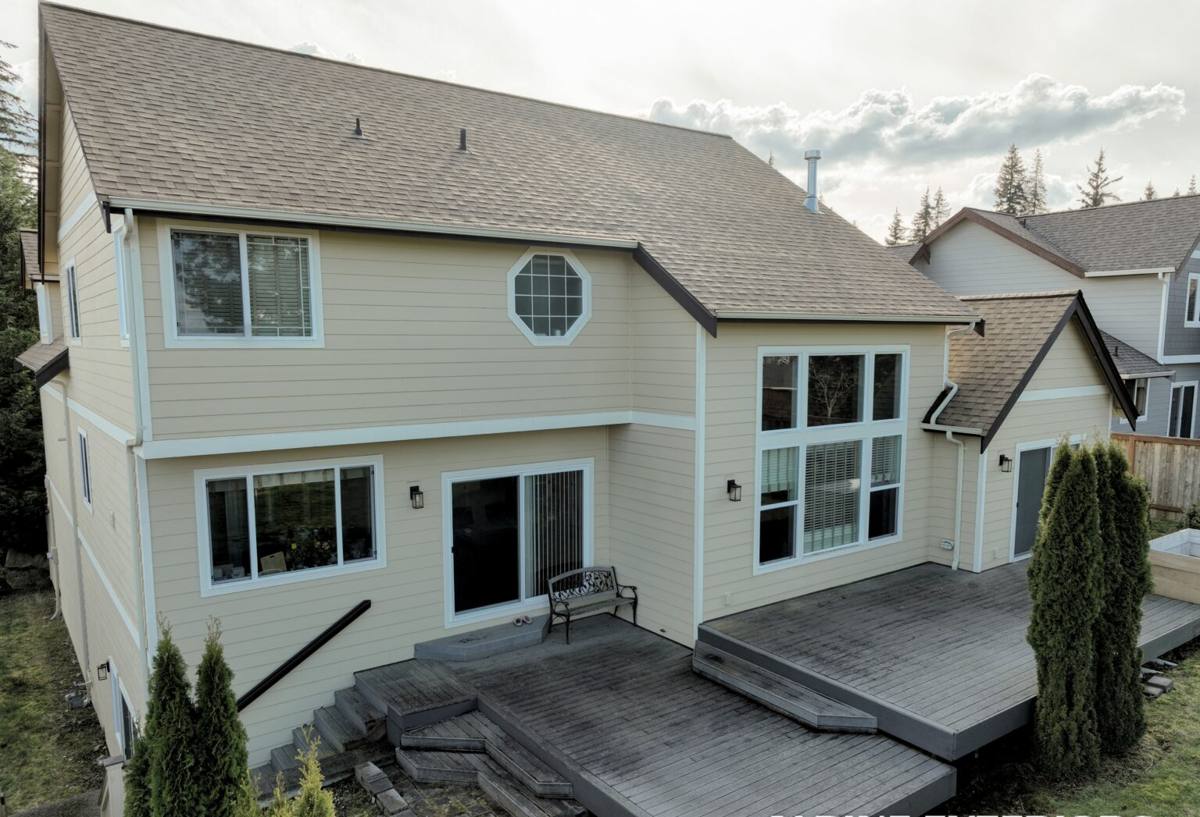
What Local Weather Does to a Deck Over Time
Salt Air and Metal Fatigue
Salt-laden air corrodes fasteners, flashing, and structural hardware faster than it damages the decking surface itself. On a wood deck, that corrosion often shows up as rust streaking around nail heads and premature failure of joist hangers. Composite boards don't corrode, but every metal component underneath and around them still can, so the hardware package matters as much as the board choice.
Driving Rain and Standing Water
Bellingham's rain doesn't just fall straight down — wind off the water pushes it sideways into ledger connections, stair stringers, and any gap where water can pool instead of shed. Wood absorbs that water and swells, cups, and eventually rots from the inside. Composite doesn't absorb water the way wood does, but poor drainage underneath a composite deck still traps moisture against the framing below, which is where most real damage on composite decks actually happens.
Moss, Algae, and Constant Shade
Long stretches of damp, low-light weather are ideal for moss and algae growth on any horizontal surface, decking included. Moss holds moisture against the board surface, and on a deck that doesn't get much direct sun — common under mature trees or on the north side of a house — it can establish itself within a season if the surface isn't cleaned or the boards don't have a texture designed to shed it.
Why Composite Makes Sense Here
Composite decking combines wood fibers with plastic (usually polyethylene or polypropylene), and in most modern products a capped polymer shell wraps the board to block moisture absorption at the surface. That matters directly for this climate:
- No swelling, cupping, or splintering from repeated wet-dry cycles
- No annual staining or sealing to keep water out, since the board itself doesn't need to "breathe" water like wood does
- Consistent color and structure even after years of gray, wet winters
- Better resistance to rot at fastener holes and board ends, which is where wood decks fail first
Composite isn't maintenance-free, and we won't tell a homeowner it is. It still needs periodic cleaning, the substructure underneath still needs to be built and drained correctly, and low-quality or uncapped composite can still absorb moisture at cut edges. But as a surface material for a wet, salty, shaded climate like this one, it holds up in ways that solid wood generally doesn't without constant upkeep.
Comparing Deck Surface Options for This Climate
| Material | Moisture Behavior | Moss/Algae Resistance | Upkeep in This Climate |
|---|---|---|---|
| Cedar or pressure-treated wood | Absorbs water, swells and shrinks seasonally | Low — porous surface holds moss and algae | Annual cleaning, sealing or staining, board replacement over time |
| Uncapped composite | Some absorption at surface and cut edges | Moderate — better than wood, still needs cleaning | Periodic cleaning, edge sealing at cuts recommended |
| Capped composite | Minimal — polymer shell resists water intake | Good — smoother, denser surface sheds growth more easily | Routine washing, no sealing or staining needed |
| PVC decking | Essentially none | Good, though very smooth surfaces can be slick when mossy | Routine washing, higher material cost |
We install capped composite on the large majority of Bellingham and Semiahmoo projects because it's the best balance of moisture performance, appearance, and cost for this specific climate. PVC has its place, particularly right at the waterline on docks or extreme-exposure builds, and we'll talk through that tradeoff honestly if your site calls for it.
What a Correct Installation Involves
Framing and Drainage First
The composite boards get most of the attention, but the framing underneath is what determines whether the deck lasts. In a climate this wet, that means pressure-treated joists sized and spaced correctly for the composite product being used (composite has different span ratings than wood), joist tape or flashing on top of every joist to keep water off the framing lumber, and a slope built into the substructure so water actually moves off the deck instead of sitting on it.
Ledger Attachment and Flashing
Where the deck attaches to the house is the single most common failure point on any deck in a wet climate, composite or not. A correctly flashed ledger board with proper counter-flashing tucked behind the siding or house wrap keeps water from tracking behind the connection and into the rim joist or sheathing. This is not a place to cut corners, and it's the detail we check most carefully on every project.
Fasteners and Hardware
Given the salt air here, we use stainless steel or otherwise corrosion-resistant fasteners and structural hardware rather than standard galvanized. It costs a little more up front and saves you from rust streaks, loosening connections, and hardware failure years down the road.
Hidden Fastener Systems and Board Spacing
Most composite decking today uses a hidden fastener clip system rather than face screws, which gives a cleaner look and eliminates screw-hole entry points for water. Board spacing has to account for composite's expansion and contraction with temperature and moisture, and gapping that's too tight can cause boards to buckle over a wet winter.
Our Process for a Bellingham Composite Deck
- On-site assessment of drainage, sun exposure, and existing structure (new build or replacing an old deck)
- Review of composite product options and a straightforward walk-through of cost, warranty, and appearance tradeoffs
- Structural framing built or upgraded to current code and sized correctly for the chosen composite
- Joist protection tape, proper ledger flashing, and corrosion-resistant hardware throughout
- Composite board installation with correct spacing and hidden fastener systems where applicable
- Final walkthrough covering drainage, edge details, and basic maintenance expectations for our climate
Keeping a Composite Deck Ahead of Moss and Salt Air
Composite decking cuts down on maintenance dramatically compared to wood, but "low maintenance" isn't "no maintenance" in this climate. A few habits go a long way:
- Sweep or blow off leaves and debris regularly through fall, since trapped organic matter is what feeds moss
- Rinse the deck periodically, especially shaded areas, and use a soft-bristle brush with mild soap for any moss or algae film before it establishes
- Avoid pressure washing directly into board grooves or fastener channels at high pressure, which can drive water where it shouldn't go
- Check that drainage gaps between boards and along the deck edge stay clear so water keeps moving off the surface
- Inspect ledger and stair connections once a year for any sign of water tracking or hardware corrosion
Mistakes We See on Older Bellingham Decks
Replacing a failed deck teaches you what not to do. The most common issues we run into on existing decks in this area are missing or inadequate ledger flashing, joists with no protective tape that have started to rot from the top down even though the composite boards above look fine, galvanized fasteners that have rusted and stained the decking, and boards installed too tight with no allowance for seasonal movement. Every one of these is preventable with correct installation the first time, which is a big part of why we treat the framing and flashing as seriously as the visible decking material.
What Affects the Cost
| Factor | Why It Matters |
|---|---|
| Deck size and shape | Complex angles, multiple levels, or curves increase labor and material waste |
| Composite tier | Entry-level, mid-range, and premium capped composite lines vary in price, warranty length, and color retention |
| Substructure condition | New framing costs more than reusing sound existing framing, but framing in poor condition should never be reused |
| Railing and stair systems | Composite or metal railing, glass panels, and multi-level stairs add cost beyond the deck surface itself |
| Site access | Sloped lots or limited equipment access near the water can add labor time |
We'll always give you a straightforward number based on your actual site rather than a generic per-square-foot estimate that ignores drainage, framing condition, or access.
Why a Crew That Already Works This Area Matters
Bellingham and Semiahmoo aren't generic building sites — the wind exposure near the water, the shade patterns from mature trees, and the amount of moisture a deck deals with over a Whatcom County winter all affect how a deck should be framed, flashed, and spaced. A crew that already builds decks in this specific area has seen which details fail here and which hold up, rather than applying a one-size-fits-all approach borrowed from a drier climate. That local experience shows up in the small decisions — flashing details, fastener choice, drainage slope — that don't show up in a sales brochure but determine whether your deck is still solid in fifteen years.
If you're planning a new composite deck or replacing one that hasn't held up to Bellingham's weather, we're happy to take a look and give you a straightforward, no-pressure estimate. Use the form below to get started.