 Semiahmoo Siding
 Building Decks for Blaine's Marine Climate
Blaine sits right on the water, at the northern edge of Whatcom County, and that location shapes everything about how a deck should be built here. The same salt-laden air that makes the marine views worth having also works against untreated metal, painted surfaces, and poorly sealed wood year-round. A deck built to a generic spec sheet, without accounting for that environment, tends to show problems within a few seasons: rusting hardware, soft spots, slick moss-covered boards, and railings that loosen before they should. A deck built correctly for Blaine's conditions is a different story — it's a matter of choosing the right materials, detailing the framing correctly, and giving water somewhere to go.
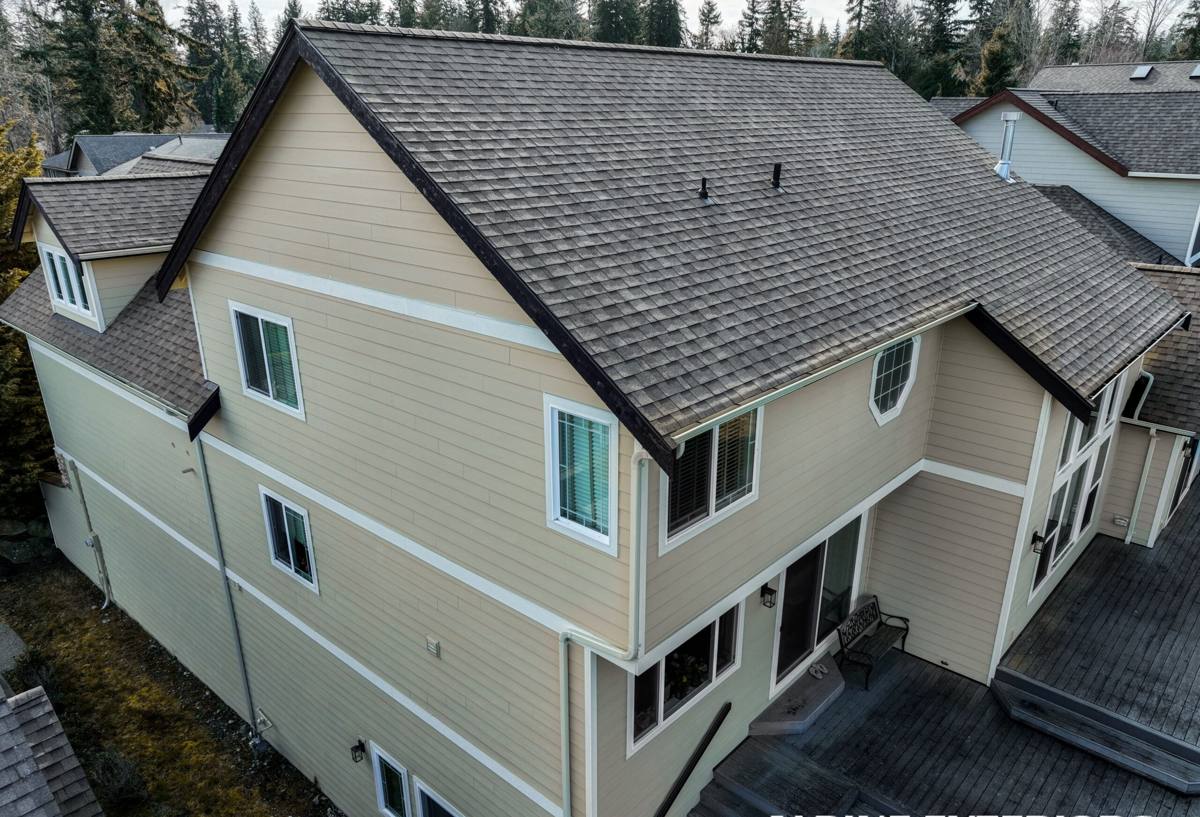
What Salt Air, Driving Rain, and Moss Actually Do to a Deck
Salt Air and Metal Fasteners
Airborne salt accelerates corrosion on any exposed metal — screws, joist hangers, bolts, and railing hardware included. Standard zinc-coated fasteners that would be fine 50 miles inland can start rusting and staining the decking around them within a couple of years this close to the water. Once a fastener corrodes, it loses holding strength, and a deck's structural integrity depends on every one of those connections doing its job.
Driving Rain and Wood Movement
Blaine gets its share of wind-driven rain off the water, which pushes moisture into places a straight-down rain wouldn't reach — under railings, into end grain, behind ledger boards. Wood expands and contracts with that repeated wetting and drying, and if end grain isn't sealed or flashing isn't detailed properly, water finds its way into the structure rather than off of it.
Moss Season and Surface Buildup
Western Washington's long wet season, made longer by the shade and humidity common on north-facing decks near the coast, gives moss and algae plenty of time to establish. Beyond looking bad, a mossy deck surface holds moisture against the boards and turns slick and genuinely dangerous underfoot, especially on stairs.
Choosing Decking Material That Holds Up Here
There's no single "right" decking material for every home — it depends on budget, maintenance appetite, and how much sun or shade the deck gets. What matters is picking with Blaine's climate in mind rather than a national average.
| Material | How It Handles This Climate | Maintenance | Typical Lifespan Here |
|---|---|---|---|
| Pressure-Treated Wood | Resists rot when properly treated, but end grain and cut edges need sealing or moisture gets in | Annual cleaning and re-sealing/staining | 15-20 years with upkeep |
| Western Red Cedar | Naturally moisture- and insect-resistant, but salt air and shade accelerate graying and moss growth | Regular cleaning, periodic oiling or staining | 15-20 years with upkeep |
| Composite Decking | Doesn't absorb water like wood, but uncapped composite can still trap moisture and grow moss/mildew on the surface | Periodic washing, no sealing or staining required | 25-30 years |
| Capped Composite / PVC | A sealed cap resists moisture, salt residue, and staining, and cleans off easily | Occasional rinsing | 25+ years, often with a longer manufacturer warranty |
For homes with significant shade, north exposure, or direct wind off the water, we're generally steering clients toward capped composite or PVC — the sealed surface simply gives moss and salt residue less to hold onto, which means less scrubbing for the homeowner. Wood is still a good choice for homeowners who want that look and don't mind the seasonal maintenance it takes to keep it performing well here.
Framing, Footings, and Hardware Built for the Coast
The framing underneath a deck matters more than the boards on top — it's what actually holds the structure together, and it's the part a homeowner won't see once the project is finished. In Blaine, that means a few non-negotiables:
- Stainless steel or high-grade coated fasteners and joist hangers rated for coastal/corrosive exposure, not standard interior-grade hardware
- Properly flashed ledger boards where the deck attaches to the house, so water is directed away from the band joist rather than trapped behind it
- Footings set to the depth required for the soil and frost conditions on the site, not just poured to a minimum
- Joist spacing and beam sizing matched to the actual decking material chosen, since composite and wood have different span requirements
- Sealed or capped end cuts on any wood component, since a fresh cut removes the factory treatment or seal
Cutting corners on any of these doesn't show up right away — it shows up two or three winters later, as movement, rust streaks, or soft framing under boards that still look fine on the surface.
Drainage and Grading: Keeping Water Moving Off and Away
A correctly built deck is designed to shed water, not hold it. That means board spacing sized to let water drain through rather than pool, a slight slope away from the house on any solid or low-level surface, and grading underneath the deck that carries water away from the footings instead of letting it collect and soften the soil around them. For decks with a covered or enclosed underside, we also plan for a real drainage path — an under-deck system or simply a graded, vented space — rather than sealing in moisture where nobody can check on it.
Moss, Mildew, and Long-Term Maintenance
No deck material in this climate is entirely maintenance-free, but the amount of upkeep varies a lot by material and by how the deck was built. A deck with good airflow underneath, boards spaced correctly, and a surface that doesn't hold moisture will fight off moss on its own far better than one that traps water against the structure. Beyond that, the basics still matter: keeping gutters clear so runoff doesn't dump directly onto the deck, sweeping off wet leaves and debris before they sit all winter, and an annual wash-down to knock back algae before it gets established. We walk every client through what their specific material actually needs — there's a real difference between what a cedar deck and a capped composite deck require, and we'd rather set expectations up front than have a homeowner surprised by it later.
Our Deck Building Process in Blaine
We approach every deck project the same methodical way, adjusted for the specific site:
- On-site assessment — we look at sun/shade exposure, wind direction, existing drainage, and how close the deck sits to salt air, then talk through material options that fit the budget
- Design and permitting — sizing, layout, and structural plan finalized, with permit paperwork handled where required
- Demolition and site prep (if replacing an existing deck) — including a look at the ledger and framing underneath for hidden rot or damage before we build over it
- Framing — footings, beams, joists, and ledger flashing installed to spec, using corrosion-resistant hardware throughout
- Decking, railings, and stairs — installed per manufacturer spacing and fastening requirements
- Final walkthrough — we go over the finished deck with the homeowner, including what maintenance to expect for the specific material chosen
What we don't do is treat a Blaine deck like it's going in a dry inland yard. The hardware, the flashing details, and the material recommendations are all made with this specific coastal, moss-prone climate in mind.
Permits and Local Considerations
Most deck construction in Whatcom County — especially anything attached to the house, elevated, or above a certain size — requires a building permit, and decks with railings need to meet current guardrail and stair code. Setback requirements can also come into play depending on lot size and proximity to property lines, which matters on some of the tighter lots common in and around Blaine. We handle the permit process as part of the job rather than leaving it to the homeowner to sort out, and we build to the code that applies at the time of construction rather than cutting that corner to save time.
Why Hire a Crew That Already Works Blaine
A contractor who mainly builds decks inland doesn't necessarily think about salt-rated hardware or moss-resistant board spacing by default — it's not wrong information, it's just not the first thing on their mind. A crew that regularly works Blaine and the surrounding Semiahmoo area has already seen what happens when standard-grade fasteners go into a deck two blocks from the water, and builds accordingly from the start. That's less about a sales pitch and more about not having to relearn the same lesson on every project — the framing, the hardware, and the material advice are shaped by what actually holds up here, not by what holds up somewhere drier.
If you're planning a new deck or replacing one that's showing its age, we're happy to take a look and walk you through what makes sense for your home's exposure and budget. Use the form below to request a free, no-pressure estimate.