 Semiahmoo Siding
 Blaine's Climate Is Rougher on Siding Than Most Homeowners Realize
Blaine sits right on the water at the top of Whatcom County, and that location comes with a specific set of conditions that wear down exterior siding faster than homes even a few miles inland. Salt-laden air off the Strait of Georgia and Semiahmoo Bay accelerates corrosion on fasteners, trim, and any siding material that isn't built to resist it. Add in driving rain that comes in sideways during winter storms, and you've got moisture finding its way into every gap, seam, and poorly flashed joint on a house.
Then there's moss. Blaine's long, wet, mild winters create a moss season that can stretch from October well into spring. Moss doesn't just look bad on siding and trim — it holds moisture against the surface for months at a time, which is exactly the kind of sustained dampness that breaks down wood-based products, delaminates weak composites, and feeds rot in anything that isn't properly sealed and ventilated. Siding installed for a drier climate simply doesn't hold up here the way it's supposed to.
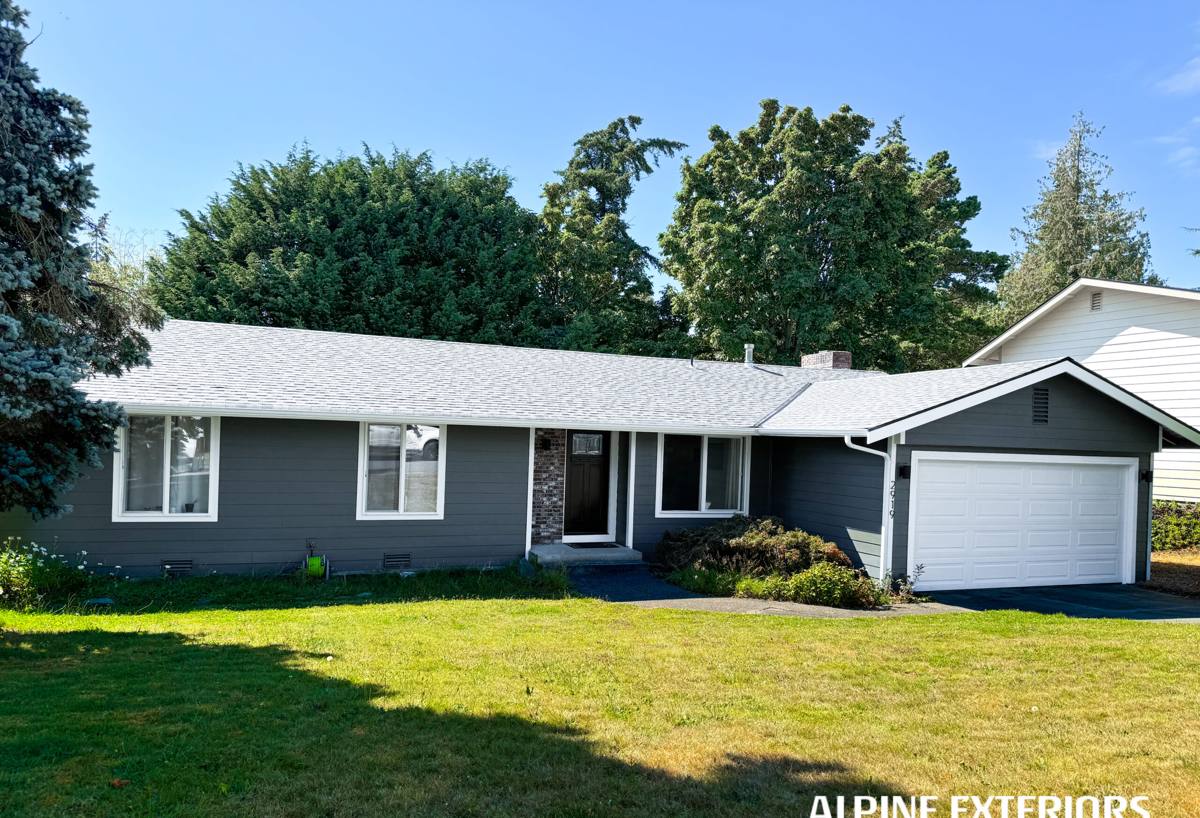
What Blaine Homes Actually Need From Their Siding
Given that combination of salt air, wind-driven rain, and moss, siding on a Blaine home has to do a few things well, not just look good on installation day:
- Resist moisture absorption so it doesn't swell, cup, or rot when it stays wet for weeks at a time
- Hold a factory finish that doesn't chalk, fade, or peel under constant damp-and-dry cycling
- Handle direct exposure on water-facing elevations without the fasteners or substrate corroding
- Resist fire, which matters more each year as wildfire smoke and dry summer stretches become part of the regional pattern
- Go on correctly the first time, because re-siding a home is disruptive and expensive to redo
That last point matters more than most homeowners expect. A huge share of siding failures in this region aren't failures of the material itself — they're failures of installation. Wrong fastener spacing, missing or incorrect flashing, siding installed too close to grade or a deck surface, or caulk used in place of proper flashing details. In a climate this wet, those mistakes show up as rot, staining, or paint failure within a few years instead of decades.
Why We Install Only James Hardie Fiber Cement
We made a decision early on to install James Hardie fiber cement siding exclusively, and Blaine's climate is a big part of why. Fiber cement is non-combustible, dimensionally stable, and doesn't absorb moisture the way wood-based or wood-composite products do. Hardie's ColorPlus factory-applied finish is baked on under controlled conditions and holds up to UV and moisture cycling far better than field-applied paint, which matters when a house is getting soaked and dried out repeatedly for half the year.
We don't install vinyl, LP SmartSide, cedar, primed spruce, or composite panel products like Cemplank or Allura. Each of those has situations where it can perform reasonably, but none of them match fiber cement's combination of moisture resistance, fire resistance, finish durability, and long-term warranty support in a climate like Blaine's. Vinyl can warp and fade under coastal UV and temperature swings and doesn't offer the fire resistance homeowners increasingly want. Wood and wood-composite products need more diligent maintenance to keep moisture out, and moss season doesn't give them much of a break to dry out. We'd rather stand behind one product system we trust completely than offer several and let homeowners guess which one is right.
James Hardie's HZ5 product line is engineered specifically for climates with freeze-thaw cycling and sustained moisture exposure, which describes the Pacific Northwest well. Combined with a transferable limited warranty, it gives Blaine homeowners a siding system built for exactly the conditions their home faces.
What a Correct Siding Installation Actually Involves
Tear-Off and Substrate Inspection
Every job starts with removing the existing siding and inspecting what's underneath. This is where hidden problems get found — rot in sheathing, deteriorated house wrap, or framing damage from long-term moisture intrusion. In a house that's been fighting Blaine's rain and moss for years, this step matters more than it does in drier climates. Skipping it, or rushing it, means covering up a problem instead of fixing it.
Water Management and Flashing
This is the step that determines whether siding lasts fifteen years or fifty. Correct installation means a properly lapped weather-resistive barrier, flashing at every window, door, and roofline intersection, and kick-out flashing wherever a roof edge meets a wall. Caulk is a supplement to good flashing, never a substitute for it. Given how much wind-driven rain Blaine gets off the water, water management details are where we spend the most care.
Fastening and Clearances
James Hardie specifies fastener type, spacing, and placement for a reason — get it wrong and you risk cracking, popped nails, or reduced wind resistance. Clearances matter too: siding needs proper gaps above rooflines, decks, and grade so water sheds away instead of wicking up into the bottom edge of the boards. These are the details that separate a correct install from one that just looks fine until the first hard winter.
Finish and Trim Details
Corner boards, trim, and caulking joints get finished to shed water, not trap it. Any cut edges get sealed per manufacturer specification so the factory finish's protection isn't compromised at the one place it's most vulnerable.
Our Process for Blaine Siding Projects
- On-site assessment — we walk the home, check current siding condition, note moisture or moss problem areas, and identify any elevations with heavier weather exposure.
- Written estimate — a clear scope covering tear-off, repairs if needed, product selection, and installation, with no surprise add-ons buried in fine print.
- Substrate repair — any rot or sheathing damage found during tear-off gets addressed before new siding goes up, not covered over.
- Weather barrier and flashing installation — the unglamorous work that determines long-term performance.
- Hardie siding installation — installed to manufacturer specification for fastening, clearances, and joint treatment.
- Final walkthrough — we review the finished work with the homeowner before calling the job complete.
Comparing Siding Options in a Blaine Climate
| Factor | James Hardie Fiber Cement | Vinyl | Wood / Wood-Composite |
|---|---|---|---|
| Moisture resistance | High — doesn't absorb water or swell | Moderate — seams and gaps can trap water | Lower — prone to swelling and rot without diligent upkeep |
| Fire resistance | Non-combustible | Combustible, can melt or warp | Combustible |
| Finish durability | Factory-baked ColorPlus finish | Can fade and become brittle over time | Needs repainting or resealing on a regular cycle |
| Performance in moss/moisture season | Strong — resists sustained dampness | Fair — doesn't rot but can trap moisture behind panels | Weaker — sustained dampness accelerates decay |
| Typical warranty structure | Long-term, transferable | Varies widely by manufacturer | Often shorter or limited to material only |
What Drives Cost on a Blaine Siding Project
Every home is different, but a few factors consistently move the price on a Blaine siding installation up or down:
| Cost Factor | Why It Matters |
|---|---|
| Tear-off complexity | Multiple layers of old siding or extensive rot repair add labor time |
| Home size and elevation count | More linear footage and more corners, windows, and rooflines mean more flashing detail work |
| Substrate condition | Sheathing repair from long-term moisture damage is common on older Blaine homes |
| Siding profile and trim selection | Lap width, panel style, and trim detailing affect material and labor cost |
| Site access | Waterfront lots and tight setbacks can affect staging and scaffolding needs |
We give a written, itemized estimate before any work starts so homeowners know exactly what they're paying for and why.
Why It Matters That We Already Work in Blaine
Siding installation isn't identical everywhere in Whatcom County, and a crew that primarily works drier, more sheltered areas inland can miss details that matter right on the water. We know which elevations in Blaine take the worst of the wind-driven rain, how long moss season really runs here, and why flashing details that would be adequate elsewhere aren't good enough this close to the Strait. That local knowledge shows up in the small decisions made on site — where extra flashing goes, how clearances get set, which details get extra attention — not just in the sales pitch.
Signs a Blaine Home May Need New Siding
- Soft or spongy spots when you press on the siding, especially near the bottom edge or around windows
- Persistent moss or algae growth that comes back quickly after cleaning
- Paint that's peeling, bubbling, or chalking heavily, especially on water-facing walls
- Visible warping, cupping, or gaps between boards
- Rising energy bills that can't be explained by anything else, which can point to compromised insulation behind failing siding
- Rot or staining around window and door trim
If your home shows any of these signs, it's worth having it looked at before small problems turn into structural repairs.
Get a Free Estimate for Your Blaine Home
If you're weighing a siding replacement in Blaine, we're glad to come take a look, explain what we see, and put together a straightforward written estimate — no pressure, no obligation. Use the form below to get started.