 Semiahmoo Siding
 Roofing in California Creek: A Different Set of Conditions
California Creek sits close enough to the water that homes here deal with a version of "normal" weather that inland Whatcom County roofs don't. Salt-laden air off the Semiahmoo shoreline works on metal fasteners and flashing year-round. Driving rain off the Strait doesn't just fall straight down — wind pushes it sideways, up under shingle edges and into any gap a roofer left loose. And because the marine layer keeps roofs shaded and damp for long stretches of the year, moss and moisture-loving growth get a much longer season to establish themselves than they would fifty miles inland.
None of that means a roof in California Creek needs to be exotic or wildly more expensive than a roof anywhere else in the region. It means the details — underlayment choice, flashing work, ventilation, fastener material — matter more here, and skipping them shows up faster than it would in a drier climate.
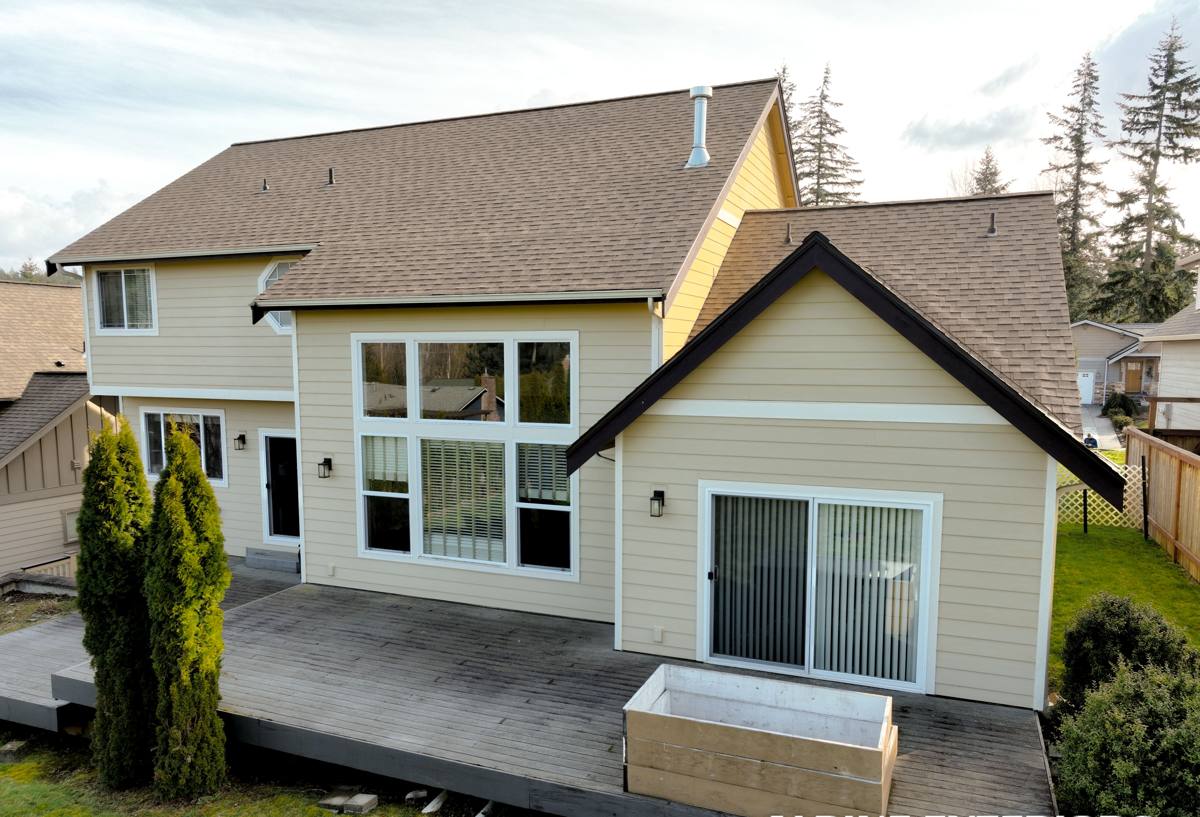
Signs a California Creek Roof Is Due for Replacement
Roofs rarely fail all at once. They give warnings first, and in this climate those warnings often show up as moisture problems before they show up as obvious damage. Homeowners in this area should watch for:
- Granules collecting in gutters or at downspout outlets — a sign shingles are wearing thin
- Dark streaking or thick moss growth on north-facing slopes that stays damp most of the year
- Curling, cupping, or cracked shingle edges, especially on slopes exposed to wind off the water
- Soft or spongy spots when walking the roof, which usually means the decking underneath has taken on moisture
- Rusted, lifted, or corroded flashing around chimneys, vents, and valleys
- Daylight visible through the roof deck from inside the attic, or damp insulation
- A roof that's 20+ years old, regardless of how it looks from the ground
Any one of these on its own might just need a repair. Several together, or a roof already past its expected service life, usually means it's time to talk about full replacement rather than patching.
What a Correct New Roof Installation Actually Involves
A new roof is more than shingles nailed to plywood. In a climate that sees this much wind-driven rain and prolonged dampness, the layers underneath the visible surface do most of the real work.
Tear-Off and Deck Inspection
We remove the old roofing down to the deck rather than layering over it. That's the only way to actually see what's underneath — soft or rotted plywood, old leaks that were never addressed, or ventilation problems that have been quietly damaging the structure. Any compromised decking gets replaced before anything new goes down; installing a new roof over a weak deck just hides the problem for a few more years.
Underlayment and Moisture Barrier
This is the layer that protects the home if wind ever drives water under the shingles — which, on an exposed lot near the water, is a matter of "when," not "if." We pay particular attention to ice-and-water shield along eaves, valleys, and anywhere water tends to collect or back up.
Flashing at Every Penetration
Chimneys, skylights, vent pipes, and roof valleys are where the great majority of leaks actually start — not in the open field of shingles. Flashing needs to be properly lapped, sealed, and fastened with corrosion-resistant materials given the salt content in the air here. Reused or reworked old flashing is a common shortcut that causes callbacks within a few years; we install new flashing as part of the job.
Ventilation
A roof deck that can't breathe traps moisture from inside the house, which leads to rot from underneath — a problem that has nothing to do with rain at all. Balanced intake and exhaust ventilation keeps the attic dry and also helps shingles last their full rated lifespan instead of baking and failing early.
Roofing Material Options for This Climate
There's no single "right" material for every home — it depends on budget, roof pitch, exposure, and how the home looks stylistically. What matters is understanding the honest trade-offs for a marine, moss-prone environment before deciding.
| Material | Typical Lifespan | Moss / Moisture Resistance | Relative Cost |
|---|---|---|---|
| Architectural asphalt shingle | 25–30 years | Good, with proper ventilation and periodic cleaning | $ |
| Standing seam metal | 40–50+ years | Excellent — sheds moisture and resists moss better than most materials | $$$ |
| Composite / synthetic shake | 30–50 years | Good; more consistent than natural wood in wet climates | $$ |
| Natural cedar shake | 20–30 years with upkeep | Requires the most maintenance in a damp, shaded climate | $$ |
We're honest with California Creek homeowners about natural cedar in particular: it can look excellent, but a shaded, marine-air lot is one of the hardest environments for it to hold up in without a real maintenance commitment. We'll install it if that's what a homeowner wants and the roof gets enough sun exposure to support it, but we won't oversell it as low-maintenance here — because it isn't.
Cost Factors on a Real Job
Every roof estimate is different, but the line items that move the price on a California Creek job are fairly consistent:
| Factor | Why It Matters |
|---|---|
| Roof size and number of planes | More cuts, valleys, and hips mean more labor and material waste |
| Pitch and accessibility | Steep or hard-to-access roofs take longer and need more safety setup |
| Deck condition found at tear-off | Rotted or soft plywood sections add material and labor not visible from the ground |
| Number of penetrations | Each chimney, skylight, and vent needs its own flashing detail |
| Material choice | Asphalt, metal, and composite carry very different material costs per square |
| Layers of old roofing to remove | Multiple existing layers mean more tear-off labor and disposal |
A firm number only comes from walking the roof and getting on the deck once tear-off starts — anyone quoting a precise price sight-unseen is guessing.
How Our Process Works
1. On-Site Inspection and Estimate
We get on the roof, check the deck condition where accessible, look at ventilation and flashing, and talk through material options based on the home's exposure and your budget. This is free and comes with no pressure to commit on the spot.
2. Material Selection
Once we agree on a direction, we go over color, style, and warranty coverage in plain terms — including what's covered by the manufacturer versus what's covered by our own workmanship guarantee.
3. Tear-Off and Deck Repair
Old roofing comes off, the deck gets inspected board by board, and any compromised plywood is replaced before anything new goes down.
4. Installation
Underlayment, ice-and-water shield, flashing, and the finish material go on in that order, with attention to the details — valleys, penetrations, eaves — that determine whether a roof holds up through a wet winter or starts leaking in year two.
5. Cleanup and Final Walkthrough
We clear nails and debris from the property, including a magnetic sweep, and walk the finished roof with you before calling the job done.
Why Local Experience in California Creek Matters
A roofer who mostly works dry, inland jobs can still do competent work — but they're often making decisions on the fly about flashing, ventilation, and material choice that a crew already familiar with this shoreline climate has already worked out. Knowing how much wind-driven rain a given exposure typically sees, how fast moss establishes on shaded north slopes in this part of Whatcom County, and which flashing details actually hold up against salt air isn't guesswork after you've done enough roofs in this specific area. It shows up in fewer callbacks and a roof that's still performing the way it should ten and fifteen years out.
Maintaining a New Roof Through Moss Season
A correctly installed roof still benefits from basic upkeep in this climate. A few habits go a long way:
- Keep gutters and downspouts clear so water isn't backing up under the roof edge
- Trim back overhanging branches to reduce shade and debris on north-facing slopes
- Have moss growth removed gently — pressure washing can strip granules and shorten shingle life
- Schedule a visual roof check after major windstorms to catch lifted or displaced material early
- Don't ignore small interior water stains; they're almost always cheaper to fix early than late
A well-installed roof with basic maintenance should give you decades of service even with everything California Creek's climate throws at it.
If your roof is showing its age or you're planning ahead rather than reacting to a leak, we're happy to take a look and give you a straightforward, no-pressure estimate — just fill out the form below.