 Semiahmoo Siding
 Building New in Custer? Get the Windows Right the First Time
When you're framing a new home in Custer or anywhere around Semiahmoo, windows are one of the few components that get harder and more expensive to fix once siding, trim, and interior finishes go on. A window that's set correctly during rough framing will perform for decades. One that's rushed or flashed incorrectly can hide a leak behind drywall for years before anyone notices a stain or a soft spot in the sill. Because we work new-construction jobs throughout this corner of Whatcom County, we've seen both outcomes, and the difference almost never comes down to the window brand. It comes down to how the opening was prepped, how the flashing was layered, and how much attention was paid to details that don't show up on a spec sheet.
This page is about doing that job right for Custer specifically, not siding installation in general. Local exposure, wind patterns, and moisture load all factor into what "correct" actually looks like here.
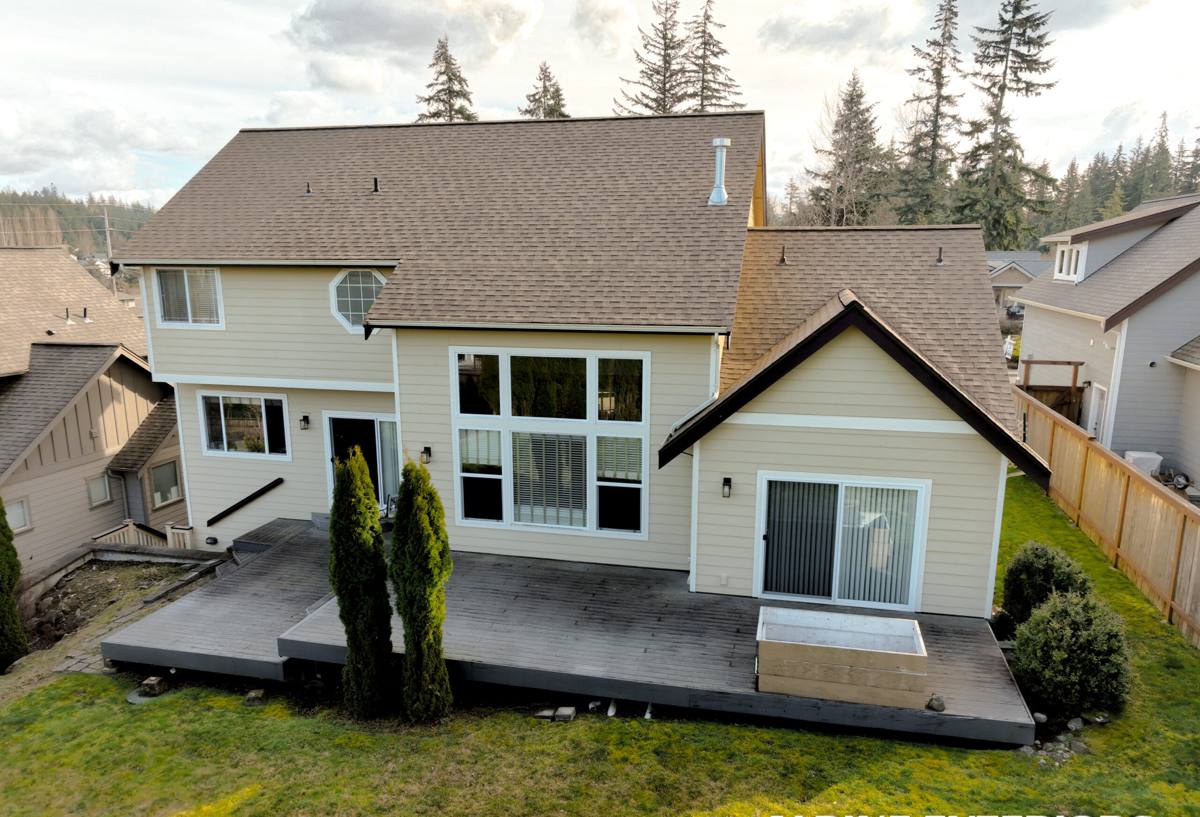
What Semiahmoo's Climate Does to New-Construction Windows
Custer sits close enough to the water that homes here deal with a mix of coastal and inland weather. That combination shapes almost every decision we make when setting windows in a new build.
Salt Air and Coastal Exposure
Proximity to Semiahmoo Bay and the Strait of Georgia means airborne salt is a real factor, even a few miles inland. Salt-laden air accelerates corrosion on unprotected fasteners, cheap hardware, and lower-grade metal flashing. On new construction, this is the easiest problem to prevent because everything is exposed before the exterior is closed in — it's also the easiest to miss if the crew is used to inland builds and doesn't adjust fastener and flashing choices accordingly.
Driving Rain and Wind-Driven Water
This part of Whatcom County gets sustained, wind-driven rain rather than just vertical rainfall. That matters because a window opening only needs to shed water falling straight down; it also needs a flashing sequence that redirects water being pushed sideways and even slightly upward under wind pressure. A house wrap lapped the wrong direction, or a sill pan installed without a back dam, will pass a garden-hose test and still leak in an actual January storm.
Moss Season and Prolonged Dampness
Long stretches of overcast, damp weather each year mean anything wood-adjacent stays wet longer than it does in drier climates. Moss and algae growth on siding and trim isn't just cosmetic — sustained dampness against wood trim, sills, or unprotected sheathing edges is what eventually leads to rot. New construction gives us the chance to build in drainage and drying paths from day one, which is a much better position than trying to retrofit them later.
What a Correct New-Construction Window Installation Involves
New-construction windows (units with a nailing fin, installed before siding goes on) are only as good as the opening they go into. Here's what we consider non-negotiable on every install in this area.
Rough Opening and Flashing Sequence
The opening needs to be square, plumb, and sized correctly before the window ever shows up on site — shimming a badly framed opening leads to uneven reveals and stress on the frame corners. From there, the flashing sequence matters more than any other single step:
- Self-adhered sill pan flashing with a back dam, sloped to shed water outward, not toward the interior
- Housewrap or weather-resistive barrier lapped shingle-style so upper layers overlap lower ones
- Jamb flashing that ties into the sill pan and is lapped correctly at the corners
- Head flashing installed last, with the housewrap above it lapping down over the top — never the reverse
- A drainage gap or capillary break behind trim where siding type allows for one
Window Selection for This Exposure
For Custer builds we lean toward frame materials and glass packages that handle sustained moisture and coastal air well, rather than whatever has the lowest sticker price. That usually means vinyl or fiberglass frames with corrosion-resistant hardware, and a glass package with a U-factor and solar heat gain coefficient suited to the Pacific Northwest rather than a warmer, drier climate spec.
Sealing and Insulation Details
Low-expansion spray foam or backer rod and sealant around the frame perimeter, applied without over-filling the cavity, keeps the window from bowing while still sealing out air and moisture. Interior and exterior sealant beads both matter — skipping either one creates a gap that either leaks water in or lets conditioned air out.
Comparing Frame Materials for New Builds in This Climate
| Frame Material | Moisture & Salt-Air Behavior | Maintenance | Typical Fit for Custer Builds |
|---|---|---|---|
| Vinyl | Won't rust or rot; performs well in coastal humidity | Low — occasional cleaning | Strong all-around choice for most new builds |
| Fiberglass | Very stable in temperature swings and damp conditions | Low | Good for larger openings or higher-end builds |
| Aluminum | Prone to corrosion near salt air unless properly coated | Moderate | Workable with the right finish, but needs care in fastener/hardware selection |
| Wood / Wood-Clad | Attractive but sensitive to prolonged dampness at joints and sills | Higher — periodic refinishing and joint inspection | Fine when detailing and maintenance commitment are both solid |
None of these materials are wrong choices on their own — the failures we see almost always trace back to installation detailing, not the material itself. We'll walk through the trade-offs honestly based on your budget and the specific exposure of your lot.
Our Process for New-Construction Window Installs
- Plan review: we look at window schedules, elevations, and siding type before anything is ordered, so flashing details match the actual wall assembly.
- Opening verification: before install day, we confirm rough openings are square, plumb, and properly sized against the actual units on order.
- Flashing and set: sill pans, jamb flashing, the window itself, then head flashing, in that order, with housewrap integration at each step.
- Seal and insulate: perimeter foam or backer rod and sealant, interior and exterior, without over-packing the shim space.
- Walkthrough: we check operation, reveals, and flashing laps before the crew moves on to siding, while everything is still accessible.
Common Mistakes We See on New Builds in This Area
Most of the callbacks we get on new-construction windows in Whatcom County trace back to a small handful of repeat issues:
- Head flashing installed before the housewrap above it, instead of after — reversing the lap and inviting water behind the wall
- No back dam on the sill pan, so any water that gets past the exterior seal runs straight to the interior
- Standard fasteners used on coastal-exposed builds instead of corrosion-resistant hardware
- Foam sealant over-packed into the shim space, bowing the frame and causing the sash to bind
- Trim installed tight against the siding with no drainage gap, trapping moisture during the wet season
Every one of these is preventable at the framing stage and expensive to fix once the house is finished.
Cost Factors to Expect on a Custer New Build
| Factor | Why It Moves the Price |
|---|---|
| Window count and size | More openings and larger units mean more material and labor per house |
| Frame material | Vinyl is generally the most economical; fiberglass and wood-clad cost more upfront |
| Glass package | Upgraded U-factor/SHGC glass for coastal exposure costs more than a basic package |
| Flashing detail level | Full sill-pan-and-back-dam systems take more labor time than minimal flashing |
| Site access and timing | Coordinating install around framing schedule and weather windows affects labor efficiency |
We'd rather walk your plans and give you real numbers than quote a range that doesn't reflect your specific build — every new-construction project has a different window schedule and exposure profile.
Why Hire a Crew That Already Works in Custer and Semiahmoo
Building codes, typical framing practices, and weather exposure all vary from region to region, and a crew used to drier inland climates can miss details that matter here. A contractor who regularly works new construction around Semiahmoo already knows which flashing sequence holds up against wind-driven rain off the water, which fasteners hold up against salt air, and how much drainage detail a given siding type actually needs in a climate with a long moss season. That local pattern-recognition is what keeps small oversights from turning into moisture problems a few years down the line.
It also means better coordination with your builder or general contractor — we know how new-construction schedules run in this area and how to fit window installation into the framing timeline without becoming the bottleneck.
Keeping New Windows Performing Long-Term
A correctly installed new-construction window shouldn't need much attention, but a few habits extend its life in this climate:
- Rinse accumulated salt residue and grime off frames and glass a couple times a year, especially on sides facing open water or prevailing wind
- Check exterior sealant beads annually for cracking or separation, particularly after the first year as the house settles
- Keep gutters and downspouts clear so water isn't sheeting down across window heads
- Watch for moss or algae buildup on trim near windows as an early sign of a damp microclimate worth addressing
- Operate and lubricate hardware periodically so mechanisms don't seize from disuse or corrosion
None of this is heavy maintenance — it's the kind of upkeep that catches small issues before they become expensive ones.
Let's Look at Your Plans
If you're framing a new home in Custer or elsewhere around Semiahmoo, we're happy to walk through your window schedule, talk through frame and glass options suited to this climate, and give you a straightforward, no-pressure estimate. Use the form below to get started.