 Semiahmoo Siding
 Why Ferndale Homes Put Extra Demands on Windows
Ferndale sits close enough to the water and open farmland that its homes take a different kind of weather beating than houses even twenty miles inland. Salt-laden air off the Strait and bay corrodes hardware and dulls finishes faster than people expect. Wind-driven rain off Georgia Strait storms doesn't just fall straight down — it gets pushed sideways into window frames, testing every seal and flashing detail. And the long, damp Whatcom County shoulder seasons mean moss and algae get a real foothold on north-facing sills and trim, holding moisture against the window unit for months at a time.
None of that is dramatic on its own, but it adds up. A window that would last 25 years in a dry inland climate can start failing at the seals in half that time here if it wasn't installed with this specific exposure in mind. Energy-efficient windows done right in Ferndale aren't just about a lower heating bill — they're about a window system that can actually shed water, resist corrosion, and keep working through another wet Whatcom County winter.
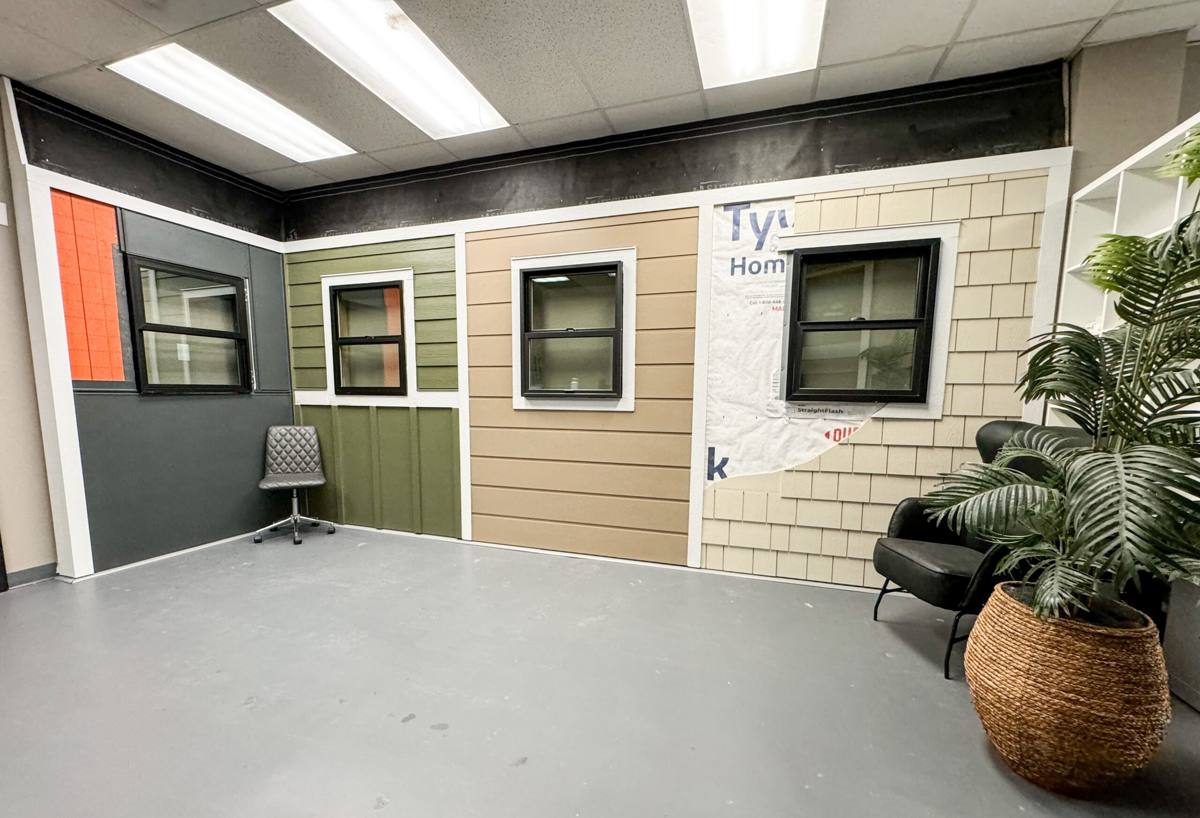
What "Energy-Efficient" Actually Means for a Window
The term gets used loosely, so it's worth being specific about what actually makes a window perform well in our climate:
- U-factor — measures how much heat escapes through the window. Lower is better for our heating-dominated climate. Most quality replacement windows sold here land between 0.20 and 0.30.
- Solar Heat Gain Coefficient (SHGC) — how much solar heat passes through the glass. In the Pacific Northwest we generally want a moderate SHGC rather than an aggressively low one, since free solar warmth on a clear winter day is worth having.
- Low-E coatings — a microscopically thin metallic layer on the glass that reflects heat back where it came from, in winter and summer alike.
- Gas fills — argon or krypton between the panes slows heat transfer more effectively than plain air.
- Frame material and construction — the frame is where most real-world failures happen, and it's the piece most affected by our wet, salty air.
A window can have excellent glass specs on paper and still perform poorly if the frame, weatherstripping, or installation lets air and moisture in around the edges. In our experience, installation quality and frame durability matter as much as the glass package for how a window actually performs here over ten or twenty years.
Frame Materials: What Holds Up in This Climate
We get asked constantly which frame material is "best." The honest answer is that it depends on budget, exposure, and how much upkeep a homeowner wants to do. Here's how the common options compare for Ferndale's coastal, wet conditions:
| Frame Material | Moisture & Salt Air Resistance | Maintenance | Relative Cost |
|---|---|---|---|
| Vinyl | Very good — won't rot or corrode; UV-stable finishes hold up well | Low — occasional cleaning | Lowest to moderate |
| Fiberglass | Excellent — dimensionally stable, resists warping in wet/dry cycles | Low | Moderate to higher |
| Aluminum | Fair — conducts cold and can pit or corrode near salt air without a quality finish | Moderate | Moderate |
| Wood-clad | Good if the cladding stays intact, but any breach exposes wood to rot | Higher — cladding seams and sills need periodic inspection | Higher |
We don't push one material on every job. A well-protected wood-clad window under a deep eave can perform beautifully for decades. That same window on an exposed, weather-facing wall with little roof overhang is a maintenance headache waiting to happen. Part of our job is matching the frame to the actual exposure on your specific walls, not just picking a favorite product line.
Why We're Selective About Aluminum-Framed Units
Aluminum frames conduct heat and cold efficiently, which works against energy efficiency unless the frame has a proper thermal break. In salt-air exposure without a marine-grade finish, aluminum can also show pitting and corrosion sooner than other materials. We're not saying it's a bad product — it has its place, especially in commercial or high-wind-rated applications — but for most residential replacement work in this area, we steer homeowners toward vinyl or fiberglass unless there's a specific reason aluminum fits the project.
What a Correct Window Installation Actually Involves
Most window failures we get called out to inspect aren't glass failures — they're installation failures. The window itself was fine; water got behind it because a flashing detail was skipped or a sealant joint wasn't done correctly. In a climate with sideways-driven rain, this matters more than in drier regions. A correct installation includes:
- Removing the old unit carefully and inspecting the rough opening for hidden rot, especially at the sill — the single most common place we find moisture damage on older Ferndale homes.
- Repairing any damaged framing or sheathing before the new window goes in. Installing a new window over rotten framing just hides the problem for a while.
- Installing sill pan flashing so any water that does get past the window has a path to drain back out, rather than pooling against the framing.
- Integrating the window with the wall's weather-resistive barrier using properly lapped flashing tape — house wrap over the top flange, flashing over the sides and bottom, shingled correctly so water always sheds downward and outward.
- Shimming and leveling the unit so it operates smoothly and the frame isn't stressed, which can compromise seals over time.
- Insulating the gap between the window frame and rough opening with a low-expansion foam or backer rod and sealant — not packed too tight, which can bow the frame.
- Sealing the exterior trim and siding interface with a quality, paintable sealant rated for our wet climate, and finishing interior trim to match.
Skip any one of these steps and the window can still look fine for a year or two before problems show up — by which point water has usually already reached the framing.
Signs Your Current Windows Are Working Against You
Homeowners often live with underperforming windows for years simply because the signs develop slowly. Worth checking for:
- Visible condensation or fogging between the panes (a sign the seal has failed and the gas fill is gone)
- Drafts you can feel with a hand near the frame on a windy day
- Soft or discolored trim, sill, or drywall near a window
- Windows that are difficult to open, close, or lock
- Visible moss, algae, or dark staining building up on sills or exterior trim
- A noticeable difference in room temperature near the window compared to the rest of the house
- Rising heating bills without another clear explanation
- Single-pane glass or aluminum frames original to a home built before the 1990s
Any one of these on its own isn't necessarily urgent. Several together, especially combined with visible moisture staining, usually means it's worth having the window and surrounding wall assembly looked at before it becomes a larger repair.
How Our Process Works
1. On-Site Assessment
We look at each window individually — not just the glass, but the exposure, the condition of the surrounding trim and siding, and any signs of past moisture intrusion. Windows on the weather-facing side of a house often need different attention than sheltered ones on the same building.
2. Product Selection
We walk through frame material, glass package, and grille or hardware options based on your budget, the home's style, and that wall's actual sun and rain exposure. We're not tied to a single manufacturer, which lets us match the product to the job rather than the other way around.
3. Installation
We follow the flashing and sealing sequence described above on every unit, regardless of whether it's one window or a whole-house replacement. We also check and, where needed, repair the surrounding siding and trim as part of the job, since a new window installed against damaged siding doesn't solve the underlying moisture problem.
4. Cleanup and Walkthrough
We clean up debris and old materials, then walk through each window's operation with you before calling the job finished.
Living With Windows in a Salt-Air, Moss-Prone Climate
Even a correctly installed, high-quality window benefits from a little seasonal attention here. A few habits go a long way in Whatcom County's coastal conditions:
- Rinse salt residue off exterior frames and hardware a couple times a year, especially on wind-exposed walls
- Clear moss or debris from sills and tracks before it holds moisture against the frame
- Check exterior caulking annually, especially after a hard winter, and re-seal small cracks before they become bigger ones
- Keep gutters and downspouts clear so roof runoff isn't sheeting down across upper-story windows
- Trim back vegetation that keeps a window shaded and damp for extended periods
None of this is heavy maintenance, but skipping it in this climate tends to shorten a window's useful life more than people expect.
Why a Crew That Already Works in Ferndale Makes a Difference
Window installation isn't identical everywhere. A crew used to installing in a dry, low-wind climate doesn't always think about sill pan flashing, sideways rain exposure, or salt-air hardware corrosion the same way a crew that works this coastline every week does. Working regularly in Ferndale and the surrounding Whatcom County area means we've seen how different wall assemblies, siding types, and exposures behave here over time — and we know which details actually matter versus which are optional in a milder climate.
We're also familiar with the local building department's permitting expectations for window replacement, which matters for anything involving structural openings or egress changes in bedrooms. Getting that right the first time avoids delays partway through a project.
What Affects the Cost of a Window Project
We give firm numbers only after seeing the actual windows and openings, but the main variables that move price up or down are fairly consistent:
| Factor | Effect on Cost |
|---|---|
| Frame material (vinyl vs. fiberglass vs. wood-clad) | Vinyl typically lowest, wood-clad typically highest |
| Window size and configuration (single unit vs. bay/bow) | Larger, multi-panel units cost more per opening |
| Insert replacement vs. full-frame replacement | Full-frame costs more but is necessary when framing or flashing needs repair |
| Number of openings done at once | Whole-house projects often reduce per-window cost vs. one-off replacements |
| Hidden rot or framing damage found during removal | Adds repair cost, but is essential to address rather than cover up |
| Access difficulty (upper stories, tight approaches) | Can add labor time and equipment cost |
We'll always flag if we find something during removal — like soft framing at a sill — before proceeding, so there are no surprises on the invoice.
Get a Straight Answer About Your Windows
If your windows are drafty, fogged, hard to operate, or just original to a home built decades ago, it's worth having someone look at them before another wet Whatcom County winter. We'll give you an honest read on what's actually needed — sometimes that's a full replacement, sometimes it's simpler than that. Reach out for a free, no-pressure estimate using the form below.