 Semiahmoo Siding
 Roof Repair Built for Laurel's Climate
Homes in the Laurel area near Semiahmoo deal with a specific combination of weather stress that most roofing guides never address. You're close enough to the water to catch salt-laden air and driving coastal rain, but far enough inland to sit under tree cover that keeps roofs shaded, damp, and slow to dry for much of the year. That combination is exactly what accelerates moss growth, granule loss, and slow leaks that homeowners in drier parts of the state rarely deal with. A roof repair here isn't just about patching a leak — it's about understanding why that leak started in the first place and making sure the fix holds up through another wet Whatcom County winter.
We work on roofs throughout the Semiahmoo area, and Laurel's mix of mature tree canopy, coastal humidity, and older housing stock means we see the same handful of failure points over and over. Knowing those patterns in advance is what separates a repair that lasts from one that reopens in six months.
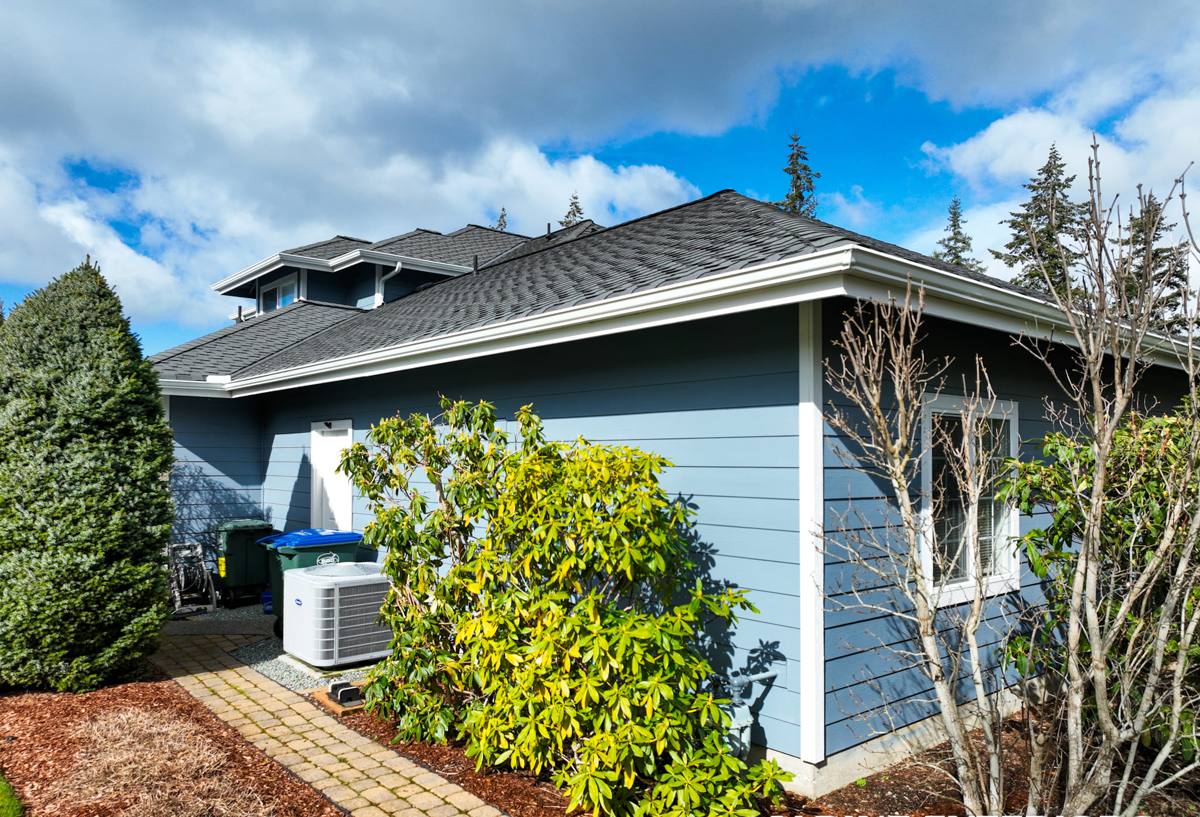
Why Roofs Fail Faster Near Semiahmoo
Salt Air and Metal Fasteners
Proximity to the water means airborne salt settles on roofing surfaces and metal components — flashing, nail heads, vent boots, and gutter hardware. Over years, that salt exposure speeds up corrosion on unprotected or lower-grade metal, which is often where a "mystery leak" actually starts. A rusted nail head or a corroded flashing seam doesn't announce itself; it just slowly lets water in until a stain shows up on a ceiling.
Moss, Shade, and Trapped Moisture
Whatcom County's long, wet moss season is hard on any roof, but shaded lots — common in and around Laurel — make it worse. Moss holds moisture against the roofing surface far longer than open sun exposure would allow, which softens shingle mat, lifts edges, and works its way under laps and flashing over time. Left alone, moss doesn't just look bad — it actively shortens the life of the roof underneath it.
Driving Rain and Wind-Driven Water
This region doesn't just get rain — it gets rain pushed sideways by wind off the water. That matters for repair work because a patch that would hold up fine in calm, straight-down rain can still leak under wind-driven conditions if flashing laps, valley details, or ridge caps aren't sealed and lapped correctly for the direction storms typically come from here.
What a Correct Roof Repair Actually Involves
A roof repair done right starts with figuring out the real source of the problem, not just patching where the water happens to be showing up inside the house. Water travels along the underlayment and framing before it ever shows as a stain, so the visible damage and the actual entry point are often several feet apart.
- Full inspection of the affected area and the roof plane above it, not just the ceiling stain location
- Check of flashing at all penetrations — chimneys, vents, skylights, and wall-to-roof transitions
- Assessment of moss and organic growth, including how far it has worked under shingle edges
- Evaluation of underlayment condition where accessible, since felt or synthetic underlayment breaks down with prolonged moisture exposure
- Gutter and downspout check, since clogged or undersized drainage is a common hidden cause of "roof" leaks
- Matching replacement materials to the existing roof as closely as possible for both function and appearance
Skipping any of these steps is how a roof gets "repaired" three or four times over a few years without the underlying cause ever getting fixed.
Repair vs. Replacement — Making an Honest Call
Not every damaged area needs a full roof replacement, but not every leak should be treated as a spot repair either. Part of doing this job honestly is telling a homeowner when a repair is the right call and when it's just delaying an inevitable, more expensive replacement.
| Situation | Repair Usually Makes Sense | Replacement Should Be Considered |
|---|---|---|
| Age of roofing material | Roof is under roughly 15 years old, isolated damage | Roof is near or past its expected service life |
| Extent of damage | Localized to one section, flashing, or a few shingles | Widespread granule loss, multiple failure points across planes |
| Moss and moisture history | Recent growth, caught early, minimal mat damage | Long-term moss coverage with soft or deteriorating decking |
| Underlayment condition | Intact where visible during the repair | Brittle, torn, or failing in multiple areas |
| Repair history | First or second repair on this section | Same area has already been patched multiple times |
We'll walk through where your roof falls on this before recommending anything — a repair estimate should never turn into a replacement pitch without a clear reason why.
Our Process for Laurel-Area Roof Repairs
1. On-Site Inspection
We start by walking the roof and the attic or interior space below the affected area when accessible. Photos and notes document the actual condition, not just the visible symptom.
2. Straight Answer on Scope
You get a clear explanation of what's causing the problem, what it will take to fix it correctly, and a realistic price range before any work begins. If moss removal, gutter work, or flashing replacement needs to happen alongside the repair to actually solve the problem, we say so up front.
3. The Repair Itself
Work is done with materials matched to your existing roofing system, proper flashing and underlayment techniques suited to this region's wind-driven rain, and attention to the details — laps, fastener placement, sealant use — that determine whether a repair lasts five years or fifteen.
4. Cleanup and Walkthrough
We clear debris, check gutters and downspouts near the repair area, and walk you through what was done and why, including any maintenance recommendations specific to your property's sun exposure and tree cover.
Signs a Laurel Homeowner Shouldn't Ignore
- Dark streaks, green tint, or visible moss buildup on north-facing or shaded roof sections
- Granules collecting in gutters or at the base of downspouts
- Ceiling stains that appear or worsen specifically during wind-driven storms rather than steady rain
- Soft or spongy decking felt underfoot near valleys or penetrations, if accessible
- Daylight visible through the attic roof deck at seams or nail points
- Curling, cracked, or missing shingles, especially after a windy weather stretch
Catching any of these early is almost always cheaper than waiting. Water damage compounds — a small flashing leak this season becomes rotted decking and interior repair costs next season if it sits through another wet Whatcom County winter.
Cost Factors for Roof Repair in This Area
Every roof and every leak is different, so exact pricing depends on what we find during inspection. That said, a few factors consistently move the price for repairs in this region:
| Factor | Why It Affects Cost |
|---|---|
| Roof pitch and accessibility | Steeper or harder-to-reach sections take longer and need more safety setup |
| Extent of moss and organic damage | Removal and treatment add time beyond the core repair |
| Flashing complexity | Chimneys, skylights, and multiple roof valleys mean more detail work |
| Underlayment condition | Deteriorated underlayment found during the repair may need addressing to prevent recurrence |
| Material matching | Older or discontinued roofing products can take more effort to source or match |
We give a firm, itemized quote after inspection — not a phone estimate — because guessing on scope in this climate leads to underpriced jobs that cut corners.
Why Hire a Crew That Already Works in Laurel
Roofing crews unfamiliar with this stretch of Whatcom County often underestimate how much moss and coastal moisture matter here, treating every repair the same way they would in a drier inland market. That shows up later as call-backs — a patch that held in testing but failed the first time wind pushed rain sideways under a poorly lapped flashing edge.
Working regularly in the Semiahmoo and Laurel area means we've already seen how local tree cover, prevailing storm direction, and salt exposure interact with different roofing materials over time. That's not something you can fully account for from a general roofing checklist — it comes from doing the work here repeatedly and paying attention to what actually fails and why.
Maintenance That Extends Repair Life
A good repair can still fail early without basic upkeep. A few habits go a long way in this climate:
- Keep gutters and downspouts clear, especially heading into fall when leaf and needle drop peaks
- Have moss treated or removed before it spreads across shaded sections, not after
- Trim back overhanging branches to reduce shade, debris, and physical abrasion on roofing material
- Schedule a roof check after major wind events, since that's when flashing and shingle damage most often starts
- Address small leaks immediately rather than waiting for the next dry stretch to deal with it
Get a Straight Answer About Your Roof
If you're dealing with a leak, moss buildup, or storm damage on a Laurel-area roof, we're happy to take a look and give you an honest read on what it needs — repair or otherwise. Fill out the form below for a free, no-pressure estimate, and we'll walk you through exactly what we find and what it would take to fix it right.