 Semiahmoo Siding
 Fiber Cement Siding Built for Marietta's Waterside Climate
Marietta sits along the water in Whatcom County, in the same marine climate belt that runs up the coast toward Semiahmoo and Blaine. Homes here deal with salt-tinged air, rain that rarely falls straight down, and a moss season that can run most of the year on shaded walls. That combination is hard on exterior building materials in general, and it's especially hard on siding, since siding is the layer standing between that weather and everything behind it — sheathing, framing, insulation, and the inside of the house.
We install James Hardie fiber cement siding exclusively for Marietta homes, and this page is specifically about that: what this climate actually does to a wall out here, what a correct fiber cement install involves, and why we don't offer alternatives like vinyl, LP SmartSide, Cemplank, Allura, primed spruce, or cedar. This isn't a generic siding overview — it's about fiber cement, in Marietta, done right.
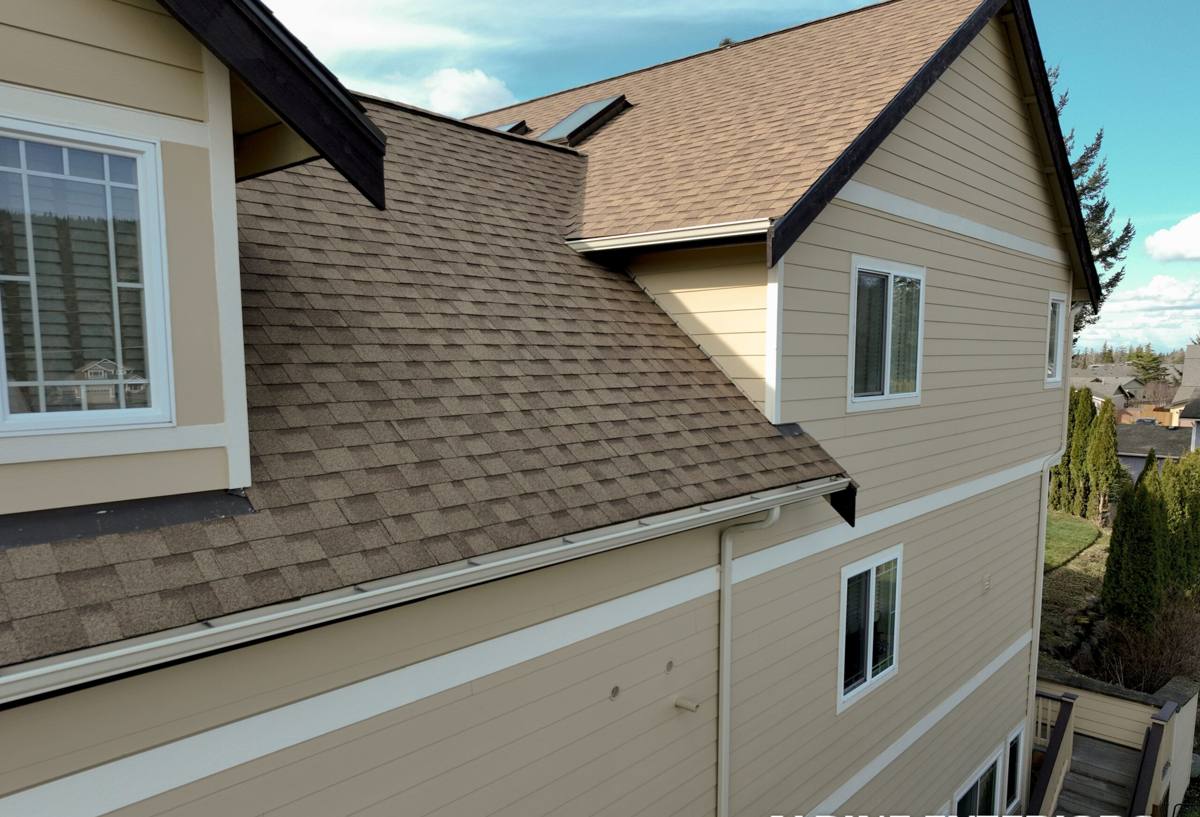
What Marietta's Climate Asks of a Siding System
Salt Air and Fastener Corrosion
Waterside homes in this part of Whatcom County pick up salt-laden air on a near-constant basis, and that salt exposure does real work over time — it accelerates corrosion in fasteners, flashing, and any exposed metal trim, and it breaks down lower-quality paints and finishes faster than a drier, more inland location would. A siding job that looks fine at installation can start showing rust streaks at fastener heads or fading at the finish within a few years if the material and hardware weren't chosen with that exposure in mind.
Driving Rain, Not Just Rainfall Totals
The rainfall numbers for Whatcom County don't tell the whole story on a waterside property like this. Wind off the water pushes rain sideways into wall assemblies, window and door flashing, and the joints between siding courses, with more force than a sheltered inland lot typically experiences. Siding details that hold up fine somewhere calmer can fail here specifically because water is finding a way in horizontally, through laps and joints that were never built to handle that kind of pressure.
A Moss Season That Doesn't Take the Winter Off
Mild temperatures, high humidity, and shaded or tree-covered walls add up to a moss and mildew season that runs most of the year across this region, and Marietta's low-lying, water-adjacent setting doesn't shorten it any. North-facing walls and anything with a porous or moisture-retentive surface tend to show it first. Once moss or mildew gets a foothold on a siding surface that can't shed moisture well, it holds dampness against the wall longer, which compounds the problem instead of just sitting there cosmetically.
Why Fiber Cement Is the Right Call for This Area
Fiber cement isn't the only siding material on the market, and we're not going to pretend the others don't have their fans. But given what salt air, driving rain, and a long moss season do to a wall over ten, twenty, and thirty years, fiber cement is the material we're willing to put our name behind here. The comparison below is about behavior in this specific kind of climate, not a blanket judgment on any product's quality everywhere it's used.
| Material | Moisture Behavior | Maintenance in Salt Air | Typical Longevity Here |
|---|---|---|---|
| James Hardie fiber cement | Dimensionally stable; doesn't swell, cup, or warp with repeated wetting | Low; factory finish resists moss, fading, and chalking | 30+ years with correct install |
| Vinyl siding | Can distort or warp with heat and settle over time; seams stay flexible | Low upfront, but seams and fastener points are exposure risks | Variable; shorter in open, wind-exposed spots |
| LP SmartSide / engineered wood | Wood-based core is sensitive to moisture at cut edges and fastener holes | Moderate; edge sealing and caulk need regular upkeep | 15-25 years, heavily dependent on install and maintenance |
| Cedar / primed wood | Absorbs and releases moisture readily without diligent sealing | High; recurring refinishing needed in wet, salty air | 15-25 years with consistent upkeep |
The pattern that matters most for Marietta: materials that swell, absorb moisture, or depend on a field-applied finish struggle more in this climate than one that's dimensionally stable with a factory-cured finish. That's the whole case for fiber cement here — not brand loyalty, just what actually holds up.
Why We Only Install James Hardie, Specifically
"Fiber cement" isn't a single product — there are multiple manufacturers making it, including Cemplank and Allura. We standardized on James Hardie rather than fiber cement in general, and the reasons come down to a handful of specific things:
- Climate-engineered HZ formulations: Hardie builds its HZ5 product line specifically for regions with heavy moisture exposure and freeze-thaw cycling, which is a solid match for waterside Whatcom County.
- Factory-applied ColorPlus finish: The color is baked on under controlled conditions rather than brushed on in the field, and it holds up longer against fading, chalking, and moisture intrusion than a site-applied paint job.
- Non-combustible core: Fiber cement doesn't feed a fire the way wood-based siding can, which matters for safety and often for insurance underwriting as well.
- A strong, transferable warranty: Hardie's warranty structure is one of the more substantial ones in the industry, provided the installation follows their published spec.
We don't install LP SmartSide, vinyl, Cemplank, Allura, primed spruce, or cedar siding. Those are legitimate products, and plenty of contractors install them well. We made a professional decision to stand fully behind one system we trust completely rather than offer a lower-cost alternative that quietly shifts long-term maintenance risk onto the homeowner.
What a Correct Fiber Cement Install Actually Involves
Fiber cement only performs the way it's engineered to when it's installed to spec — the material itself isn't a guarantee against moisture problems if the details behind it are wrong. A correct install on a Marietta home includes:
- House wrap or a weather-resistive barrier installed and properly lapped before any siding goes on
- A drainage gap or rainscreen behind the siding so moisture that does get past the surface can dry out instead of sitting against the wall
- Corrosion-resistant fasteners at the manufacturer's specified type, size, and spacing — not just "enough to hold the board up"
- Proper clearance from grade, roof lines, and decks so siding isn't sitting in standing water or trapped moisture
- Flashing correctly lapped at every window, door, corner, and roof-to-wall transition, since these are the highest-risk points for wind-driven rain intrusion
- Factory-cured ColorPlus finish preserved by cutting boards face-down and priming any field-cut edges before they go up
Skip any one of these and a wall can still look right for a year or two. The problems that show up when corners get cut — staining at joints, soft spots near the base, premature paint failure at cut edges — take a few wet seasons to surface, which is exactly why a rushed install is easy to get away with until the homeowner is the one living with the consequences.
Our Process for a Marietta Siding Project
On-Site Assessment
We start by walking the specific home — which walls take the most direct wind and rain, which are shaded and slow to dry, and whether the existing wall assembly has moisture issues that need addressing before new siding goes up. New fiber cement over a wall with hidden rot or poor drainage just buries the same problem under a better-looking surface.
A Written Plan Before Install Day
We work out fastening pattern, flashing details, and how the siding will meet windows, trim, and rooflines before any material gets cut. Planning these details on paper first avoids field improvisation, which tends to be where corners get cut on a rushed job.
Installation to Manufacturer Spec
Every fastener, gap, and flashing lap follows James Hardie's published installation requirements for this climate zone. That's what keeps the manufacturer's warranty intact, and it's also simply what makes the wall perform the way it's supposed to for decades instead of years.
Final Walkthrough
We walk the finished job with you, explain what little maintenance fiber cement actually needs, and make sure you know what a healthy wall looks like if you ever want to check it yourself down the road.
Why Hire a Crew That Already Works Marietta
A contractor who's installed siding across this part of Whatcom County through multiple wet seasons already knows things a generic install guide won't tell you — which orientations need extra drainage detailing because of shade and tree cover, how much clearance actually holds up in a climate this consistently damp, and where salt exposure means upgrading fastener grade is worth it rather than optional. That judgment doesn't show up on a spec sheet. It's the difference between a wall that still looks and performs the same in fifteen years and one that's showing seam staining or soft spots by year five.
Cost Factors for Fiber Cement Siding in This Area
Fiber cement siding costs vary by project, and giving a number without seeing the home would be a guess dressed up as an estimate. A few things that consistently move the price on a Marietta home:
| Factor | Why It Matters |
|---|---|
| Home size and wall complexity | More corners, dormers, and transitions mean more cuts and flashing details |
| Existing wall condition | Rot or moisture damage found during tear-off needs repair before new siding goes up |
| Siding profile chosen | Lap, shingle, and panel profiles differ in material use and installation labor |
| Trim and window detailing | More openings mean more flashing and finish work around each one |
| Site access | Waterside lots and tighter setbacks can add labor time for staging and scaffolding |
Here's a quick pre-hire checklist worth using on any siding contractor, whether that's us or someone else:
- Ask what siding material they install and why, and whether it comes with a written manufacturer warranty
- Confirm current Washington contractor licensing and active liability insurance
- Ask how they detail flashing at windows, doors, and roof-to-wall transitions for wind-driven rain specifically
- Ask about fastener corrosion resistance for a salt-air setting like this one
- Get a clear, written scope of work before signing anything
Getting It Right the First Time
Fiber cement siding is not a forgiving material to redo. Correcting a bad install usually means pulling boards, re-flashing, or both, rather than a quick patch — and by the time problems are visible from the outside, there's often already moisture damage to the wall assembly underneath. That's part of why we treat the assessment and planning phase of a Marietta siding project as seriously as the installation itself. Getting it right the first time costs a lot less than tearing out a wall that was installed wrong.
If you're weighing fiber cement siding for a home in Marietta, we're happy to walk the property, talk through what your specific walls need given their exposure and condition, and give you a straightforward, no-pressure estimate. There's a form below — reach out and we'll set up a time to take a look.