 Semiahmoo Siding
 Siding Built for Marietta's Coastline
Marietta sits close enough to Semiahmoo Bay and Drayton Harbor that its homes deal with a specific mix of weather most inland Whatcom County properties never see: salt-laden air rolling off the water, wind-driven rain that hits siding sideways instead of straight down, and a long, damp shoulder season where moss and algae get a real foothold on anything that stays wet. Siding in this pocket of the county isn't just a cosmetic layer — it's the first line of defense against moisture intrusion, and it has to hold up to conditions that would degrade a lot of common siding materials well before their expected lifespan is up.
We install James Hardie fiber cement siding exclusively, and Marietta is a neighborhood where that decision matters more than most. This page walks through what the local climate actually does to siding over time, what a correct Hardie installation looks like on a home in this area, and how our process is built around the realities of working this close to the water.
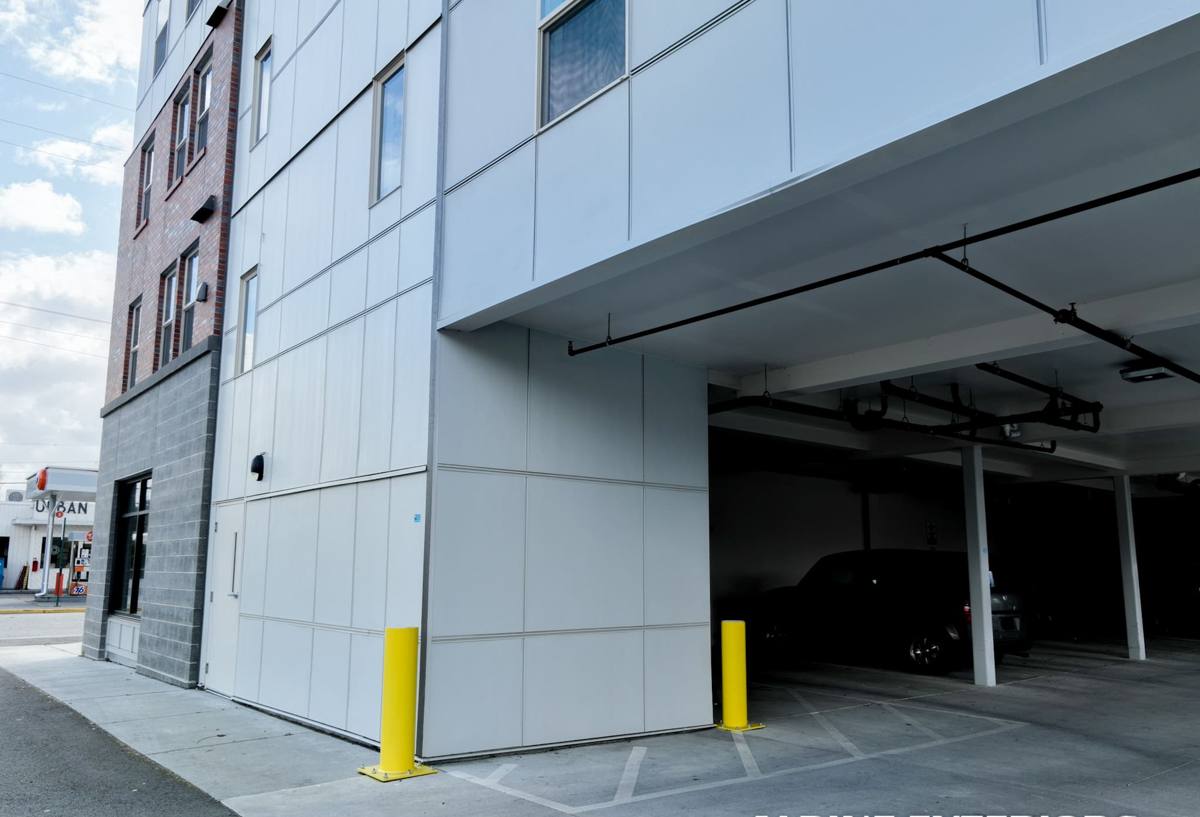
What Salt Air, Rain, and Moss Actually Do to Siding
Salt Air
Airborne salt from Semiahmoo Bay settles on exterior surfaces and accelerates corrosion of fasteners, flashing, and any metal trim components. It also draws moisture out of the air and holds it against the surface it lands on, which is a slow but steady stress on paint finishes and caulked joints. Materials that rely on a surface-applied paint film — rather than a factory-baked finish — tend to chalk, fade, or lose adhesion faster in a salt-air environment because the salt film interferes with how the coating bonds and weathers.
Driving Rain
Wind off the water doesn't let rain fall straight down — it pushes it laterally into wall assemblies, seams, and butt joints. This is a different (and tougher) test than what siding faces in a sheltered, inland yard. Every seam, every piece of trim, and every penetration point becomes a place where wind-driven water can find its way behind the cladding if the flashing and gapping details aren't done correctly.
Moss and Algae Season
Marietta's damp fall-through-spring stretch gives moss, algae, and mildew months of favorable growing conditions on any surface that doesn't shed water and dry out quickly. Siding installed too tight to the ground, without adequate drainage gaps, or with a porous surface finish holds moisture longer and gives organic growth more time to establish. Over years, that growth traps moisture against the substrate underneath.
Why James Hardie Fits This Climate
James Hardie fiber cement siding is engineered specifically to handle the kind of coastal, wet-climate conditions Marietta sees. A few reasons it holds up where other materials struggle:
- Non-combustible fiber cement core — dimensionally stable and resistant to the swelling, warping, and rot that come from repeated wet-dry cycling.
- ColorPlus Technology finish — a factory-applied, baked-on finish that resists fading and chalking far better than field-applied paint, which matters when salt air is actively working against surface coatings.
- HZ5 and HZ10 product engineering — Hardie's climate-specific formulations are built to perform in high-moisture, marine-influenced regions like ours, rather than a one-size-fits-all product.
- Moisture resistance without moisture absorption — fiber cement doesn't wick and hold water the way wood-based products can, which slows the conditions moss and mildew need to take hold.
We don't install LP SmartSide, vinyl, Cemplank, Allura, primed spruce, or cedar. Each of those has legitimate uses elsewhere, but in a salt-air, high-rainfall pocket like Marietta, we've made James Hardie our standard because it consistently performs better over the long term with less maintenance burden on the homeowner.
What a Correct Installation Involves
The siding material is only half the equation — how it's installed determines whether a home actually gets the performance James Hardie is engineered to deliver. In a driving-rain environment, installation details aren't optional extras; they're the difference between siding that sheds water for decades and siding that traps it behind the wall.
Key Installation Details We Follow
- Correct clearance gaps at the ground, roofline, decks, and any horizontal surface, so water and moss-promoting debris don't sit against the bottom edge of the siding.
- Weather-resistant barrier installed and lapped correctly behind the siding, so any moisture that does get past the cladding has a drainage path instead of a dead end.
- Proper flashing at windows, doors, and all penetrations — the highest-risk points for wind-driven rain intrusion.
- Correct fastener type, spacing, and depth per Hardie's published installation requirements, which also protects the manufacturer's warranty coverage.
- Factory-cut and factory-primed edges kept intact wherever possible, with any field cuts properly sealed per Hardie's specifications.
- Rain screen or drainage gap detailing appropriate to the wall assembly, giving the system a way to dry out between wet spells.
Skipping or rushing any of these steps is how a quality product ends up underperforming. James Hardie's warranty is also tied to proper installation practices, so cutting corners doesn't just risk moisture problems — it can jeopardize the coverage that's supposed to protect the homeowner's investment.
Our Process for Marietta Homes
1. On-Site Assessment
We walk the property and evaluate current siding condition, moisture exposure on each elevation (particularly the sides facing the water and prevailing wind), existing trim and flashing condition, and any moss or growth patterns that point to drainage issues.
2. Product and Line Selection
We help homeowners choose the right Hardie plank profile, exposure, and ColorPlus finish for their home, factoring in how each elevation is exposed to salt air and driving rain.
3. Preparation and Weather Barrier Work
Before a single piece of siding goes up, we address the sheathing, weather-resistant barrier, and flashing details that determine long-term performance. This step gets less attention from crews in a hurry — we don't skip it.
4. Installation to Manufacturer Spec
Fastening, clearances, joint treatment, and trim work are all done to James Hardie's published installation guidelines, which keeps the manufacturer's warranty intact and gives the home the performance the product is designed for.
5. Final Walkthrough
We review the completed work with the homeowner, covering what basic maintenance looks like (periodic rinsing to keep salt residue and organic growth from building up) and what to watch for over the first few seasons.
Comparing Siding Options for a Marietta Exposure
| Factor | James Hardie Fiber Cement | Vinyl | Untreated Wood / Cedar |
|---|---|---|---|
| Salt air resistance | Factory finish holds up well; dimensionally stable | Can become brittle and discolored over time | Absorbs salt-laden moisture, accelerates decay |
| Driving rain performance | Rigid, holds seals and flashing details well | Panels can flex, opening gaps at seams | Prone to cupping and joint separation when wet |
| Moss/algae resistance | Dense surface sheds water, slows growth | Moderate; growth can still take hold in seams | Porous surface holds moisture, favors growth |
| Finish longevity | Baked-on ColorPlus finish resists fading | Color is through-body but can chalk/fade | Requires repainting or restaining on a cycle |
| Fire performance | Non-combustible | Combustible | Combustible |
What Marietta Homeowners Should Watch For
Whether your current siding is nearing the end of its life or you're just trying to understand what's normal wear versus a real problem, a few things are worth checking seasonally:
- Dark green or black staining low on the wall, especially on the north or shaded side — early moss/algae growth.
- Chalky white residue or visible fading concentrated on the water-facing elevation — salt and UV wear on the finish.
- Soft spots, swelling, or separation at butt joints and corners — signs moisture has gotten behind the material.
- Gaps or cracking around window and door trim — a common entry point for wind-driven rain.
- Paint that's peeling or bubbling rather than wearing evenly — often a sign of moisture trapped underneath rather than just age.
None of these mean a full replacement is automatically needed, but they're worth having looked at before they turn into sheathing or framing damage, which costs a lot more to fix than siding alone.
Why Local Experience Matters for This Job
A crew that mostly works inland siding jobs can still do competent general installation work, but they won't necessarily anticipate the specific failure points that show up near the water — where wind direction concentrates rain on one elevation, how quickly salt residue builds up on south- and west-facing walls, or which ground-level details invite moss the fastest in a Whatcom County winter. Working Marietta and the surrounding Semiahmoo area regularly means we see how James Hardie siding actually performs here over years, not just on installation day, and we apply that back into how we detail every new job.
Get a Free Estimate
If you're planning a siding project in Marietta or anywhere near Semiahmoo, we'll come take a look, walk the property with you, and give you a straightforward, no-pressure estimate for James Hardie siding installed the right way for this climate. Use the form below to get started.