 Semiahmoo Siding
 Why Semiahmoo Resort Roofs Wear Differently Than Homes Inland
Semiahmoo Resort sits right on the water, at the end of a low, exposed spit that catches wind and salt spray off the bay with almost nothing to slow it down before it hits a roofline. That's a different exposure than a roof three or four miles inland in Blaine or Birch Bay. Salt-laden air accelerates corrosion on unprotected metal, driving rain off the water finds gaps that a calmer site would never expose, and the tree cover on parts of the property keeps roof surfaces shaded and damp longer after a storm passes. None of that means metal roofing is a bad fit here — it's actually one of the better options for this kind of exposure — but it does mean the product, the fasteners, and the installation details matter more here than they would on a typical Whatcom County home set back from the water.
We work on homes throughout Semiahmoo Resort regularly enough to know which roof details fail first in this specific environment, and which ones hold up for decades. This page is about metal roofing specifically for this location — what the climate demands, what a correct installation looks like, and how we approach these jobs.
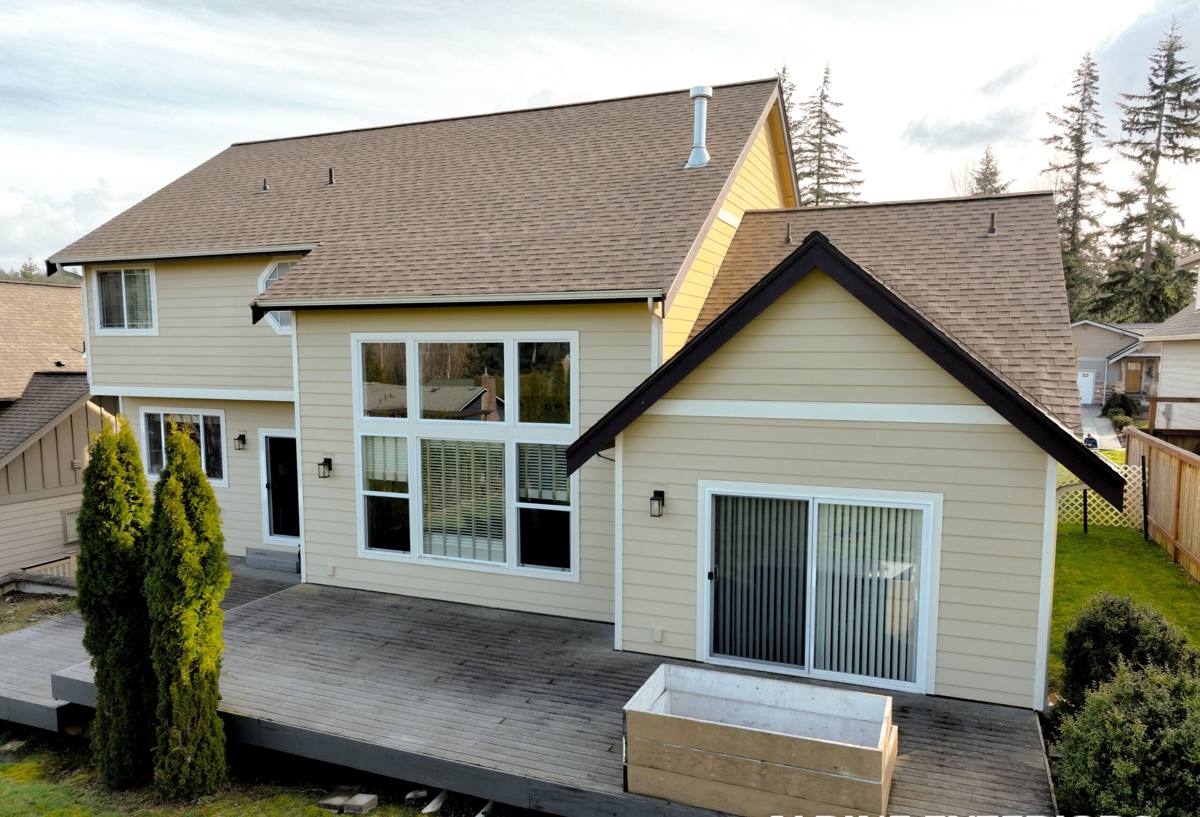
What Salt Air, Rain, and Moss Actually Do to a Roof Here
Salt Air and Corrosion
Airborne salt is corrosive to raw or poorly coated metal, and it works faster on fasteners and cut edges than on the broad flat panel surface. A roof can look fine from the ground for years while exposed screw heads, panel seams, or unsealed cut edges are quietly rusting underneath. On a waterfront property like Semiahmoo Resort, this is the single biggest reason metal roofing choices and installation details need to be matched to the site, not just picked off a standard spec sheet.
Driving Rain and Wind-Driven Water
Storms coming off the water don't just fall on a roof — they push rain sideways, up under laps, and into any flashing detail that was cut short. Standard install tolerances that work fine in a sheltered inland yard can leak here during a hard blow. Flashing at valleys, chimneys, skylights, and wall transitions has to be built for wind-driven water, not just gravity drainage.
Moss and Prolonged Dampness
Whatcom County's long wet season, combined with shaded areas around Semiahmoo Resort's mature tree cover, keeps some roof sections damp well after a storm has cleared everywhere else. Moss and algae growth on north-facing slopes and shaded valleys is common. On metal roofing, moss is less of a structural threat than it is on shingles, but it can still hold moisture against fasteners and finish coatings longer than the manufacturer's warranty assumes, which is why panel choice and coating quality matter as much as the install itself.
Metal Roofing Options That Actually Hold Up on the Water
Not every metal roofing product is built for salt-air exposure, and we don't treat this as a one-size-fits-all category. The table below is how we talk homeowners through the real trade-offs for a Semiahmoo Resort property specifically.
| Option | How It Handles Salt Air | Trade-Offs on a Waterfront Site |
|---|---|---|
| Standing seam steel, quality paint finish (e.g., Kynar/PVDF-class coatings) | Strong — concealed fasteners and a durable factory finish resist salt exposure well | Higher upfront cost; finish quality and fastener detailing must be right the first time |
| Exposed-fastener metal panels, standard coating | Weaker — exposed screws and gaskets are the first failure point in salt air | Lower upfront cost, but gaskets and fasteners typically need earlier attention |
| Aluminum panel systems | Very strong — naturally corrosion-resistant, well suited to direct salt exposure | Denting resistance is lower than steel; cost varies by profile |
| Uncoated or poorly coated steel | Poor — corrodes visibly within a few seasons this close to the water | Not something we install on a waterfront property regardless of upfront savings |
For most Semiahmoo Resort homes we recommend a concealed-fastener standing seam system in a marine-grade finish, or an aluminum panel system where weight or substrate conditions favor it. The right call depends on the roof's exposure direction, pitch, and what's underneath it — which is exactly what we walk through on-site rather than over the phone.
What a Correct Metal Roof Installation Actually Involves
Metal roofing fails less often because the panel itself was wrong, and more often because a detail underneath it was rushed. On a property with this much salt and wind exposure, we treat the following as non-negotiable:
- A fully sealed, high-temp underlayment as the actual water barrier — the metal panel is the weather shield, not the last line of defense
- Fasteners and clips rated for coastal/corrosive environments, not standard interior-grade hardware
- Closed-cell foam or solid closures at eave and ridge to keep wind-driven rain and blown debris from working up under the panels
- Custom-fabricated flashing at every valley, wall transition, chimney, and penetration — not stock trim stretched to fit
- Proper panel expansion allowance, since temperature swings and coastal humidity cause more movement than inland installs account for
- Attic and roof-deck ventilation sized correctly, so trapped moisture doesn't condense under the panel from the inside
Skipping any one of these doesn't usually cause a problem in year one. It shows up in year six or seven, as a slow leak at a valley or corrosion starting at a fastener line — the kind of failure that's expensive to trace back because it's hidden under a roof that still looks fine from the ground.
Our Process for Semiahmoo Resort Roofing Projects
1. On-Site Assessment
We look at the existing roof structure, deck condition, ventilation, and — specific to this location — which slopes take the most direct wind and salt exposure off the water versus which are more sheltered by tree cover. That exposure difference often changes our panel and coating recommendation from one slope to the next on the same house.
2. Product and Detail Plan
We spec the panel system, finish, fastener type, and flashing plan before work starts, and walk the homeowner through why each choice fits this specific site rather than handing over a generic proposal.
3. Installation
Tear-off (if replacing an existing roof), deck inspection and repair as needed, underlayment, custom flashing fabrication, panel installation, and closure details — done in the sequence that keeps the roof weathertight even if a storm rolls through mid-project, which isn't unusual on this stretch of Whatcom County in the wetter months.
4. Final Walkthrough
We check every flashing point, seam, and penetration before calling the job done, and go over basic maintenance specific to a salt-air, high-moss-exposure site.
Maintenance: What Metal Roofing Still Needs Here
Metal roofing is low-maintenance compared to most other roofing materials, but "low-maintenance" isn't "no-maintenance" on a property this exposed. A short annual routine catches almost everything before it becomes a repair:
- Clear moss, needles, and debris from valleys and low-slope sections, especially in shaded areas, before wet weather sets in
- Check gutters and downspouts for blockage from the same debris — backed-up water at the eave is a common source of hidden leaks
- Look at exposed fasteners (if the system uses them) for early rust staining or loosening
- Rinse accumulated salt residue off panels periodically, particularly on slopes facing the water directly
- Have flashing and sealant points checked every few years rather than waiting for a visible leak
Cost Factors for a Semiahmoo Resort Metal Roof
We don't quote exact numbers on a page — every roof here has a different pitch, access situation, and existing condition — but the factors that actually move the price are consistent:
| Factor | Why It Matters |
|---|---|
| Panel and coating grade | Marine-grade finishes and concealed-fastener systems cost more upfront and less over time in this environment |
| Roof complexity | Valleys, dormers, and multiple roof planes require more custom flashing labor than a simple gable roof |
| Existing deck condition | Rot or damage found under an old roof adds repair cost before the new roof goes on |
| Tear-off vs. overlay | Full tear-off costs more but lets us inspect and fix the deck and ventilation — the right call on most waterfront homes |
| Access and site conditions | Waterfront lots, steep pitches, or limited staging area can add labor time |
Why Hiring a Crew That Already Works Semiahmoo Resort Matters
A roofing crew that mostly works inland jobs will often spec a roof exactly the way they'd spec one three miles from the water — standard fasteners, standard flashing depth, standard coating grade. That's not incompetence, it's just a different baseline exposure. On a property sitting directly on Semiahmoo Bay, that baseline isn't enough. We already know which slopes on this kind of site catch the worst of the wind and salt, which valleys hold moss the longest, and which flashing details actually need to be oversized rather than built to code minimum. That local pattern recognition is the difference between a roof that needs attention in year five and one that's still solid in year twenty-five.
If you're planning a metal roof for a home in Semiahmoo Resort — new construction, a full replacement, or you're just trying to figure out whether your current roof is holding up the way it should — we're glad to come take a look. The estimate is free, there's no pressure, and you'll get a straight answer about what your roof actually needs.