 Semiahmoo Siding
 Roofing Peace Arch Homes for the Water, Not Against It
Peace Arch sits close enough to the water that a roof here is doing a different job than a roof ten miles inland. Salt-laden air, wind-driven rain off the Strait, and a moss season that can run half the year all work on a roof at the same time. An asphalt shingle roof installed with inland assumptions — standard fastening, minimal ventilation, generic underlayment — tends to show its age early here: curling shingle edges, dark streaking, granule loss around valleys, and soft spots where moisture has been sitting under moss for months without anyone noticing.
None of that is inevitable. Asphalt shingle roofing is still one of the most practical, cost-effective roofing systems for homes in this part of Whatcom County, as long as the materials and installation details account for what this specific stretch of coastline throws at a roof year-round. That's the difference between a roof that needs attention every couple of years and one that quietly does its job for decades.
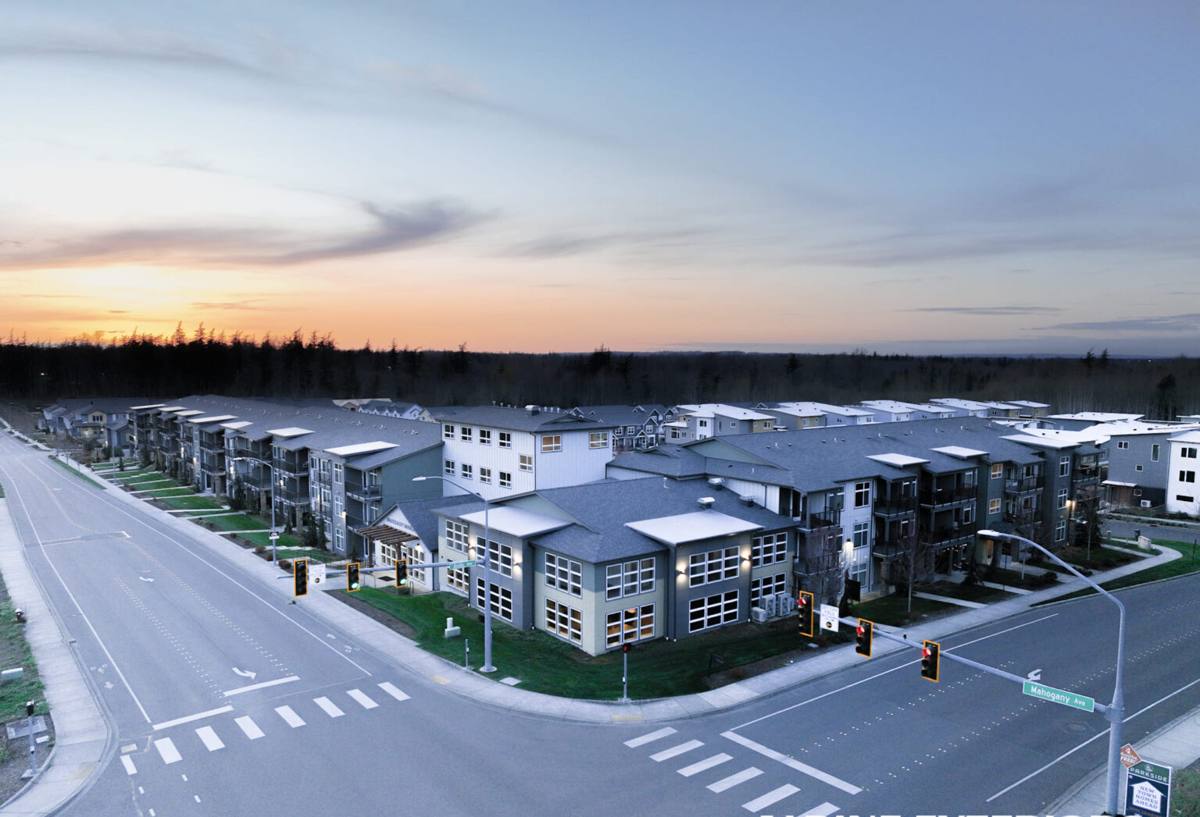
What Salt Air, Rain, and Moss Actually Do to a Shingle Roof
Salt Air
Airborne salt doesn't just sit on the surface — it works into fasteners, flashing seams, and any exposed metal on the roof. Over time it accelerates corrosion on nails, drip edge, and vent flashing faster than it would inland. Once a fastener starts to corrode, it loses grip, and a shingle that isn't held down properly is the first thing to lift in a windstorm.
Driving Rain
Rain that comes in sideways off the water doesn't behave like rain falling straight down. It finds its way under shingle tabs, into exposed nail heads, and along poorly lapped underlayment. A roof detailed for calmer inland weather often has just enough margin for error that this kind of wind-driven rain exposes it — usually at valleys, chimney flashing, and roof-to-wall transitions.
Moss Season
Whatcom County's wet season runs long, and shaded, north-facing slopes in Peace Arch can stay damp for months. Moss doesn't just sit on top of shingles — its root structures lift granules and hold moisture directly against the shingle surface, which is exactly the condition that shortens shingle life the fastest. Left unchecked, moss growth can also work its way under shingle edges and into the deck itself.
Choosing the Right Shingle for This Stretch of Coastline
Not every asphalt shingle product is built the same way, and for a Peace Arch home the differences matter more than they would somewhere drier and further from salt air.
| Shingle Type | How It Performs Here | Best Fit For |
|---|---|---|
| 3-tab (standard) | Lightest option; lower wind rating; shows algae streaking faster | Budget-driven projects, low-slope garages/outbuildings |
| Architectural / laminate | Heavier, higher wind rating, better performance in driving rain | Most Peace Arch homes — the practical default |
| Algae-resistant (AR) laminate | Copper- or zinc-infused granules resist moss and algae growth | Shaded lots, north-facing roofs, homes with heavy tree cover |
| Impact-rated / high-wind laminate | Reinforced mat, higher fastener count, rated for higher wind exposure | Homes with more direct exposure to wind off the water |
Our standard recommendation for most Peace Arch homes is an algae-resistant, high-wind-rated laminate shingle. It costs more than a basic 3-tab up front, but it's a better match for the actual conditions this roof will face, and it reduces how often the roof needs moss treatment or granule touch-up down the road.
What a Correct Installation Involves Here
The shingle itself is only part of the system. A roof that's going to hold up near the water needs every layer underneath it built for that environment too.
- Ice-and-water shield at eaves and valleys: A self-adhering membrane at the vulnerable points, not just felt paper, to stop wind-driven rain that gets past the shingle line.
- Full synthetic underlayment: More tear-resistant and water-resistant than old-style felt, and it holds up better if the roof sits exposed for a day or two mid-project.
- Corrosion-resistant fasteners and flashing: Hot-dip galvanized or stainless fasteners and flashing where salt exposure is a factor, instead of standard-grade materials that corrode faster this close to the water.
- Correct nailing pattern and fastener count: Under-nailing is one of the most common causes of early shingle lift in wind, and it's invisible until a storm finds it.
- Proper valley and flashing detail: Woven or open-metal valleys installed correctly, with step flashing at walls and chimneys — the single most common source of leaks on an otherwise sound roof.
- Balanced attic ventilation: Intake at the eaves and exhaust at the ridge, sized to the attic, so trapped moisture doesn't condense on the underside of the deck.
Our Process for a Peace Arch Roofing Job
1. Inspection and Honest Assessment
We start on the roof, not with a sales pitch. We check the deck condition, existing ventilation, flashing details, and how much moss or moisture damage is present before recommending a repair or a full replacement.
2. Tear-Off and Deck Check
We remove the old roofing down to the deck rather than layering over it. This is the point where hidden moisture damage from years of moss or slow leaks shows up, and any soft or rotted decking gets replaced before anything new goes down.
3. Underlayment and Flashing
Ice-and-water membrane at eaves, valleys, and penetrations, full synthetic underlayment across the field, and new flashing at every wall, chimney, and vent — not reused flashing from the old roof.
4. Shingle Installation
Installed to the manufacturer's high-wind fastening specification, with attention to exposure and nailing height so every shingle is doing its job, not just sitting close enough.
5. Ventilation Check
We confirm intake and exhaust airflow are balanced before we call the job finished — a new roof with poor ventilation will still trap moisture underneath it.
6. Cleanup and Walkthrough
Full site cleanup including a magnetic sweep for stray fasteners, followed by a walkthrough so you know exactly what was done and what to watch for going forward.
Ventilation and Moisture: The Part Most Roofs Get Wrong
A surprising number of roof problems near the water aren't caused by the shingles at all — they're caused by what's happening underneath them. If an attic can't breathe properly, moist air from the living space condenses against the cold underside of the roof deck during our wet, mild winters. Over time that moisture feeds rot in the sheathing and can shorten the life of the shingles from below, even while the top surface still looks fine.
Balanced ventilation — enough intake at the soffits to match the exhaust at the ridge — keeps air moving through the attic space so it doesn't stay damp. On older Peace Arch homes we often find ventilation that was adequate when the house was built but has since been blocked by insulation, paint, or additions. Fixing that is a small part of a re-roof job, but it has an outsized effect on how long the new roof actually lasts.
Maintenance Checklist for Homeowners Near the Water
Asphalt shingle roofs in this area do best with a bit of regular attention rather than being ignored until there's a leak. A few things worth checking once or twice a year:
- Look for moss or dark algae streaking on shaded or north-facing slopes and have it treated before it takes hold
- Check gutters and downspouts are clear so water isn't backing up under the shingle edge
- Look at flashing around chimneys, vents, and skylights for lifted edges or rust
- Watch for granules collecting in gutters, which can signal accelerated shingle wear
- After any significant windstorm, do a visual check for lifted or missing shingles
- Keep overhanging branches trimmed back to reduce shade, debris, and moss pressure on the roof
Cost Factors for Asphalt Shingle Roofing in This Area
Every roof is different, but the factors that move the price up or down are fairly consistent for homes in and around Peace Arch:
| Factor | Effect on Cost |
|---|---|
| Shingle grade (3-tab vs. laminate vs. AR laminate) | Higher-grade shingles cost more per square but reduce maintenance and moss treatment over time |
| Roof pitch and access | Steeper or harder-to-access roofs take longer and require more safety setup |
| Deck condition | Rotted or damaged sheathing found during tear-off adds material and labor |
| Number of valleys, penetrations, and flashing points | More detail work means more labor time, regardless of shingle choice |
| Ventilation upgrades | Adding or correcting intake/exhaust ventilation is a modest add-on with a long-term payoff |
| Layers of existing roofing to remove | Multiple old layers mean more tear-off labor and disposal |
As a general range, a straightforward asphalt shingle replacement typically runs somewhere in the mid-to-high hundreds of dollars per square installed, with algae-resistant and high-wind-rated products landing toward the upper end of that range. The only way to get a real number is a look at the actual roof, which is what a proper estimate is for.
Why Hiring a Crew That Already Works Peace Arch Matters
A roofing crew that mostly works inland can still install a technically fine roof — but they may not think to spec corrosion-resistant fasteners, prioritize algae-resistant shingles on a shaded slope, or flag ventilation problems that are specific to homes sitting this close to the water. Those are the details that separate a roof that looks fine at handoff from one that's still performing well ten and fifteen years later.
Working regularly in Semiahmoo and the surrounding Whatcom County coastline means we're not guessing at how salt air, driving rain, and moss season affect a roof here — we see the results of roofs that were and weren't built for it, on a regular basis. That's what shapes the material choices and installation details we recommend for a Peace Arch home specifically, rather than applying a one-size-fits-all approach.
If you're dealing with an aging roof, visible moss, or just want an honest read on how much life is left in your current shingles, we're glad to take a look. Fill out the form below for a free, no-pressure estimate.