 Semiahmoo Siding
 Board & Batten Siding Built for the Peace Arch Area
Peace Arch sits close to the water, close to the border, and squarely in the path of everything Whatcom County's marine climate throws at a house. Board and batten siding — wide vertical panels with narrow battens covering the seams — has become a popular choice here for its clean, modern-farmhouse look and the strong shadow lines it gives a home's exterior. But that same vertical profile that makes it look good is also the part of the assembly most exposed to wind-driven rain, and it only performs as well as the materials and installation behind it.
This page is about board and batten siding specifically for homes in and around Peace Arch — what the local climate demands from it, what a correct installation actually involves, and why we install it in James Hardie fiber cement only.
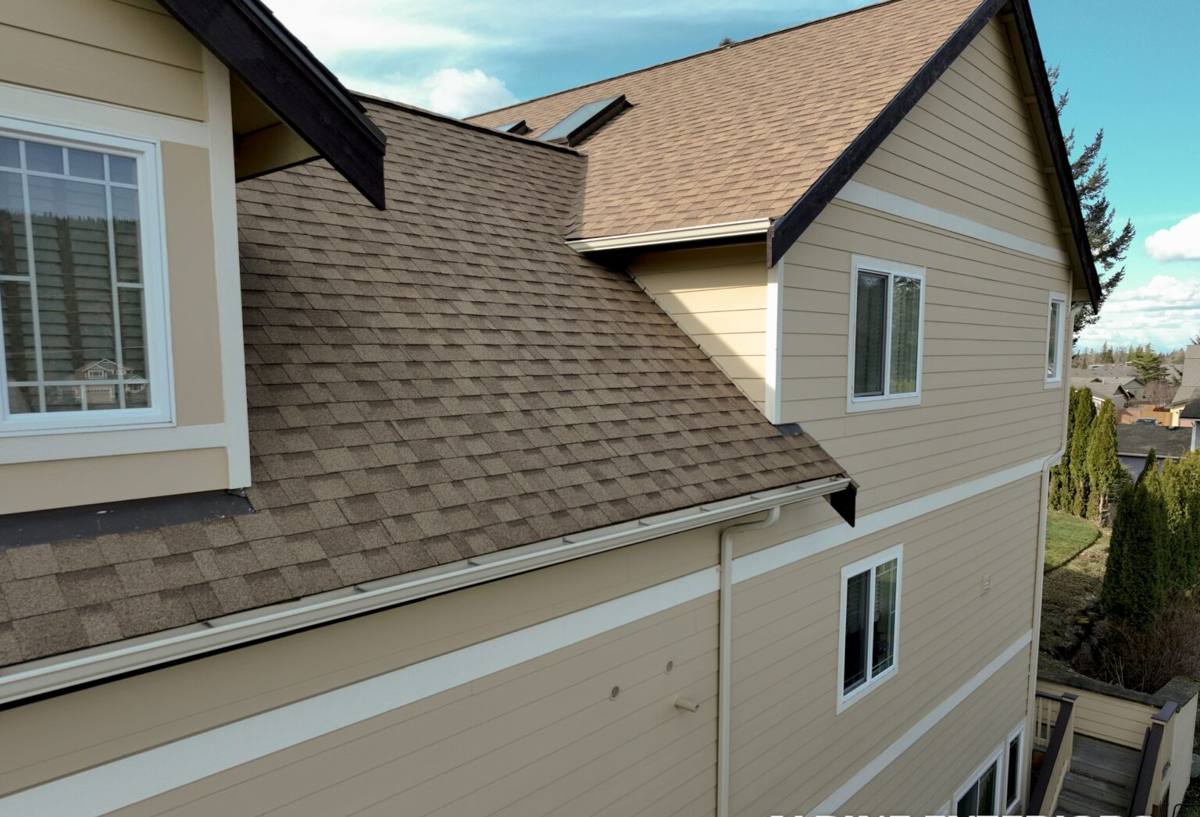
What Semiahmoo's Climate Does to Vertical Siding
Homes near Semiahmoo Bay deal with three conditions that matter a lot for board and batten specifically:
Salt Air
Proximity to the water means airborne salt is a constant, low-level presence on exterior surfaces. It accelerates corrosion on exposed metal fasteners and trim, and over years it can dull or degrade paint finishes that weren't formulated to hold up against it. Vertical siding has more exposed seams and batten edges than a horizontal lap profile, which means more places for salt-laden moisture to sit.
Driving Rain
Storms off the Salish Sea don't just fall straight down — wind pushes rain sideways into wall assemblies. Board and batten relies on the batten strip to shed water off the seam between boards. If that batten is undersized, poorly fastened, or the gap behind it isn't detailed correctly, wind-driven rain finds its way behind the siding instead of running down the face of it.
A Long Moss Season
Whatcom County's wet season runs long, and shaded or north-facing walls stay damp for extended stretches. Moss and algae take hold on surfaces that don't dry out quickly, and on vertical siding they tend to collect right where battens meet boards — the exact seams that need to stay clear for water to shed properly.
Why We Only Install James Hardie for This Application
Board and batten in the wrong material turns these climate factors into ongoing maintenance headaches. That's why our crews install James Hardie fiber cement exclusively, and it's especially relevant here:
- Non-combustible material that doesn't rely on paint film alone to resist moisture damage the way wood-based products do.
- Factory-applied ColorPlus finish baked on under controlled conditions, holding color and resisting the fading and chalking that salt air accelerates on field-painted products.
- Climate-engineered HZ formulations that Hardie builds specifically for wetter regions like the Pacific Northwest, rather than a one-size-fits-all product.
- Dimensional stability — fiber cement doesn't swell, cup, or split the way engineered wood or solid wood battens can when they take on repeated moisture cycles.
- A strong transferable warranty backed by a manufacturer that's been refining this exact product category for decades.
We don't install vinyl, LP SmartSide, Cemplank, Allura, primed spruce, or cedar board and batten. Each of those has legitimate strengths, but none of them hold up to Peace Arch's combination of salt exposure, driving rain, and prolonged dampness as consistently as Hardie fiber cement does when installed correctly — and installed incorrectly, none of them hold up at all.
What a Correct Board & Batten Installation Involves
Board and batten looks simple from the street, but it's one of the less forgiving siding profiles to get wrong. The details that matter most:
Water-Resistive Barrier and Rainscreen Gap
Behind every board, there needs to be a continuous water-resistive barrier and a drainage gap that lets any moisture that does get past the battens drain and dry out instead of sitting against the wall sheathing. In a climate with this much sustained wet weather, skipping or shortchanging this gap is the single most common reason board and batten fails early.
Batten Spacing and Fastening
Battens need consistent spacing over the board seams and fasteners driven at the correct depth and location — over-driven or misplaced fasteners crack the material and create entry points for water. Fastener spacing and placement also affect how the assembly handles wind load, which matters on exposed lots closer to the water.
Flush and Corner Detailing
Inside corners, outside corners, and the transitions around windows and doors are where vertical siding is most likely to leak if flashing and trim aren't integrated correctly. These details take more time to get right on board and batten than on standard lap siding, and it shows in how the wall performs during the first real storm season.
Fastener and Trim Material
Given the salt air, we use fasteners and trim components rated to resist corrosion in a coastal environment — not just what happens to be on the truck. Cutting a corner here is invisible on install day and expensive to fix five years later.
Board & Batten Material Comparison for Coastal Whatcom County
| Factor | James Hardie Fiber Cement | Engineered Wood (e.g. LP) | Vinyl | Solid Wood / Cedar |
|---|---|---|---|---|
| Salt air resistance | Strong — factory finish, non-combustible core | Moderate — dependent on coating integrity | Moderate — can chalk/discolor over time | Weak without diligent recoating |
| Driving rain / seam performance | Strong when battens and gap are installed to spec | Moderate — more sensitive to moisture at cut edges | Moderate — seams can flex and open over time | Weak — prone to swelling at seams |
| Moss/algae resistance on shaded walls | Strong, low-maintenance surface | Moderate — organic material more prone to growth | Moderate | Weak — organic surface, needs regular cleaning/treatment |
| Finish longevity | Factory ColorPlus, long fade resistance | Field-applied, shorter repaint cycle | Molded-in color, can chalk and fade | Field-applied, shortest repaint cycle |
| Typical warranty structure | Long-term, transferable | Varies by manufacturer | Varies, often prorated | Typically none beyond installer workmanship |
None of these products are inherently "bad" — they're built for different priorities. Our position is simply that for board and batten specifically, in this climate, Hardie fiber cement gives homeowners the best combination of moisture performance, appearance retention, and long-term value with the least ongoing maintenance.
Our Process for Peace Arch Projects
- On-site assessment — we look at wall orientation, shade exposure, existing moisture or moss patterns, and how close the home sits to open water or prevailing wind.
- Substrate and barrier check — existing sheathing and water-resistive barrier are inspected before anything new goes up; problems here get fixed first, not covered over.
- Rainscreen and flashing plan — drainage gap, window/door flashing, and corner details get planned before the first board is cut.
- Hardie board and batten installation — installed to manufacturer spec with corrosion-resistant fasteners appropriate for a coastal setting.
- Final walkthrough — seams, corners, and penetrations checked before we call the job done.
Living With Board & Batten in This Climate
Even correctly installed Hardie board and batten benefits from a little seasonal attention in an area with this much rain and shade. A simple maintenance rhythm keeps it looking right and performing the way it should:
- Rinse siding annually, paying attention to north-facing and shaded walls where moss and algae collect first.
- Keep gutters clear so overflow doesn't run down the wall face and saturate seams repeatedly.
- Trim back landscaping that keeps a wall section shaded and damp longer than the rest of the house.
- Walk the exterior once a year and look at caulking around trim, windows, and corners — reseal before small gaps become water paths.
- Address any impact damage promptly rather than letting a cracked board sit through a wet season.
Why Hire a Crew That Already Works Peace Arch
Board and batten performs differently on a lot exposed to open water and prevailing wind than it does a few miles inland. A crew that already works this area understands the wind-driven rain patterns, the exposure differences between shaded and open walls, and how quickly moss establishes on the wrong wall orientation here. That local pattern recognition shows up in where the rainscreen gap gets extra attention, which corners get reinforced flashing, and how fastener spacing is handled on the sides of a home that take the most weather. It's the difference between siding that looks right on install day and siding that still performs correctly five wet seasons later.
If you're considering board and batten siding for a home near Peace Arch or elsewhere around Semiahmoo, we're happy to take a look and walk you through what your specific home needs. Request a free, no-pressure estimate using the form below.