 Semiahmoo Siding
 Roofing in the Peace Arch Area — What Makes It Different
Homes near the Peace Arch area, just inland from Semiahmoo Bay in Whatcom County, take a beating that roofs in drier parts of the state never see. You've got salt-laden air rolling in off the water, wind-driven rain that gets pushed sideways under poorly sealed edges, and a long, damp shoulder season every fall and spring that gives moss all the time it needs to take hold. A roof replacement out here isn't just "put new shingles on" — it's a system that has to handle moisture from three directions at once: falling rain, blown rain, and condensation trapped under the decking.
We work on roofs in this specific area regularly, which means we're not guessing at how a roof will hold up here — we're building to what we've already seen fail and what's held up over time.
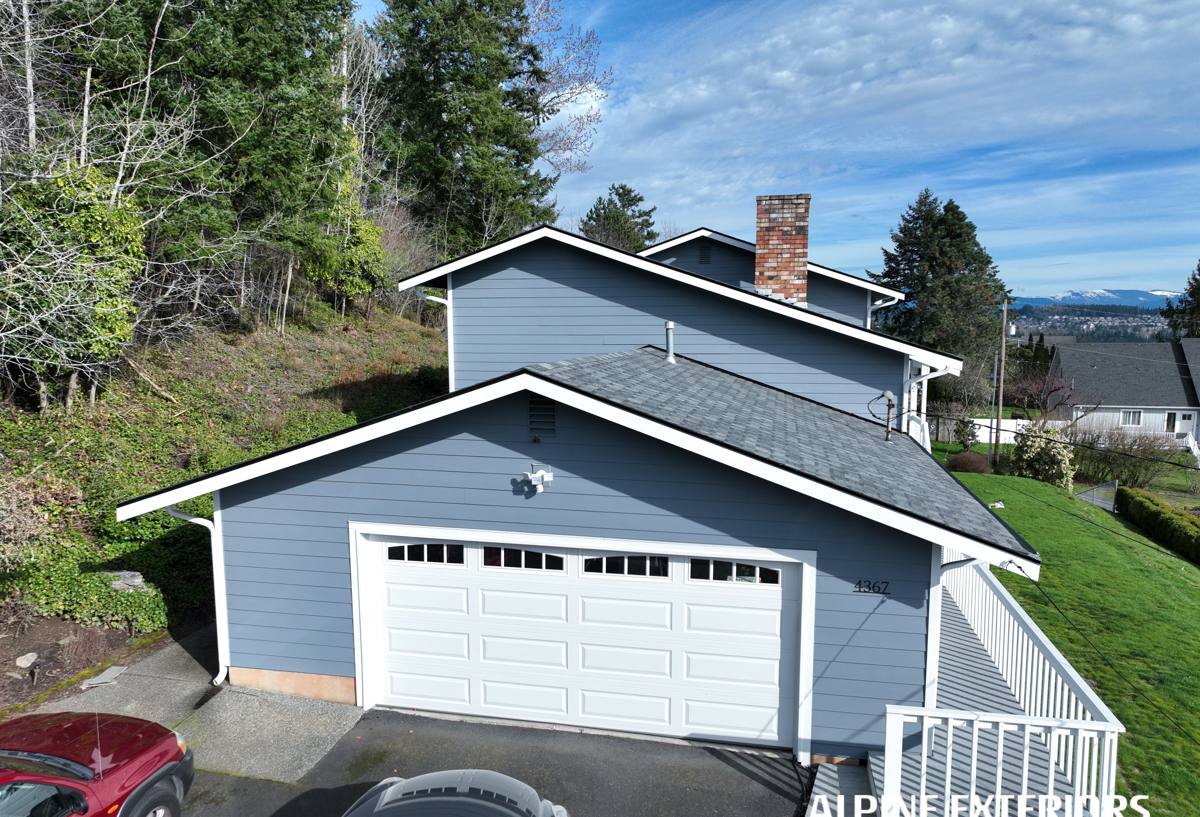
The Climate Factors That Wear Down Peace Arch Roofs
Salt Air and Corrosion
Semiahmoo Bay sits close enough that salt spray reaches roofs on breezy days, even ones set back from the water. Salt air accelerates corrosion on exposed metal — flashing, nail heads, vent caps, and gutter hardware age faster here than they would twenty miles inland. Low-grade or improperly coated metal components are usually the first thing to show rust streaks, staining shingles and eventually letting water find a path underneath.
Wind-Driven Rain
Whatcom County storms off the Strait of Georgia don't just drop rain straight down — they push it sideways, which means rain finds any gap in shingle overlap, any short nail, or any flashing detail that was installed "close enough." A roof that would pass fine in a calmer climate can leak here specifically because it wasn't built with wind-driven rain in mind.
Moss and Shade
The long wet season, combined with mature trees common in and around Semiahmoo neighborhoods, gives moss a long runway to establish itself, especially on north-facing slopes that stay damp and shaded most of the year. Moss isn't just cosmetic — its root structure lifts shingle edges and holds moisture against the roof deck, which is exactly the condition that leads to rot underneath.
Signs Your Peace Arch Roof Needs Replacing, Not Just Repair
Not every roofing problem calls for a full replacement, but there's a point where patching becomes throwing money at a roof that's already lost the battle. Look for:
- Granule loss heavy enough that you can see it collecting in gutters or at downspout outlets
- Shingles that are cupping, curling at the edges, or cracking when touched
- Soft or spongy spots underfoot on the roof deck, usually a sign of trapped moisture below
- Daylight visible through the roof deck from inside the attic
- Repeated leaks in different spots each winter, rather than one isolated failure
- Moss coverage thick enough that it's holding standing moisture against the roof surface
- Rust staining or visible corrosion on flashing, vents, or valley metal
- A roof approaching or past the manufacturer's expected service life for its material
If you're only seeing one or two of these, a repair may still make sense. Several at once, especially combined with age, usually means replacement is the more honest recommendation — and we'll tell you that directly rather than stringing out repairs on a roof that's not coming back.
What a Proper Roof Replacement Involves
Full Tear-Off and Deck Inspection
We don't recommend layering new shingles over old ones. A full tear-off lets us see the actual condition of the roof deck — soft, delaminated, or water-stained plywood needs to be replaced before anything new goes down, because no underlayment or shingle can compensate for a compromised deck underneath it.
Underlayment and Ice-and-Water Protection
Given how much wind-driven rain this area sees, underlayment choice matters more here than in calmer inland climates. We use synthetic underlayment across the full roof and self-adhered ice-and-water membrane at the eaves, valleys, and around every penetration — the places wind-driven rain is most likely to get pushed uphill under the shingle line.
Flashing Done Right
Flashing failure is the single most common cause of "mystery leaks" on an otherwise sound roof. We use corrosion-resistant flashing at chimneys, sidewalls, valleys, and vent penetrations, and we don't rely on caulk or roof cement as a substitute for a properly stepped and layered flashing detail. Caulk fails; correctly lapped metal doesn't.
Ventilation
A roof needs to breathe. Balanced intake and exhaust ventilation keeps attic moisture from condensing on the underside of the deck — a problem that shows up as rot from the inside out, which is much harder to catch early than a surface leak. In a damp climate like this one, ventilation isn't optional; it's part of what makes the rest of the roof last.
Fastening Standards
Nail placement and count matter for wind resistance. We fasten to the shingle manufacturer's specified pattern and nail count rather than the minimum, since under-fastened shingles are one of the more common causes of wind-related failure during winter storms off the bay.
Comparing Roofing Materials for This Climate
There's no single "best" roofing material for every home — it depends on your roof pitch, budget, and how much long-term maintenance you want to take on. Here's how the common options stack up for a salt-air, high-moisture environment like this one:
| Material | Typical Lifespan | Salt Air / Corrosion Resistance | Moss Resistance | Relative Cost |
|---|---|---|---|---|
| Architectural asphalt shingle | 25-30 years | Good, if flashing and fasteners are corrosion-resistant | Moderate; benefits from zinc strips | $ |
| 3-tab asphalt shingle | 15-20 years | Fair | Lower; thinner profile holds less moss but wears faster overall | $ |
| Standing seam metal | 40-50+ years | Very good with proper coating | High; sheds moisture quickly | $$$ |
| Synthetic composite shingle | 30-50 years | Good | Moderate to high | $$-$$$ |
We install and stand behind all of these; we don't push a homeowner toward whichever material carries the best margin for us. What we will do honestly is walk through the maintenance burden of each option for your specific roof — a low-slope, heavily shaded roof is a very different conversation than a steep, sun-exposed one.
Our Roof Replacement Process, Start to Finish
- On-site inspection. We walk the roof and attic, photograph problem areas, and check the deck condition where accessible before quoting anything.
- Written estimate. You get a clear scope of work and material breakdown — no vague line items.
- Material selection. We go over the comparison above in the context of your actual roof, budget, and how long you plan to be in the home.
- Scheduling around weather windows. Roof replacement needs a dry stretch; we plan around realistic forecasts rather than rushing a tear-off into rain.
- Tear-off and deck inspection. Old material comes off, the deck gets inspected, and any needed repairs are flagged before covering it back up.
- Underlayment, flashing, and shingle installation. Installed in the order and to the fastening standard described above.
- Cleanup and magnetic sweep. Debris and stray fasteners are cleared from the yard and driveway before we consider the job done.
- Final walkthrough. We go over the finished roof with you, including any maintenance notes specific to your material and shading conditions.
Why a Crew That Already Works Peace Arch Matters
A roof replacement done by a crew unfamiliar with this specific stretch of Whatcom County tends to make generic assumptions — standard fastening schedules, standard underlayment, standard flashing details — that don't fully account for salt exposure or the wind patterns coming off Semiahmoo Bay. A crew that already works in this area has seen which flashing details actually hold up here, which roof orientations collect moss fastest, and where wind-driven rain tends to find its way in on a poorly built roof.
Local permitting and inspection requirements also vary by jurisdiction, and knowing that process ahead of time keeps a project moving instead of stalling on paperwork. It's a small thing until it isn't — a permit delay in the middle of a wet season can leave a roof exposed longer than anyone wants.
What Affects the Cost of a Roof Replacement
Every roof is priced individually, but the same handful of factors drive most of the variation we see on homes in this area:
| Factor | Why It Matters |
|---|---|
| Roof size and number of planes | More square footage and more valleys/hips mean more material and labor |
| Roof pitch | Steeper roofs take longer to work safely and require more fall-protection setup |
| Layers to remove | Tearing off multiple existing layers adds disposal cost and labor time |
| Deck condition | Rotted or delaminated sheathing found during tear-off needs replacing before install continues |
| Material choice | Asphalt, synthetic, and metal carry different material and installation costs |
| Ventilation upgrades | Adding or correcting intake/exhaust venting is often bundled with a full replacement |
| Access and staging | Tight lots, landscaping, or limited driveway access can affect labor time |
We don't quote a number until we've actually seen the roof — flat per-square pricing over the phone tends to miss deck damage or access issues that change the real cost once tear-off starts.
Keeping a New Roof Performing in This Climate
A well-installed roof still needs some ongoing attention in an environment like this one:
- Keep gutters clear of needles and debris so water isn't backing up under the eave edge
- Trim back overhanging branches on shaded, moss-prone slopes to let more air and light reach the surface
- Have zinc or copper control strips installed near the ridge if moss has been a recurring problem — they release trace metals with rainfall that slow regrowth
- Rinse moss and debris off gently from the ground or with a low-pressure approach; pressure washing shingles directly strips granules and shortens their life
- Schedule a quick visual check after major winter storms, since wind-driven rain is when small flashing issues tend to reveal themselves first
None of this replaces professional inspection, but it goes a long way toward getting the full expected life out of whatever material you choose.
Ready to Talk About Your Roof
If your roof is showing its age or you just want an honest read on how much life it has left, we're glad to come take a look. The estimate is free, there's no pressure attached to it, and you'll get a straight answer about whether you're looking at a repair or a full replacement. Use the form below to get started.