 Semiahmoo Siding
 Roofing Built for Semiahmoo Resort's Coastline
Semiahmoo Resort sits right where Semiahmoo Bay meets the open water, and that location shapes everything about how a roof ages here. Salt-laden air drifts in off the bay and settles on every exposed surface, wind-driven rain comes in sideways during winter storms, and the shade from mature evergreens combined with damp Whatcom County air gives moss a long growing season that runs nearly year-round. A shingle roof that would perform fine twenty miles inland can wear out faster here if it wasn't specified and installed with this exposure in mind.
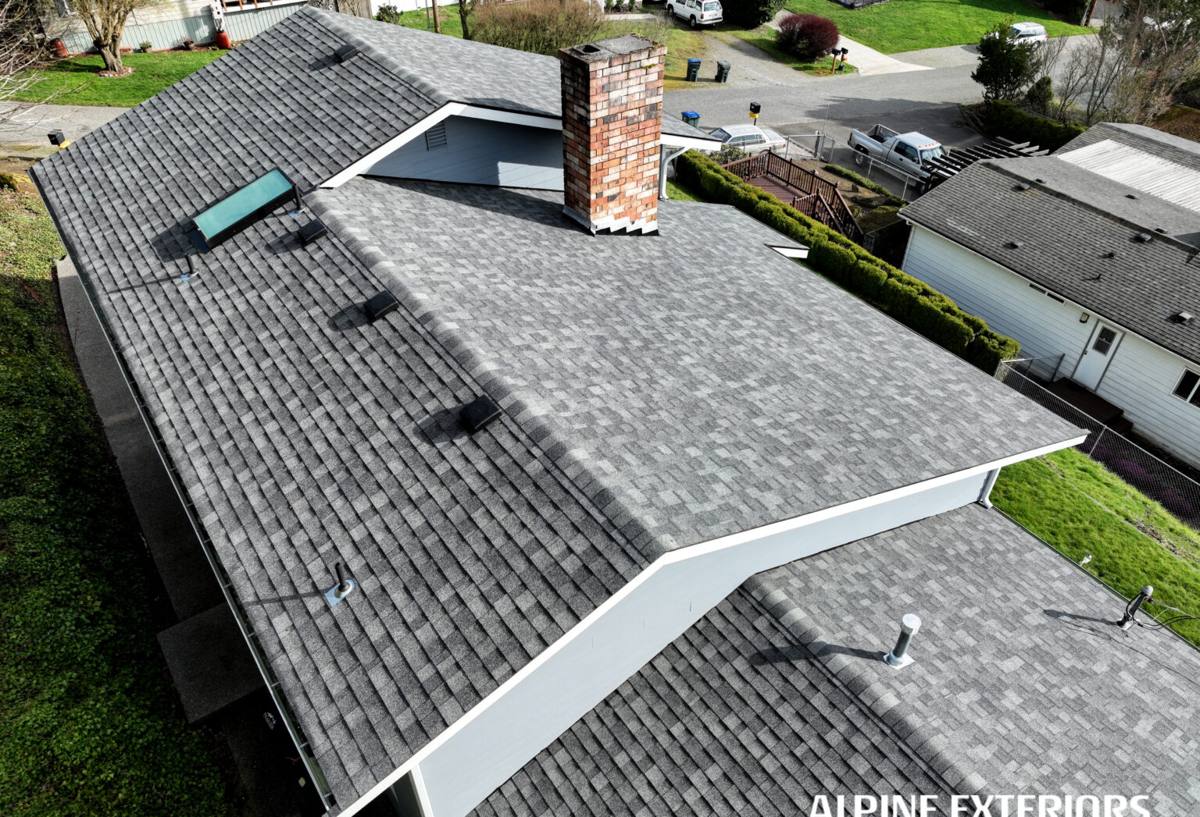
We install and repair asphalt shingle roofs specifically for homes in this area, and the approach we use reflects what actually shows up on Semiahmoo Resort roofs when we inspect them: granule loss on the windward slopes, moss colonies starting in the shaded valleys and north-facing planes, and soft spots where trapped moisture has worked into the deck over several seasons. Asphalt shingles remain one of the most practical roofing choices for this stretch of coastline when the product, ventilation, and detailing are matched to the conditions — this page walks through what that looks like.
What Coastal Exposure Does to a Shingle Roof
Salt Air and Wind
Salt air itself doesn't rot asphalt shingles the way it corrodes bare metal, but it accelerates wear on the metal components tied into the roof system — flashing, valley metal, nail heads, vent caps, and gutter hardware. Over time this shows up as rust streaking, pinhole corrosion, and fasteners that back out or fail early. Wind off the water also matters: gusts that build unobstructed across open water hit roof edges and ridges harder than the same wind would inland, which is why edge and ridge detailing gets extra attention on every job we do near the resort.
Driving Rain
Rain that comes in at an angle finds every weak point in a roof's water-shedding path — lifted shingle tabs, undersized underlayment laps, and flashing that was cut short. A roof here needs every layer doing its job, not just the shingles on top, because horizontal rain will test the underlayment and flashing far more often than it would on a calmer, more sheltered lot.
Moss and Shade
Moss needs moisture and shade to establish, and Semiahmoo Resort has both in abundance thanks to tree cover and the marine layer that keeps roofs damp longer after a storm than they would be further inland. Moss holds water against the shingle surface, works into butt joints, and can lift tabs over time, which is why moss control is a maintenance item here rather than an occasional afterthought.
Signs Your Shingle Roof Needs Attention
- Moss or dark algae streaking on north-facing or shaded slopes
- Granules collecting in gutters or at downspout outlets
- Shingle tabs that look curled, cupped, or lifted at the edges
- Rust staining below metal flashing, vent boots, or valley metal
- Soft or spongy decking felt underfoot near valleys or eaves
- Daylight visible through the roof deck from inside the attic
- Ice or water staining on interior ceilings after a windstorm
Any one of these on its own isn't necessarily an emergency, but catching them early is almost always cheaper than waiting for an interior leak to show up.
What a Correct Asphalt Shingle Installation Involves
An asphalt shingle roof is a layered system, and every layer has a job. Skipping or shortcutting one layer to save time is where most premature failures on this coastline start.
Deck and Underlayment
We check the existing deck for soft spots, delamination, and fastener pull-through before anything new goes down, and replace any compromised sheathing rather than roofing over it. Synthetic underlayment goes down with full manufacturer-spec overlaps, and we install ice-and-water shield membrane at eaves, valleys, and around penetrations — the areas where wind-driven rain is most likely to find a way in.
Flashing and Metal Detailing
Step flashing at walls, properly lapped valley metal, and correctly sized drip edge matter more here than in a sheltered location, since they're the first line of defense against sideways rain. We use corrosion-resistant metal rather than the lightest-gauge option, since standard-grade metal simply doesn't hold up as long this close to salt air.
Shingle Selection and Wind Rating
We generally recommend architectural (laminated) shingles with a higher wind rating over standard three-tab product for homes in this area, along with algae-resistant granules where the roof plan includes shaded or north-facing slopes. This isn't a claim that three-tab shingles are defective — it's a judgment call based on the extra wind load and moss exposure this location sees, weighed against the modest cost difference.
Ventilation
Balanced intake and exhaust ventilation keeps the attic dry and temperature-stable, which matters twice over here: it prevents condensation from building up under the deck during our damp winters, and it helps the shingles themselves last through their full warranty life instead of baking and curling prematurely from trapped heat.
Fastening and Ridge Detail
Correct nail placement and count — not staples, not high-nailing — combined with a properly capped ridge, is what keeps a roof intact in a real windstorm. This is one of the most common shortcuts we find when we inspect an older roof, and it's non-negotiable on our installs.
Our Process for Semiahmoo Resort Homes
- On-site inspection — We walk the roof (or use a drone where pitch or access makes that safer) and check the deck, flashing, ventilation, and moss/algae condition, not just the shingles.
- Honest scope and estimate — You get a written estimate that separates what's needed now from what can wait, with the reasoning explained plainly.
- Tear-off and deck repair — Old roofing comes off down to the deck, any damaged sheathing gets replaced, and we haul away all debris.
- Underlayment, flashing, and shingle install — Installed to the standards above, matched to your roof's actual exposure and pitch.
- Final walkthrough and cleanup — Magnetic sweep for stray fasteners, gutter check, and a walkthrough so you know exactly what was done.
- Warranty paperwork — Manufacturer warranty registration and our workmanship warranty documentation, handed over in writing.
Cost Factors on a Shingle Roofing Project
| Factor | Why It Affects Cost |
|---|---|
| Roof size and number of planes | More squares and more valleys/hips mean more material and labor time |
| Pitch and access | Steeper roofs and limited equipment access take longer and need more safety gear |
| Existing deck condition | Rotted or delaminated sheathing has to be replaced before new roofing goes down |
| Shingle grade selected | Standard three-tab, architectural, and premium impact-rated products carry different material costs |
| Flashing and ventilation scope | Full flashing replacement and added ventilation cost more upfront but reduce future repair calls |
| Layers to remove | Tearing off multiple existing layers takes more labor than a single-layer tear-off |
We don't publish flat per-square pricing because these variables genuinely change the number — but every estimate we give breaks the scope down line by line so you can see what's driving the cost.
Maintenance That Extends Roof Life Here
- Have moss and algae growth treated before it spreads across a full slope
- Keep overhanging branches trimmed back to reduce shade and debris buildup
- Clear gutters and valleys each fall so water has a clear path off the roof
- Have flashing and vent boots checked every few years for corrosion or cracking
- Address lifted or missing shingles quickly rather than waiting for a full season
- Schedule a post-storm check after any unusually high wind event
Why Local Experience with Semiahmoo Resort Matters
A roofing crew that regularly works this specific stretch of coastline already knows which slopes tend to hold moss, how the wind funnels across open water into certain roof exposures, and what deck condition to expect on homes of a given age in this area. That familiarity shows up in faster, more accurate estimates and fewer surprises once tear-off starts. It also matters for scheduling around Whatcom County's weather windows — timing tear-off and dry-in to avoid catching an exposed deck in a rainstorm takes local judgment, not just a general forecast check.
We also understand that homes in and around a resort community often care about street-facing appearance as much as function, and we account for that in shingle color and profile recommendations without ever compromising the underlying installation quality.
Ready for a Straightforward Roof Assessment?
If your shingle roof is showing moss, granule loss, or you just want an honest read on how much life is left in it, we're glad to take a look. Fill out the form below for a free, no-pressure estimate — we'll tell you plainly what your roof needs and what it doesn't.